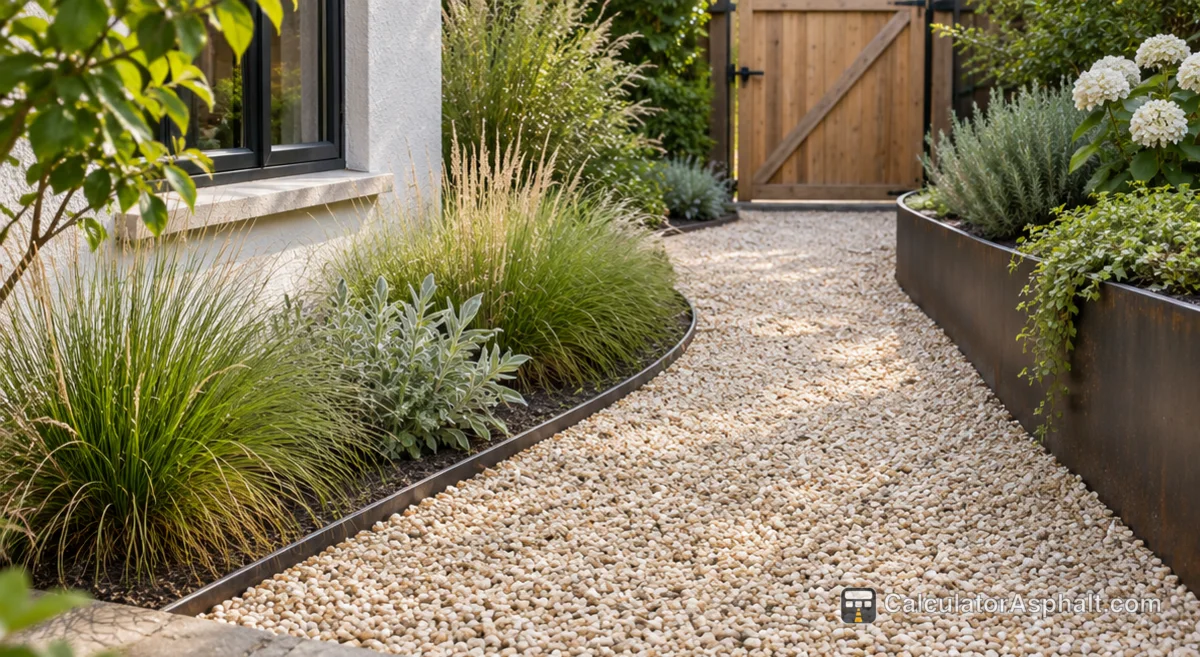
Compare bagged and bulk gravel for the same coverage, including delivery and bag rounding.
Open the gravel quantity calculator
Start with the same coverage
A bag price and a bulk price look comparable until you account for different units and fixed delivery fees. Measure the actual area to cover and use the same finished depth for both quotes. If the path widens, break it into rectangles and add their areas. Measure each layer separately if the project includes both a base and a decorative surface.
Work the numbers before asking for prices
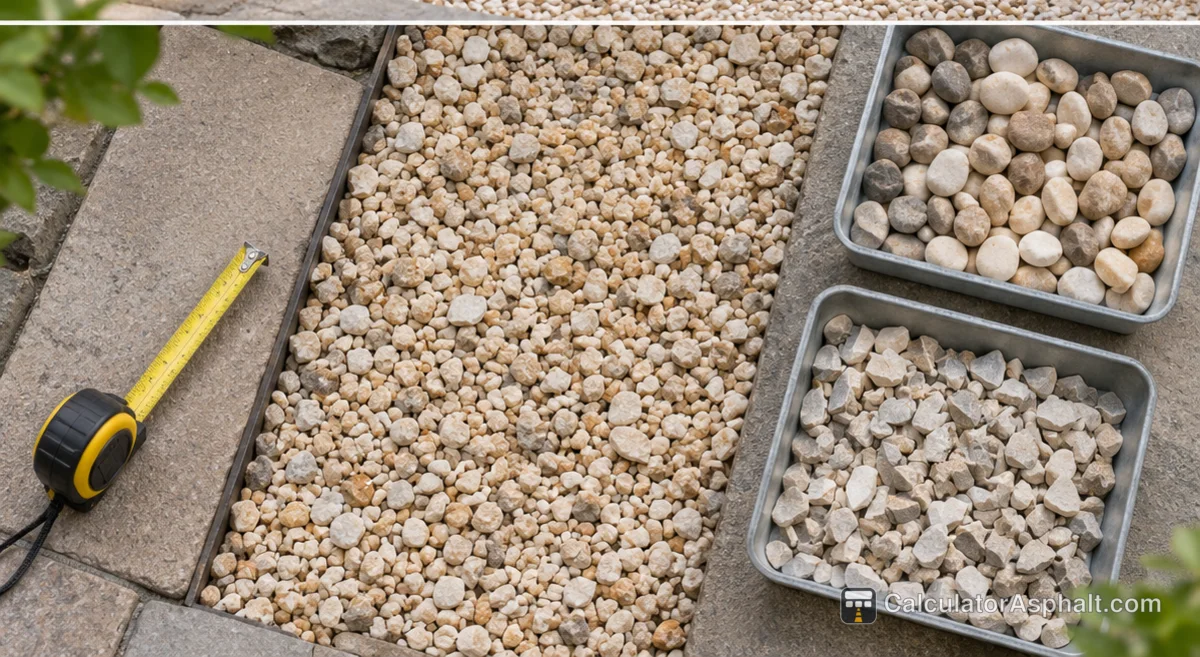
A 12 ft by 5 ft path at an assumed 2 inches deep needs 10 cubic feet before allowance. An illustrative 10% adds 1 cubic foot, for 11 cubic feet, or about 0.41 cubic yards. A 0.5-cubic-foot bag gives 22 bags. If the yard has a half-yard minimum, compare the actual half-yard invoice against those 22 bags. Two inches is the input for this example, not a construction specification.
Compare what you will actually pay
At illustrative prices of $6 per bag, the bagged subtotal is $132. A half-yard bulk minimum priced at $58 per cubic yard gives $29 of material. Add $75 delivery and the bulk example totals $104. At $103 delivery the two examples tie, before tax or pickup costs. Confirm whether delivery, pallet deposits, minimum quantities and material type change the comparison.
Choose an example
Bag rounding
One bag covers only the volume stated on the label. Round up after dividing total volume by the volume in one bag.
Bulk delivery
Compare the supplier’s billable quantity and delivery fee with the actual number of bags.
Check tons before signing the quote
For a weight-based quote, ask for the supplier’s bulk density in short tons per cubic yard. The stone’s grading and moisture can change the weight of a given volume. Compare rounded gravel with angular crushed stone by intended use, then price the actual product. Enter your area and depth in the gravel calculator and check the result units before ordering.
Open the gravel quantity calculator
Questions before you order
When do bags make sense?
They can make sense for a small fill-in, when you can transport them safely and a bulk minimum would leave substantial surplus.
Why did two suppliers quote different weights?
They may be quoting different material, moisture, density or units. Match those inputs before comparing.
Related guides
Using the linked calculator
Enter feet for length and width, inches for depth, and dollars per US short ton. The calculator’s material estimate adds 5% waste. The 10% used in the bag-and-bulk example is a separate planning assumption. Compare the raw volume or remove the difference in allowances before comparing results. If ordering by the ton, ask the supplier to quote the same type, moisture condition and delivery quantity.