Estimate paver base and bedding sand separately. Work through a 120-square-foot patio and learn what to ask the supplier before ordering.
Measure the base footprint before pricing stone
A patio drawing gives you the finished surface area. The aggregate base can have a different footprint where the chosen edge system needs support. Record the dimensions of each layer and subtract openings. Measure separate sections if one part of the patio is wider.
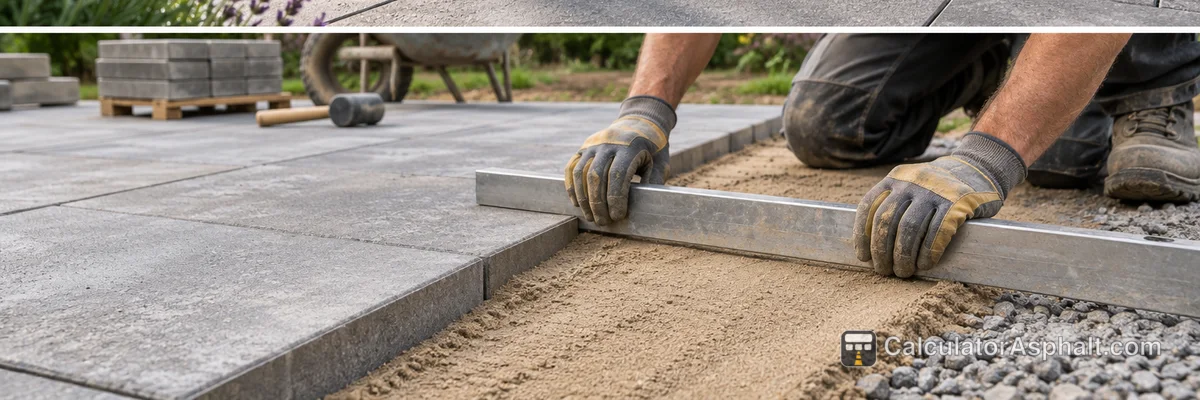
Work an example for each layer
A 12 × 10 ft patio has 120 sq ft of surface. With a hypothetical 4 in compacted base and 1 in bedding, the rectangular volumes are 40 and 10 cubic feet. Divide by 27 to get about 1.48 and 0.37 cubic yards, respectively. Those figures exclude any base extension. The depths are arithmetic assumptions, not installation specifications.
Turn the volume into an order
Ask the supplier how much loose aggregate their product takes to produce your specified compacted volume. A 10% allowance applied once to 1.48 cubic yards gives about 1.63 cubic yards. That allowance alone does not establish the required compaction conversion. Quote the bedding separately and ask about minimum order sizes and delivery.
Estimate the three materials
Before you excavate
Confirm the build-up with the paver system instructions and conditions on site. Compare the finished elevation with door thresholds, surrounding grades and where water can go. Use the bedding to seat the pavers, not to make up a low spot in the base. A vehicle-bearing surface needs its own design.
Why are the base and bedding on separate quote lines?
The layers use different materials and depths. A single volume makes it difficult to compare two quotes or see what each supplier is delivering.