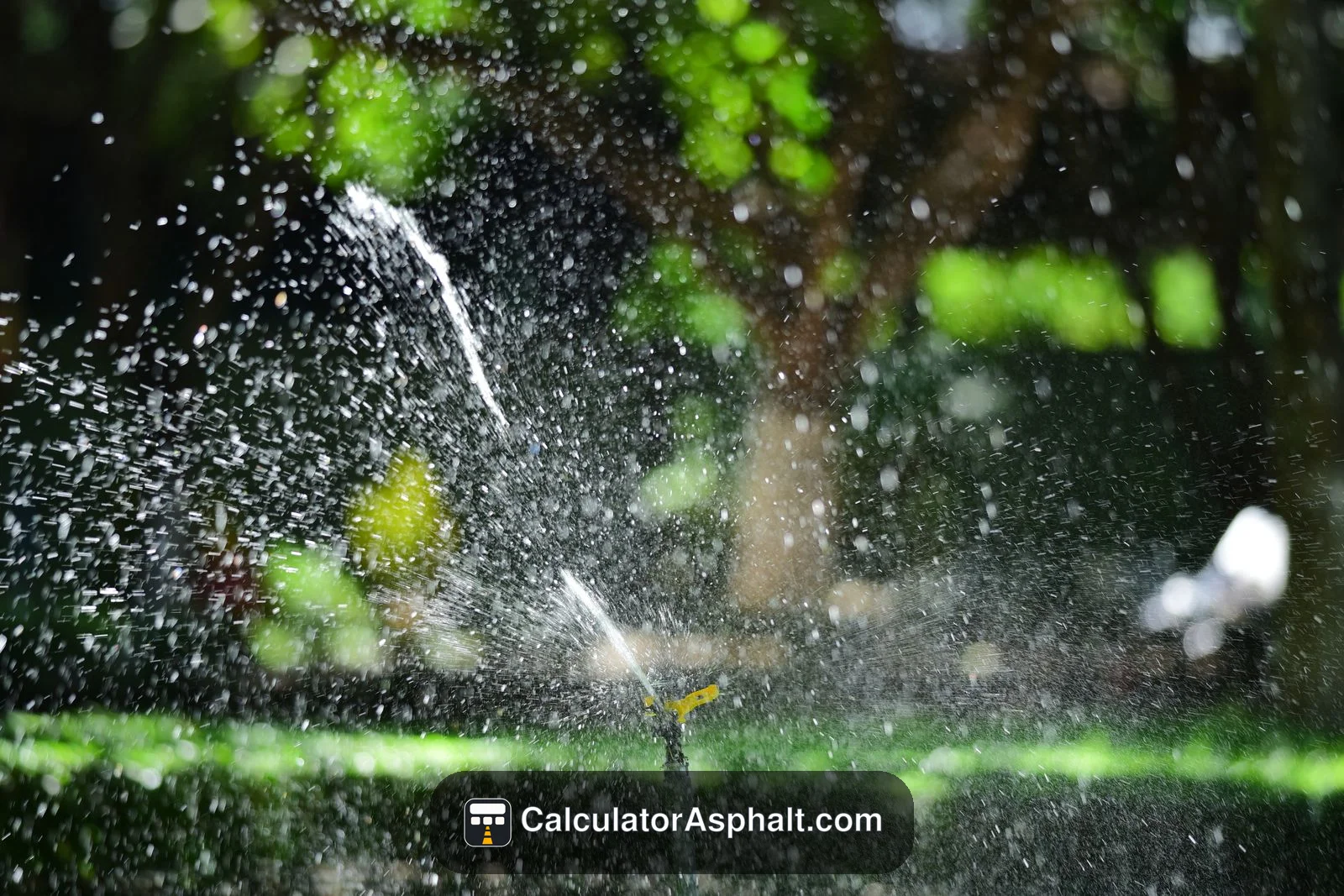
A garden watered from a single zone has two kinds of plants: the ones getting too much water and the ones getting too little. The lawn wants a lot of water, delivered quickly over a large area. The flower beds want a little, delivered slowly at the roots. The vegetable patch wants something in between. One timer setting cannot serve all three, so half the garden pays for it.
The fix is zoning: split the garden into groups that want the same amount of water, delivered the same way, and water each group on its own schedule. Zoning is decided by two numbers — flow and pressure — measured at the tap before anything is bought.
The decision first: measure flow, then draw zones
Everything in irrigation starts at the tap, and the tap has two numbers that decide what is possible. The first is flow: how many gallons per minute the tap can deliver. The second is pressure: how hard the water pushes, in pounds per square inch. Flow decides how many emitters can run at once; pressure decides whether the emitters at the far end get any water at all.
Measure flow with a bucket: put a five-gallon bucket under the tap, open it fully, and time the fill. Five gallons in 30 seconds means 10 gallons per minute, because 5 gallons in half a minute doubles to 10 in a full minute. Five gallons in 60 seconds means 5. Test with nothing else running, and do it twice.
Measure pressure with a gauge that screws onto the tap. Most homes read 40 to 60 pounds per square inch. Spray heads want 30 to 40 at the head. Drip emitters want 20 to 30, and need a pressure regulator to bring household pressure down to that range. Below 30, spray heads throw short and leave dry rings; above 60, drip emitters blow off without a regulator.
Zones: group plants by thirst, not by location
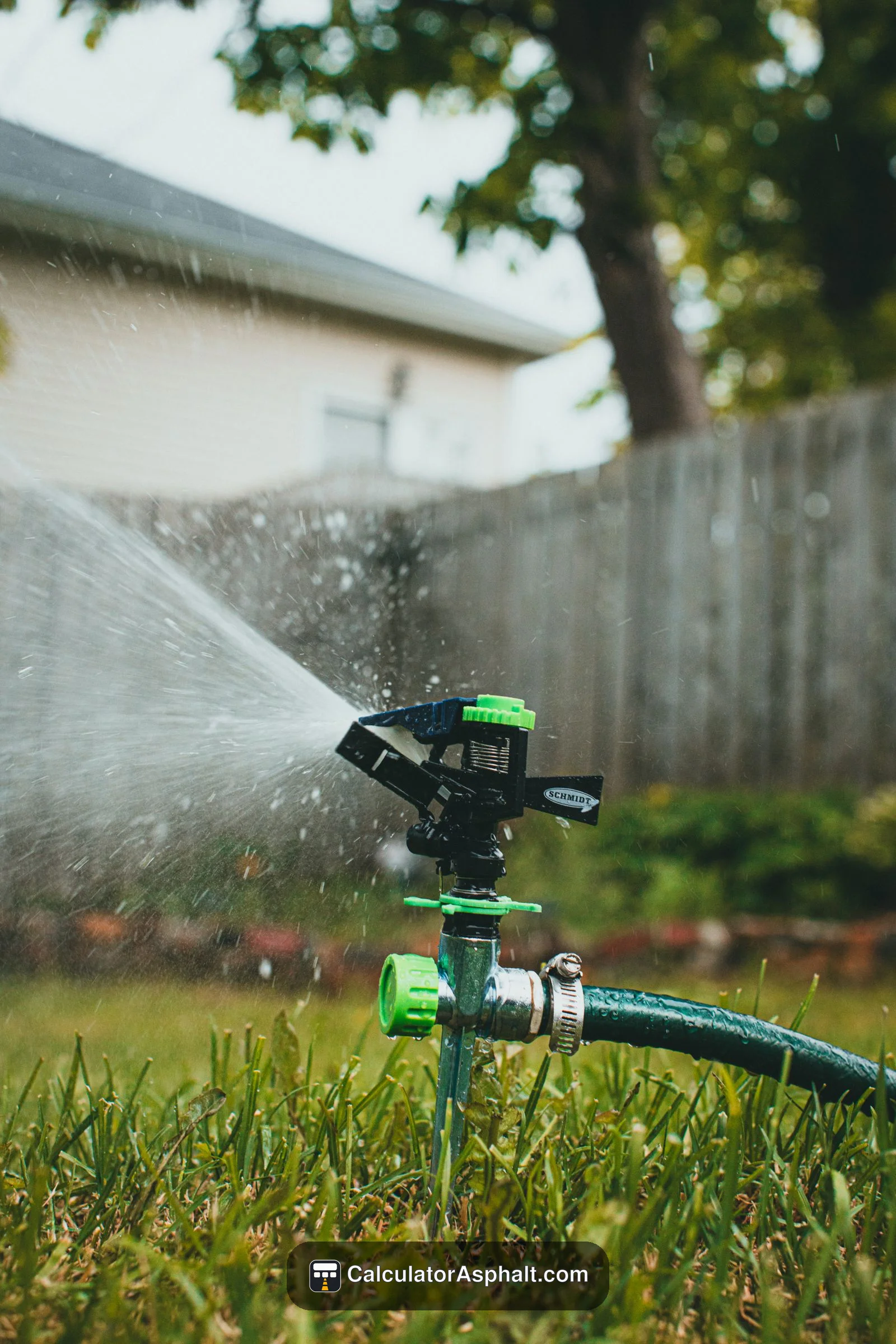
A zone is a group of emitters on one valve, running on one schedule, grouped by thirst, not geography. The lawn is one zone: all of it wants the same depth of water on the same days. The flower beds are another: less water, delivered slowly. The vegetable patch is a third: steady moisture at the roots, nothing on the leaves.
Mixing thirsts in one zone is the classic beginner error. Put spray heads and drip emitters on the same valve, and the sprays will drown the flower beds before the drip lines have delivered enough to the vegetables. Put sun and shade in the same lawn zone, and the sunny half dries out while the shady half stays soggy. Group by water need.
The second grouping rule is flow: a zone must not ask for more water than the tap can deliver. Add up every emitter in the zone. Six spray heads at 1.5 gallons per minute each need 9 gallons per minute. If the tap delivers 10, that zone works, but only just — one gallon per minute of margin is not enough, because pressure drops when the washing machine runs. Split it in two, three heads each, and each zone needs 4.5 gallons per minute, leaving comfortable margin and steady pressure at the farthest head.
Drip or spray: choose by plant and pressure
Spray heads throw water through the air over a wide area, which suits lawns — but they lose water to wind and evaporation and wet leaves, which invites disease. Drip emitters release water slowly at the base of the plant, which suits beds, borders, and vegetables: they lose almost nothing to evaporation, and they keep leaves dry.
The choice is not about preference; it is about what the plant wants and what the pressure allows. Lawns need spray, because drip cannot cover a thousand square feet evenly. Beds need drip, because spray would waste water on the paths between plants. Never mix the two in one zone: spray and drip run on different schedules and different pressures.
Pressure decides the details. Drip emitters are rated in gallons per hour — typically 1 each. Twenty emitters at 1 gallon per hour need 20 gallons per hour, which is 0.33 gallons per minute, so a drip zone asks almost nothing of the tap. Spray heads are rated in gallons per minute, and a handful can use the whole tap — which is why spray zones stay small and drip zones can be generous.
Worked example: a first lawn and two beds
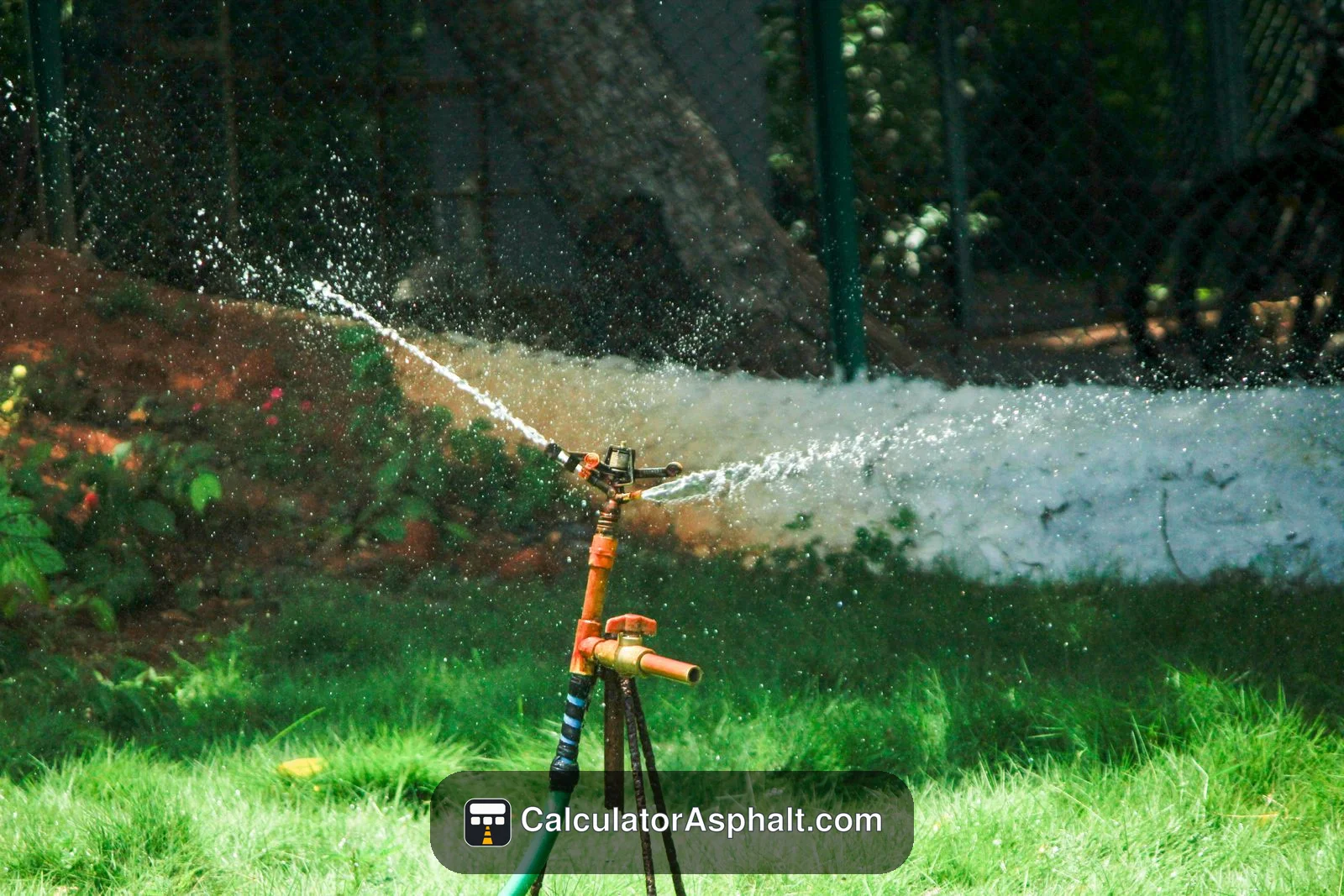
Take a 1,000-square-foot lawn, a flower bed, and a vegetable patch. The bucket test fills five gallons in 30 seconds, so the tap delivers 10 gallons per minute, and the pressure gauge reads 50 pounds per square inch.
Step 1: work out how much water the lawn needs. A lawn needs about one inch of water per week. One inch over one square foot is 0.623 gallons, because one inch over 144 square inches is 144 cubic inches, and a gallon holds 231 cubic inches. For 1,000 square feet, one inch per week is 1,000 × 0.623 = 623 gallons per week. Split into two waterings of half an inch, each is 623 ÷ 2 = 311.5 gallons.
Step 2: size the spray zones. Six spray heads at 1.5 gallons per minute each need 9 gallons per minute — nearly the whole tap, leaving one gallon per minute of margin, which is too tight. Split the lawn into two zones of three heads each. Each zone needs 3 × 1.5 = 4.5 gallons per minute, leaving 5.5 spare and keeping the pressure steady. Each zone runs 311.5 ÷ 2 = 155.75 gallons per watering, taking 155.75 ÷ 4.5 = 34.6 minutes, or about 35 minutes per zone.
Step 3: size the drip zones. The flower bed has 20 emitters at 1 gallon per hour each — 20 gallons per hour, or 0.33 gallons per minute. The vegetable patch has 30 emitters at 1 gallon per hour — 30 gallons per hour, or 0.5 gallons per minute. Together they need 0.33 + 0.5 = 0.83 gallons per minute, less than a tenth of the tap.
Step 4: set the schedules. The lawn zones run twice a week for 35 minutes each, half an inch each time. The flower bed runs three times a week for 20 minutes, and the vegetable patch every other day for 30 minutes.
Step 5: check the pressure. The spray heads want 30 to 40 pounds per square inch at the head, and the tap delivers 50. The drop through the pipes and valves brings the farthest head into range, so no regulator is needed on the spray zones. The drip zones need a regulator to bring 50 down to 25, because drip emitters at household pressure blow off their fittings.
Decision table: zone designs for a 10-gallon-per-minute tap
| Garden | Zones | Flow per zone | Schedule | Verdict |
|---|---|---|---|---|
| 1,000 sq ft lawn, 6 spray heads | 1 zone, all 6 heads | 9 gpm | Twice a week, 35 min | Works, but 1 gpm margin is too tight |
| Same lawn, 6 spray heads | 2 zones, 3 heads each | 4.5 gpm | Twice a week, 35 min per zone | Works: steady pressure, room to spare |
| Flower bed, 20 drip emitters | 1 drip zone | 0.33 gpm | Three times a week, 20 min | Works: barely touches the tap |
| Vegetable patch, 30 drip emitters | 1 drip zone | 0.5 gpm | Every other day, 30 min | Works: steady moisture, dry leaves |
| Everything on one valve | 1 zone, spray plus drip | 9.8 gpm | One schedule for all | Fails: beds drown, lawn thirsts |
Small spray zones, generous drip zones. Never mix spray and drip on one valve, and never let a spray zone use more than two-thirds of the tap's flow — the margin keeps the farthest head spraying properly.
Where irrigation plans go wrong
Skipping the bucket test. Guessing the flow is the most common error, and it makes every later number wrong. A tap that delivers 5 gallons per minute cannot run six spray heads, and no timer adjustment fixes that. Five gallons and a stopwatch take two minutes and settle the question.
Putting spray and drip on one valve. Spray needs half an inch in 35 minutes; drip needs a slow soak over hours. One schedule cannot deliver both, so the beds drown or the lawn dries out. Separate valves cost little; a drowned flower bed costs the whole bed.
Running zones too often and too briefly. Ten minutes every day wets the top inch of soil and teaches roots to stay shallow, which makes the lawn thirstier, not healthier. Water less often and deeper: half an inch twice a week beats a daily sprinkle, because deep water grows deep roots.
Ignoring pressure drop. Pressure falls along a long pipe run, and the last head gets less than the first. If the far corner stays dry while the near corner is soggy, the zone is too long or too full. Shorten it or split it, and the far head recovers.
Field checklist: before you buy a valve
- Bucket test done twice, flow written down
- Pressure reading taken at the tap, nothing else running
- Garden grouped by thirst: lawn, beds, vegetables listed separately
- Every emitter counted, each zone's total flow added up
- No spray zone above two-thirds of the tap's flow
- Spray and drip on separate valves
- Pressure regulator planned for each drip zone
- Schedule written per zone: days and minutes per run
- Farthest head checked after the first full run
Mistakes that cost a garden
The most expensive mistake is buying the whole system before the bucket test and discovering the tap cannot run it. The second is mixing spray and drip on one valve, which drowns the beds while the lawn stays thirsty. The third is watering ten minutes every day, which grows shallow roots and a lawn that needs more water every year. The fourth is a spray zone with no margin, so the farthest head throws short. Every one is a planning mistake, fixed by measuring the tap and grouping the plants before buying a valve.
Frequently asked questions
How do I know if my tap delivers enough for spray heads?
Five gallons in 30 seconds is 10 gallons per minute, which runs two small spray zones comfortably. Five gallons in 60 seconds is 5, which runs one small zone of three heads. Less than that, and drip is the better choice for most of the garden.
Why do my drip emitters keep popping off?
Pressure. Household pressure of 50 pounds per square inch is twice what drip emitters want, so fit a regulator at the drip valve to bring it down to 25. Without one, the first emitter on the line takes the full pressure and blows off.
How deep should I water the lawn?
Half an inch per watering, twice a week, is the usual target — one inch per week in total. Half an inch soaks several inches into the soil and grows deep roots. A daily sprinkle wets the top inch only, and the roots stay shallow and thirsty.
Can I run drip and spray at the same time?
Only on separate valves with separate schedules. They can share the tap, because drip uses so little flow, but they must never share a valve or a timer setting. Spray runs 35 minutes twice a week; drip runs longer, slower, and on different days.