A tiny garage feels impossible. The car barely fits, the clutter takes the rest, and every storage idea costs money the budget does not have. So nothing changes, and the garage stays a room you cannot use. That is the trap. A tiny garage does not need new storage. It needs the clutter moved, stacked, and thinned out, and all three of those are free. This guide is for the renter and the small-space owner with almost no budget, and it makes one promise: free fixes first, and the tiny garage gets usable without spending anything.
The fix is three free moves in one afternoon: hang twelve items on the wall, stack eight boxes two high, and move six items out. This guide works through one example with real arithmetic, compares free fixes with bought storage, and gives a step-by-step plan for freeing twenty-nine square feet of floor in ninety-five minutes.
The decision first
Fix the tiny garage with what you already have before you spend anything. Hang what can hang, stack what can stack, and move out what does not belong. A tiny garage has no room for storage products, because storage products take up the floor they are meant to clear. Free fixes use the walls and the air above the floor, and the floor comes back.
Why a tiny garage feels impossible
A tiny garage feels impossible because every square foot is already taken. The car takes ninety square feet, the clutter takes forty-five, and the walkway takes whatever is left: nothing. There is nowhere to put anything, so nothing moves, and the clutter stays where it fell. The garage feels full, and a full garage feels like it needs a bigger garage, not a better arrangement.
The second reason is that small spaces punish big buys. A shelving unit in a tiny garage takes ten square feet of floor to hold twenty square feet of things. A bin takes a square foot to hold a square foot of clutter, and the garage gains nothing. In a tiny garage, bought storage is a trade, not a gain: floor for storage, and the floor is what you needed.
Worked example: one tiny garage, twenty-nine square feet freed
Every number here comes from the assumptions below, and every step shows its arithmetic. Measure your own garage before you start.
Assumptions: a garage 10 ft by 18 ft, with a car parked inside. The floor holds 45 sq ft of clutter. Hanging, stacking, and moving out are all free. These are assumptions, not facts about your garage.
The garage: one hundred eighty square feet, ninety for the car
The garage is 10 ft x 18 ft = 180 sq ft. The car is 6 ft wide and 15 ft long, so it takes 6 x 15 = 90 sq ft. The car leaves 180 – 90 = 90 sq ft of floor, and the clutter takes 45 sq ft of it, which is half the free floor. The walkway takes the rest, which is why there is no walkway. The numbers say the garage is not too small. The clutter is too big, and the clutter can shrink for free.
The hang: twelve items, twelve square feet freed
Twelve items can hang on the wall: tools, hoses, cords, and anything with a handle or a hook. Each one takes about 1 sq ft of floor, so hanging twelve frees 12 x 1 = 12 sq ft. The wall was holding nothing, and now it holds twelve items, and the floor holds twelve square feet less clutter. Hanging takes thirty minutes, and it needs nothing but nails or hooks already in the house. A wall that holds twelve items is a wall that earns its keep.
The stack: eight boxes, eight square feet freed
Eight boxes sit on the floor in a single layer, each taking 2 sq ft, so they cover 8 x 2 = 16 sq ft. Stacked two high, they form four stacks of 2 sq ft each, covering 4 x 2 = 8 sq ft. The floor freed is 16 – 8 = 8 sq ft, won back by lifting four boxes onto four others. Stacking takes ten minutes, and it needs nothing but the boxes themselves. A stack two high is stable, and a stack two high is enough.
The move-out: six items, nine square feet freed, ninety-five minutes in all
Six items do not belong in the garage at all: broken things, doubled things, and things that belong in another room. Each one takes about 1.5 sq ft of floor, so moving six out frees 6 x 1.5 = 9 sq ft. Add the three moves together: 12 + 8 + 9 = 29 sq ft freed, and the clutter left is 45 – 29 = 16 sq ft, which is a third of what it was. The walkway comes back too: 3 ft wide and 10 ft long, which is 3 x 10 = 30 sq ft of clear floor to walk on. The time is 45 minutes sorting, 30 minutes hanging, and 20 minutes stacking and moving, which is 45 + 30 + 20 = 95 minutes, or 1 hour and 35 minutes. Ninety-five minutes, no spending, and a garage you can walk through.
Free fixes or bought storage
The choice is not which one looks better. It is which one a tiny garage can afford.
| Choice | What happens | Best for | Watch out for |
|---|---|---|---|
| Hang, stack, and move out | Twenty-nine square feet freed, and the floor comes back | Every tiny garage, and every garage with no budget | The wall must take hooks, and the stacks must stay two high |
| Bought shelving unit | A unit that holds things neatly and takes ten square feet of floor | A garage with floor to spare | A tiny garage has no floor to spare, and the unit trades floor for storage |
| Bought bins | Matching containers that stack neatly | Keepers that are genuinely worth protecting | A bin takes a square foot to hold a square foot, and the garage gains nothing |
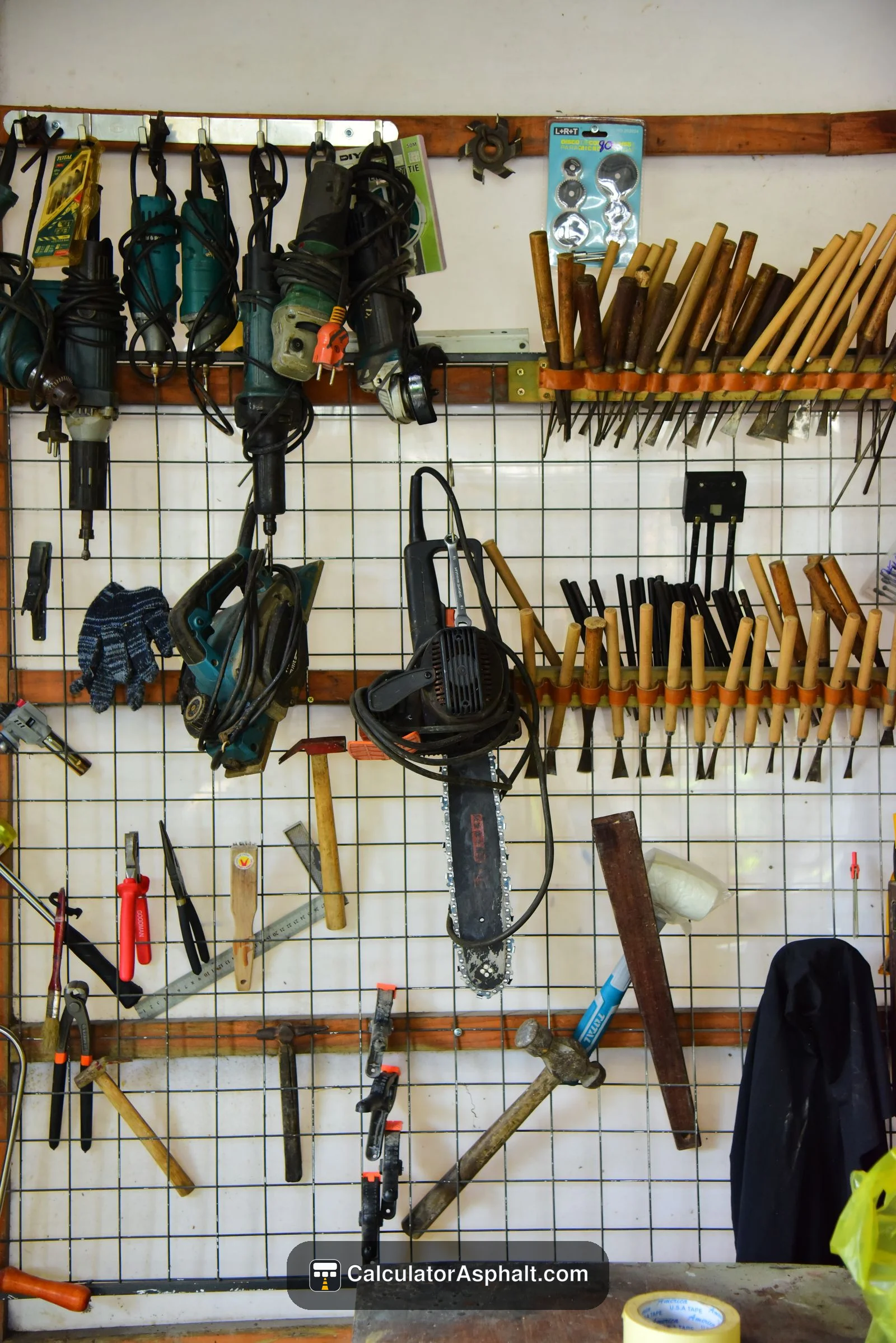
| Wall hooks you own | Twelve items off the floor and onto the wall | Tools, hoses, cords, and anything with a handle | Hooks must be fixed solidly, and heavy items go low |
| Moving things out | Six items leave the garage, and nine square feet come back | Anything broken, doubled, or belonging in another room | Things moved to another room become clutter there, so sort honestly |
The right answer is free fixes first, and bought storage later, only if the free fixes leave a keeper that still needs a home. Hang, stack, move out, and then look at what is left.
How to fix a tiny garage for free
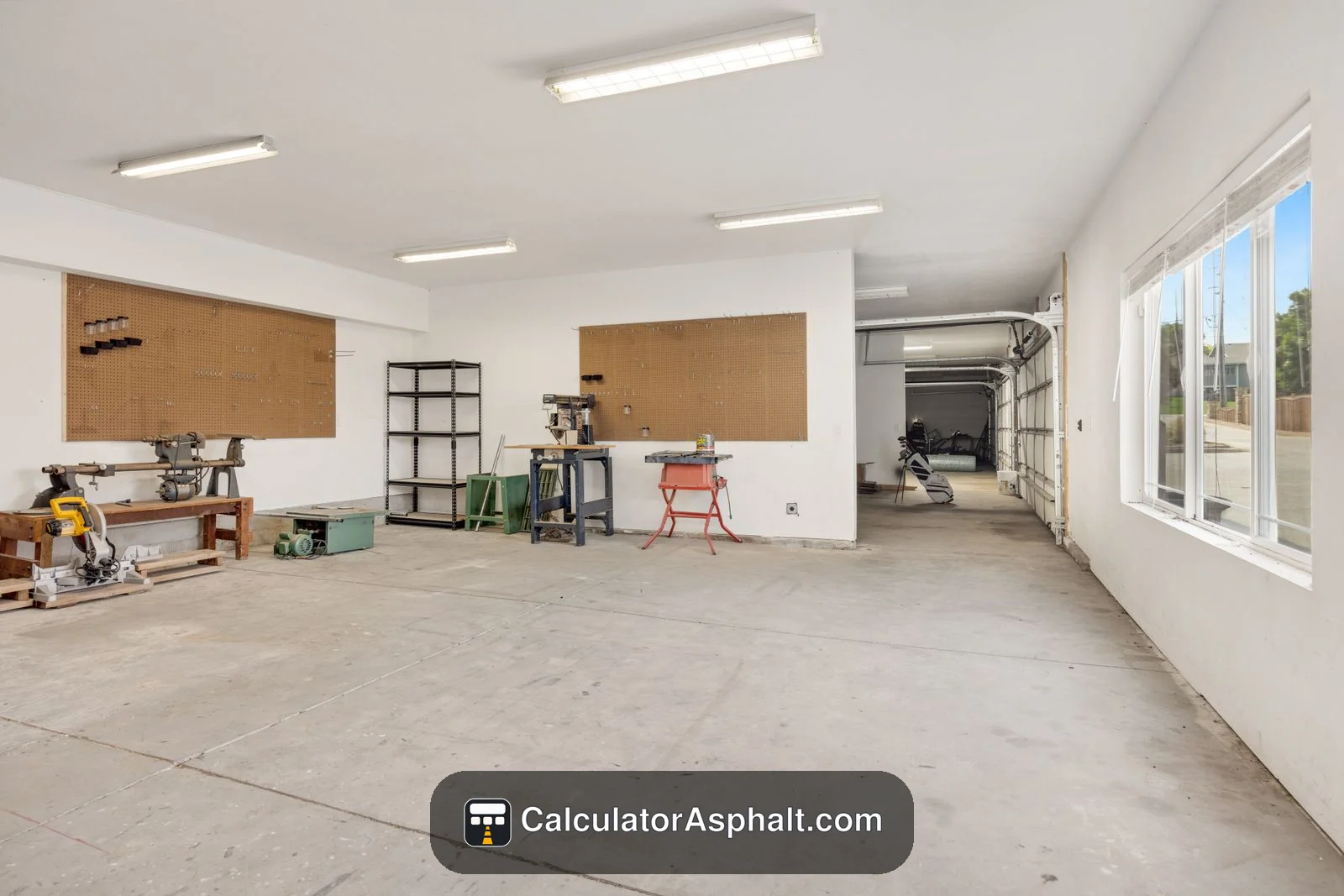
Start by pulling the clutter into the middle, not by shopping. Lay everything where you can see it, and sort into three piles: hang, stack, and out. Hang is anything with a handle or a hook. Stack is anything in a box. Out is anything broken, doubled, or belonging in another room. Forty-five minutes, no second thoughts, and no maybe pile.
Hang next, because the wall is free. Fix hooks or nails, and hang the twelve items at a height you can reach. Heavy items go low, light items go high, and nothing hangs above the car where it can fall on it.
Stack next, because the air above the floor is free. Eight boxes become four stacks of two, heaviest at the bottom, lightest on top, and every stack on a flat bit of floor where it cannot be knocked over. Two high is the rule, and a stable stack beats a tall one every time.
Move out last, because the door is free. Six items leave the garage in one trip: broken things to the bin, doubled things to a friend, and things that belong indoors to their proper room. A bag left by the door is clutter with a nicer name.
Field checklist: before you spend anything
Use this checklist in order.
- Measure the garage, and write down the length, the width, and the car space.
- Count the clutter on the floor, and write the number down.
- Sort everything into hang, stack, and out, and count each pile.
- Hang the twelve items on the wall, heavy low and light high.
- Stack the eight boxes two high, heaviest at the bottom.
- Move the six out items out the same day, in one trip.
- Check the freed floor: walk the space the clutter used to cover.
- Mark the walkway: three feet wide, from the door to the car.
- Check every stack is stable, and no item hangs above the car.
- Agree the rule with everyone in the house: a thing goes back on its hook or in its stack.
Mistakes that shrink a tiny garage
Buying storage first is the first mistake. A shelving unit takes ten square feet of floor in a garage that has ninety, and the garage loses a tenth of its floor to hold things that were already there. Free fixes first, bought storage later, if at all.
Hanging heavy items high is the second mistake. A heavy item hung above eye level falls on your head when the hook slips, and in a tiny garage there is nowhere to dodge. Heavy goes low, every time.
Stacking three high is the third mistake. A stack of three boxes falls over, and in a tiny garage it falls on the car. Two high is enough, and a stable stack beats a tall one every time.
Keeping a maybe pile is the fourth mistake. A maybe pile is clutter with a nicer name, and it takes up the same floor. Every item is hang, stack, or out. There is no fourth pile.
Leaving the out pile by the door is the fifth mistake. A pile by the door is a delivery waiting to happen. A pile in the corner is storage, and it will still be there in six months. Take it out the same day.
Frequently asked questions
What if I rent and cannot fix hooks to the wall?
Use what the wall already offers. Nails in existing holes, hooks over the top of a door, and freestanding racks that lean on the wall all hang things without new fixings. If the wall truly takes nothing, stack higher on the floor and move more out: the arithmetic still works, because the move-out is the biggest free win.
What if the garage is smaller than ten by eighteen?
The numbers scale down, and the moves stay the same. A garage half the size holds half the clutter, and hanging six items still frees six square feet. Measure your own garage, count your own clutter, and run the same three moves. The walkway shrinks too, but it is still there.
What if the car does not fit with the clutter gone?
Then the clutter was never the problem, and the garage is too small for the car. That is a different problem, and it is answered by parking outside, not by storage. But check first: twenty-nine square feet freed is often the difference between a car that fits and a car that does not.
How do I keep a tiny garage usable?
Check it once a month, for five minutes. A thing off its hook goes back, a stack that leans gets rebuilt, and anything new gets sorted the day it arrives. A tiny garage checked monthly stays usable, and a tiny garage checked never fills up again.