Start with the one view you see when you enter the room. Preserve the route from the door to the bed.
Style it from the room’s main view
Put the first design on the side of the room that guests see on arrival. Photograph it from the doorway and from a regular chair. Check whether the most important color or shape still reads when the lights are used normally. Take a second photo with one item removed. A decoration that makes little difference from either view is a good candidate to leave in storage.
Layout 1: Textiles with one repeated color
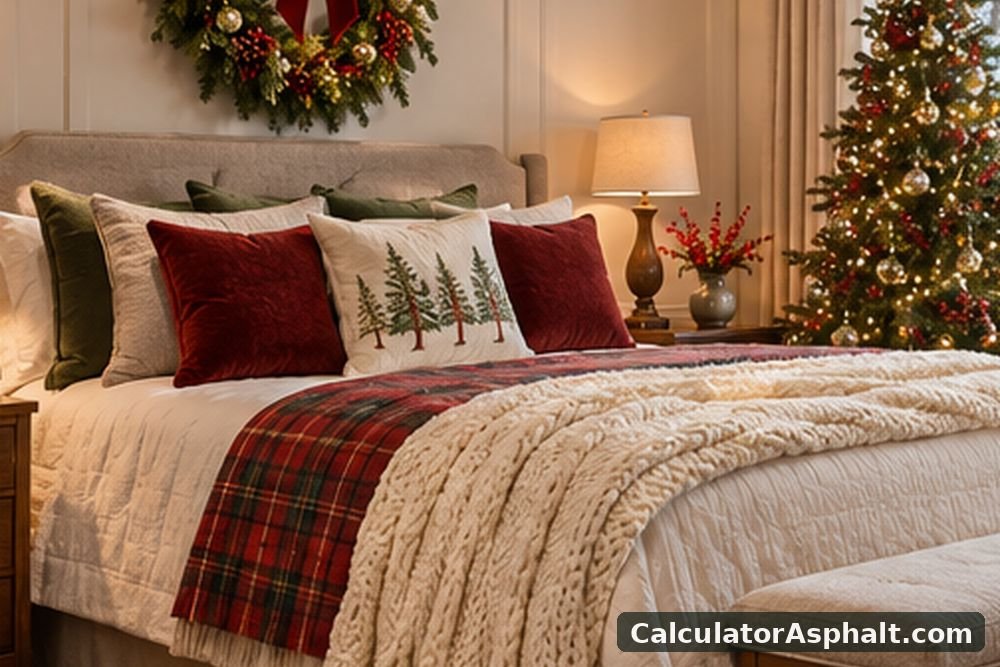
Repeat a pillow or throw color in a small accent by the window.
Layout 2: A compact bedside scene

Use one removable group that leaves the lamp and daily essentials accessible.
Work through the dimensions
A 16-inch bedside surface with an 8-inch accent can reserve half its width for ordinary use, subject to the depth of both items.
Try the spot during an ordinary evening before fixing the arrangement. Put everyday objects where they usually go and walk through the room carrying something. Relocate anything that competes with needed circulation or the furniture you use. Write down the one or two pieces you plan to keep and measure their actual footprint. Check what can be stored in the same container at the end of the season.
Make a layout worth keeping
Measure the selected visual area, the display footprint and the approach. Plan for ordinary room use and the way pieces will be stored. Keep decoration compatible with the surfaces and away from active heat or any appliance clearance.
Open the project checklist
- Measure the full size or usable footprint before choosing components.
- Review the options from the usual viewing position or test the final thumbnail.
- Write down the quantities and the first thing to test using the example above.
- Make one complete mock-up before buying additional materials.