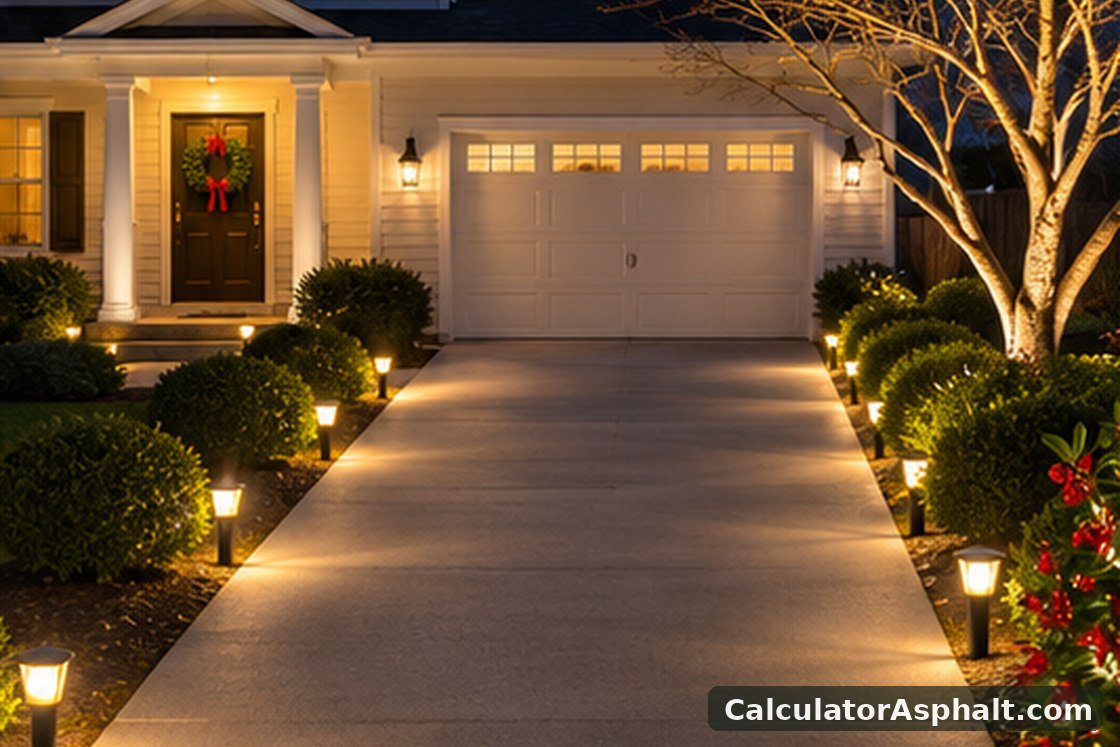
A runway look starts with rhythm and a clear drive. Choose where lights should appear from the street, then use the paving edge and planting to keep the display out of vehicle movements.
Check the approach first
Mark the tire sweep, the garage approach and any place a door opens beside the drive. Observe the entrance with the car parked in its regular position.
Choose one driveway edge and draw it from the point where the car first enters. A line that appears continuous from the street may break at the pedestrian crossing or garage approach. Treat these interruptions as usable space. Test the layout while standing at the approach and again from the parked driver's position.
Layout 1: One edge with a low rhythm

Layout 2: A bright entrance with a quiet middle
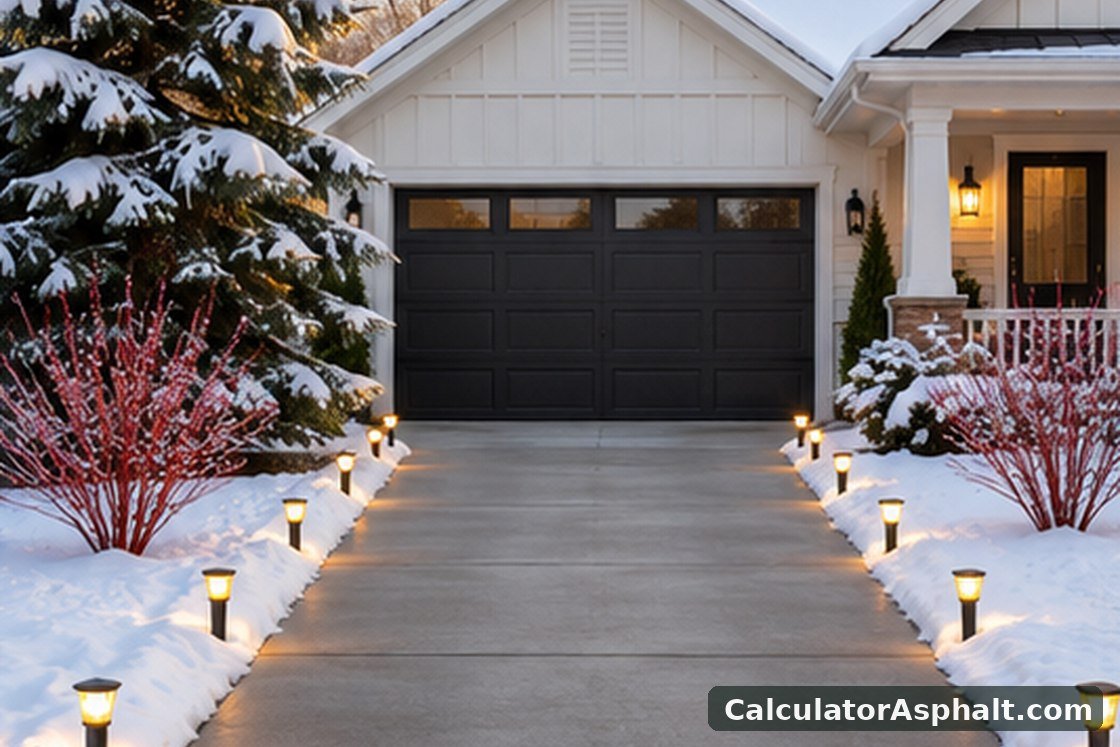
Layout 3: Paving beside a warm planted border
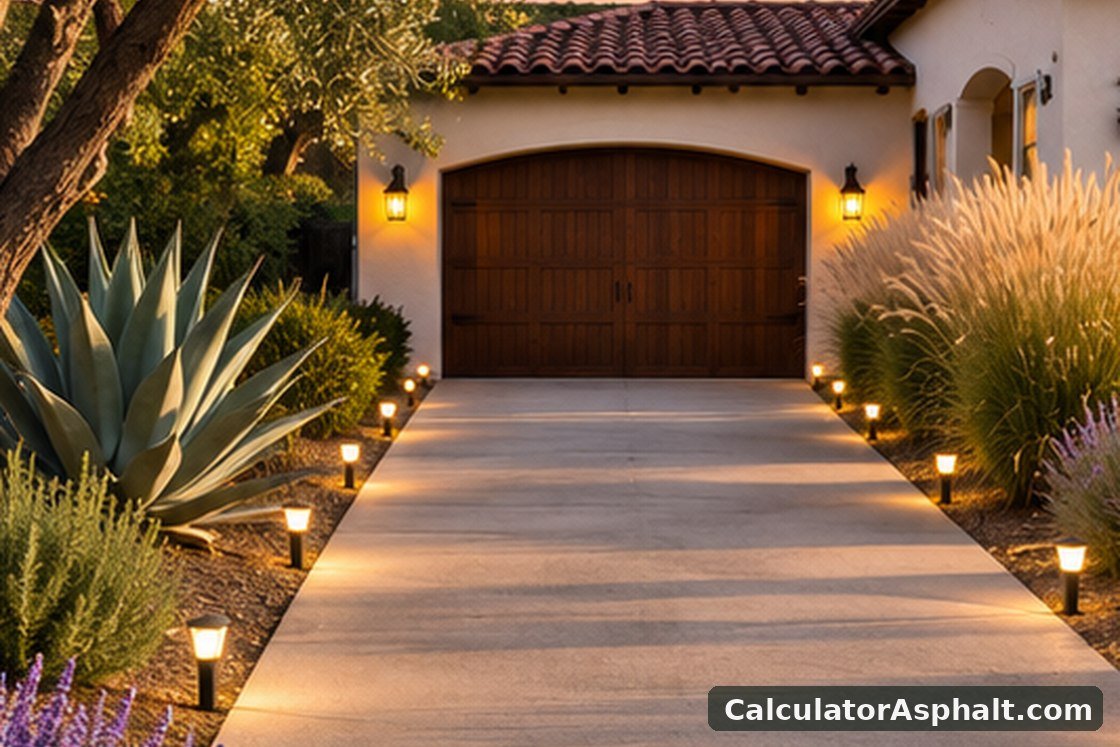
Choose the version that fits
A long straight driveway reads well with repeating low points along one edge. A short driveway often looks better with a strong entrance cue and a quiet middle. Keep year-round vehicle and pedestrian visibility in service.
Work through a measured example
On one straight 24-foot decorative edge, a paper sketch with 6 feet between four equal intervals gives five marker positions including the ends. Move the marks where they clash with paths or vehicles. The spacing illustrates layout math.
| Zone | Measurement | Check |
|---|---|---|
| Main feature | Lighted length | View from the usual approach |
| Transition | Length of each side separately | Walking or driving route |
| Secondary accent | Actual length or marker count | Visible impact compared with cost |
Put the plan to the test
Walk and drive the approach at normal speeds before decorating. From both directions, check whether the curb, visitor path and last turning point are still immediately visible.
On the sketch, mark the normal tire path, the open car-door footprint and the first place visitors transition to walking. Give each repeated point a number. Cross out positions that overlap driving or walking space and revise the spacing on paper. The strongest result may be fewer points closer to the naturally visible edge.
Should the two sides match?
Mock up one side first. Add the second only if it improves the view and leaves the full usable driving width clear.
Outdoor lighting safety
Use lights and accessories rated for outdoor use when the display is outdoors. Inspect the equipment for damage before use, follow product directions, and use GFCI protection for outdoor plug-in decorations. Keep cords and pieces out of driving and walking routes. Keep ordinary safety lighting and required access available.
Electrical Safety Foundation International outdoor decoration guidance
Calculators for related outdoor projects
These tools estimate landscaping and paving materials for a separate project. Use the measurements and product information above to plan the seasonal display.