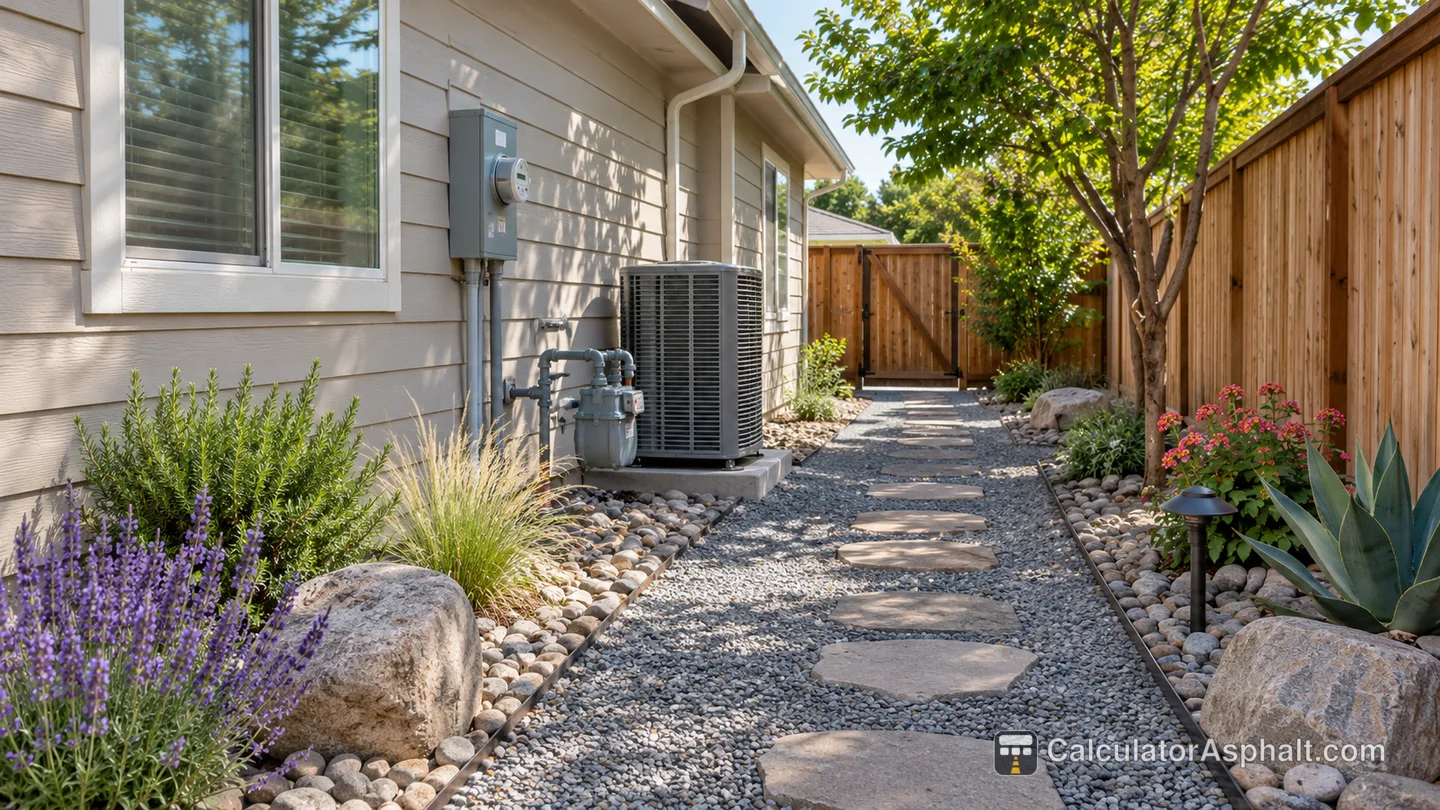
A side yard often needs to do several jobs in a tight space. It may carry trash bins, give access to utilities and collect runoff from the roof. Plan the open route first and place stone where it can stay contained. These seven layouts show how to use gravel or rock accents around a narrow access corridor. The images are AI-generated design illustrations.
Compare the options
1. Narrow angular gravel access strip
Use a clearly marked route for occasional foot traffic and choose an aggregate suited to the site and use. Angular crushed aggregate can interlock more than rounded stone. Loose material can still migrate or become difficult for small wheels. For an everyday route with a wheeled bin or mobility aid, consider a stable continuous surface.
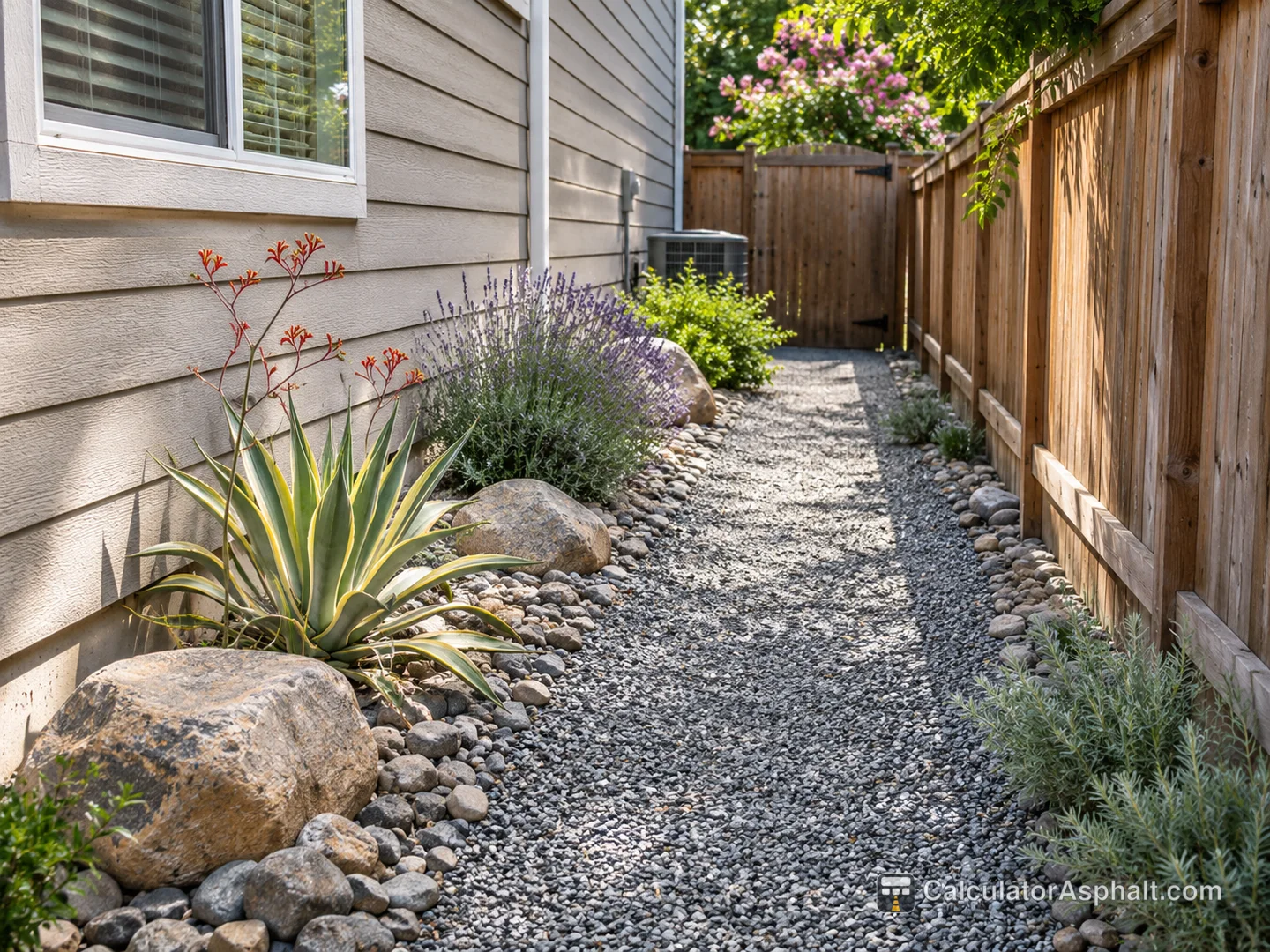
Compare the finished surface and underlying preparation separately. Sweep loose rock from the gate and check for ruts or pooling.
2. River rock accent bed off the path
Use rounded stone in a contained bed well outside the walking route. Combine one modest accent area with a simpler hard surface. Check whether roof runoff or a steep grade would move the stones before placing them. Leave room to reach walls and utility covers.
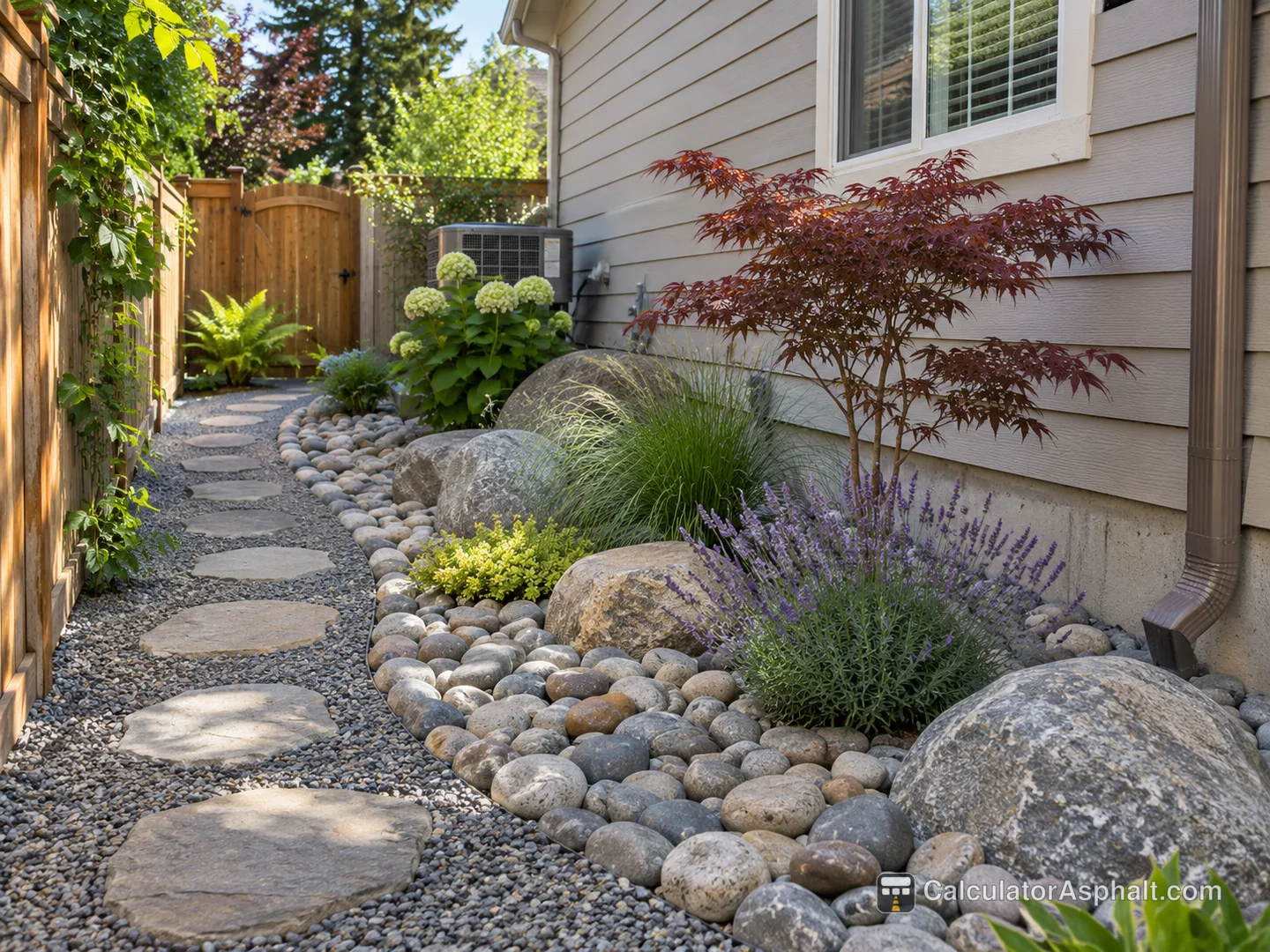
Price accent stone with any edging and delivery. Remove leaves and pull weeds while they are small. Sweep any stones that drift onto a firm route.
3. Planting pockets for dry spots
Break up a rock strip with small groups of climate-suitable plants. Match species to sun, soil, moisture and winter temperatures. Set plants back so mature growth does not close the access route. Check whether exposed rock will get hot enough to stress the chosen species.
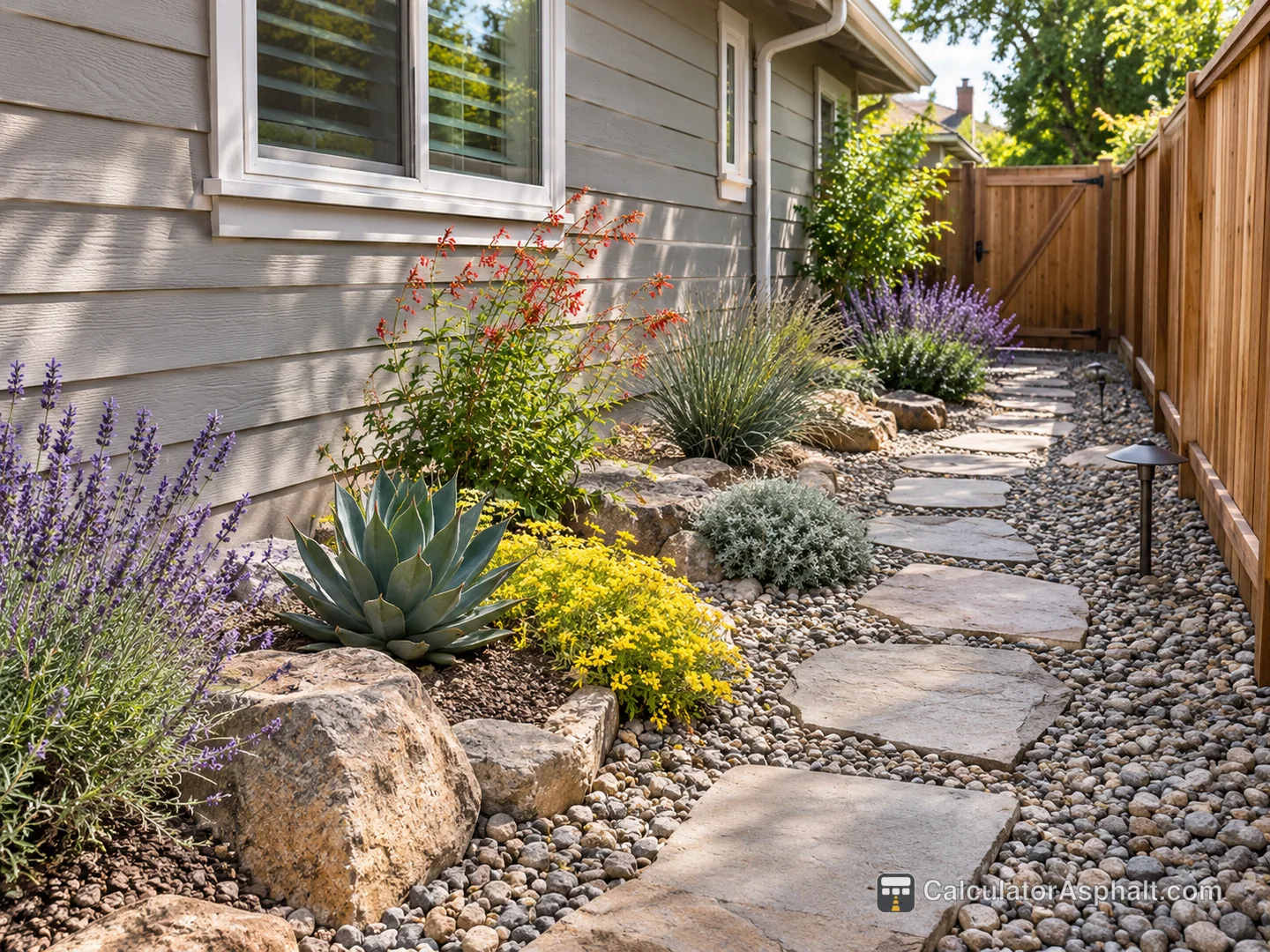
Plan for establishment watering and replacement. Keep soil conditions suitable for each plant and avoid burying crowns under stone.
4. Stable stepping slabs with a firm landing
Use supported slabs to mark a walking route where occasional stepping is practical. Use a continuous, even landing near the gate or service door where people need to stand or turn. Keep the slab tops stable and transitions even with the adjoining surfaces.
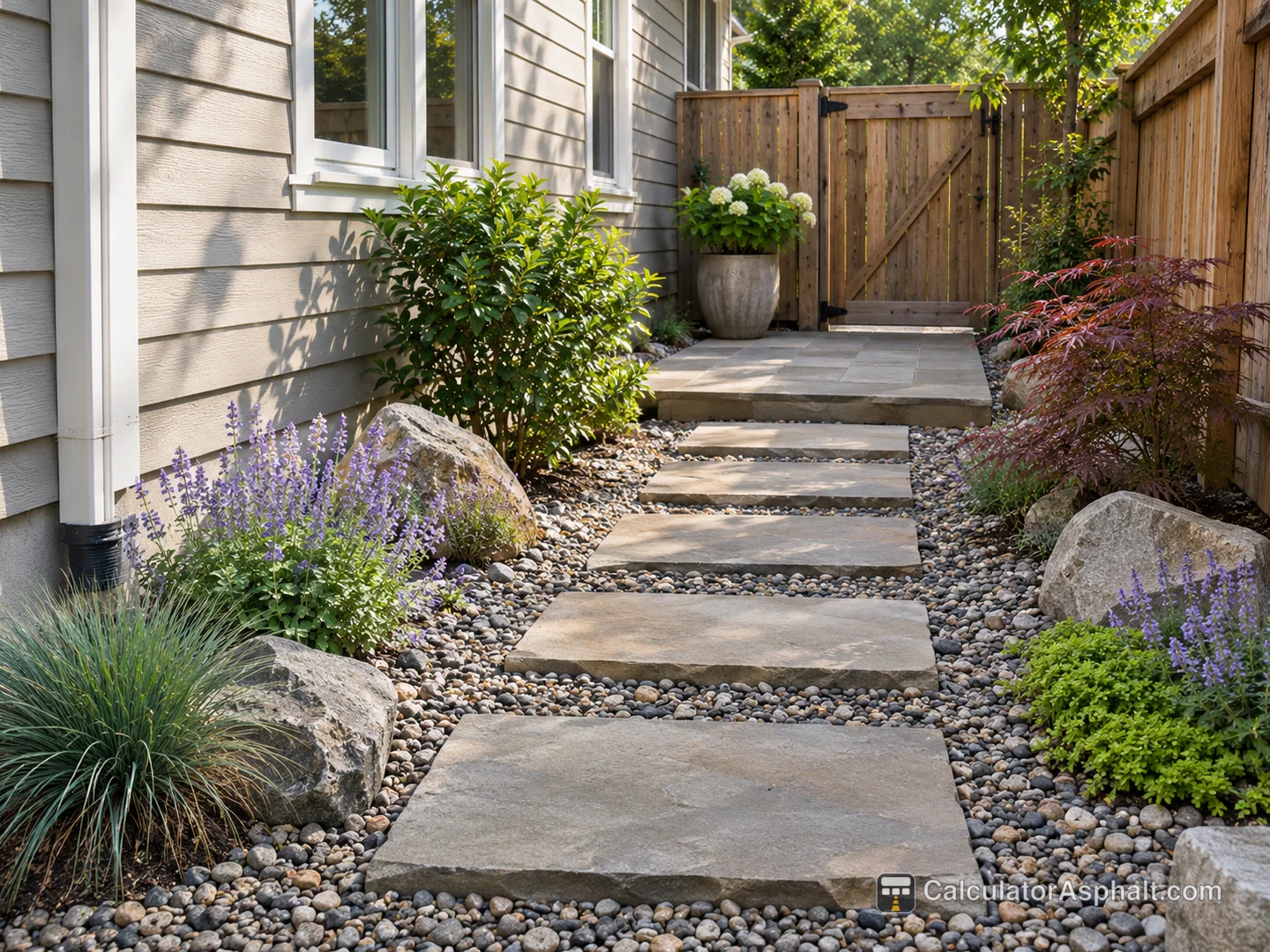
Estimate slabs, base and restraint separately from decorative stone. Check for rocking units after frost or heavy rain. For rolling equipment or mobility needs, compare a continuous firm path.
5. Two contrasting rock bands
A narrow dark accent next to a pale stone bed can define the limits of a garden or service zone. Use a divider where the aggregates would mix, and keep the accent out of walking and wheel paths. Avoid raising the dividing strip across a natural drainage route.
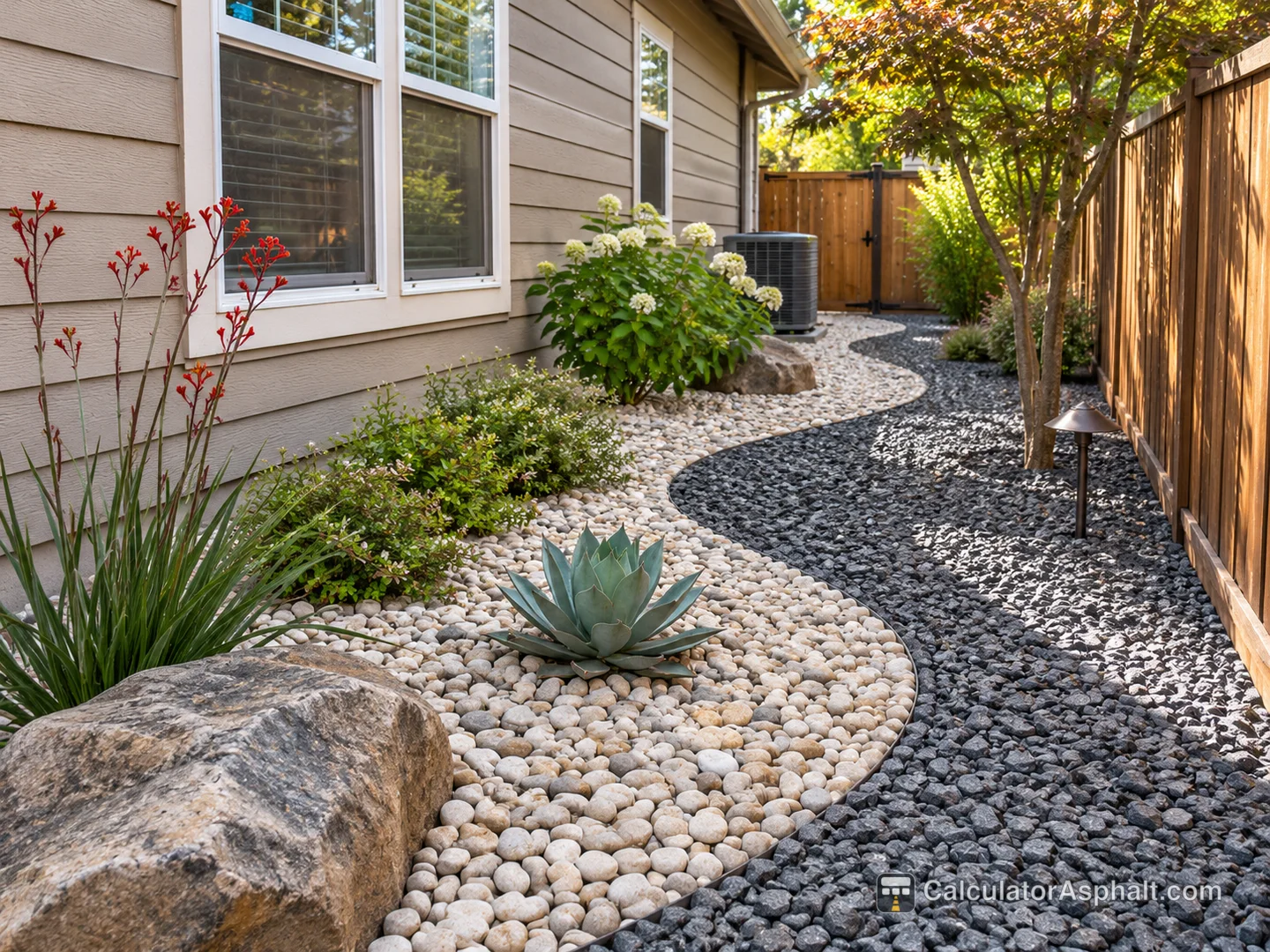
Order the two materials separately and confirm how the yard can receive them. Rake back stray stones and check that the separator remains stable.
6. Rock border along a fence with access clearance
Keep an open strip beside the fence for inspection and repairs. Use stone where it can be contained without leaning on fence boards or blocking a gate. Avoid burying timber or modifying ground levels against the fence without checking the materials and structure.
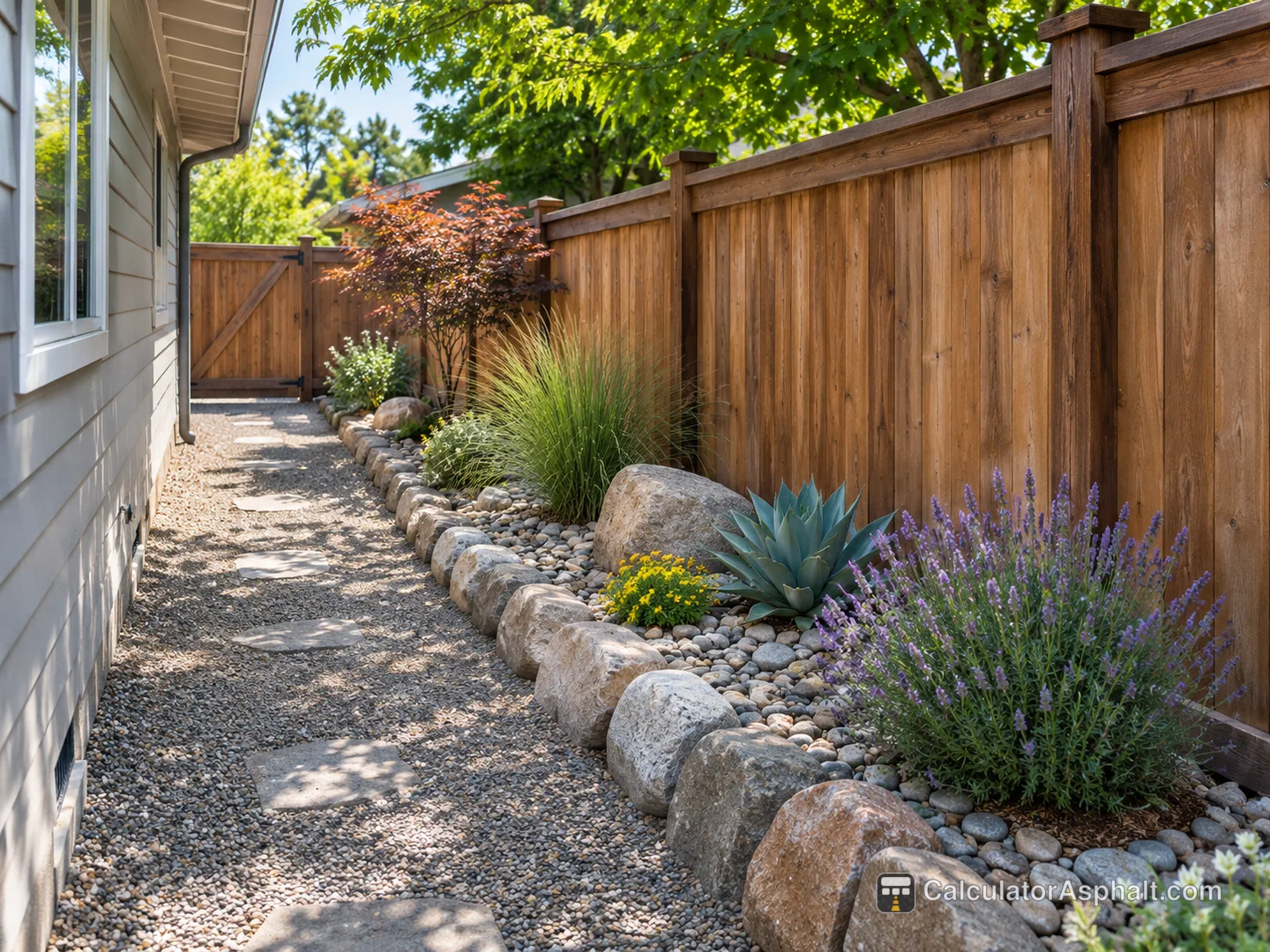
Compare a short, narrow band with filling the entire space. Keep repair access and remove leaf litter that collects along the boards.
7. A small service area with a hard standing surface
Reserve a stable surface where you place bins or stand at a utility access point. Use rock alongside that surface to define the boundary and leave space for doors and equipment access. Check the actual width required to move the largest object through the gate.
Price the solid standing surface and rock accent separately. Keep air-conditioning clearance and service access consistent with equipment and local requirements.
Choose the design that fits your site
| Layout | Purpose | Upkeep |
|---|---|---|
| Angular strip | Occasional foot access | Rake and correct ruts |
| River rock accent | Visual texture beyond the path | Remove leaves and stray rock |
| Planting pockets | Break up a stone surface | Water, prune, replace as needed |
| Stepping slabs | Mark an occasional route | Check for rocking or offsets |
| Contrasting bands | Define zones visually | Keep materials separated |
| Fence border | Frame the boundary | Clear litter and maintain access |
| Service standing area | Stability for equipment or bins | Sweep edges and keep access open |
Measure rock separately from the walking surface
An 18-by-2-foot example strip covers 36 square feet. At a hypothetical fill depth of 2 inches, it contains 6 cubic feet or about 0.22 cubic yard. Use the gravel calculator to estimate order weight using the selected material. Confirm depth, stone size and density with the supplier for your project.
Protect drainage and utility access
Observe the side yard after rain. Preserve appropriate drainage routes and maintain access to utilities and doors. Stone alone does not resolve standing water. Contact 811 before digging and arrange private locating where applicable. Ask a professional about recurring runoff near a foundation or work on an unstable slope.
Frequently asked questions
Are rounded rocks suitable as a main walking surface?
Rounded loose stones can shift underfoot. Use them in accent areas or consider a firm continuous route where footing and access are priorities.
What is the simplest way to maintain a narrow side yard?
Keep a generous clear route, choose a few compatible materials and pick plants that fit at maturity. Inspect the setup after storms and remove trapped debris.
Can I cover the full side yard with rock?
Assess access, runoff, equipment clearance and nearby plants first. A supportable walking surface and a limited accent strip can better match daily use.