A pea gravel patio can turn a small patch of yard into a place to sit. The rounded stones move under feet and furniture, so the layout needs an edge that contains them, a stable place for chairs and a plan for runoff. Compare these seven designs before pricing the stone. The images are AI-generated design illustrations.
7 Pea Gravel Patio Ideas for Budget Backyard Seating
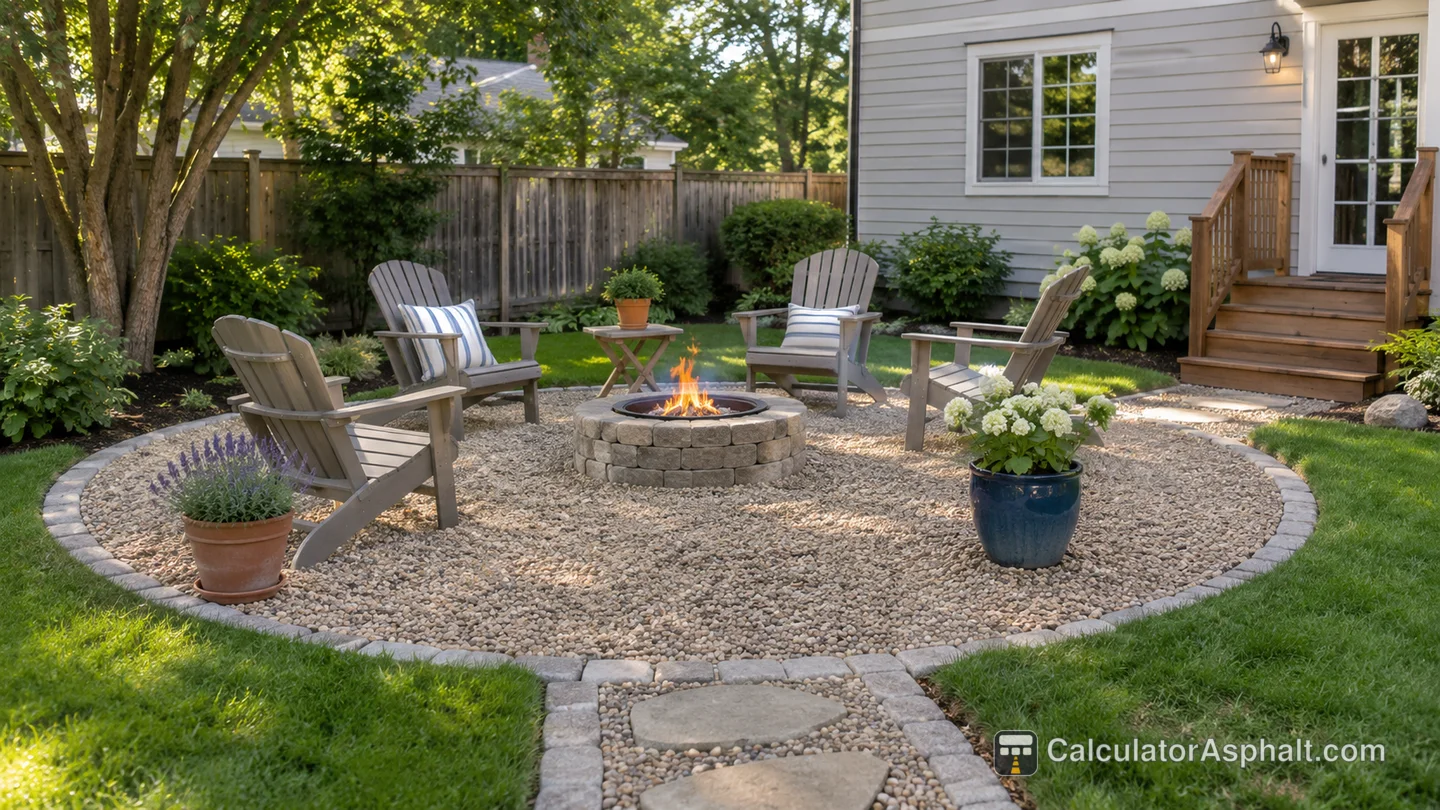
1. Round seating nook
Mark a circle where two or more chairs can face each other without blocking access. Use a border that follows the curve and ends cleanly at the entry. A shorter walk from the house may work better than a remote corner if you plan to carry food or drinks. Measure the circle before ordering and check how furniture feet behave on a small patch of the material.
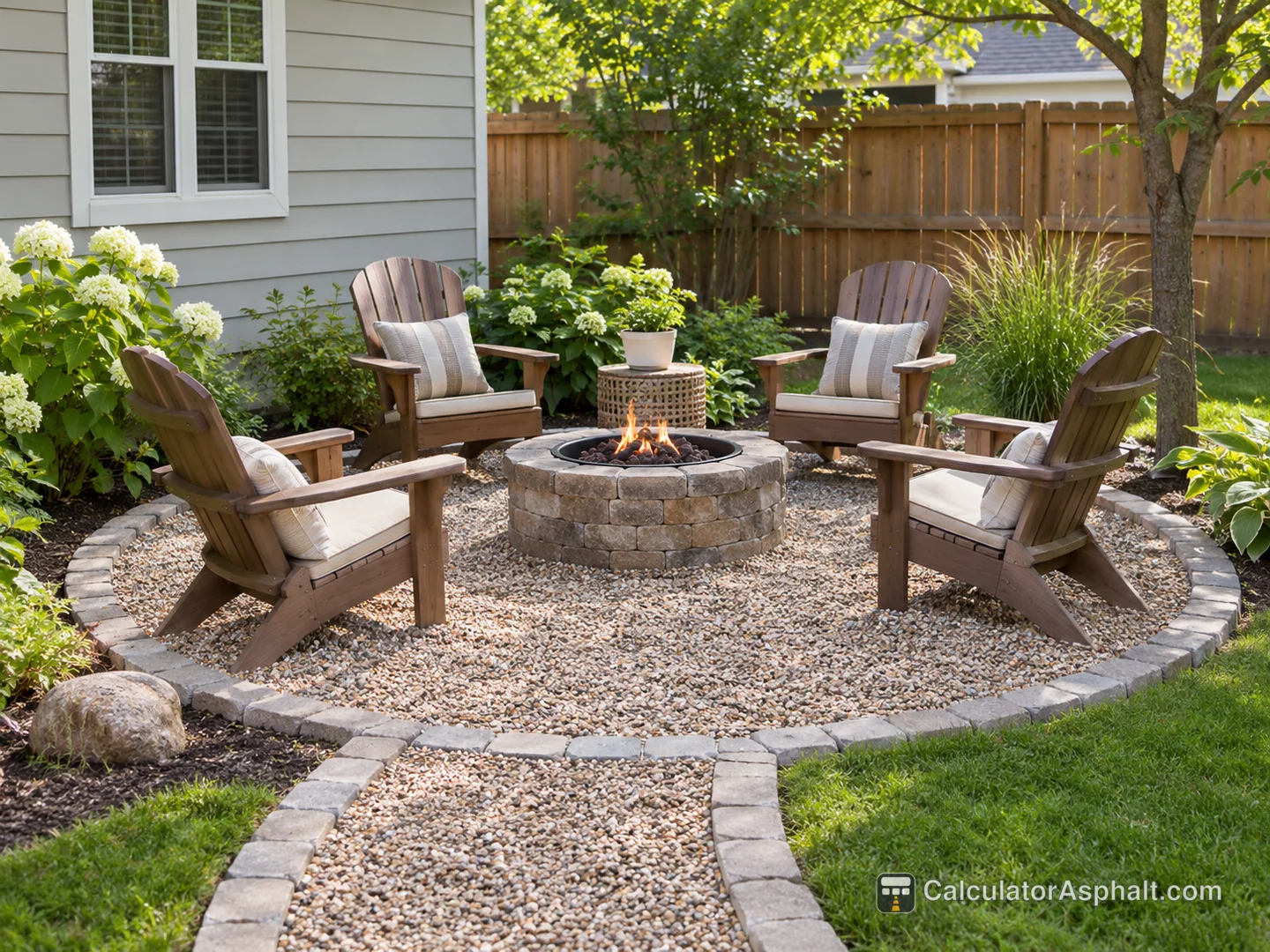
Allow for edging and its support as well as delivered gravel. Rake the gravel back from the entrance and check that the border stays even with the intended transition.
2. Rectangular dining zone
Lay out an imaginary table with chairs pulled out and leave a route to reach each seat. A rectangle makes the area and perimeter easier to estimate. Choose furniture with wide feet or put a stable landing under the pieces that shift. Check whether people can reach the table on a firm, even path.
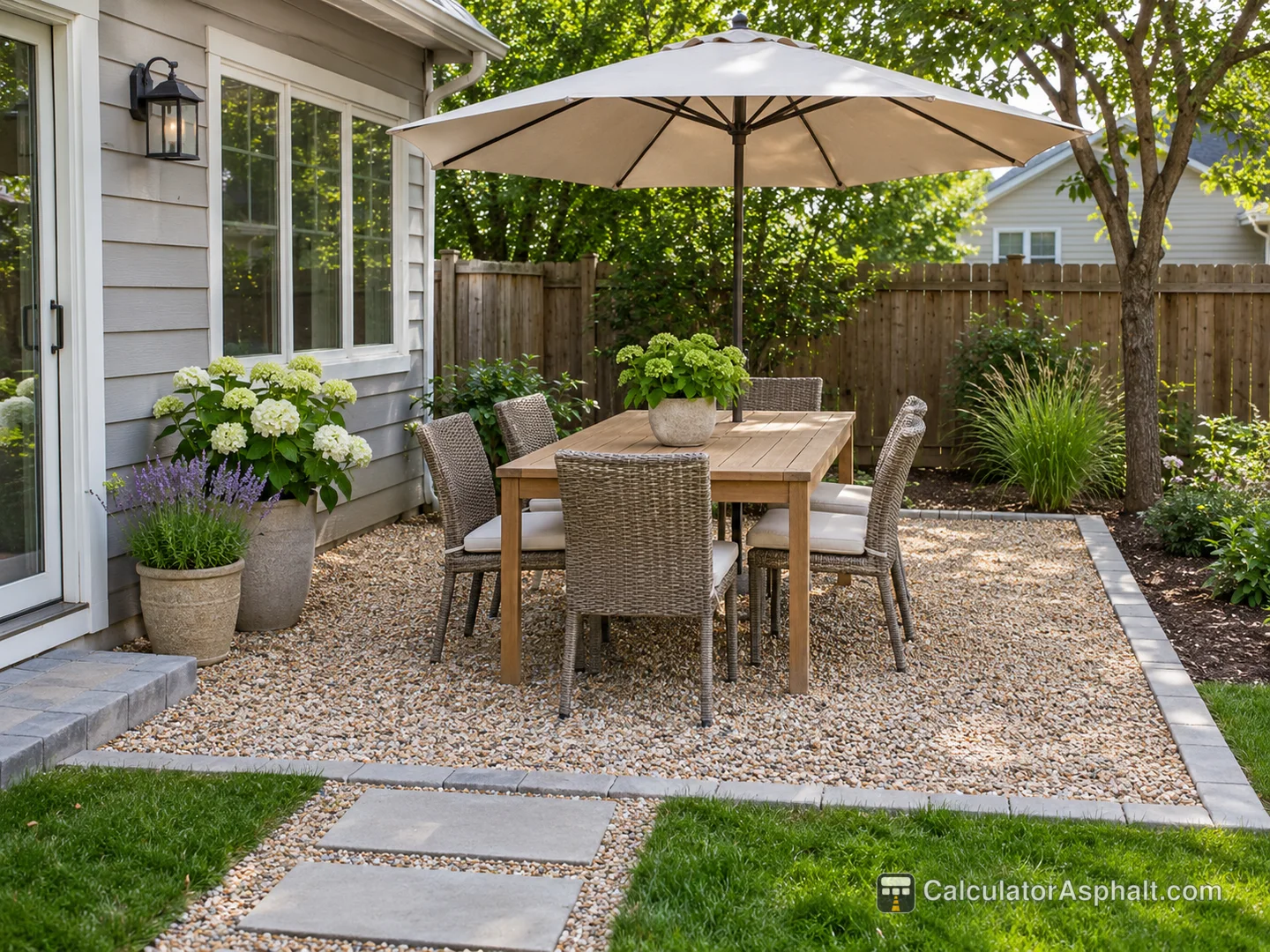
Compare a full gravel dining area with a smaller gravel border around a continuous hard surface. Include edging, soil removal and delivery. Sweep loose stones away from nearby paving.
3. Pea gravel with a paver border
A short row of pavers can give the patio a clear edge and repeat the material of a nearby walk. Pick an edge detail that suits the selected paver and keeps gravel contained where people enter. A visible color change can show where the loose surface begins. The edge needs suitable support and a continuous transition if people cross it.
Ask a supplier about the installed unit size and any cuts, joint material or edge support. Inspect for pieces that shift and sweep spilled gravel back inside.
4. Contained courtyard
Use a small gravel surface inside an existing courtyard or protected side garden. Check for downspouts, gates, foundation clearance and places water already pools. Keep access to drains and service points. Near structures, choose the finished elevations and drainage path before building the edge.
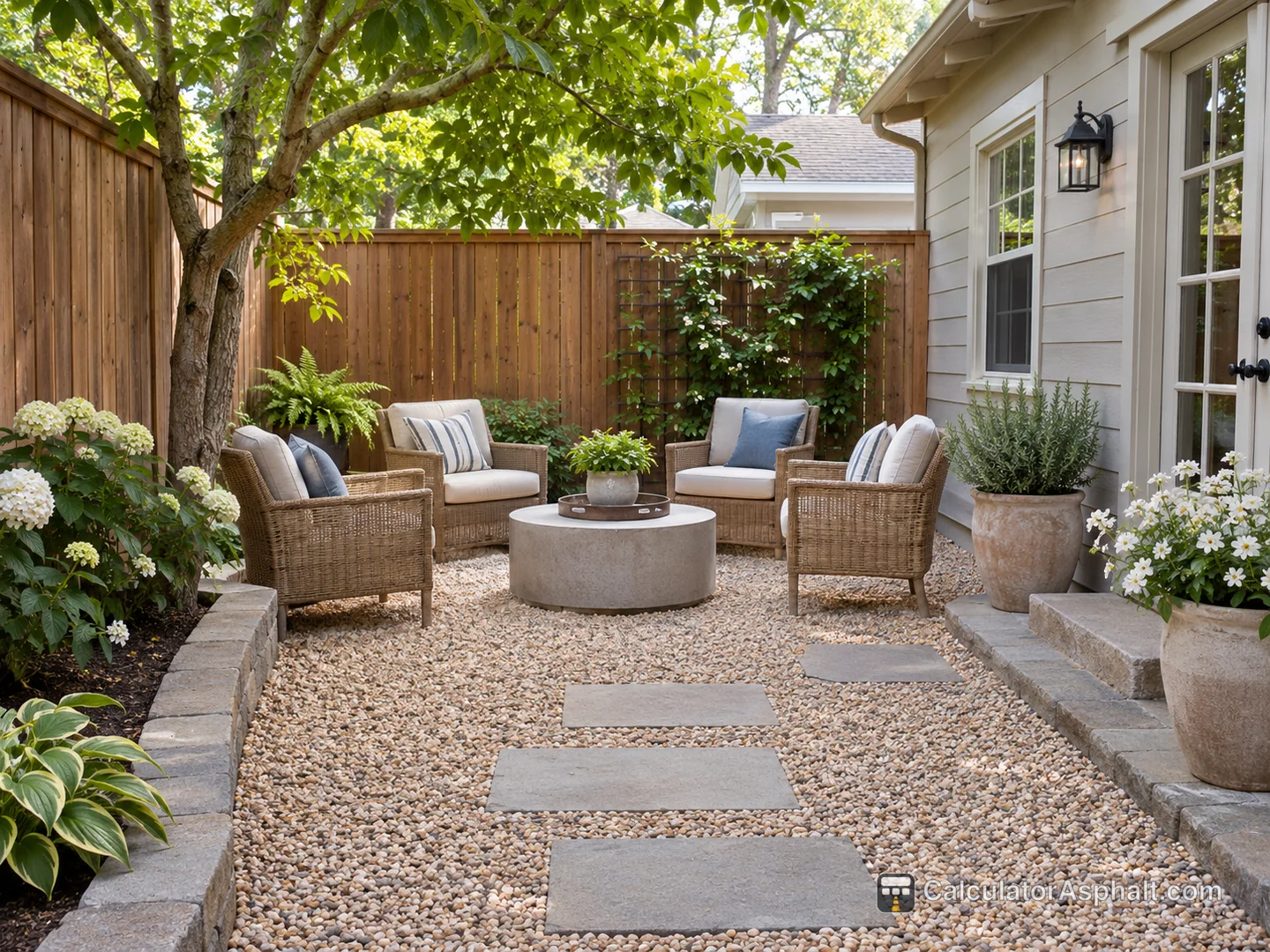
Tight gates can increase hand-hauling even when stone volume is small. Include unloading and material handling. Rake away leaves before they break down among the gravel, especially under trees.
5. Gravel beside stable stepping slabs
Connect the patio to the house with a stable pedestrian surface. Individual slabs can mark a route through the gravel where the spacing and installation suit users. For wheelchairs, walkers, strollers or frequent trips with trays, consider a continuous firm surface. Use supported units suited to the site and keep transitions even.
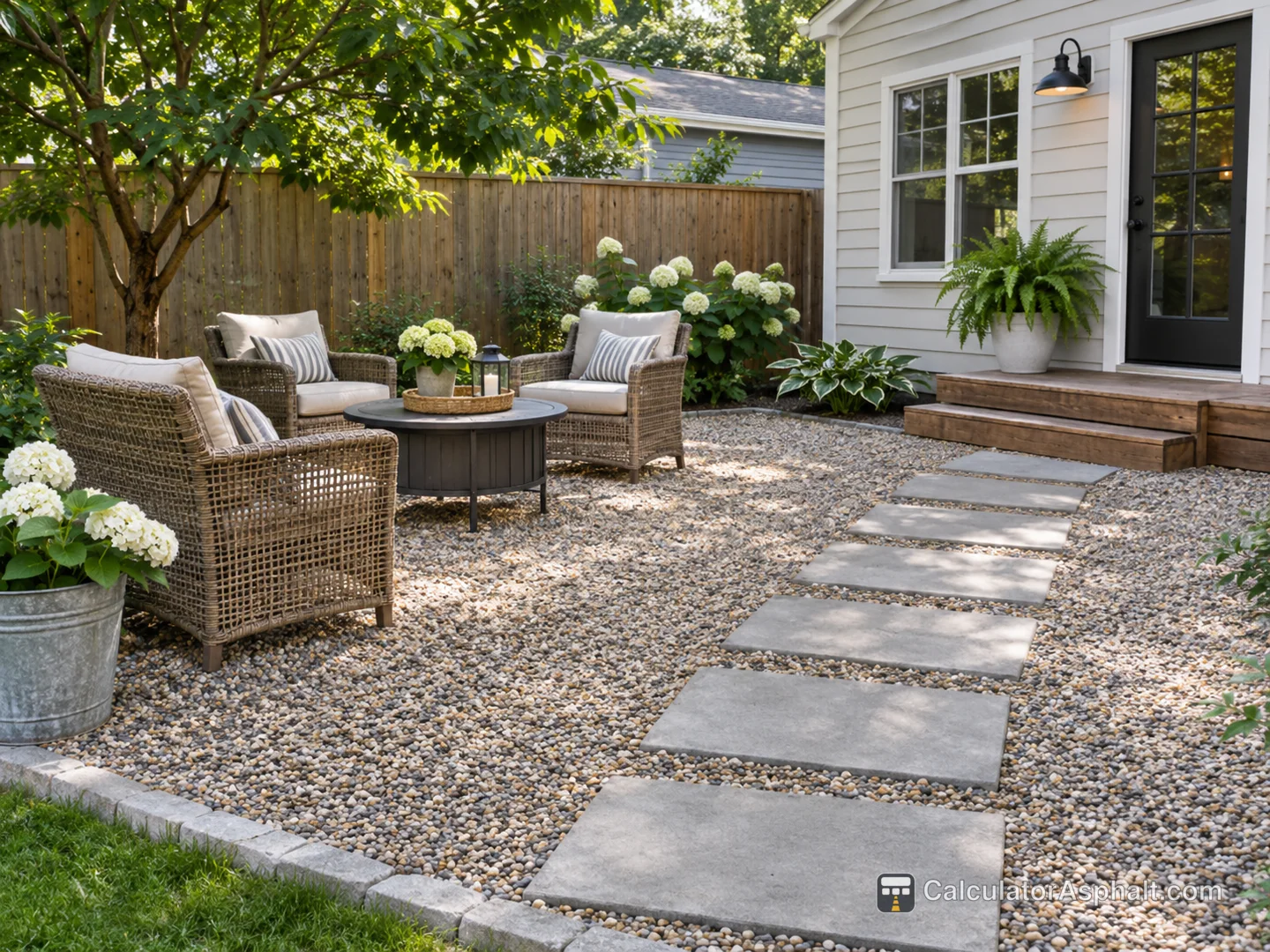
Price the slabs and their support separately from the loose stones. Check for rocking edges and shifted gravel after heavy rain. Move a step or change the route if it feels awkward to use.
6. A two-chair reading nook
Set two durable chairs and a small table in a shaded spot where the soil stays stable after rain. Leave enough room to slide seats back, reach them and walk past. Place chairs with broad or continuous feet on a test patch before committing. Avoid areas where frequently dropped seeds or leaves would make gravel difficult to maintain.
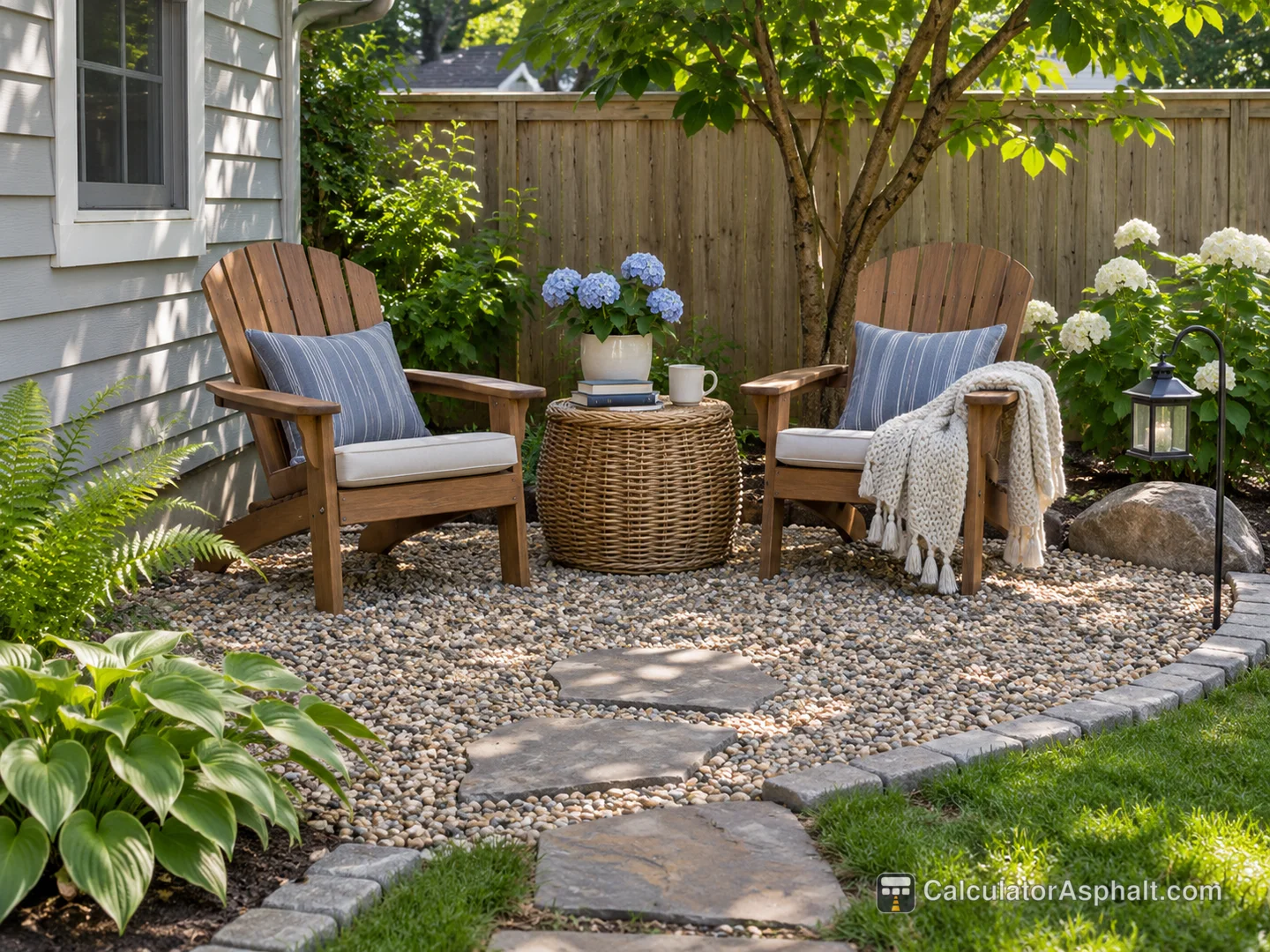
Start with a limited footprint and compare a local bulk delivery with bagged material. Place gravel where it is easy to rake back into the nook when it shifts.
7. A freestanding seating arrangement with a firm furniture zone
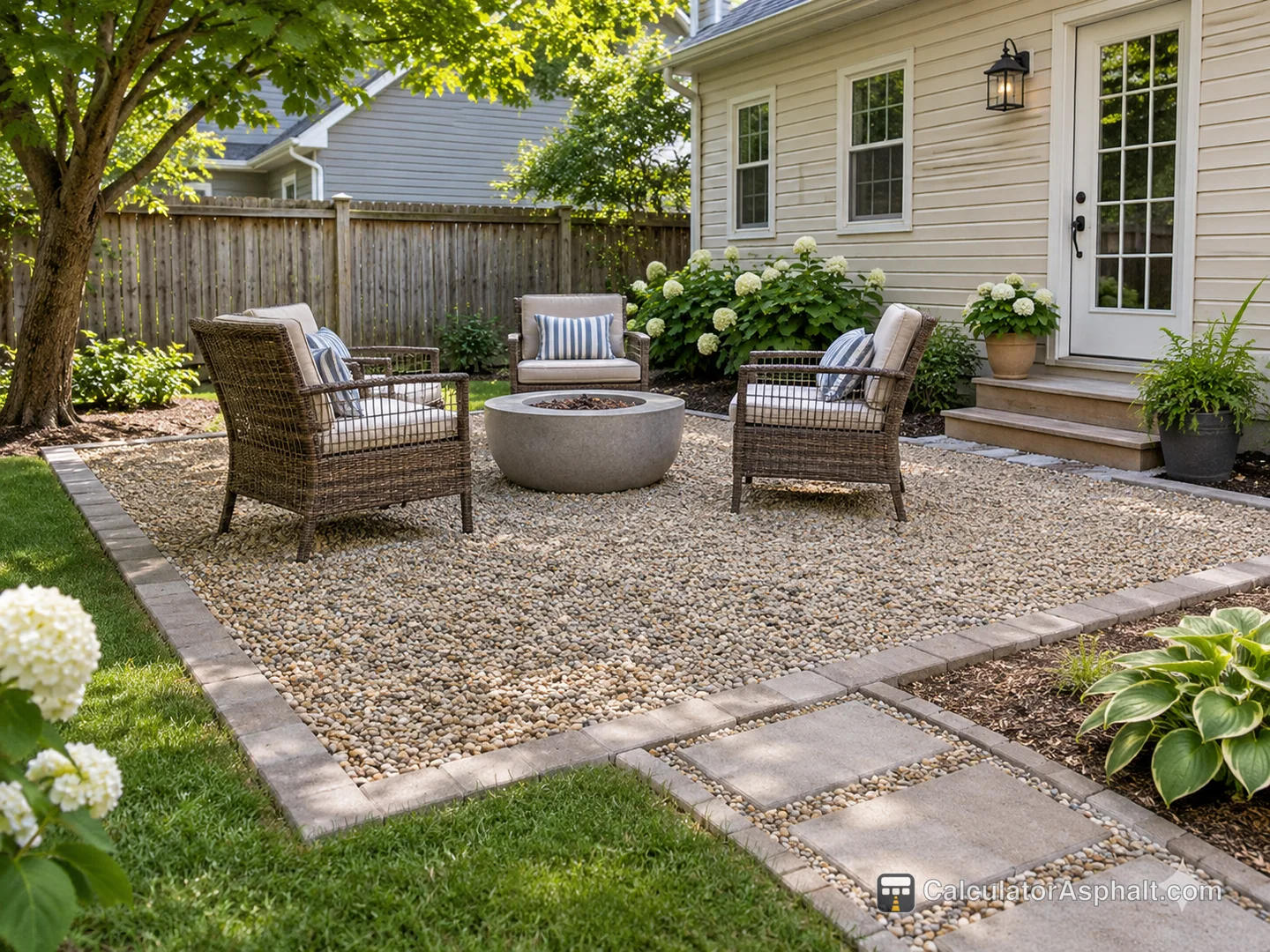
Place a small lounge set in a contained gravel field and provide a stable continuous pad under the furniture if the legs sink or tip. Position the firm area where people sit and stand up. The surrounding gravel can define the visual outline while an even route connects the seats to the house.
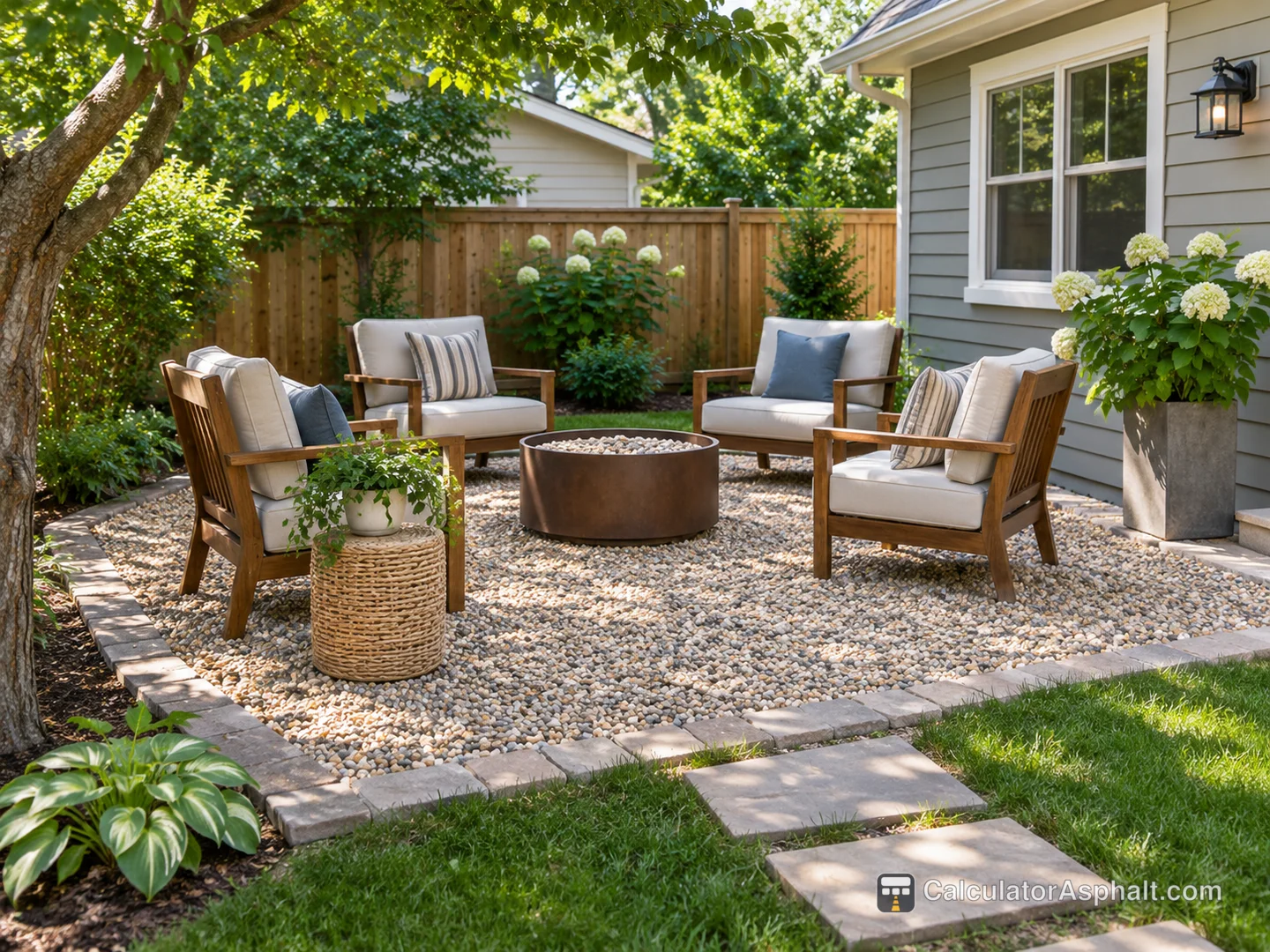
A hybrid layout adds a material and transition, but the firm area can be sized to the furniture. Check the pad after use and sweep gravel off the paved surface before it becomes slippery underfoot.
Compare the layouts and their cost drivers
| Layout | Where it fits | Cost drivers |
|---|---|---|
| Round nook | Small informal seating area | Curved edge and material delivery |
| Rectangular dining | A table and chair pull-back space | Area, edging and firm furniture support |
| Paver edge | A patio next to an existing hardscape | Border units and cuts |
| Courtyard | Existing sheltered enclosure | Access and drainage |
| Stepping slabs | A connection through landscaping | Slabs and stable supports |
| Reading nook | A discreet two-chair spot | Small order or delivery minimum |
| Firm furniture zone | Narrow legs or frequent use | Pavers or slab, plus gravel edge |
Estimate the gravel and perimeter separately
A hypothetical 10-by-12-foot rectangle at a 2-inch fill depth contains 20 cubic feet, or about 0.74 cubic yard. The example is a quantity calculation. Set actual layer depths based on site and material guidance. Use the gravel calculator for volume and supplier weight estimates, and the paver calculator if the design includes a continuous paver pad. Check delivery minimums and the planned edge length before ordering.
Plan the base, drainage and containment
Watch where water moves after rain. Plan a stable surface and edge that leave appropriate outlets open. Ask a local supplier or installer which materials and base details fit the soil and slope. Contact 811 before digging and arrange private utility locating when appropriate. This Old House’s pea gravel patio guide shows one installation and explains preparation and edging.
Frequently asked questions
Can dining chairs sit directly on pea gravel?
Test the chair feet on a small finished patch. Wide feet can be easier to use. If feet sink or slide when seated, add a stable continuous pad under the furniture.
Where should I use a firm walking surface?
Keep the main route firm and even if visitors use mobility aids or if it is a frequently used entry. Check transitions at doors and existing paths.
When should I ask for help?
Seek an assessment for unstable or steep soil, recurring runoff, drainage near a building, or a patio that needs a retaining wall.