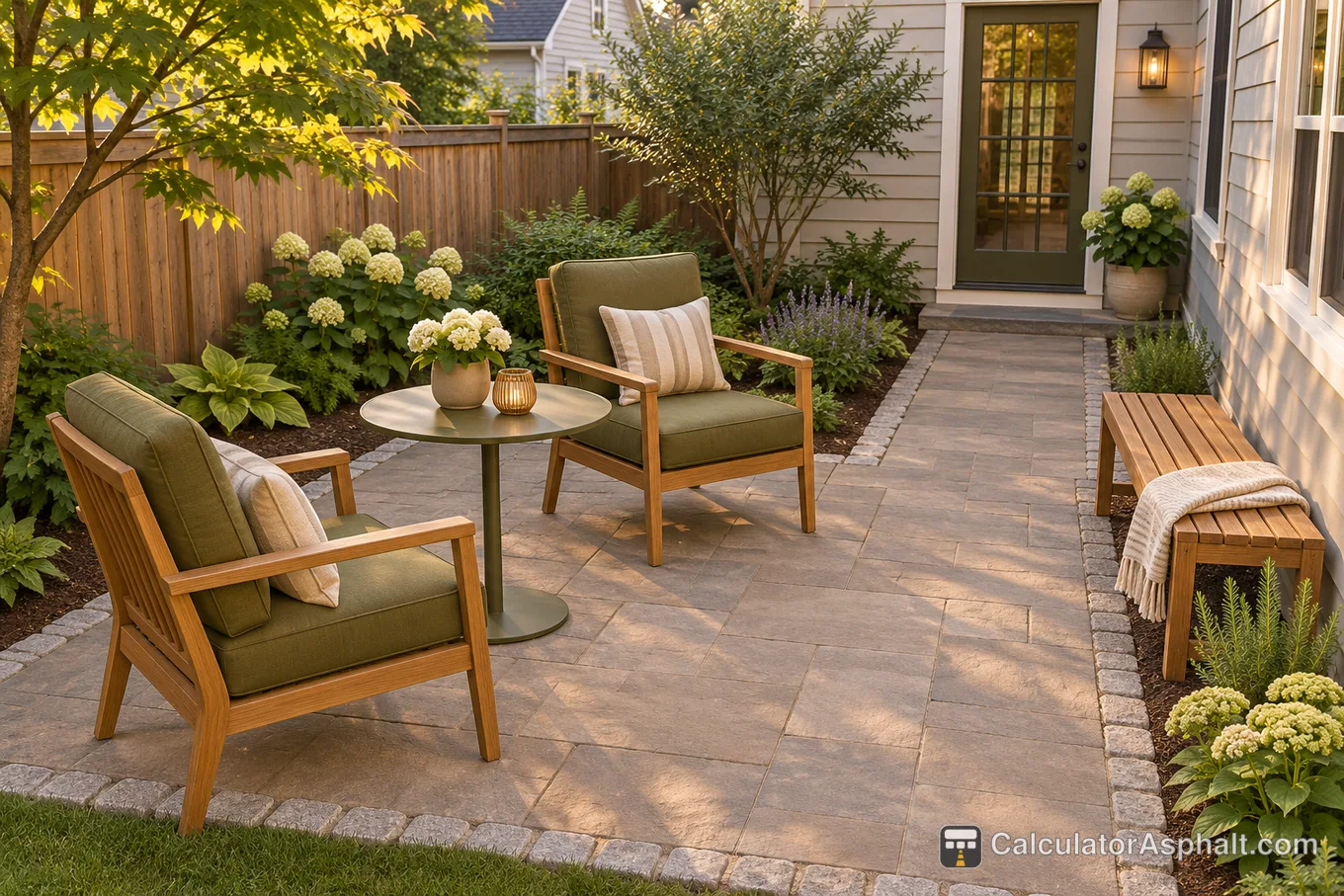
A chunkier chair can erase the only path to your back door. A table that looks tiny online can take over the patio once two people pull their chairs out. These six small patio furniture layouts help you test what fits before you spend on a set.
Start by naming the job your patio needs to do on an ordinary day. Two morning coffees call for different furniture than dinner for four. Mark the route you walk most often, then give the remaining space to seating. The photos are AI-generated design illustrations.
Small patio furniture layouts by how you use the space
1. Put a two-chair bistro set off the main route
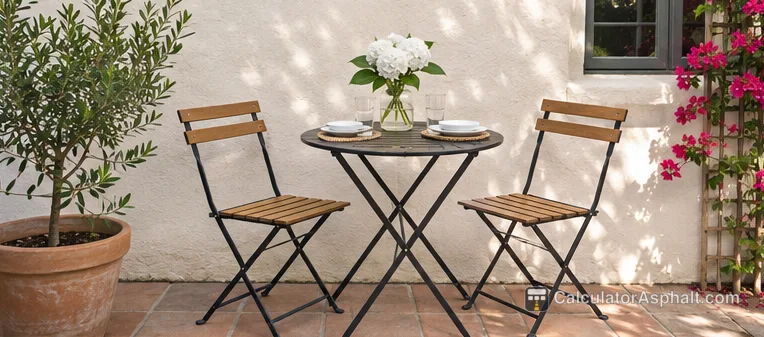
Set a small round table toward one side and turn the chairs so they pull out into the seating area. This works well when you want coffee or a light meal for two. Test the chairs with someone sitting at the table and another person carrying a tray past it. A folding set can be useful if you occasionally need the full patio floor.
2. Run a slim bench along one long edge
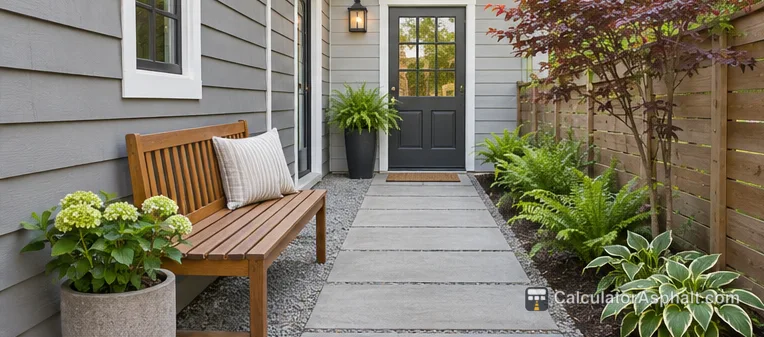
A bench can seat two people along a wall or fence while leaving more room opposite for the route to a door. Choose a depth that lets people sit upright without their knees crowding the path. Favor a narrow side table if a coffee table would sit in the middle of the passage. Check access to siding, outlets and exterior fixtures before you commit.
3. Give two deep chairs a corner of their own
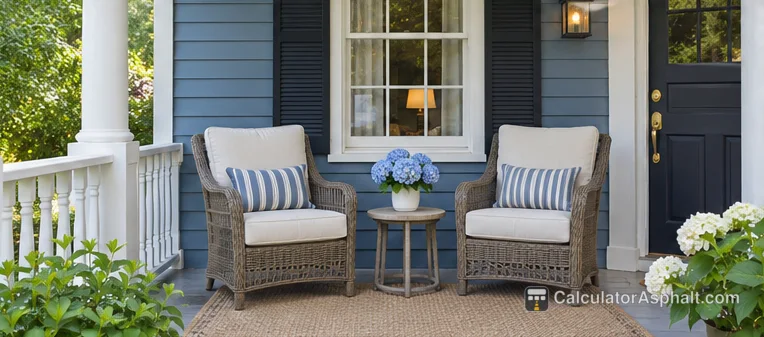
Two comfortable chairs and a small side table can make a compact patio feel like a room. Angle the chairs toward each other when possible and keep their backs out of the door’s swing. Deep lounge chairs take more floor area than bistro chairs, so compare their full depth and the space someone needs to stand up.
4. Move a four-seat table away from the center
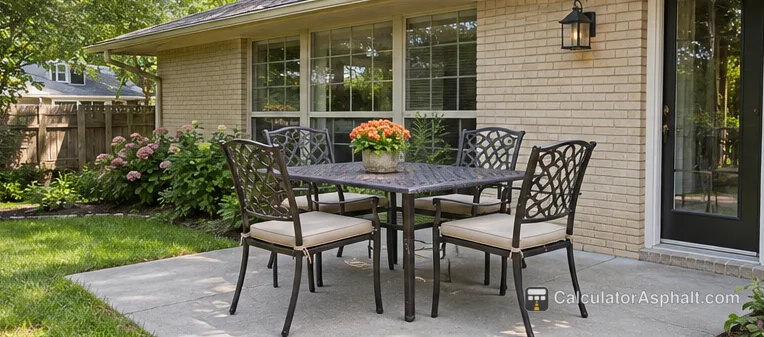
On a rectangle, place the long side of the dining table parallel to the house or fence so you can preserve a route on one side. Test the occupied position at all four seats. If seldom-used end chairs would block access, put those chairs away between visits. Confirm where you will store them before picking a heavier set.
5. Use a small sofa as the anchor
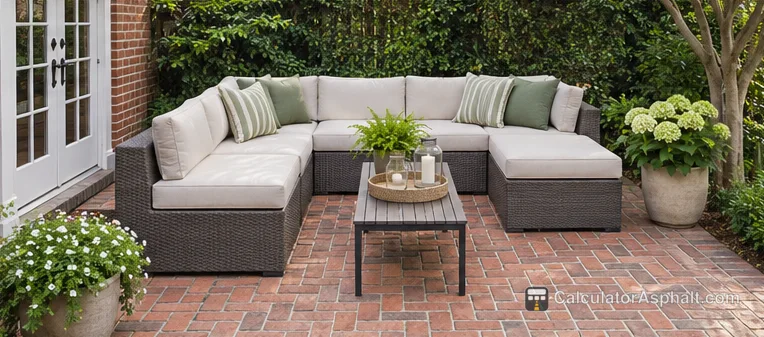
Place a compact sofa on the quieter edge of a square patio, then try a movable side table. A low sofa with visible legs can leave more of the paving in view. Check whether the seating depth works with the patio’s usable width, especially if you want a second seat across from it. A modular set can adapt later if replacements remain available.
6. Leave a path for the patio’s busiest moment
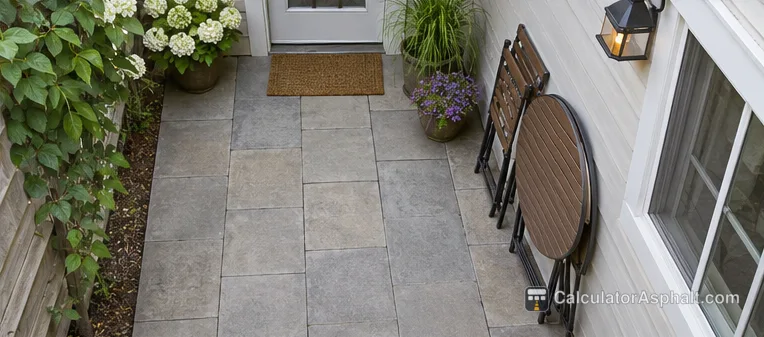
Walk from the door to the steps or gate while the chairs are pulled out. Pay attention to corners that look generous standing still and feel cramped in motion. Move one chair, rotate the table or switch to a narrower piece before assuming you need more paving. If children or pets use the route, include their usual movement in the test.
Sketch your patio before buying furniture
Example: On a patio that measures 8 by 10 feet, use tape to reserve a 36-inch-wide route along one side for this layout exercise. That leaves 60 inches of width in the seating zone. If the table measures 24 inches across and the occupied chair positions need 22 inches on both sides, the setup needs 68 inches and exceeds the zone by 8 inches. Turn the seating direction, choose shallower chairs or look for a smaller table. The 36 inches is an example assumption. Measure room for how your household moves and check any applicable access requirements separately.
Draw the door swing, steps and gate on graph paper. Measure the existing furniture at its widest point, including armrests and chair backs. Tape the footprint on the patio, then open the door and walk the route. If you’re considering adding paving, estimate units with the paver calculator after deciding on the finished dimensions.
For examples of how two seats and a small table can work in different spaces, see 4 Easy Designs for Small Patios from Lowe’s.
What a compact outdoor set can cost
IKEA’s U.S. listings showed a FEJAN table and two folding chairs at $49.99, a TÄRNÖ outdoor table and two chairs at $99.99, and a LÄCKÖ gray set at $179.99 when checked November 25, 2026. These are furniture-only examples before tax, delivery or accessories. Check the current listings and availability for the exact finish you want. Reusing furniture you already own changes the budget more than buying an extra accessory to make an oversized set fit.
Choose furniture you can maintain
Folding frames are easy to move, but opening and storing them becomes part of the routine. Wood generally needs periodic cleaning and care according to the finish instructions. Metal options vary in weight and coating, so consider exposure and how often you move the pieces. Choose feet suited to the surface, and test them on the actual pavers or gravel. Cushion storage matters most when you want to sit down soon after rain.
Common mistakes to avoid
Don’t rely on the product photo to judge scale. Measure the chair in use, check the door with the handle fully open, and look for foot placement across paver joints. Try the layout with the table set before adding a rug or planters. If the larger seating plan only works on paper, start with the pieces you use most.
Frequently asked questions
Where should two chairs go on a narrow patio?
Try both chairs along one edge with a small table between them, or angle them into an unused corner. Keep the normal walking route open and check the space each chair needs when someone sits down or stands up.
Can patio furniture sit on pea gravel?
It depends on the furniture feet and the surface. Check for wobble and sinking using the actual pieces on the patio. Compare the furniture footing examples in the pea gravel patio guide if you want a firmer seating area.
Should I enlarge my patio before buying furniture?
Test a minimal layout first. If it still cannot serve your main use, see these small paver patio layouts before drawing a larger footprint.