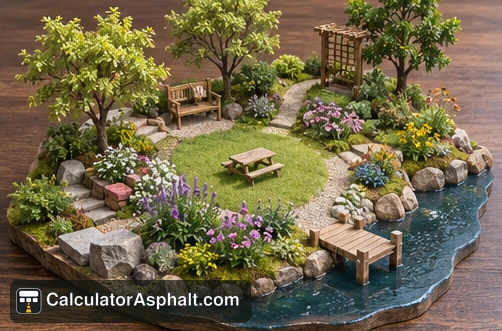
A tiny island space in Animal Crossing: New Horizons can feel intentional when it has one purpose and a clear way in. Sketch the outline before moving pieces. The design concepts here use original craft dioramas as illustrations and focus on planning your own in-game spaces.
Jump to a section
Try a small reading nook or picnic clearing
Make a short path into a reading spot with a seat and a visible focal item. For a picnic clearing, set a group of furnishings around a point you can approach. Stand at each entrance and check what the arrangement looks like from the game’s normal viewpoint.
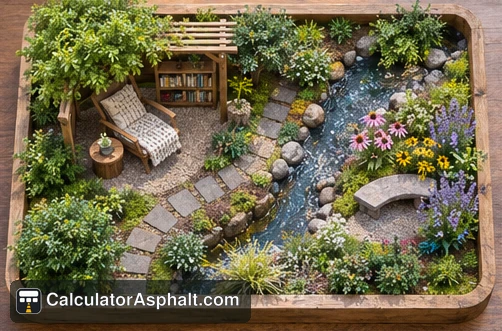
Build a garden stop or a waterside sitting spot
Repeat one flower color along the approach to a little garden. Change the arrangement near water so a route and a place to sit both stay legible. Use furniture and paths available in your own game. Test nearby transitions before placing more items.
Keep one simple design rule
Use one dominant path material and one accent color in the nook. Let empty space show where the visitor walks. If the first view is crowded, remove one decoration temporarily and walk through again before making the change permanent.
Draw a tiny concept on a blank grid
Try six columns and eight rows on paper. Reserve a two-column strip for the entrance, then sketch the seat, focal item and planting area in the remaining space. These are planning cells. Check actual available positions, item footprints and in-game mechanics where you build.
Give your design a short play test
Walk through from the two adjoining areas and pause where you expect visitors to notice the main item. Try the layout once with only the path and focal furnishings. Add decorative pieces in small groups and repeat the walk after each change. Save a simple sketch of the arrangement you enjoyed using. Try a second entrance only if it serves a distinct route. The visual balance of the corner often depends on the way people enter it.
What helps very small areas feel deliberate?
Give the area a visible entrance and one primary use. Walk through the route at normal speed, then look back from its exit. If it reads as a shortcut to somewhere else, move the focus closer to the viewpoint or give it one clear focal object.
Reference Nintendo introduction to customizing your island.