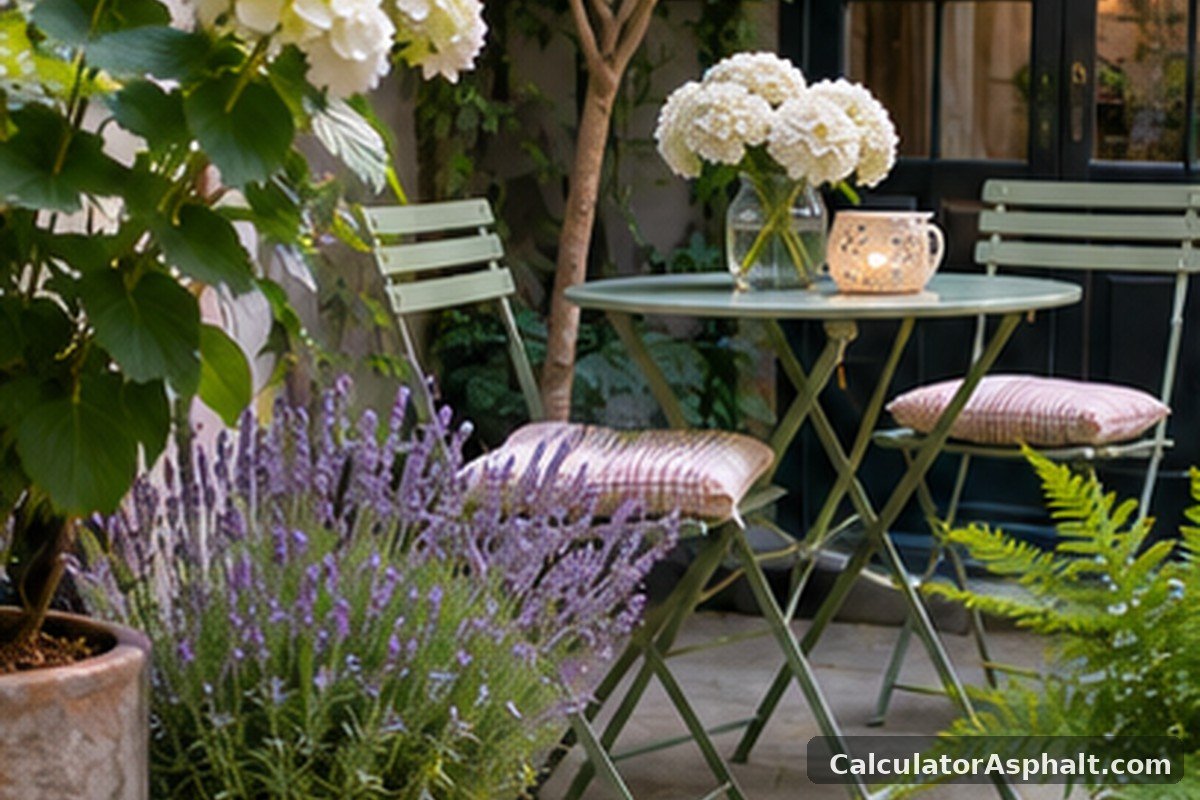
A patio garden has to earn the floor space it takes up. A planter can soften a bare fence, shade a seat or put herbs within reach of the kitchen. The same pot can also catch the door, narrow the walkway or drip onto the neighbor's balcony. Start with a layout that fits your daily route, then choose plants and containers that suit the light you actually get.
Jump to a section
Start with the route you use every day
Draw the patio on graph paper and mark the door swing, steps, outlets, drain covers and any route between the house and yard. Add the chair or bench at its real size, including the space you need to pull a chair back. Before moving on, walk the route carrying a laundry basket or watering can. A clear-looking drawing can hide a pinch point that becomes obvious in use. Keep the route to an exit completely open and follow any applicable access requirements.
Measure planters at their widest outside point, including handles and saucers. The actual growing volume comes from the inside. A tapered pot can occupy as much floor area as a straight-sided container while holding much less growing mix. Mark both values on your shopping list so the layout and the soil order describe the same pot. If you have a balcony or elevated surface, get approval and confirm the allowable load before adding heavy containers, especially once watered.
Layout 1: A two-chair garden corner
Start with the chairs and a small table, then put one large container at the back and two shorter pots toward the outside edge. Keep the pot group out of the door approach. In an illustrative 8-by-10-foot ground-level patio, placing a 2-foot-deep planter group against the 10-foot side leaves a 6-foot-deep rectangle before you account for seating. Draw the seating and route inside that rectangle before you assume everything fits. Tape the rectangles on the floor for an evening and try using the space.
Place tall foliage at the back where it can frame the seat. Shorter plants at the open end let you see across the patio and reach in with a watering can. If the tallest pot creates a wind problem, look for a wider base and a shorter plant with the same visual fullness. Check how the group looks from indoors and from the chair before choosing the final position.
Layout 2: A kitchen-door herb strip
A narrow row of pots can suit a patio beside the kitchen when the door approach stays open. Choose the sunniest usable edge and keep pots with similar water needs together. Start with herbs you cook with weekly. A vigorous spreader such as mint is easier to manage in its own container. Put the pot you harvest most often closest to the convenient end of the strip.
Work from the mature size on the plant tag. For example, three pots with an 18-inch outside diameter, spaced with 4 inches between them, use 62 inches of edge before end clearance. Add room at each end for hands and watering. If you only have 5 feet available, reduce the pot count or choose smaller plants matched to smaller containers. A shelf may recover some floor space if it is stable and appropriate for the location and loading.
Layout 3: A planting edge for a shaded patio
Look at the patio morning, midday and late afternoon on a mostly clear day. Separate bright open shade from the deep shade beneath an overhang. Use locally appropriate, shade-tolerant plants suited to the actual conditions and put a drought-tolerant group under cover only if you can supply the water it still needs. A mix of leaf sizes and heights can give the planting depth where flowers are sparse.
A shaded boundary can also make the outdoor room feel cooler and more enclosed. Keep containers movable until you see how often the paving dries after rain. Check the wall and the bottom of the pots for damp areas and stains, especially where air movement is poor. If screening is the main goal, compare the garden corner with the patio privacy guide before buying taller containers.
Estimate potting mix by volume
Use the labeled filled capacity wherever it is available. For an approximate straight rectangular trough with an 18-by-12-inch inside footprint and 10 inches of planned fill, multiply to get 2,160 cubic inches. Divide by 1,728 to get 1.25 cubic feet. Two identical troughs need about 2.5 cubic feet before allowing for the root balls, taper and settling. If bags contain 1 cubic foot, three bags cover that starting estimate. Set aside any surplus for topping up.
Use a container-grade growing medium and check that the pots drain. For individual pots, a container size label and the potting-mix bag are more useful than a bulk topsoil order. For a separate ground bed, use the topsoil calculator and mulch calculator for the distinct soil and surface layers. If the project grows beyond pots, the raised-bed soil guide walks through a bulk delivery estimate.
Make maintenance part of the plan
Use the same route you tested for watering, pruning and dragging furniture out for cleaning. Test drainage with a small amount of water before setting a heavy planter in its final position. On finished paving, try a suitable base or pot feet where the product permits and check for trapped moisture. Empty saucers as needed and avoid sending runoff across a doorway or a shared surface.
Review the layout after the first hot spell. Pots near a sunny wall can dry at a different rate from pots only a few feet away. Touch the medium below the surface, note how plants respond, and adjust watering by group. Leave space to lift a container or get a hand around it when plants fill out.
Watch how a container is planted
MU Extension's demonstration shows the planting process from pot preparation to setting the plants. Use the video alongside the instructions for your own containers and growing mix.
Questions to settle before buying
### Can one pot make a difference? Yes. A single appropriately scaled planter can define the view from the door or make a seating corner feel finished. Pick its position first, keep the walk clear and select a plant whose mature width fits that position.
How do I make a small patio garden look cohesive?
Repeat one container finish or foliage shape. Group pots instead of distributing one against every edge. Leave a visible stretch of paving so the plants read as a deliberate grouping and the patio remains usable.
What should I measure first?
Measure the smallest dimension across the route you cannot move. That single measurement controls which planters fit, especially near a step, doorway or gate.
More outdoor project guides
- Under Deck Patio Ideas: Three Layouts and a Rain-Check Plan
- Patio Privacy Ideas: Screens, Planters, and Fences That Fit
- Backyard Fire Pit Seating Ideas: Three Layouts to Test Before Buying Chairs
- Raised Garden Bed Ideas: Three Layouts and How Much Soil to Buy
Source
University of Maryland Extension: Growing Vegetables in Containers