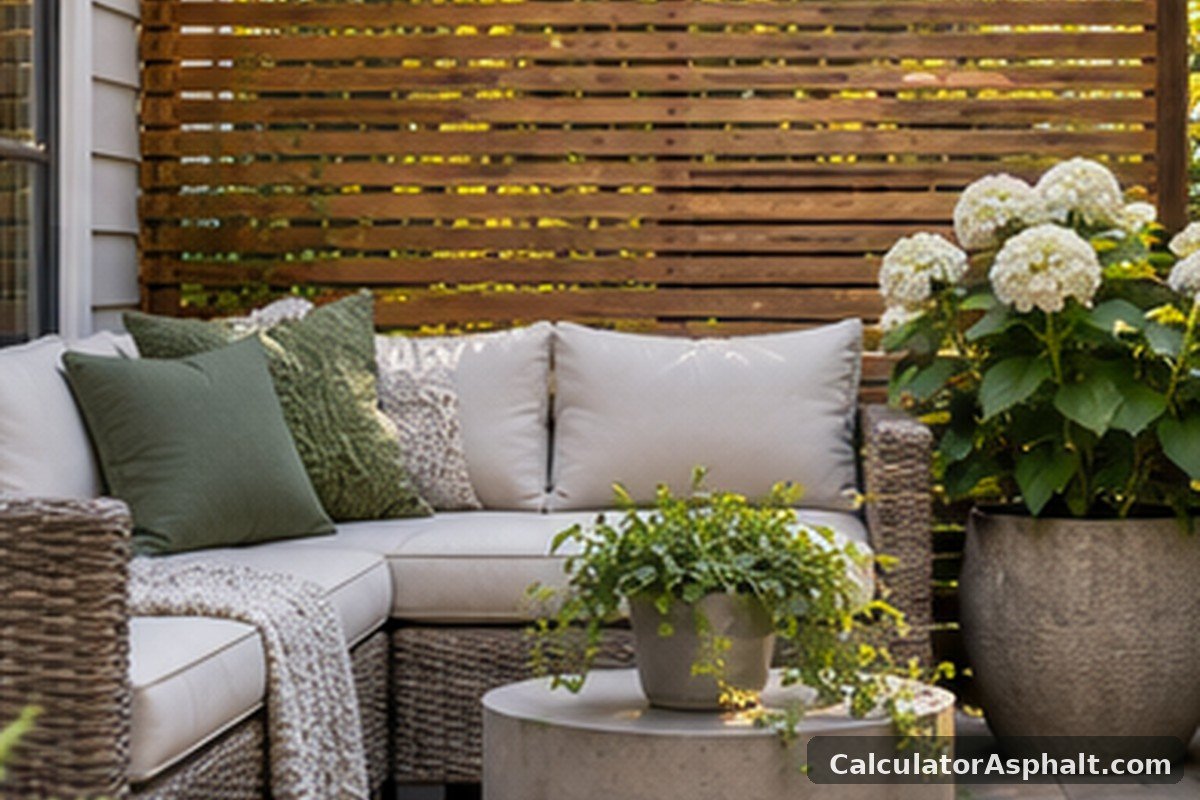
The fastest way to choose patio privacy is to identify the exact view you want to block. A screen aligned with the chair can block a nearby walkway while preserving the garden view. An upstairs window may require a different seating location. Map the view and test the footprint before buying plants, panels or fence posts.
Jump to a section
Mark the view from the actual seat
Choose one seat where you notice exposure. Set a camera or ask a helper to check the view from that seated position. Repeat for a standing position if it matters for cooking or dining. Note the direction and whether the view comes from above, at the same level or from below. Identify the nearest point where a screen can interrupt that line without closing off the route.
Make a temporary mock-up with a tape line at ground level and a helper holding a light sheet on a calm day. Compare one short panel near the seats with a longer screen farther away. Observe from outside the seating area too. This helps reveal if the proposed solution blocks a welcome view, creates an isolated entrance or removes light from plants that need it.
Try a short screen along the seating edge
A short screen is useful when the exposure comes from a narrow angle, such as a path beside the patio. Position it just outside the usable chair zone, where it interrupts the view without needing to extend the entire length of the yard. Check that a pulled-out dining chair and the person walking behind it still fit.
Compare the look of a solid panel with slatted or lattice options. Angled views can penetrate straight gaps between slats. Use the mock-up before committing to the gap pattern. A freestanding screen has to be designed and secured for its location and conditions. Tall panels have meaningful wind loads, especially where the open yard funnels gusts.
Use planters when filtered privacy is enough
Place elongated planters parallel to the seating edge, then fill them with plants suited to container life and the local light. Match mature height and spread to the available space, and check seasonal leaf loss if you want coverage in winter. Containers can be moved as the patio layout changes, provided the pots are suitable for the site and practical to handle when watered.
A leaf screen works well when you want a softer view and can accept gaps. To block an exact view immediately, start with a properly installed panel and use planting to soften its appearance. The patio garden guide shows how to group pots around a two-chair seating area. Use the capacity on container labels to price growing mix and draw the mature spread on the plan.
Use a fence run when the exposed edge is long
A boundary fence can address exposure across several seating locations. Confirm the property line, check local height and placement rules, and arrange utility locating before digging where required. Ask how the design handles posts, corner conditions, gates and wind. Keep the lines from the fence to the patio accessible so the fence and plants can be maintained.
For a design comparison, suppose a straight 16-foot run has a permitted maximum planned post spacing of 6 feet for the system under consideration. Dividing 16 by 6 and rounding up gives three bays, with four posts for a continuous standalone run with two end posts and no gate. This is layout arithmetic. A real product may need cut panels, fixed module widths, more posts or different spacing. The fence calculator helps test the count and the fence cost calculator lets you compare quote inputs.
Work within a narrow footprint
An 8-foot-deep patio loses one quarter of its depth to a 2-foot planter strip. That may be fine against a dead edge. It may also consume the only useful walking route. On a small patio, lay out the circulation with both chairs pulled back and plot each planter at its real maximum width. Try rotating a rectangular table, splitting one continuous planter into two corners or screening only the chair backs. Choose whichever arrangement you will use comfortably.
Leave working space for cleaning paving and washing a wall. Keep drain covers and exterior service access reachable. A screen that prevents you from reaching the garden tap or opening a gate will be moved or left unused. If the new seating zone connects to a walkout or covered area, use the under-deck patio guide to compare the routes in rain.
Watch how a lattice screen is framed
The This Old House demonstration is useful for seeing how a framed lattice fence goes together. Treat it as a visual example and check the installation details for the product, location and rules that apply to your project.
Questions to settle before buying
### How can I gain privacy without fixing a screen to a patio? Start with a shorter seating-level screen that the manufacturer approves for the location, or a low stable planter grouping. Confirm the surface can carry the load and that the wind exposure suits the product. If you rent, confirm the permitted options before purchasing.
Can a screen block an upstairs window?
Sometimes moving the seat is the simplest solution. Mock up the exact line from the window to the seat. The line may pass over a screen that gives excellent privacy at eye level.
How much planting will I need?
Estimate from mature spread and the amount of overlap that suits the species. Plan room for watering and trimming. Order materials only after the spacing, container width and desired degree of screening agree.
A quick before-and-after check
Take one photo from the chair and one from the most used approach. After the mock-up, repeat the photos with the same framing. Keep the layout that blocks the view you identified while keeping the entrance open and preserving the light you want. Add the final measurements and installation notes to the material quote.