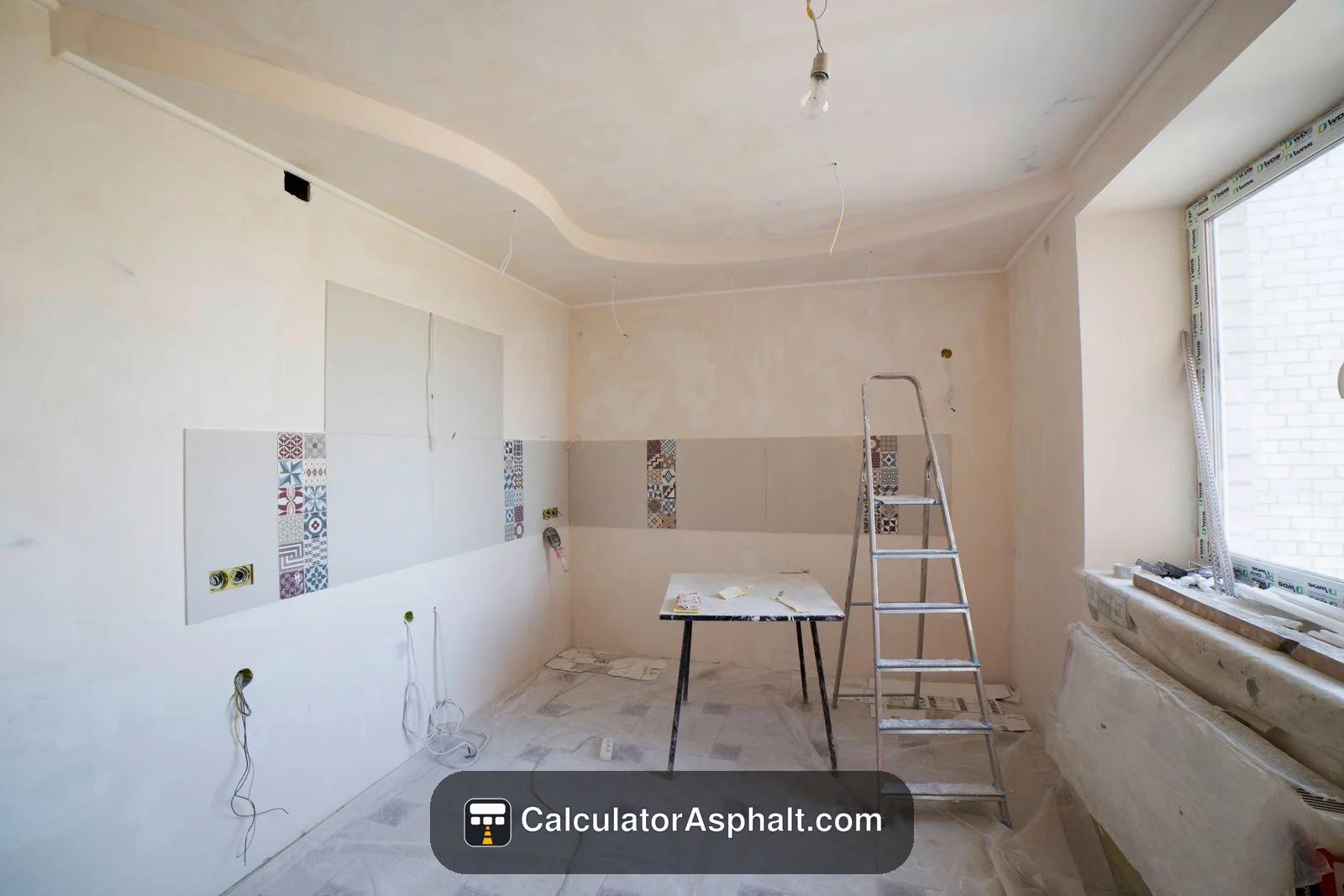
A kitchen quote looks complete. It lists the cabinets, the counters, and a total at the bottom, and the total looks like the cost of the kitchen. It is not. It is the cost of the cabinets and the counters, plus whatever else the supplier chose to include. Labor, appliances, flooring, lighting, plumbing changes, and the surprises behind the walls are usually somewhere else — in other quotes, in other budgets, or nowhere at all until the work starts.
The fix is to build the budget yourself, in separate lines, before anyone quotes anything. Cabinets, counters, appliances, labor, and contingency are five different decisions with five different numbers, and they should never be folded into one. This article walks through that budget with one worked example, shows the arithmetic line by line, and flags the places where a first kitchen budget usually breaks.
The decision first: budget in lines, not in one number
A single-number kitchen budget fails because a kitchen is not a single purchase. It is six or seven purchases made over several weeks, by different people, at different prices. A cabinet quote does not include the plumber. An appliance sale does not include the electrician. A countertop price does not include the sink cutout, the edge profile, or the delivery. Each of those is a line, and each line needs its own number before the work starts.
So decide this before you shop: write down every line the kitchen needs, assign each line a share of the total, and keep ten percent aside as contingency that belongs to nobody until something goes wrong. A budget built in lines can absorb a surprise. A budget built as one number cannot, because there is nowhere for the surprise to go.
What to count
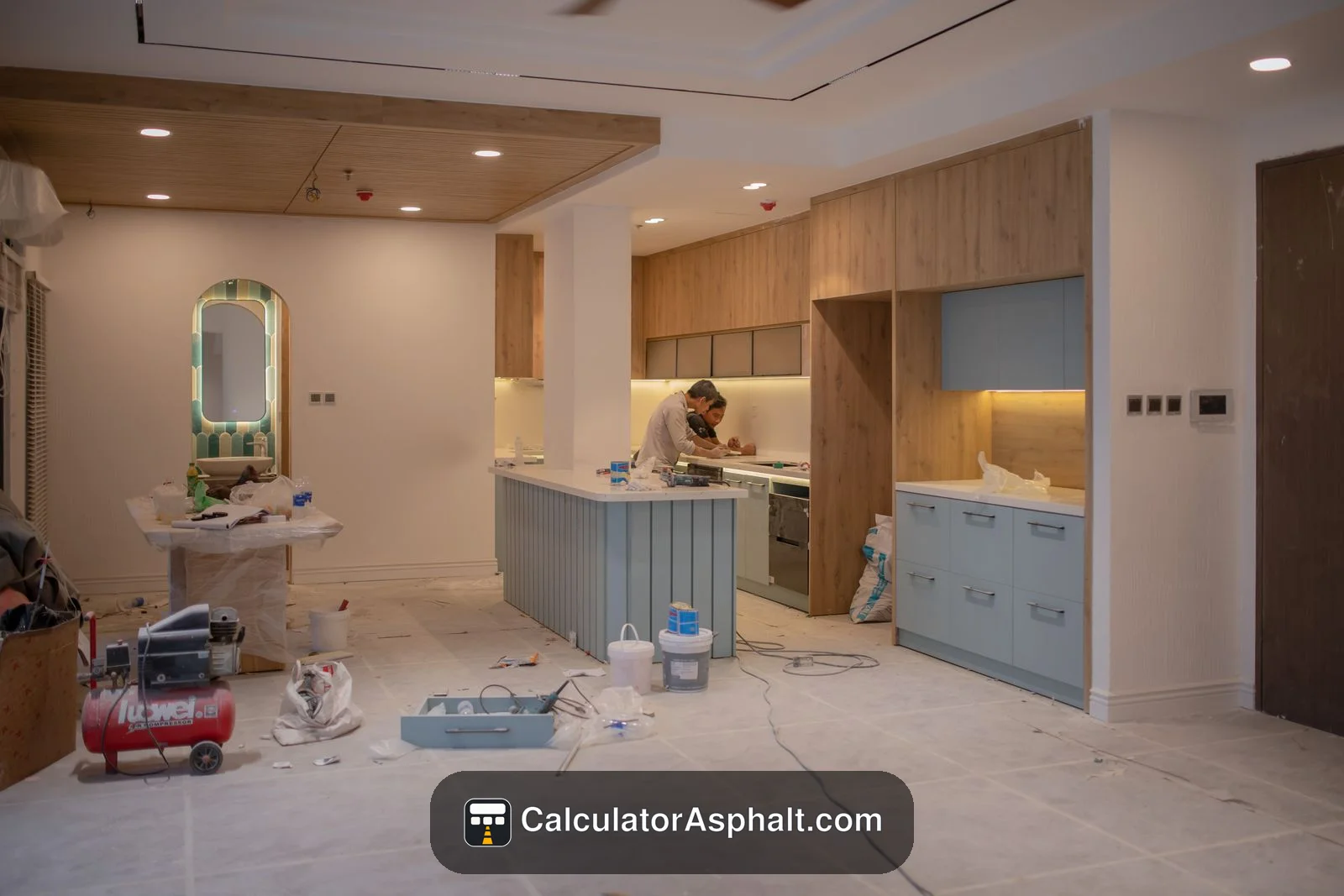
You need a notepad, the kitchen's dimensions, and a list of every line the remodel touches:
- Cabinets. Usually the largest line. Count the linear feet of base cabinets and wall cabinets separately, and note how many drawers, pull-outs, and tall units the plan includes. Drawers and pull-outs cost more than doors, and a tall pantry unit costs more than a wall cabinet of the same width.
- Counters. Measure the countertop run in linear feet, and note the material, the edge profile, and the number of sink and cooktop cutouts. Cutouts and edges are charged separately from the square footage, and they are the part of the countertop quote that first-time budgets miss.
- Appliances. List every appliance the remodel replaces, including the ones that feel like they belong to the old kitchen. A fridge, a range, a dishwasher, and a microwave are four purchases, not one, and each has a delivery and installation cost of its own.
- Labor. Count every trade separately: demolition, plumbing, electrical, carpentry, tiling, and painting. A quote that says "labor" without naming the trades is not a quote. It is a guess with a signature on it.
- Flooring, lighting, and fixtures. The floor under the cabinets, the lights over the island, the faucet, and the sink are all separate lines. The sink and faucet alone are often bought as an afterthought, and they are not cheap afterthoughts.
- Contingency. Ten percent of the total, held aside for what the walls hide. Old wiring, a rotted subfloor under the sink, a drain in the wrong place — the contingency is for these, and it is spent only when they appear.
Do not start with a total and work backwards. Start with the lines, add them up, and the total is whatever it is. A total chosen first is a wish. A total built from lines is a budget.
Worked example: a planning budget of $30,000
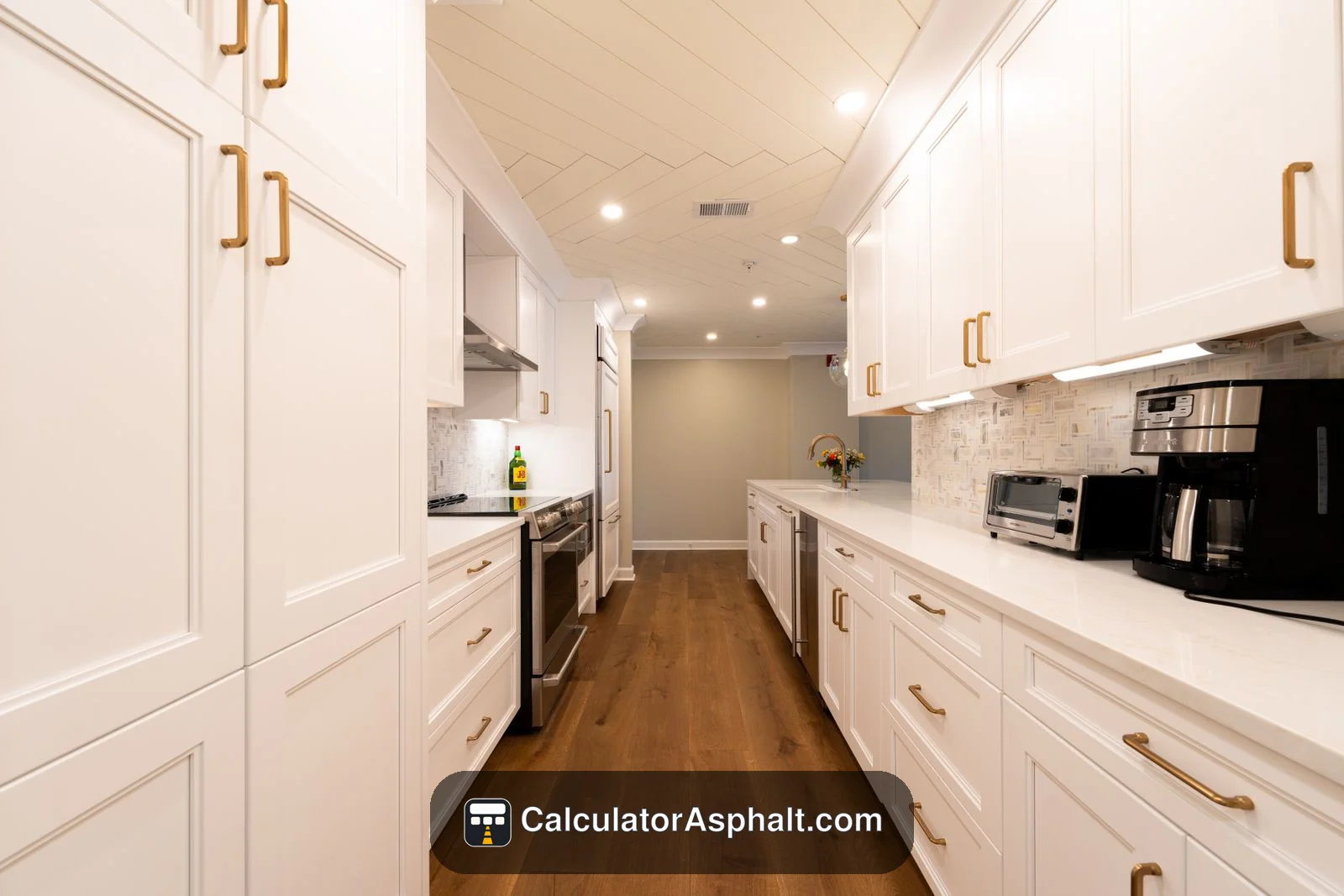
Take a first-time remodel of a medium kitchen, about 12 feet by 14 feet, keeping the existing layout. The homeowner sets a planning budget of $30,000 as an example figure — a number chosen to show how the shares work, to be replaced with the reader's own total. The budget is split into six lines by percentage, and each percentage is multiplied by the total.
Step 1: cabinets, 30 percent. Thirty percent of $30,000 is $9,000. This is the largest line, and it covers stock or semi-custom cabinets with a mix of doors and drawers. A plan heavy on drawers and pull-outs pushes this share toward 35 percent. A plan that reuses the existing cabinet boxes and replaces only the doors pushes it toward 20 percent.
Step 2: labor, 25 percent. Twenty-five percent of $30,000 is $7,500. This covers demolition, plumbing, electrical, carpentry, tiling, and painting across the whole job. Labor is the line most often missing from a supplier's quote, because the supplier does not employ the trades. If the quote in hand has no labor line, the labor is not free. It is unbilled.
Step 3: appliances, 15 percent. Fifteen percent of $30,000 is $4,500. This covers a fridge, a range, a dishwasher, and a microwave at mid-range prices, plus delivery and installation. Appliances bought on sale still need delivery, and delivery is rarely free for four large items on the same day.
Step 4: counters, 10 percent. Ten percent of $30,000 is $3,000. This covers the countertop material for the kitchen's run, plus the sink cutout and a standard edge profile. A second cutout for a cooktop, or an upgraded edge, comes out of this line, and it is the reason the line should be ten percent rather than the material price alone.
Step 5: flooring, lighting, and fixtures, 10 percent. Ten percent of $30,000 is $3,000. This covers the floor, the lights, the faucet, and the sink. It is the line that absorbs the small decisions — the pendant over the island, the under-cabinet lighting, the faucet that costs twice the budget one — so it needs to be a real line, not a rounding error.
Step 6: contingency, 10 percent. Ten percent of $30,000 is $3,000. This money belongs to nobody until something goes wrong, and something usually does. A rotted subfloor under the sink, discovered on demolition day, might cost $2,400 as an illustrative example figure. With the contingency in place, the repair is paid for and the counters are untouched. Without it, the repair comes out of the counters, the appliances, or the credit card.
Total: $9,000 + $7,500 + $4,500 + $3,000 + $3,000 + $3,000 = $30,000. Check the percentages: 30 + 25 + 15 + 10 + 10 + 10 = 100. The budget balances, and every line has a name and a number.
Notice what the example shows. The cabinets are not half the budget, even though the cabinet quote is the biggest single piece of paper in the project. Labor and appliances together are 40 percent, and neither appears on the cabinet quote at all. A homeowner who budgets from the cabinet quote alone is budgeting for 30 percent of the kitchen and calling it the whole job.
Decision table: how the budget moves
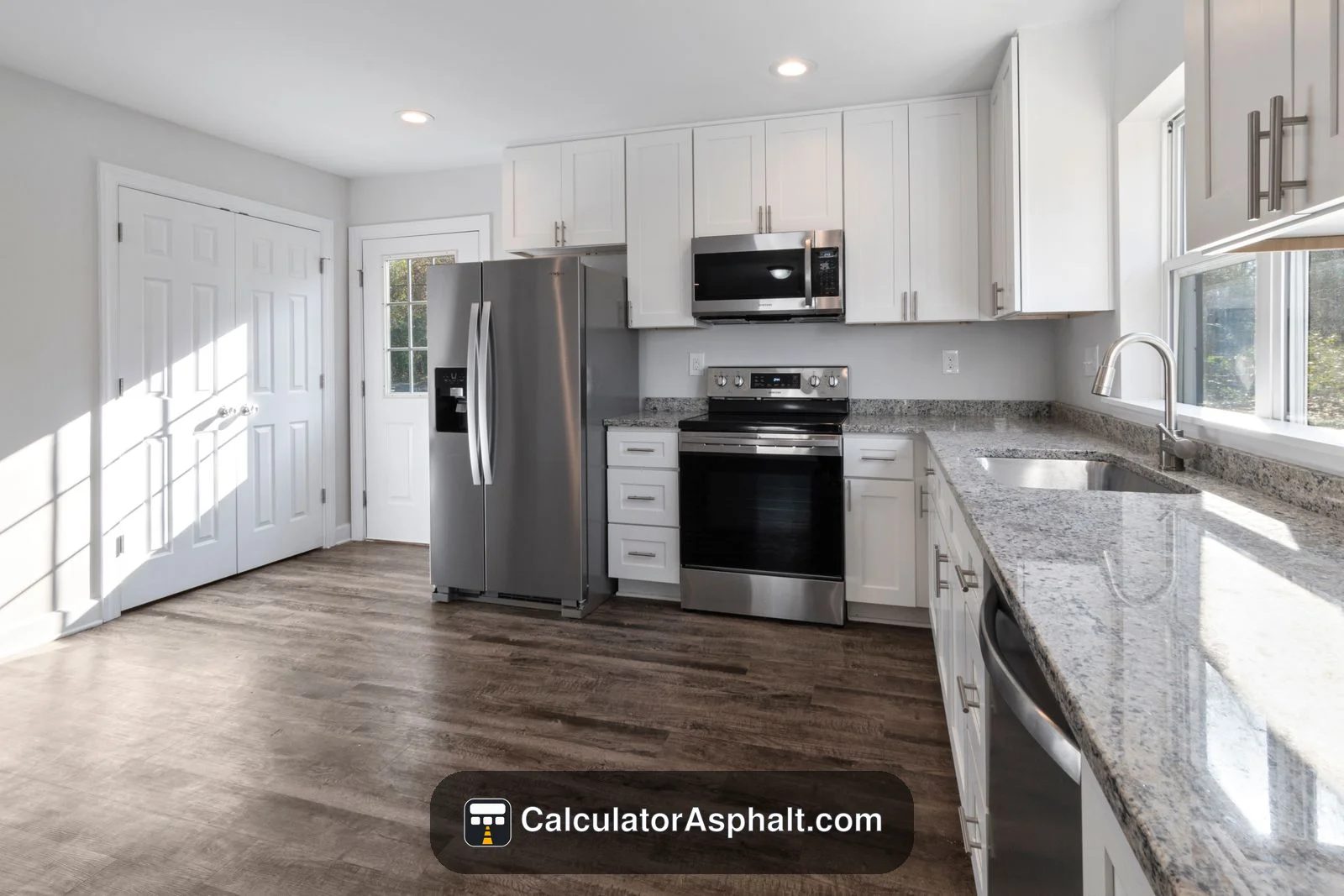
| Choice | Cabinets | Labor | Contingency | What changes |
|---|---|---|---|---|
| Keep the layout, stock cabinets | 30% | 25% | 10% | The baseline in the worked example |
| Move the sink and range | 30% | 30% | 15% | Plumbing and electrical rise; contingency rises because walls open |
| Reface cabinets, keep the boxes | 15% | 20% | 10% | Cabinet line halves; labor falls because there is less to install |
| Custom cabinets, full height | 40% | 25% | 10% | Cabinets take share from appliances and fixtures |
| No contingency, quote-only budget | 30% | 25% | 0% | The first surprise is paid from another line or from credit |
Where kitchen budgets go wrong
Budgeting from a single quote. A cabinet quote is a quote for cabinets. It is not a kitchen budget, and treating it as one leaves labor, appliances, and contingency with no number at all. Every supplier quote should be filed under its own line, and the budget should be the sum of the lines, not the largest quote.
Spending the contingency on upgrades. The contingency is not a slush fund for a better faucet. The moment it is spent on an upgrade, the next surprise has nowhere to go. Upgrades come from savings in other lines. The contingency stays untouched until demolition reveals something, and if nothing is revealed, it is the money that pays for the last ten percent of the job without stress.
Field checklist: before you sign anything
- Every line listed: cabinets, counters, appliances, labor by trade, flooring, lighting, fixtures, contingency
- Cabinet count written down in linear feet, with drawers and pull-outs noted separately
- Countertop run measured, with cutouts and edge profile listed
- Every appliance listed, including delivery and installation
- Labor quoted by trade, not as a single "labor" number
- Contingency set at ten percent and held separate from every other line
- Delivery and installation confirmed in writing on every quote
- One quote per line filed under that line, so no line is budgeted from memory
Mistakes that cost a kitchen
The most expensive mistake is signing a cabinet order before the labor is quoted, and discovering that installation costs a quarter of the budget nobody set aside. The second is spending the contingency on a nicer faucet in week two, then finding the rotted subfloor in week four with no money left for it. The third is moving the sink without budgeting the plumbing, which turns a ten-percent line into a twenty-percent surprise. The fourth is forgetting the floor, the lights, and the faucet entirely, and paying for them on a credit card because the budget had no lines left. Every one of these is a budgeting mistake, not a buying mistake, and every one is fixed with a notepad before the first quote is signed.
Frequently asked questions
What percentage should labor be in a kitchen remodel?
About a quarter of the total is a sound planning figure for a remodel that keeps the layout. If the layout moves, plan for closer to a third, because plumbing and electrical work rises fast. If labor is quoted as a single number with no breakdown by trade, ask for the breakdown. A labor quote you cannot read is a labor quote you cannot check.
Is ten percent contingency enough?
Ten percent is the planning minimum for a kitchen where the layout stays put and the house is in reasonable condition. For an older house, or a remodel that moves plumbing, fifteen percent is safer. The contingency is not pessimism. It is the price of the things behind the walls that nobody can see until demolition day.
Should I budget appliances at sale prices?
No. Budget appliances at their regular prices, and treat a sale as a saving that stays in the budget. A budget built on sale prices breaks the moment one appliance is out of stock at the sale price, or the sale ends before the order is placed. The sale is a bonus, not a plan.
Can I cut the budget by reusing the old cabinets?
Yes, and refacing is the biggest single saving available, often cutting the cabinet line in half. It works when the cabinet boxes are sound and the layout stays the same. It does not work when the boxes are damaged, the layout changes, or the storage does not suit the household. Check the boxes before deciding — open every door, pull every drawer, and look for water damage at the sink base.