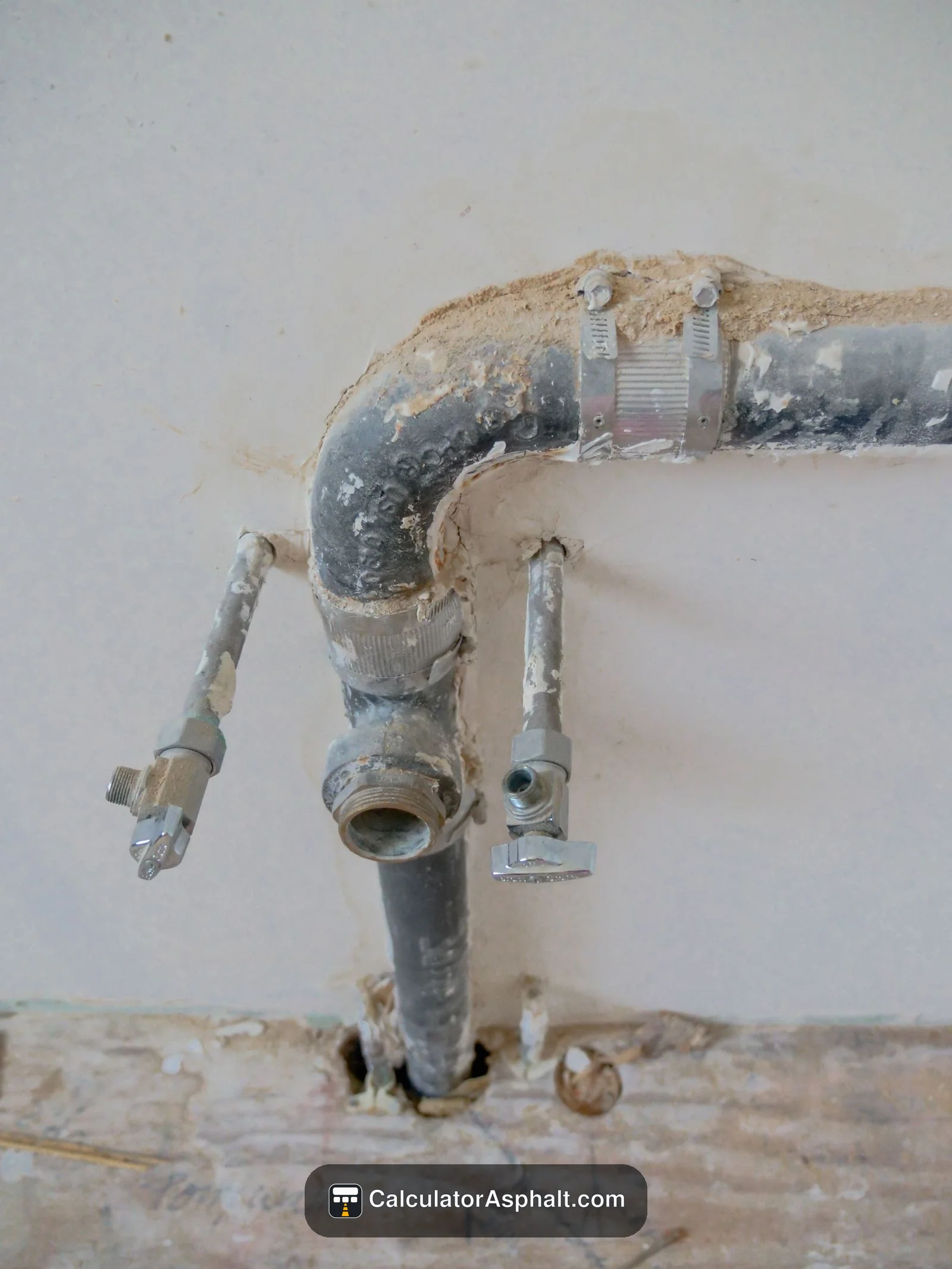
A drain works on gravity alone. There is no pump, no pressure, and no second chance once the pipe is buried. Water flows downhill, and solids ride along in it. If the pipe is flat, the water moves too slowly and the solids settle, and the drain clogs a little more every week until it backs up. If the pipe is too steep, the water outruns the solids, leaves them behind, and the drain clogs from the other direction. The slope has to be right, and right is a narrow band.
The fix is a tape measure and a level before the trench is dug. The drop — the fall of the pipe from one end to the other — is calculated from the length of the run and the slope the code requires. Work it out on paper: the pipe either fits the numbers or it does not.
The decision first: a quarter inch per foot
The standard slope for a drain pipe of 3 inches diameter or smaller is a quarter inch of drop for every foot of run. That number comes from the plumbing code, and it is the same in almost every jurisdiction. A pipe that falls a quarter inch per foot moves water fast enough to carry solids, and slowly enough not to leave them behind.
A 12-foot run at a quarter inch per foot needs 12 × 0.25 = 3 inches of drop. A 20-foot run needs 20 × 0.25 = 5 inches. Measure the run from the fixture to the main drain, multiply by a quarter inch, and that is the drop the pipe must have end to end. If the floor cannot give that much drop, the fixture must move closer or the main must be deeper.
Bigger pipes follow a different rule: a 4-inch pipe may slope at an eighth of an inch per foot, because the larger diameter carries solids more easily. But a basement laundry or a new bathroom usually runs in 2-inch or 3-inch pipe, and the quarter-inch rule applies.
Why too steep is as bad as too flat

It feels wrong that a steeper pipe could be worse, because steeper sounds like faster, and faster sounds like better. But a drain carries two things — water and solids — and they need to travel together. Water flows faster than solids, so on a slope steeper than about half an inch per foot, the water races ahead and the solids are left sitting in a dry pipe. The next flush washes them a little further, and the cycle repeats until they build into a blockage.
A flat pipe fails the other way: water moves slowly, solids settle out of the flow, and the pipe fills with sediment that narrows it a little more each month. The drain gets slower and slower, and one day it backs up. Both failures look the same from above — a slow drain that eventually stops — but they have opposite causes, and opposite fixes.
Aim for a quarter inch, check it with a level as the pipe goes in, and the drain will carry its solids for decades.
Traps, vents, and the parts you cannot skip
Slope is not the only thing a drain needs. Every fixture needs a trap — the U-shaped bend that holds a plug of water and blocks sewer gas. The trap must sit close to the fixture, and the pipe from the trap to the vent — the trap arm — has its own slope and length limits. A trap arm that is too long or too flat loses its water seal, and the house starts to smell.
Every drain also needs a vent, a pipe that runs up through the roof and lets air in so the water can flow. Without one, water draining from one fixture can siphon the trap of another, and the gas seal is lost. A basement laundry needs a vent as surely as a bathroom does, and it must connect before the drain turns downward. Plan the vent route with the drain route: a drain without a vent fails inspection and fails in use.
Worked example: a basement laundry 18 feet from the main
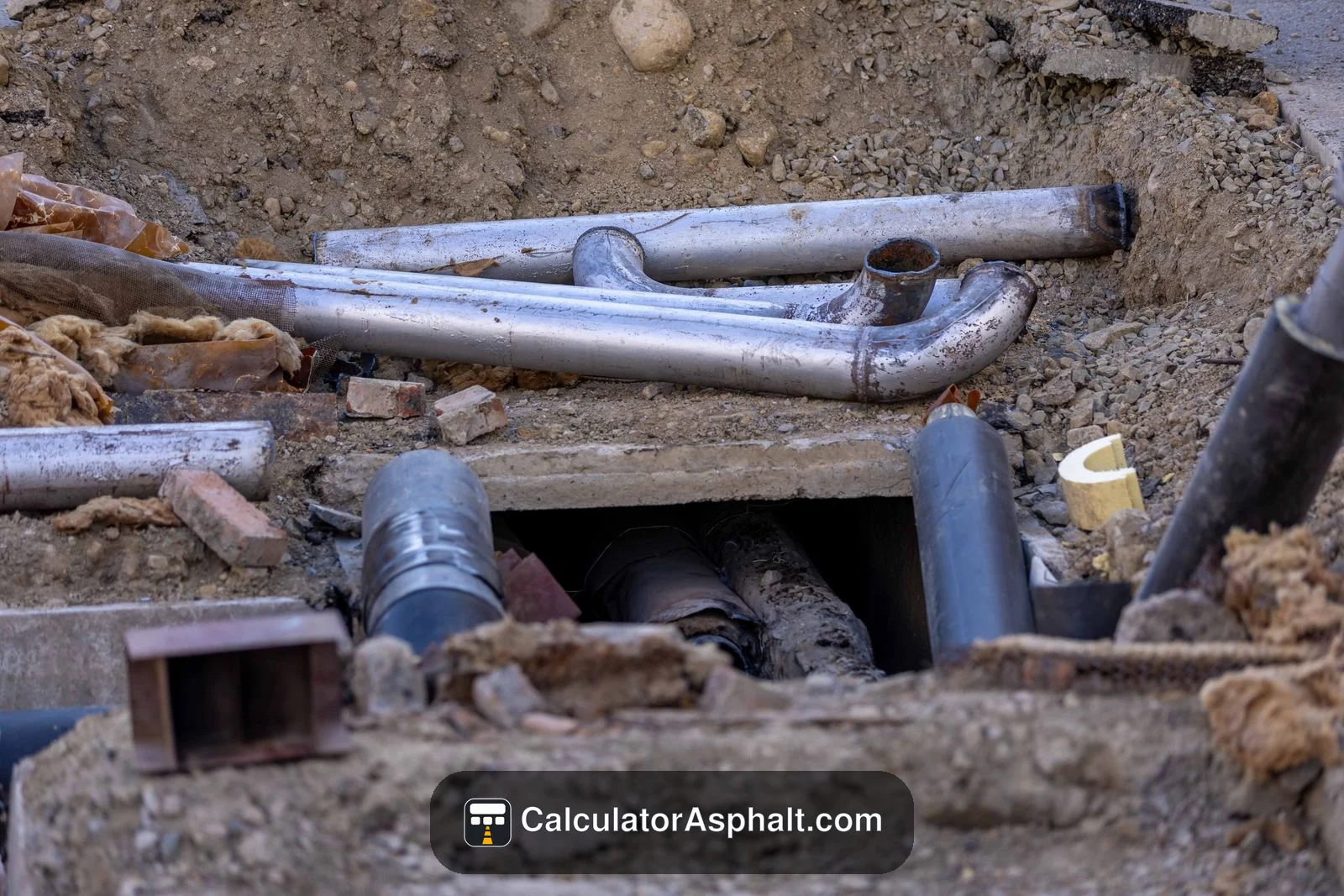
Take a DIY beginner adding a laundry standpipe in the basement, 18 feet from the main sewer line along the far wall. The floor is concrete, and the pipe will run under it in a trench. The main sewer invert — the inside bottom of the main pipe — sits 24 inches below the floor.
Step 1: calculate the drop. The run is 18 feet at a quarter inch per foot, so the drop is 18 × 0.25 = 4.5 inches.
Step 2: check the starting depth. The pipe leaves the trap at 12 inches below the floor — the starting invert. After the 4.5-inch drop, it arrives at the main at 12 + 4.5 = 16.5 inches below the floor.
Step 3: check the main. The main sewer invert is 24 inches below the floor, and the laundry pipe arrives at 16.5, so it sits 24 − 16.5 = 7.5 inches above the main invert and can join it with a wye fitting, with fall to spare. If the main had been at 15 inches below the floor, the laundry pipe would arrive below it, and the drain could not work at all.
Step 4: check the joists, if the pipe runs overhead instead. The joists are 2-by-10s, which are 9.25 inches deep. The code allows a hole no larger than one-third of the joist depth, which is 9.25 ÷ 3 = 3.08 inches. A 2-inch drain pipe has an outside diameter of 2.375 inches, which fits with room to spare. But each hole must sit in the middle third of the joist, and the holes must step down a quarter inch per foot, so the last hole sits 4.5 inches lower than the first. If the joists cannot give that much step, the run must go under the floor instead.
Step 5: check the trap arm. The trap arm from the laundry trap to its vent must slope at a quarter inch per foot and stay under its length limit — about 5 feet for a 2-inch pipe. Measure it on the plan: if the vent is further than that, it must move closer, or the trap will siphon.
Decision table: slopes for a basement drain
| Run length | Drop at 1/4 in per foot | Drop at 1/8 in per foot | Drop at 1/2 in per foot | Verdict |
|---|---|---|---|---|
| 10 ft | 2.5 in | 1.25 in | 5 in | Quarter inch works; eighth too flat |
| 18 ft | 4.5 in | 2.25 in | 9 in | Quarter inch works; half inch is the limit |
| 30 ft | 7.5 in | 3.75 in | 15 in | Quarter inch works if the depth allows |
| 40 ft | 10 in | 5 in | 20 in | Quarter inch needs 10 in of depth — check the main |
| Any length, 2-in pipe | 1/4 in per ft | Too flat, solids settle | Too steep, water outruns solids | Quarter inch is the target |
At an eighth of an inch, the drop over 18 feet is only 2.25 inches, and solids settle. At half an inch, the drop is 9 inches, and water outruns the solids. At a quarter inch, the drop is 4.5 inches, and water and solids travel together.
Where drain runs go wrong
Burying the pipe before checking the slope. Once the pipe is under concrete, the slope cannot be checked without digging it up. Check it with a level as each section goes in, and check the total drop before the trench is backfilled.
Assuming the main is deep enough. The main sewer invert is the hard limit on every drain in the house. If the calculated arrival depth is below it, the drain cannot work, and no slope adjustment fixes it. Measure the main invert before planning the run.
Boring joists too low or too large. A hole larger than a third of the joist depth weakens the joist, and a hole outside the middle third weakens it further. A 2-inch pipe needs a hole of about 2.5 inches, which fits a 2-by-10, but the holes must step down with the slope and the last one must still sit in the middle third.
Forgetting the vent. A drain without a vent will gurgle, siphon its trap, and let sewer gas into the house. The vent is not optional or a finishing touch: plan it with the drain, and connect it before the drain turns down.
Field checklist: before you dig the trench
- Run length measured from the fixture trap to the main
- Drop calculated: length in feet times a quarter inch
- Main sewer invert measured — the depth the drain must arrive above
- Starting invert measured, arrival depth checked against the main
- Trap arm length checked against the limit for the pipe size
- Vent route planned, connecting before the drain turns down
- Joist holes checked if the run goes overhead: size, position, step-down
- Level and string line on hand to check the slope as the pipe goes in
- Trench left open until the slope is verified end to end
Mistakes that cost a re-dig
The most expensive mistake is backfilling the trench before checking the slope, and discovering the backup a month later when the only fix is digging the pipe up again. The second is planning a run that arrives below the main sewer invert, which means the drain never worked. The third is a slope of half an inch per foot or more, which leaves solids behind and clogs the pipe from the inside. The fourth is forgetting the vent, which trades a working drain for a house that smells of sewer gas. Every one is a measuring mistake, fixed with a tape measure and a level before the trench is dug.
Frequently asked questions
What slope does a toilet drain need?
The same quarter inch per foot, for a 3-inch toilet drain. A toilet moves more water and more solids, so the slope matters at least as much — and a flat toilet drain clogs faster.
Can I use a steeper slope if the run is short?
A short run at half an inch per foot is at the upper limit and usually works, because the water does not have far to outrun the solids. But there is no reason to exceed a quarter inch per foot on a short run: the quarter-inch slope works at every length, so use it everywhere.
How do I check the slope on a pipe I have already laid?
Put a level on the pipe, or stretch a string line along it and measure the drop over a known distance. A four-foot level should show one inch of drop over its length at a quarter inch per foot. Less means too flat; two inches means too steep.
What if the main sewer is too shallow for my drain?
Then the fixture must move closer to the main, the main must be lowered, or the fixture must go on a pump. A sewage ejector pump lifts the drain water up to the main, but it adds cost, noise, and a pump that can fail. Measure the main invert first, because it decides which of those options is real.