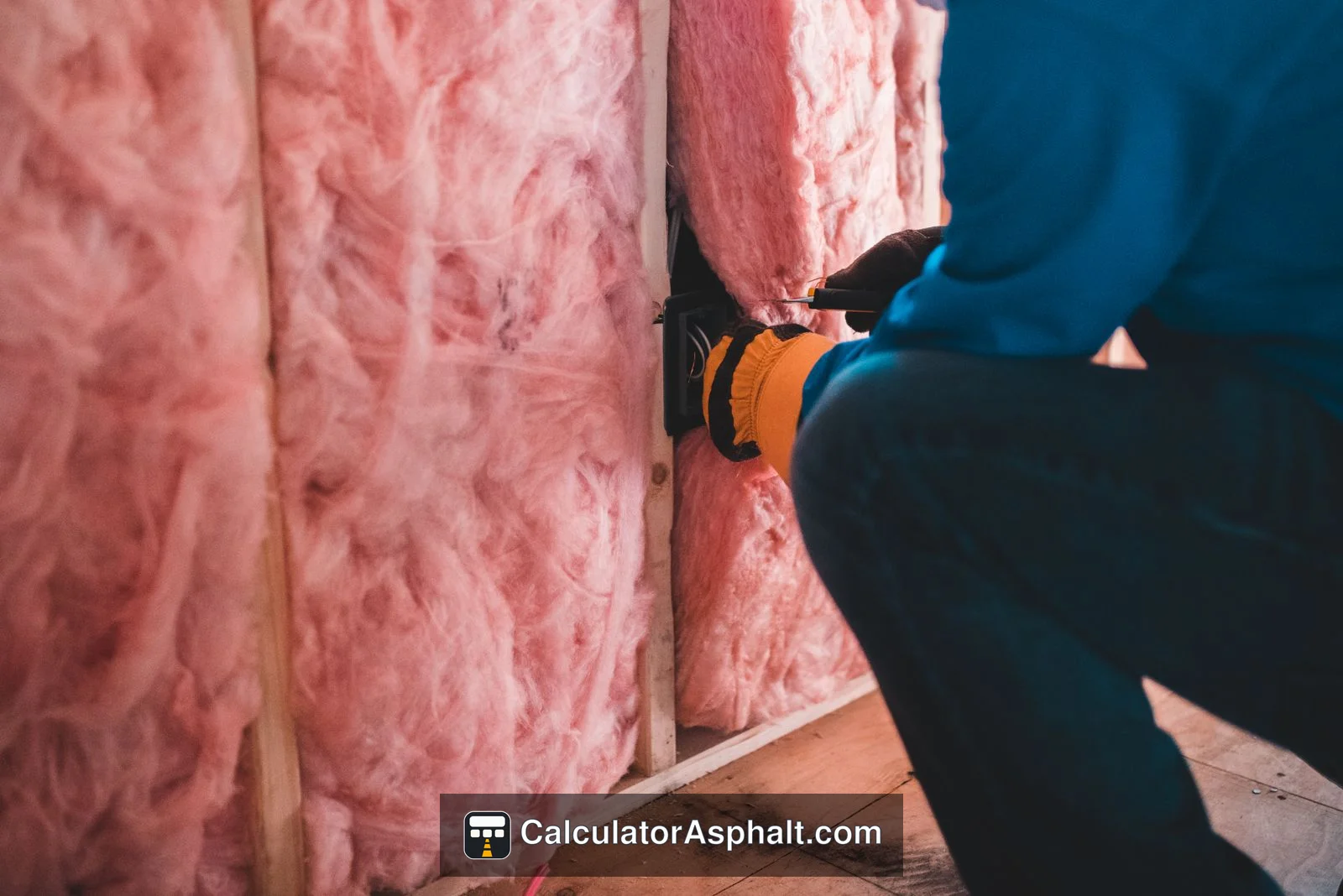
The heater runs, the vents blow warm air, and one room still feels cold. The usual response is a bigger heater or a space heater in the cold room, but neither fixes the real problem: the heat leaves the room almost as fast as the heater puts it in. Thin insulation in the attic or the walls lets heat escape through the ceiling and the outside walls, and the room never catches up.
The fix is to buy insulation by R-value, not by habit. R-value measures resistance to heat flow — the higher the number, the slower heat escapes. A room with R-11 in the attic loses heat far faster than the same room with R-38, and the difference shows up directly in how cold the room feels and how long the heater runs.
The decision first: measure what you have, then buy the gap
Insulation buying has three steps, and skipping the first one is how people end up with the wrong product. First, find out what R-value is already in place. Second, decide the target R-value for that part of the house. Third, buy the product that fills the gap between the two — in the right form, batts, rolls, or blown-in bags.
Start in the attic, because that is where most heat escapes and where the work is easiest. Lift a corner of the existing insulation and measure its depth with a tape measure. Fiberglass batts run about R-3.2 per inch, blown-in fiberglass about R-2.5 per inch, and cellulose about R-3.7 per inch — these are label assumptions to check on the product you buy, because density and brand shift the numbers slightly. A 3.5-inch batt is about R-11; six inches of blown-in fiberglass is about R-15.
Walls are harder to measure without opening them, but the house tells you its age. A house built before the 1970s often has empty wall cavities or 3.5-inch batts at R-11. A 2-by-4 wall cavity fits a 3.5-inch batt at about R-13; a 2-by-6 cavity fits a 5.5-inch batt at about R-19. If the walls are empty, batts will not go in without opening the wall — blown-in is the answer there.
Batts, rolls, or blown-in: pick by the space

Batts are pre-cut rectangles sized to fit between joists and studs, usually 16 or 24 inches wide. They are the right choice for an open attic with regular joist spacing, or for open wall cavities during a renovation, because they go in fast and their thickness is printed on the package. Their weakness is gaps: a batt compressed, cut short, or pushed around a wire loses R-value at every gap.
Rolls are the same material in a continuous length, cut to fit on site. They suit long, clear attic runs where one piece can cover the whole span without joints. They are awkward around obstacles — every pipe, wire, and junction box means cutting and fitting, and every cut can leave a gap.
Blown-in insulation — loose fiberglass or cellulose from bags, fed through a blower — suits attics with obstacles, topping up existing insulation, and filling empty wall cavities through small holes. It flows around wires and pipes instead of leaving gaps beside them. Its weakness is depth control: the finished depth has to be measured with a ruler after blowing, because it is easy to lay down too little and hard to see thin spots once the attic is covered.
None of the three is better in general. The right one is the one that fits the space you actually have, at the depth your target R-value needs.
Depth and coverage: the numbers on the bag
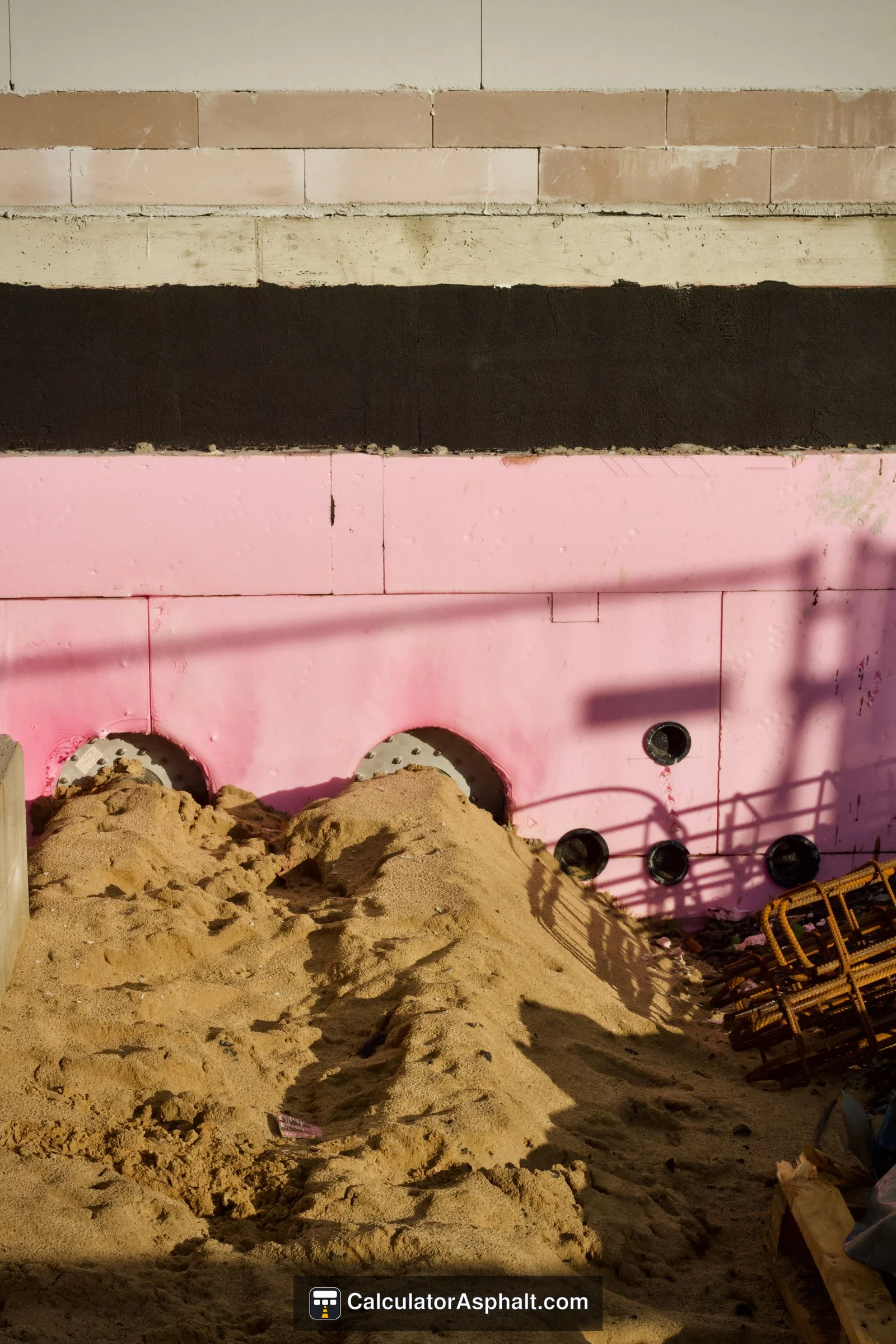
Every insulation product carries two numbers that matter: R-value per inch, and coverage per bag or roll at a given R-value. Read both off the label of the product you are buying, because they change between brands and between product lines.
At a label assumption of 30 square feet per bag at R-27 depth, a 600-square-foot attic needs 20 bags — before waste. A roll of R-19 batts covers about 48 square feet per roll at a label assumption, so the same attic needs 13 rolls. The bag count and the roll count are not interchangeable: they describe different products at different R-values, and the only fair comparison is cost per R-value per square foot.
Depth is the number people get wrong most often. Insulation settles, especially cellulose, so a depth measured on day one is not the depth a year later — blow-in is usually installed slightly deeper than the target to allow for it, and the label states the settled R-value. Measure the finished depth with a ruler in several places and top up any thin spot before you call the job done.
Worked example: a 600-square-foot attic from R-11 to R-38
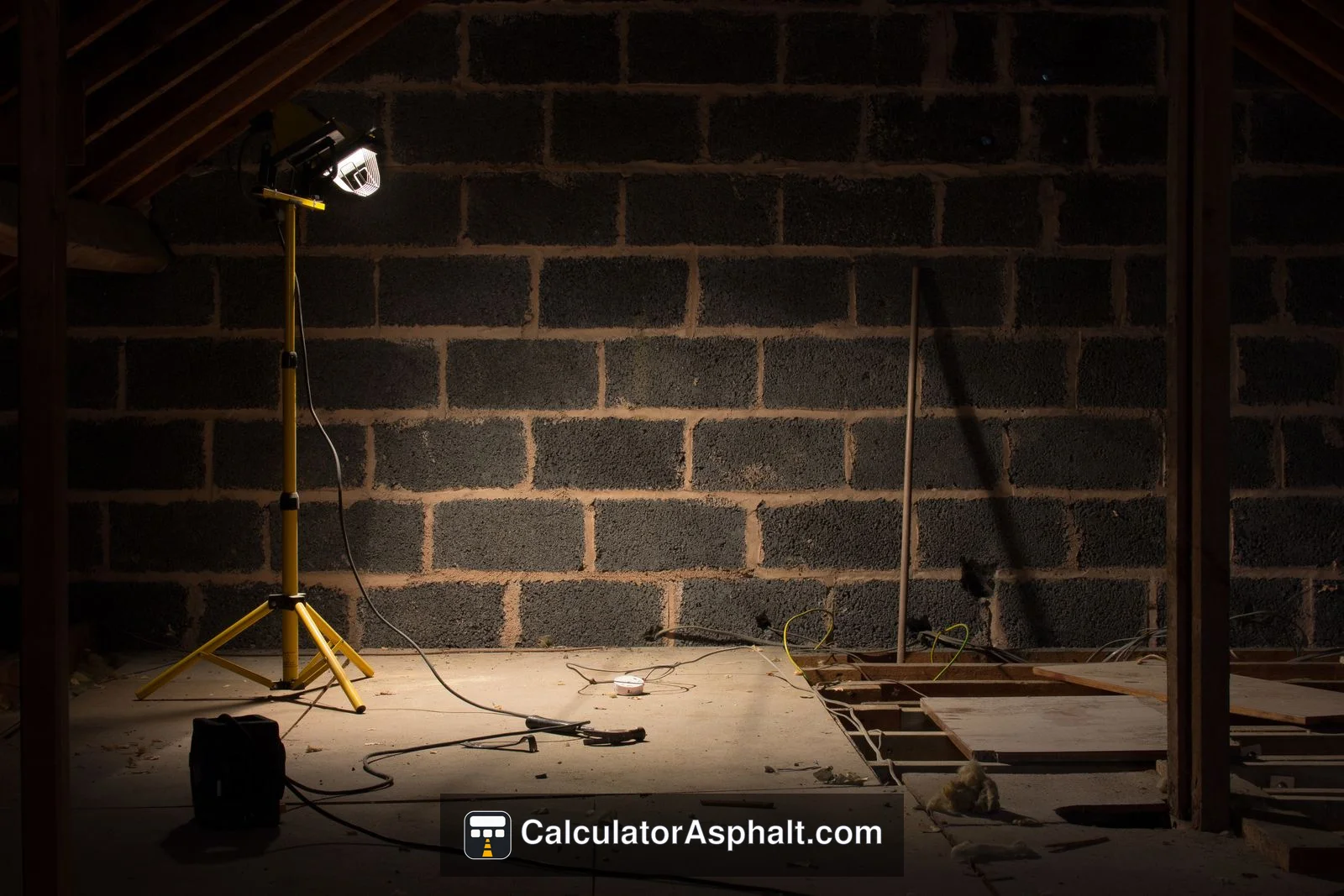
Take a single-story house with a 20-by-30-foot attic floor — 600 square feet — holding 3.5-inch batts at about R-11. The target is R-38. All R-value-per-inch figures below are label assumptions to check on the products you buy.
Step 1: the gap. Target R-38 minus existing R-11 leaves a gap of R-27 to add. The existing batts stay in place; the new insulation goes on top of them.
Step 2: depth for blown-in fiberglass. At a label assumption of R-2.5 per inch, R-27 needs 27 ÷ 2.5 = 10.8 inches of blown-in fiberglass on top of the existing batts. Measure it with a ruler after blowing, in at least four places across the attic, and top up anywhere under 10.8 inches.
Step 3: bags. At a label assumption of 30 square feet per bag at R-27 depth, 600 square feet needs 600 ÷ 30 = 20 bags. Add one extra bag for waste and thin spots, and buy 21.
Step 4: the batt alternative. An R-19 batt is 6.25 inches thick, so layering R-19 batts on top of the R-11 batts gives R-11 + R-19 = R-30 — short of the R-38 target. To reach R-38 with batts alone you need a second layer: R-19 plus R-13 batts gives R-11 + R-19 + R-13 = R-43, which clears the target but means two layers and twice the fitting. A single layer of R-19 batts covers 600 square feet at a label assumption of 48 square feet per roll, so 600 ÷ 48 = 12.5 rolls — buy 13.
Step 5: the wall check. The same house has 2-by-4 exterior walls with R-11 batts. A 2-by-4 cavity cannot hold more than a 3.5-inch batt, so the wall maximum with batts is about R-13. Chasing R-38 in a 2-by-4 wall is a dead end; the wall gets R-13 and the attic gets the attention, because the attic is where the heat is actually going.
Step 6: compare. Blown-in reaches the target in one pass at 10.8 inches and 21 bags, flowing around every wire and pipe. Batts need two layers, 13 rolls of R-19 plus a second layer of R-13, and careful fitting around every obstacle. For this attic, blown-in is the simpler buy.
Decision table: three products for the same attic
| Product | Depth to add R-27 | Quantity for 600 sq ft | Fits obstacles |
|---|---|---|---|
| Blown-in fiberglass | 10.8 in | 21 bags (incl. 1 spare) | Flows around them |
| R-19 batts, one layer | 6.25 in | 13 rolls — only reaches R-30 | Gaps at every obstacle |
| R-19 + R-13 batts, two layers | 6.25 in + 3.5 in | 13 + 13 rolls | Gaps at every obstacle |
| Cellulose blown-in, R-3.7/in | 7.3 in | Check bag label for coverage | Flows around them |
Run the same table with the label figures from the products on your shelf before you buy.
Where insulation buying goes wrong
Buying the cheapest bag without reading the R-value. Two bags can cost the same and cover the same area at very different R-values. The price that matters is cost per R-value per square foot, and it can only be worked out from the label.
Compressing batts to fit. A batt squeezed into a space thinner than its thickness loses R-value — a 6.25-inch R-19 batt compressed to 3.5 inches performs closer to R-13 than to R-19. The air trapped in the fibers is what insulates, and compression squeezes the air out.
Leaving gaps around obstacles. Heat flows through the path of least resistance, and a one-inch gap beside a pipe or a wire is a path. A batt job with gaps at every junction box can lose a fifth of its rated performance, which is why blown-in wins in a crowded attic.
Insulating the attic and ignoring the walls. The attic is the biggest single loss, but a house with R-38 in the attic and empty walls still has cold rooms on the windward side. The attic first, then the walls — in that order, and both measured, not guessed.
Field checklist: before you buy insulation
- Attic insulation depth measured with a tape in several places
- Existing R-value estimated from depth and material
- Target R-value decided for the attic and for the walls
- Joist and stud spacing measured — 16 or 24 inches on centre
- Obstacles counted: wires, pipes, junction boxes, recessed lights
- Product label read: R-value per inch and coverage per bag or roll
- Bag or roll count calculated from the actual square footage
- One spare bag or roll added for waste and thin spots
- Settled depth checked with a ruler after installation
Mistakes that keep rooms cold
The most expensive mistake is buying insulation by the bag count on a guess and discovering halfway through the attic that you are short, because a half-insulated attic is barely better than a thin one. The second is compressing batts to fit a shallow space, which throws away the R-value you paid for. The third is leaving gaps around every obstacle, which hands heat an easy escape route. The fourth is insulating over air leaks, which is a different job entirely — insulation slows heat moving through solid material, and it does nothing about air blowing straight through gaps. Every one is a measuring mistake, fixed by a tape measure and a calculator before the first bag is opened.
Frequently asked questions
How do I know what R-value I already have?
Measure the depth and identify the material. A 3.5-inch fiberglass batt is about R-11, six inches of blown-in fiberglass is about R-15, and 3.5 inches of cellulose is about R-13 — label assumptions, so check the product label and measure depth in several places rather than trusting one spot.
Can I put new insulation on top of old insulation?
Yes, and that is the normal way to top up an attic: the new layer goes on top of the old one, unfaced, so moisture can still escape. Never lay a second vapor-faced batt on top of the first with the facing down, or you trap moisture between the layers.
Is thicker always better?
Up to the target, yes — and past it, no. Once the attic is at R-38, another layer buys very little extra warmth, because the return on each extra inch falls as the total R-value rises. Spend the money on the next weakest part of the house instead.
Why is one room still cold after I insulated the attic?
Because heat leaves through more than the ceiling. Check the walls on that side, the windows, and the air leaks around the room's outlets and frames. A single cold room usually has a local cause — a missing patch of insulation, an unsealed gap, or a duct leak.