Use a ground-level test rather than relying on access to tall framing.
Preserve the everyday patio layout
Make two sketches. In the first, mark the structure, seating, doors and route to the garden. In the second, add only the objects needed for the holiday view. Compare the main approach in both sketches. Where the two uses compete, adjust the seasonal material before moving furniture or changing how people enter.
Layout 1: One stable planter
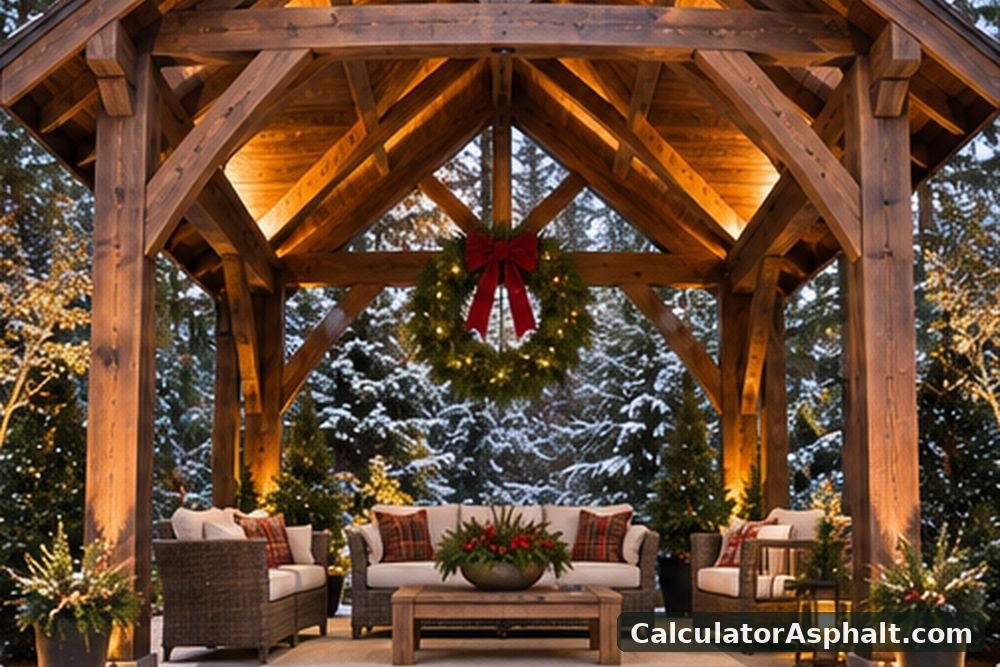
Build an eye-level focal shape outside the normal route.
Layout 2: Two contrasting textures near a seat
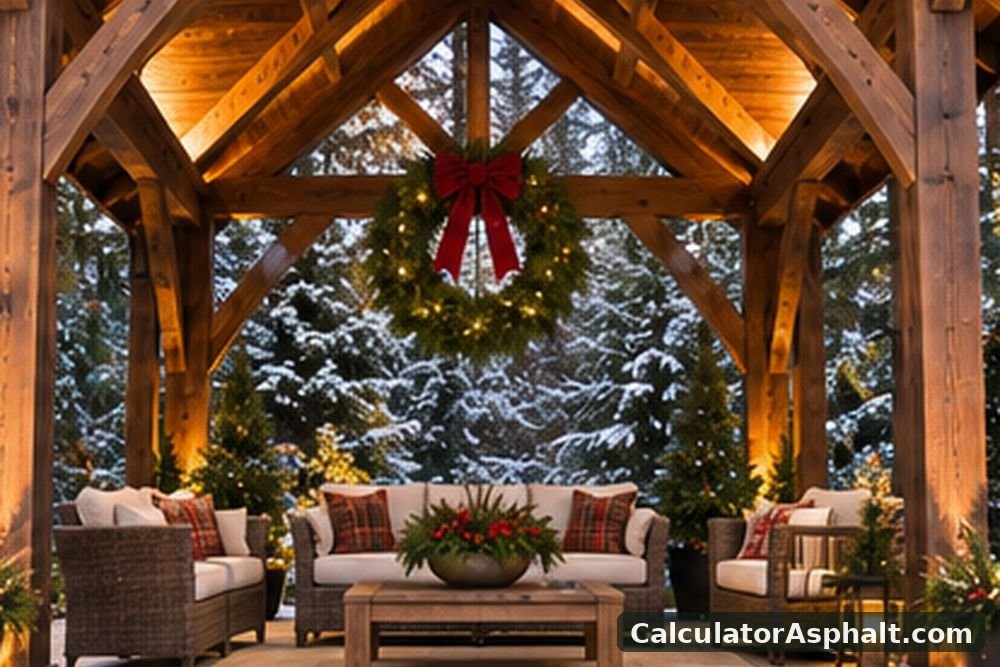
Let the high structure remain visually quiet.
Work through the dimensions
Compare a 16-inch pot with the actual footprint after branches are added.
Set out portable pieces at ground level first and leave space to remove them when the weather changes. Consult the structure and product documentation before attaching anything. Preserve required access, ordinary lighting and clearance around fixtures. Keep freestanding pieces stable and suited to the exposure. A night photograph can show where a second ornament competes with the main feature, even when both look appealing from close up.
Test before attaching anything
Measure the seating and the open routes before pricing decoration. Check both an evening view and a daytime view, then check product and structure compatibility. Keep any electrical work or structural modification within applicable requirements.
Open the project checklist
- Measure the full size or usable footprint before choosing components.
- Review the options from the usual viewing position or test the final thumbnail.
- Write down the quantities and the first thing to test using the example above.
- Make one complete mock-up before buying additional materials.
Outdoor decoration safety guidance and Penn State Extension’s winter container ideas.
Planning a separate permanent surface upgrade? Estimate pavers and base material using separate areas and specified depths.