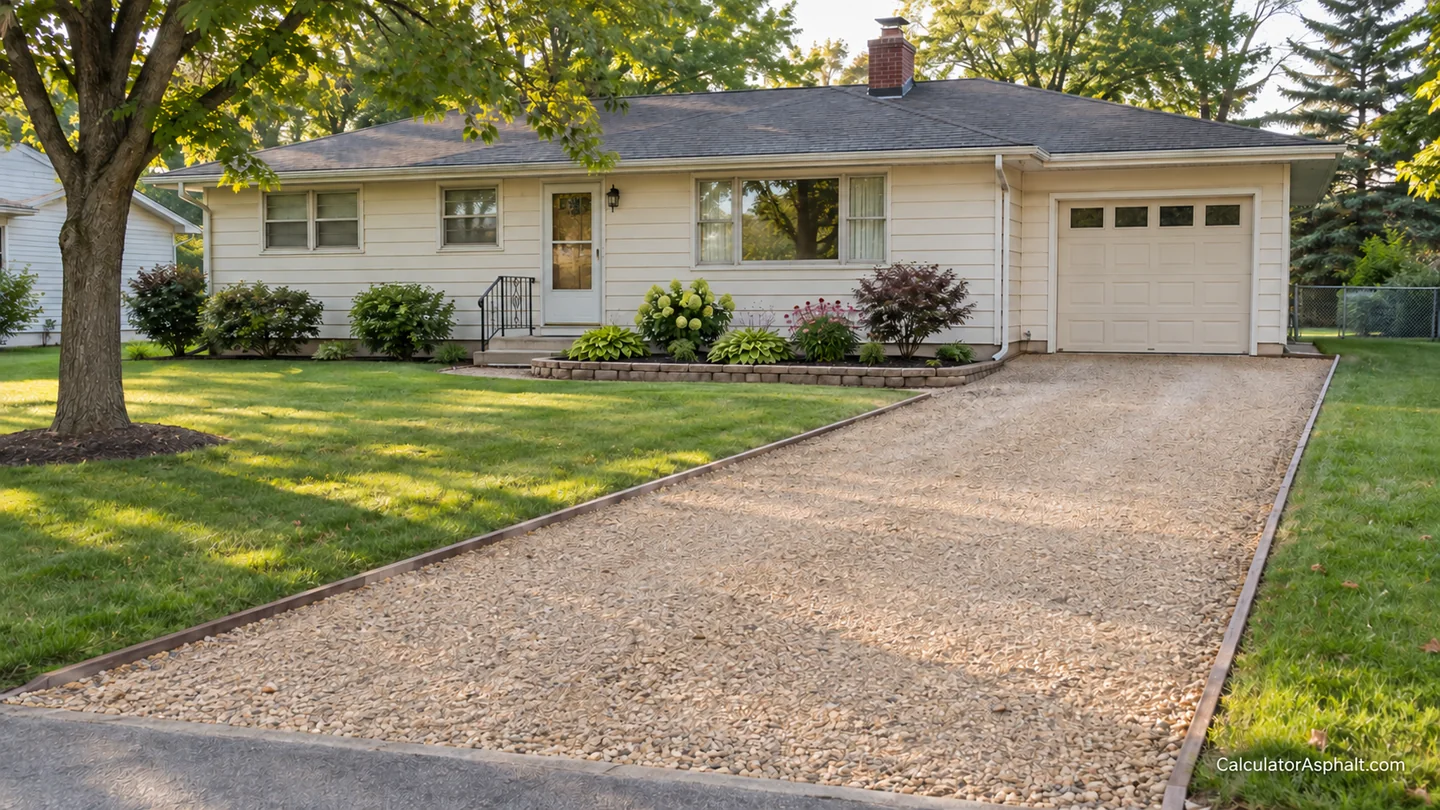
A gravel driveway can look deliberate on a tight budget when the surface, layout and edges work together. A short, straight run with locally available crushed stone is often easier to price than a curved drive with imported stone. Start with drainage and vehicle clearance, then choose the finish and planting details. These seven ideas apply to the full gravel driveway, from the approach to the garage. The images are AI-generated design illustrations.
7 cheap gravel driveway ideas
1. Use locally sourced angular gravel
Ask a local aggregate yard which angular, graded material it supplies for residential driveways. Compare samples dry and wet. Tan stone can pick up warm siding or brick, while blue-gray stone makes a clean transition to cooler colors. Get quotes for material, delivery and any minimum load before comparing bag and bulk costs. A nearby quarry can lower hauling costs, but actual quotes determine the total.
A surface gravel and a base aggregate can serve different jobs. Tell the supplier about slope, drivers, winter maintenance and expected vehicle loads before selecting either. Ask how the product should be spread and compacted. Rake migrating gravel off pedestrian areas and keep spare matching stone for later top-ups.
2. Add a contrasting gravel band
A dark edge band can frame a pale driveway without changing the surface across its whole width. Keep the accent outside the wheel paths, with a clear transition and a border suited to the landscape material. Use a wider band only where doors, pedestrians and runoff still have room. For an existing asphalt edge, see the separate driveway edging guide.

The cost depends on the amount of accent rock, the material used to separate it and how often the two finishes mix. Check the border after storms and snow removal. Sweep loose stone away from hard crossings and return it to the bed.
3. Stabilize a problem area with a vehicle-rated grid
A cellular gravel grid can hold compatible stone where rutting or gravel displacement is a recurring problem. Get an assessment first if water collects or the base feels soft. Choose a grid system specified for the vehicles and site, then follow its instructions for subgrade, aggregate, grid attachment, edge treatment and transitions. Permeability depends on the whole assembly, soil and outlet.
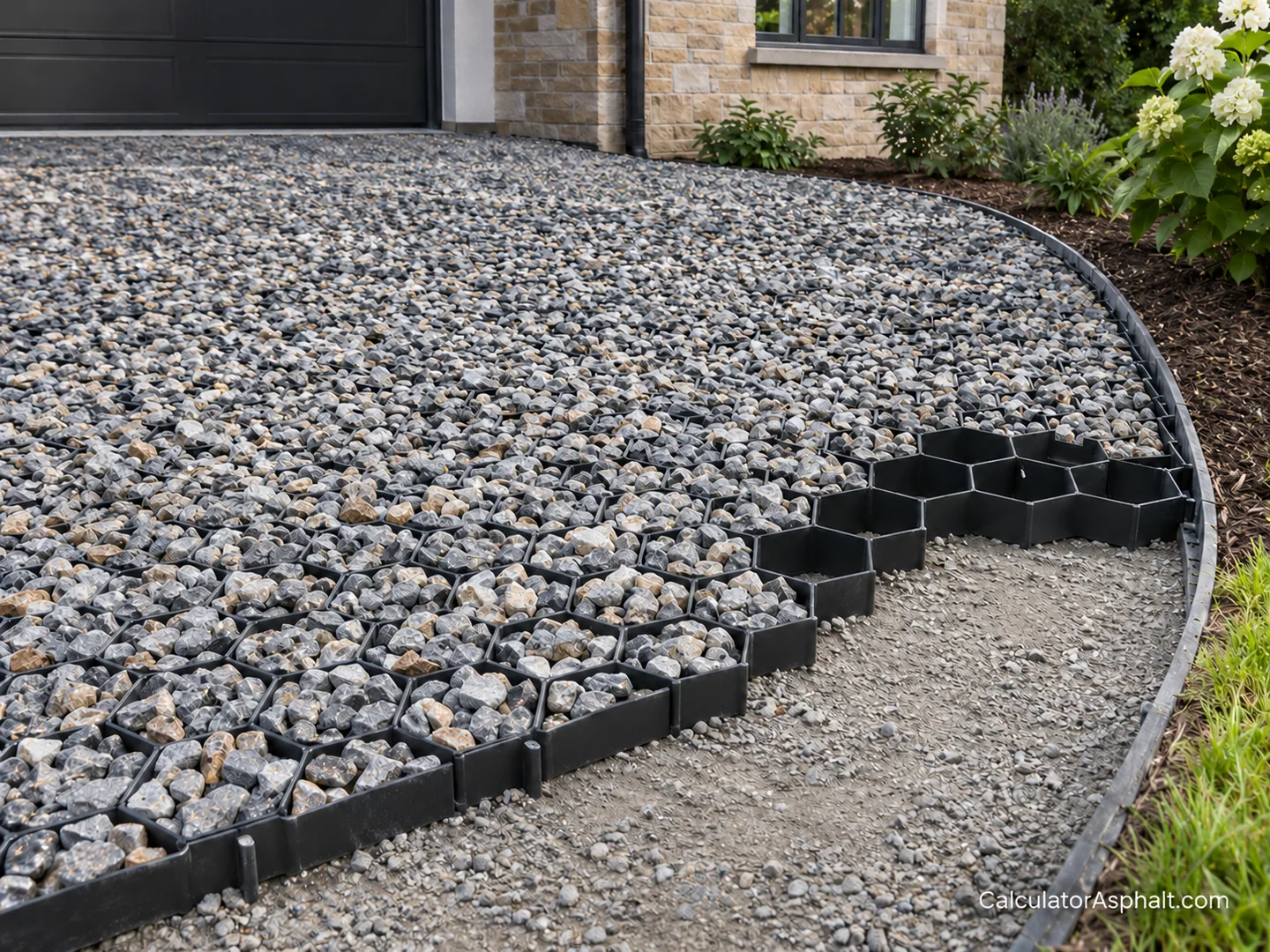
Budget for panels, the specified infill and base, and any excavation or stabilization. A focused grid project may make sense at a regularly used parking area if the product and site design permit the transition. Inspect for exposed cells and replenish the specified infill as needed. See the manufacturer’s residential gravel-grid demonstration for one system’s sequence.
4. Keep a single-car driveway straight
A straight approach to a single garage creates a simple sightline and makes a rectangular takeoff easier. Before deciding how narrow the surface can be, measure the actual vehicle with its mirrors, account for open doors and walk the path from each door to the house. Consider deliveries, snow storage and any gateposts that pinch the approach.
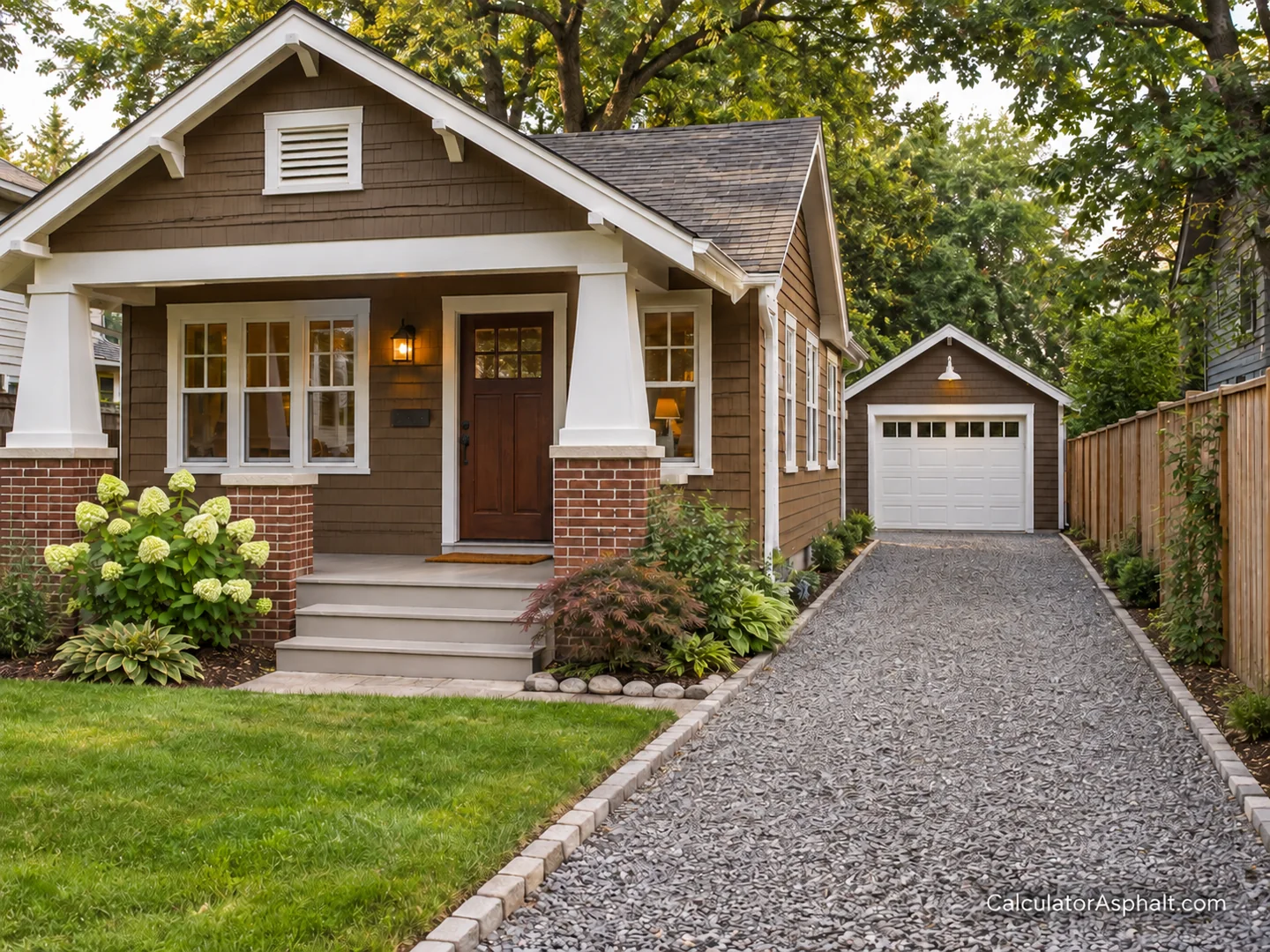
The simplest footprint may reduce surface area and edge length, but a site with poor drainage or fill can still cost more to prepare. If the design puts pedestrians close to tires, separate the walking route where the lot permits. Watch for recurring ruts at the apron and garage.
5. Use a curve only where it solves a layout problem
A gentle curve can work around a mature tree, avoid a steep alignment or improve the arrival view. Mark the route and test turning clearance slowly before ordering gravel. Pay special attention to the inside of turns, where tires can cut across a shoulder, and to the outside edge, where stone can migrate.
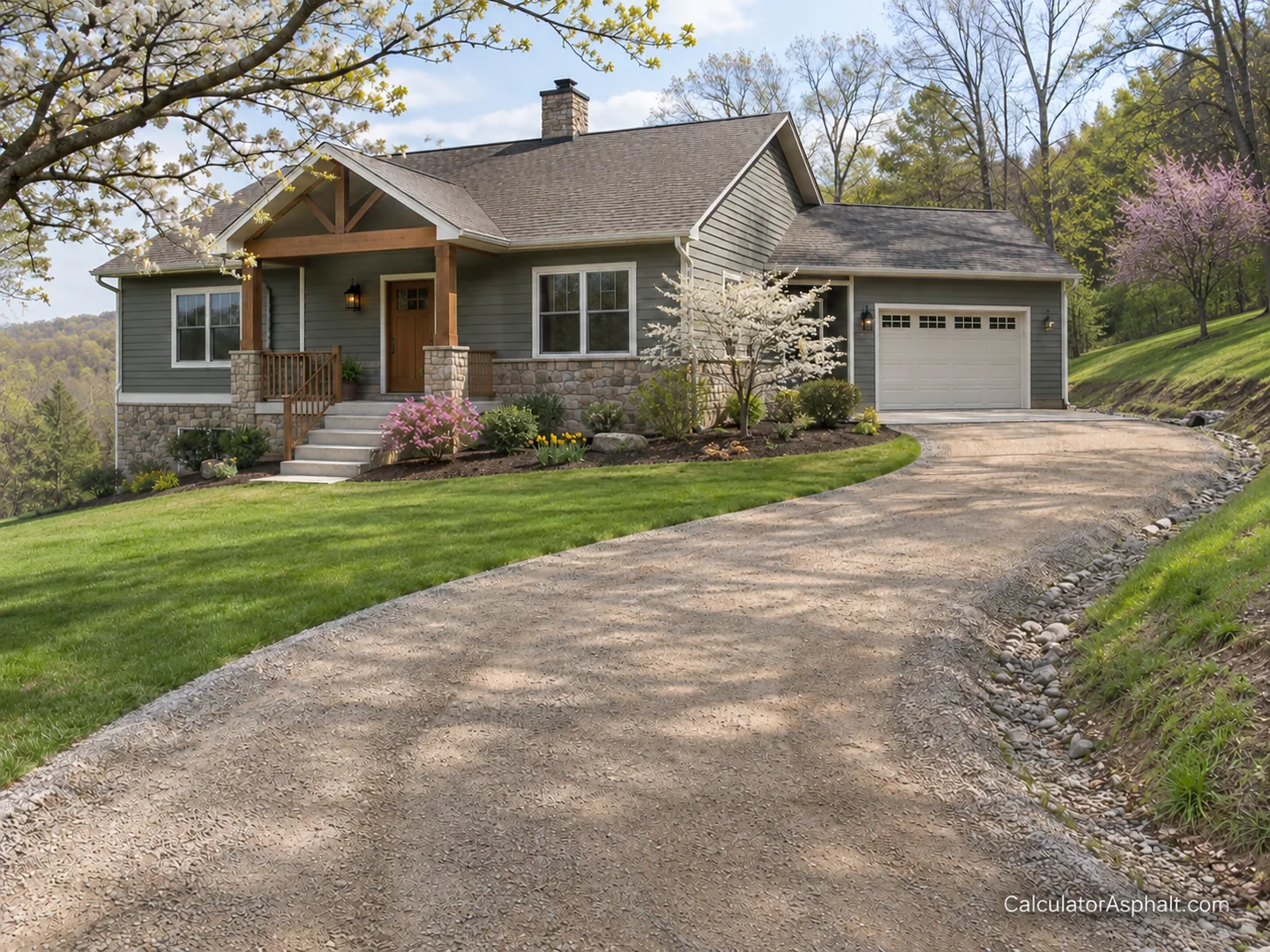
Curves add layout work and may increase surface area or require a stronger shoulder. Trees, steep slopes, drainage structures and driveway entrances by the road warrant professional advice. Inspect the turning area after heavy rain and correct the source if the same section keeps washing out.
6. Refresh the surface over a sound existing base
If a gravel drive drains well and feels firm, restoring its profile and adding a compatible surface course may be a smaller project than rebuilding. Check for persistent depressions, soft material underfoot, repeated washout, low spots and exposed subgrade. Have a contractor check recurring faults and confirm whether the base can remain.
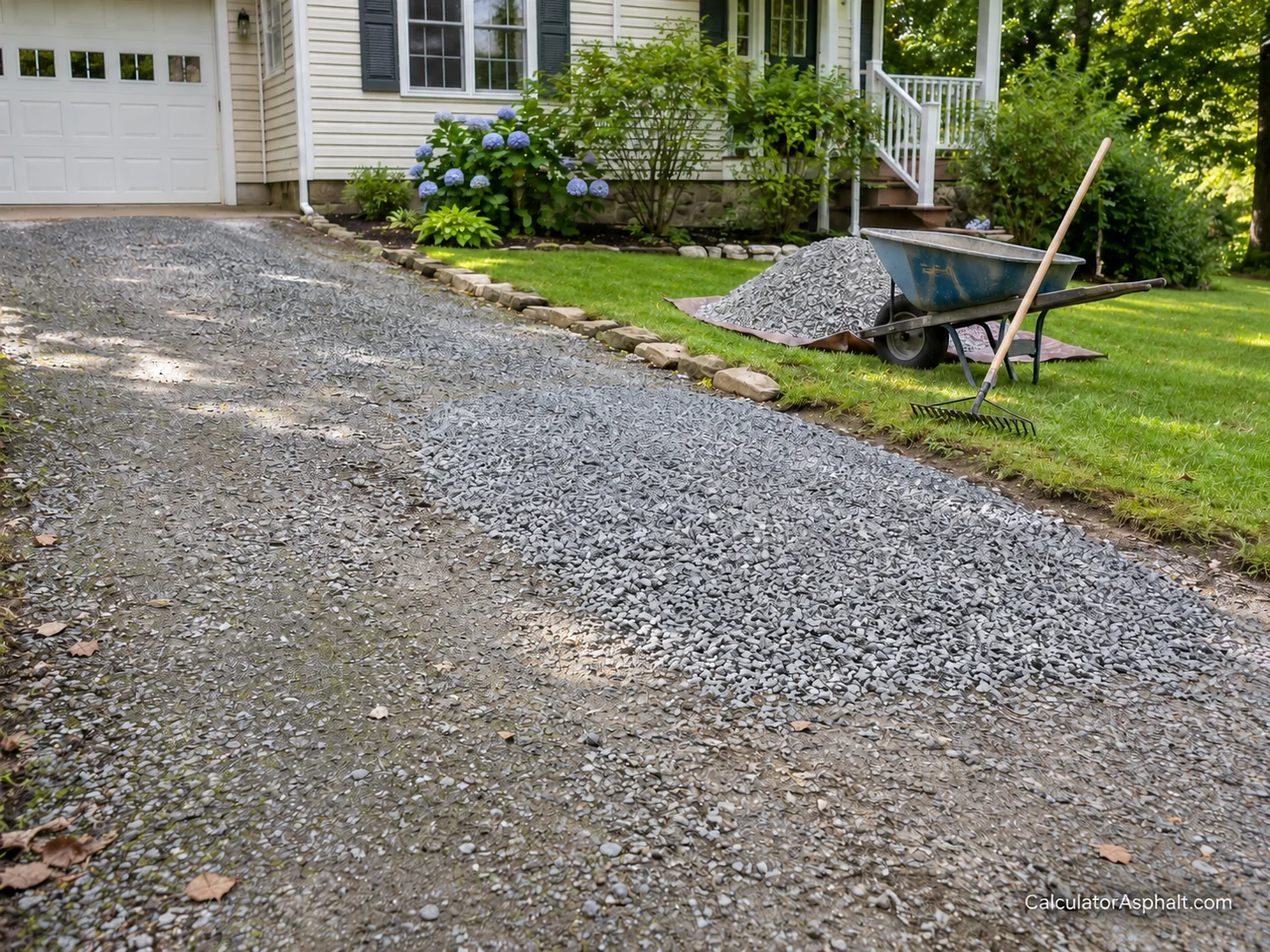
Compare the costs of grading, local repairs and topping up with the costs of removing and rebuilding weak sections. A fresh layer can refresh the color and fill shallow wear after grade correction. Persistent ruts need a diagnosis before more material is ordered.
7. Frame the approach with low planted margins
For a softer look, place simple repeated plantings beyond the shoulder, where mature growth leaves room for vehicle doors and keeps the street view open. A small grouping near the entry has a clear visual effect and costs less to install than a continuous new bed with the same plants. Select species for sun, water, deicing exposure and local climate.
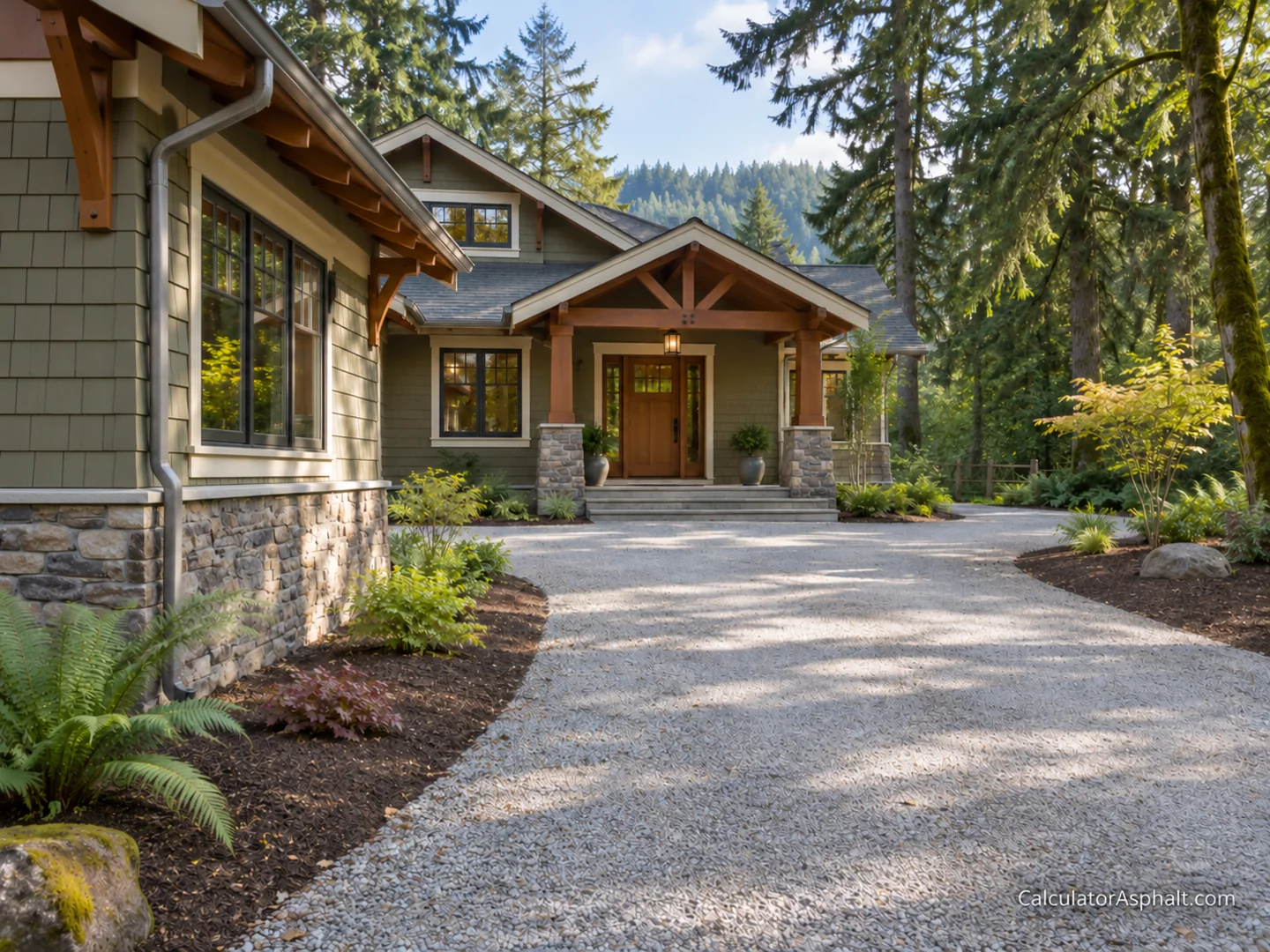
Reserve space for runoff, plowed snow and trimming. Put mulch or a stone accent outside the driven area and hand-rake scattered material. Inspect plants after their first season and move any that encroach on the drive or obscure the view when pulling out.
Compare seven gravel driveway approaches
| Approach | Best fit | Main cost driver | Upkeep |
|---|---|---|---|
| Local angular gravel | Sound, straightforward sites | Delivered aggregate and prep | Rake and replenish |
| Contrasting band | Stable shoulder with room | Accent stone and separation | Contain mixing |
| Gravel grid | A suitable vehicle-use area | Grid, compatible stone and base | Cover exposed cells |
| Straight single-car run | Clear route to a garage | Surface and base area | Watch apron ruts |
| Curved run | A lot with alignment constraints | Turns, grading and shoulder | Check high-wear edges |
| Surface refresh | Firm existing base | Grading and fresh aggregate | Monitor recurring defects |
| Planted margins | A wide, clear shoulder | Plants and bed preparation | Prune and remove debris |
Estimate gravel before getting delivery quotes
Measure the full driving area and any parking bay separately. Break irregular footprints into simple shapes, and estimate each material layer separately. For a quantity example, a 40-by-10-foot section at a hypothetical 3-inch fill depth contains 100 cubic feet, or about 3.70 cubic yards. The gravel calculator returns 6.30 US tons for its crushed-stone density and allowance. This example is an order estimate, and the depth is for illustrating the arithmetic. Use your supplier’s data and project specifications.
Ask about delivery access, unloading space and how many loads the supplier can make. Use the driveway cost estimator for a preliminary whole-project comparison. Keep a separate line item for grading, drainage, base, surface material and equipment. If you are choosing between materials, see the gravel versus asphalt comparison.
Check drainage and local requirements
Observe runoff after rain and keep drainage exits open. Ask your municipality about driveway entrances, rights-of-way and changes to site drainage before grading. Contact your state’s 811 program before digging and arrange private utility locating where needed. The EPA gravel-road maintenance manual explains surface drainage and grading principles. Residential construction details depend on the actual soil, slope, frost, drainage and expected load.
Save these gravel driveway ideas on Pinterest to keep this guide handy for your project.
Gravel driveway FAQs
What is the least expensive gravel driveway approach?
For a driveway with a reusable, well-drained base, compare a surface refresh with local delivered aggregates and the minimum delivery charge. For a new drive, get quotes for drainage, site preparation and the same footprint before comparing finishes.
Does rounded pea gravel work on a driveway?
Ask a supplier or installer about a graded angular material for the traveled surface. Loose rounded stone can move under tires. Some proprietary systems specify particular infill and containment, so follow the product instructions.
When should I hire a contractor?
Get a site assessment if you find soft ground, repeated washout, a steep or shared entrance, a culvert, significant excavation or heavy vehicle loads. Get written details on runoff, the base, edge support and planned maintenance.