Learn when staggered stepping stones work and when a direct path makes the space more useful.
Before choosing a pattern or shopping for finishes, test the design on the space you already use. Walk with the largest thing you take through the side yard. Mark the gate swing, hose storage and the width at the tightest point.
Offset pavers through planting
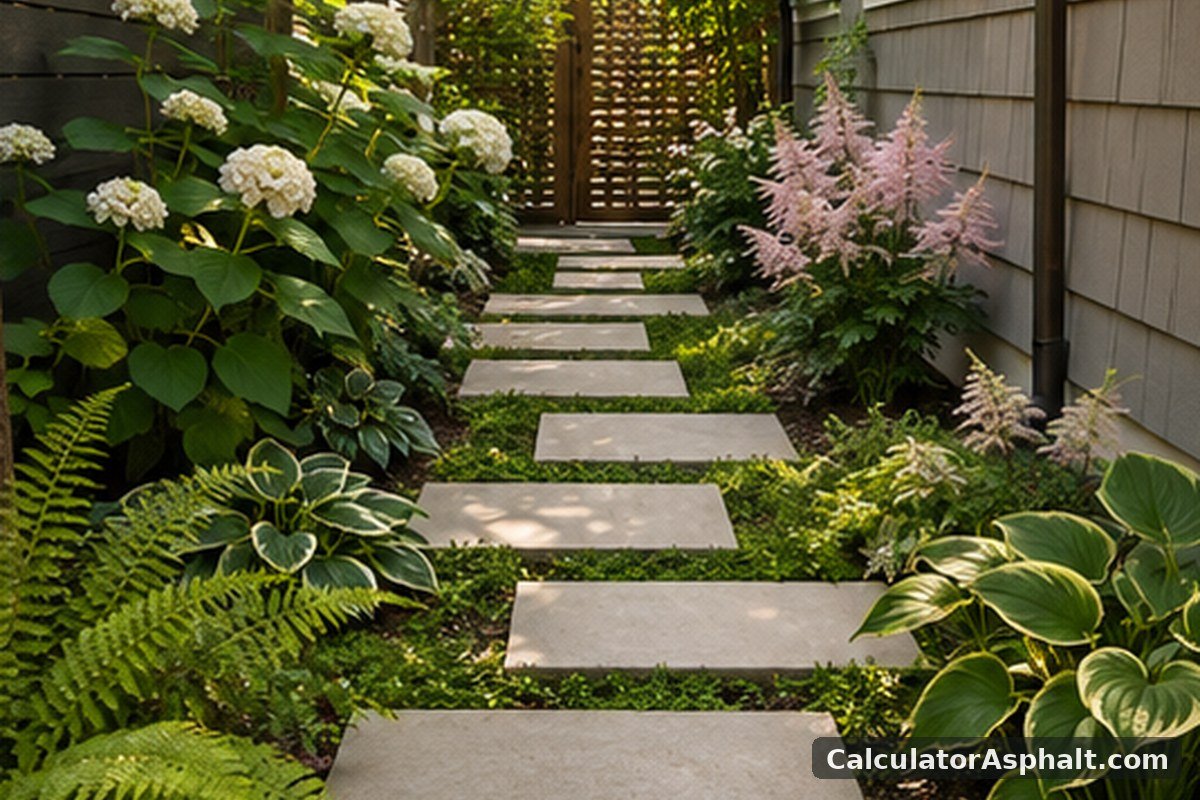
Try the actual offset with cardboard. Keep the walking rhythm natural and put the planting outside the travel line.
Two ways to adapt the idea
- Straight service lane
- Use the clearest line from the gate. Keep the edges available for incidental access and maintenance.
- A broad landing at the far end
- Use a squared-off group of pavers where people turn. Align it with a back gate or outdoor tap.
Work through a measured example
A 4-by-25-foot example covers 100 square feet before you account for cutouts. Keep separate totals for each material and avoid counting the same surface twice. Choose the line that feels easiest carrying equipment, even if the visual effect of a more elaborate route is stronger.
Check the design from both sides
Access on a side yard changes with the seasons. A hose, bins or a mower can use the same space as the walkway. Mark a second footprint for anything stored along the edge. If the walkway serves a gate, test whether the gate opens naturally while someone is standing on the proposed surface.
A question to settle before ordering
When does a staggered path fit?
It is useful when people take the path at an easy pace and the route can remain clear. A frequently used service route may be easier to use when it follows one simple line.
Estimate the materials
Before you buy
Open the site checklist
- Mark the current routes and the areas that must stay accessible.
- Walk with the largest thing you take through the side yard. Mark the gate swing, hose storage and the width at the tightest point.
- Choose the line that feels easiest carrying equipment, even if the visual effect of a more elaborate route is stronger.