Compare a quiet running bond, a herringbone center and a strong border for a garden path.
Before choosing a pattern or shopping for finishes, test the design on the space you already use. Find the most obvious view down the walk. Set a straight line from the point people enter. Choose a pattern that can turn or finish cleanly at the end.
Running bond with matching edge
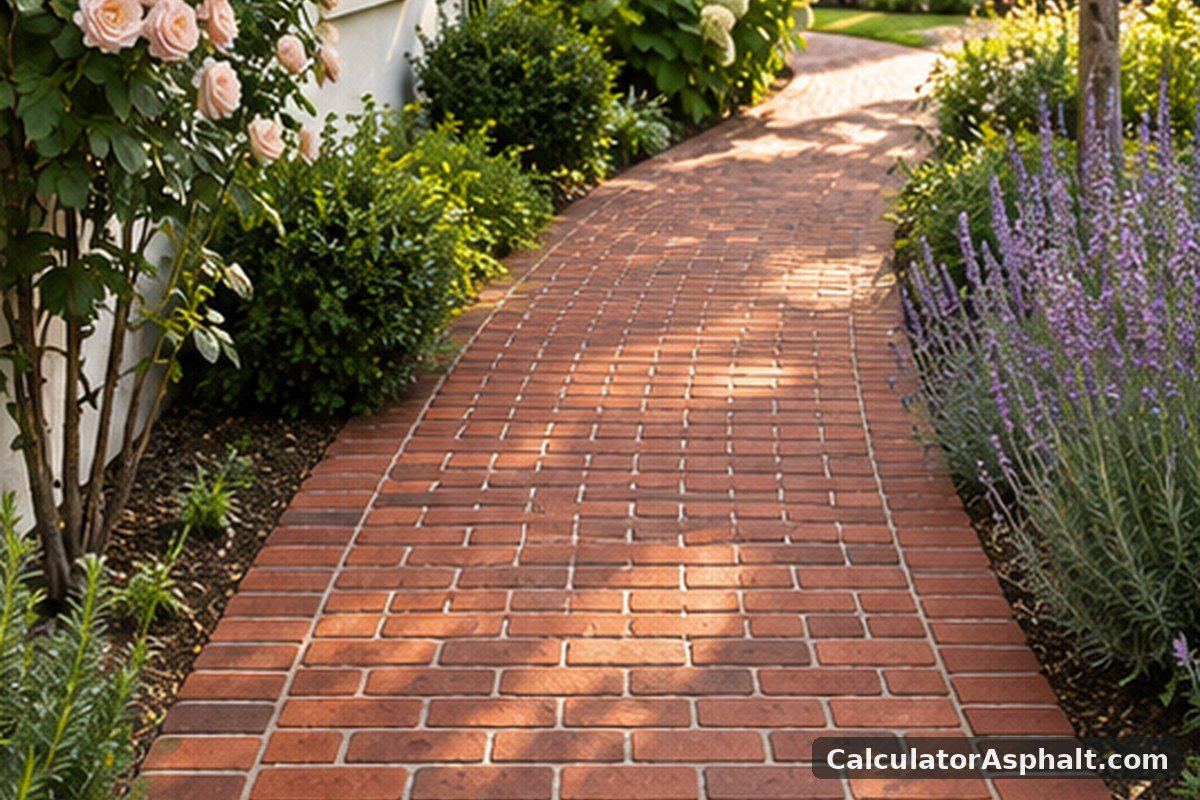
Dry-lay enough bricks to see the rhythm of the joints. Test how it meets the threshold.
Two ways to adapt the idea
- Herringbone framed by a straight course
- Build a sample before setting the finished width, since edge cuts depend on the unit and pattern.
- Contrasting border on one side
- Make the edge strongest where it marks the planting or arrival. Repeat a color from nearby existing brick.
Work through a measured example
A 4-by-22-foot example covers 88 square feet before you account for cutouts. Keep separate totals for each material and avoid counting the same surface twice. Get unit coverage for the product and pattern. Record the number of straight runs, end cuts and pieces you want to keep for future repairs.
Check the design from both sides
The brick color can read one way when laid face-up on a sample and another in a long sunny run. Make one trial section in the very place where the bricks will go. Compare how the joints read at a doorway or change of direction. A strongly contrasting edge generally makes any dimension changes more visible.
A question to settle before ordering
Which pattern is easiest to compare on a quote?
Ask suppliers to price each pattern against the same finished width and length. Include borders and cuts in the description.
Estimate the materials
Before you buy
Open the site checklist
- Take a photo from the point where the project is first seen.
- Find the most obvious view down the walk. Set a straight line from the point people enter. Choose a pattern that can turn or finish cleanly at the end.
- Get unit coverage for the product and pattern. Record the number of straight runs, end cuts and pieces you want to keep for future repairs.