Use repeat planting, a clear route and a layered gravel edge for a calmer front yard.
Before choosing a pattern or shopping for finishes, test the design on the space you already use. Observe the hottest areas and the likely maintenance route. Check which plants suit both the climate and the light with a local nursery or Extension service.
Three repeated planting groups
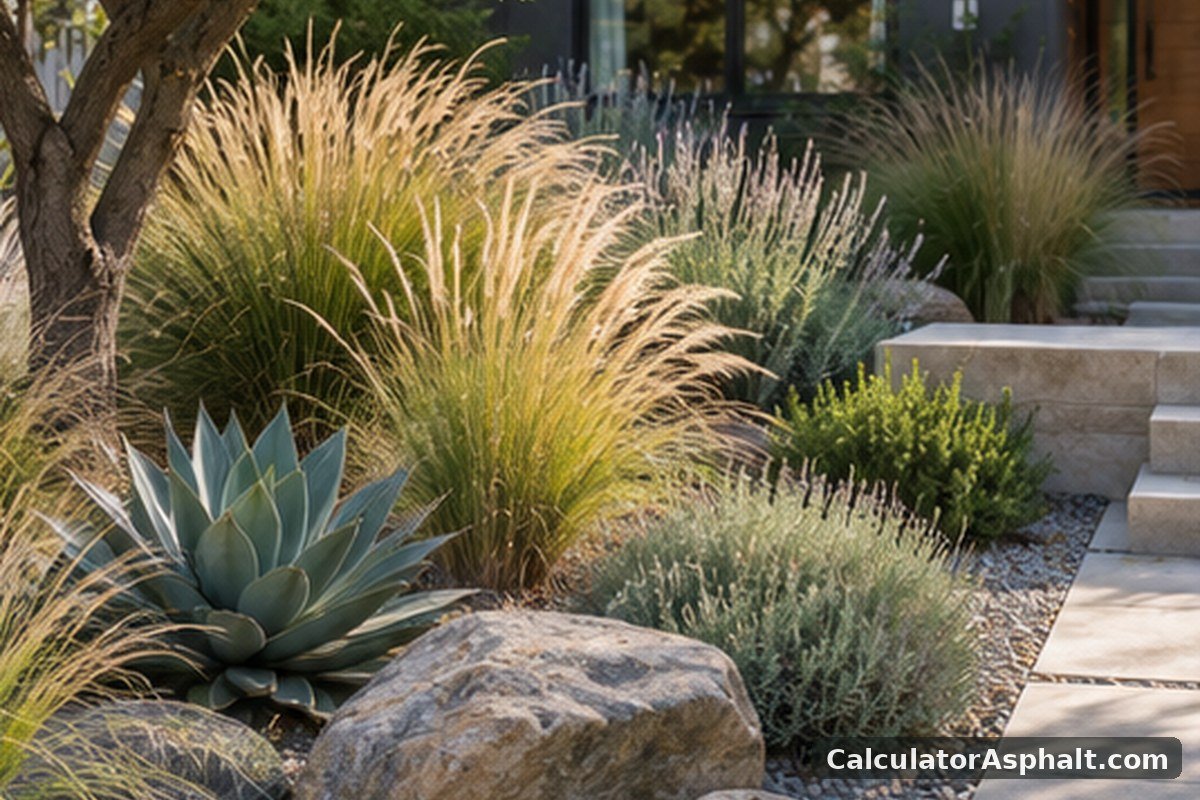
Repeat the same grouping from the entrance to a boundary. Draw the mature spread so you can reach each plant.
Two ways to adapt the idea
- Gravel surrounds with planted pockets
- Keep the plant beds large enough to read from the street. Estimate their soil separately from the aggregate.
- A framed planting island
- Use a defined edge where it improves maintenance. Leave open space where the entrance needs to feel clear.
Work through a measured example
A 14-by-18-foot example covers 252 square feet before you account for cutouts. Subtract the 30 square feet used by the excluded area to leave 222 square feet. Keep separate totals for each material and avoid counting the same surface twice. Split the plan into a walking strip and separate bed areas. Estimate each material as its own layer and preserve access for planting and repairs.
Check the design from both sides
A gravel garden becomes easier to understand when the planting has a rhythm. Sketch the mature outlines, then add the route a person will take to prune or replace a plant. A grouping can fill out over time, so verify the long-term gaps rather than designing only around the pots at the nursery.
A question to settle before ordering
Can the decorative gravel cover everything?
Map the spaces separately. Keep the walking area, planted beds and visible aggregate in distinct estimates, and ask your local plant supplier what the selected plants need at the soil surface.
Estimate the materials
Before you buy
Open the site checklist
- Mark the current routes and the areas that must stay accessible.
- Observe the hottest areas and the likely maintenance route. Check which plants suit both the climate and the light with a local nursery or Extension service.
- Split the plan into a walking strip and separate bed areas. Estimate each material as its own layer and preserve access for planting and repairs.