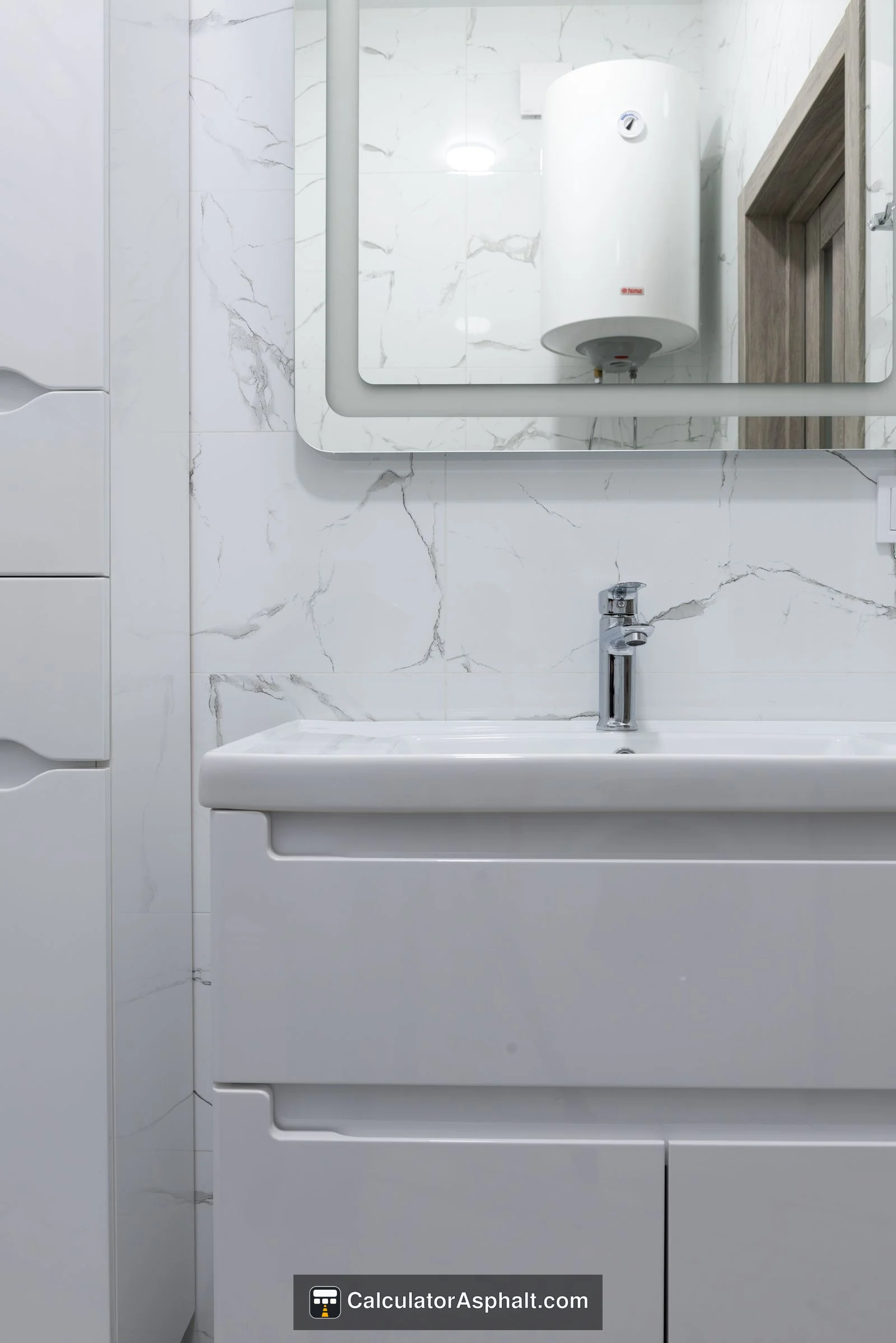
The water heater is the only appliance in the house that works all day, every day, whether anyone is home or not. It heats water for showers nobody takes yet, keeps a tank hot through the night, and replaces the heat that leaks through the tank walls hour after hour. Most households never see it as a line item, because the cost hides inside the electricity or gas bill, mixed in with everything else.
The fix is to price hot water the way you would price anything else: count the gallons you heat, work out the energy each gallon needs, and multiply by the rate on your own bill. That calculation shows which heater is cheapest for your house.
The decision first: gallons, energy, rate
Hot water cost has three parts, and each one is a number you can find. First, the gallons: how many gallons of hot water the household uses in a day. Second, the energy: how much fuel it takes to heat those gallons from the temperature of the incoming cold water to the temperature of the tap. Third, the rate: what your utility charges for that fuel. Multiply the three together and you have the daily cost; multiply by 365 and you have the year.
The gallons are the part most people guess wrong. A household of four typically uses about 50 gallons of hot water a day — showers, laundry, dishes, handwashing — but that number swings widely: long showers push it up, a dishwasher and a washing machine running on hot push it further, and a household that showers at the gym pushes it down. Count your own uses for a week before trusting any average.
The energy per gallon is fixed by physics, not by the heater. Heating one gallon of water through a 70-degree rise — from 50-degree incoming water to 120-degree tap water — takes 8.33 pounds per gallon times 70 degrees, or about 583 BTU. Fifty gallons a day needs 50 times that, or about 29,155 BTU a day. That is the heat the water itself needs; the heater's job is to deliver it, and different heaters deliver it at different efficiencies and different rates.
Fuel and efficiency: where the money goes
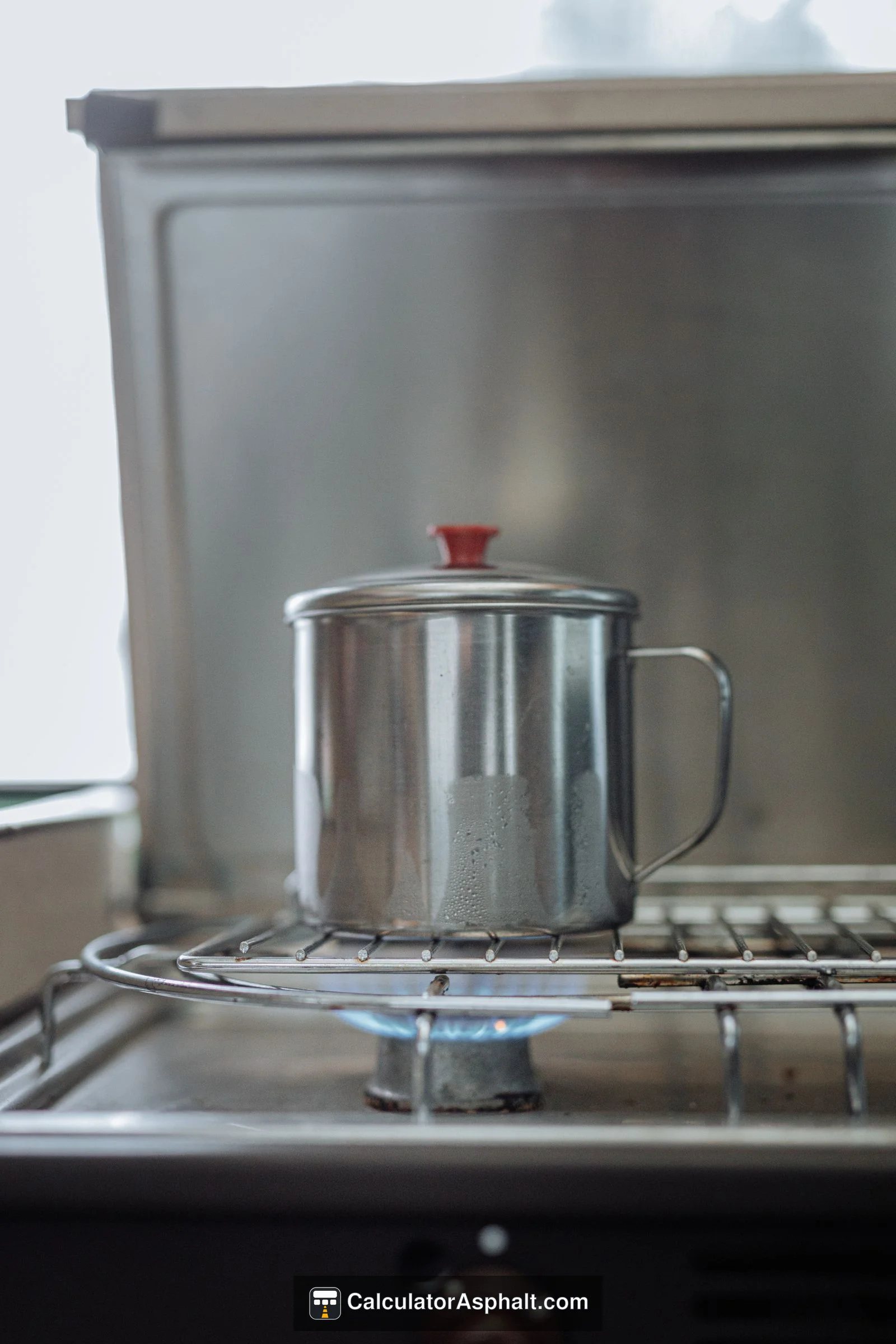
An electric resistance tank heater turns almost every unit of electricity into heat, which sounds efficient until you look at the price: electricity is usually the most expensive way to buy heat, unit for unit. A gas tank heater burns cheaper fuel but loses heat up the flue, so it needs more fuel to deliver the same heat to the water. A heat pump water heater moves heat from the surrounding air instead of making it, so it uses far less electricity than a resistance heater for the same gallons.
Efficiency numbers are stated as label assumptions to check on the unit you buy: a gas tank at about 80 percent, a gas tankless at about 95 percent, a heat pump at a coefficient of performance of about 3.0, meaning it moves three units of heat for every unit of electricity.
Standby loss is the cost nobody budgets for. A tank heater keeps 40 or 50 gallons hot around the clock, and heat leaks through the tank walls and up the flue all day. A gas tank loses roughly 10 percent of its daily fuel to standby; an electric tank loses roughly an extra kilowatt-hour a day. A tankless heater has no standby loss at all, which is why it often wins on cost even when its fuel is not the cheapest.
Rates: the number that flips the answer
The same heater can be the cheapest option in one house and the most expensive in another, because rates differ. Electricity is priced per kilowatt-hour and gas per therm, and both vary by region, by season, and by tariff. One kilowatt-hour equals 3,412 BTU, and one therm equals 100,000 BTU, so the two fuels can be compared on the same basis — but only once you know your own rates.
Read the rates off your own bill, not off a national average. The worked example below uses example rates — $0.15 per kilowatt-hour for electricity and $1.20 per therm for gas — labelled as examples to check against your bill.
Worked example: fifty gallons a day, four heaters compared
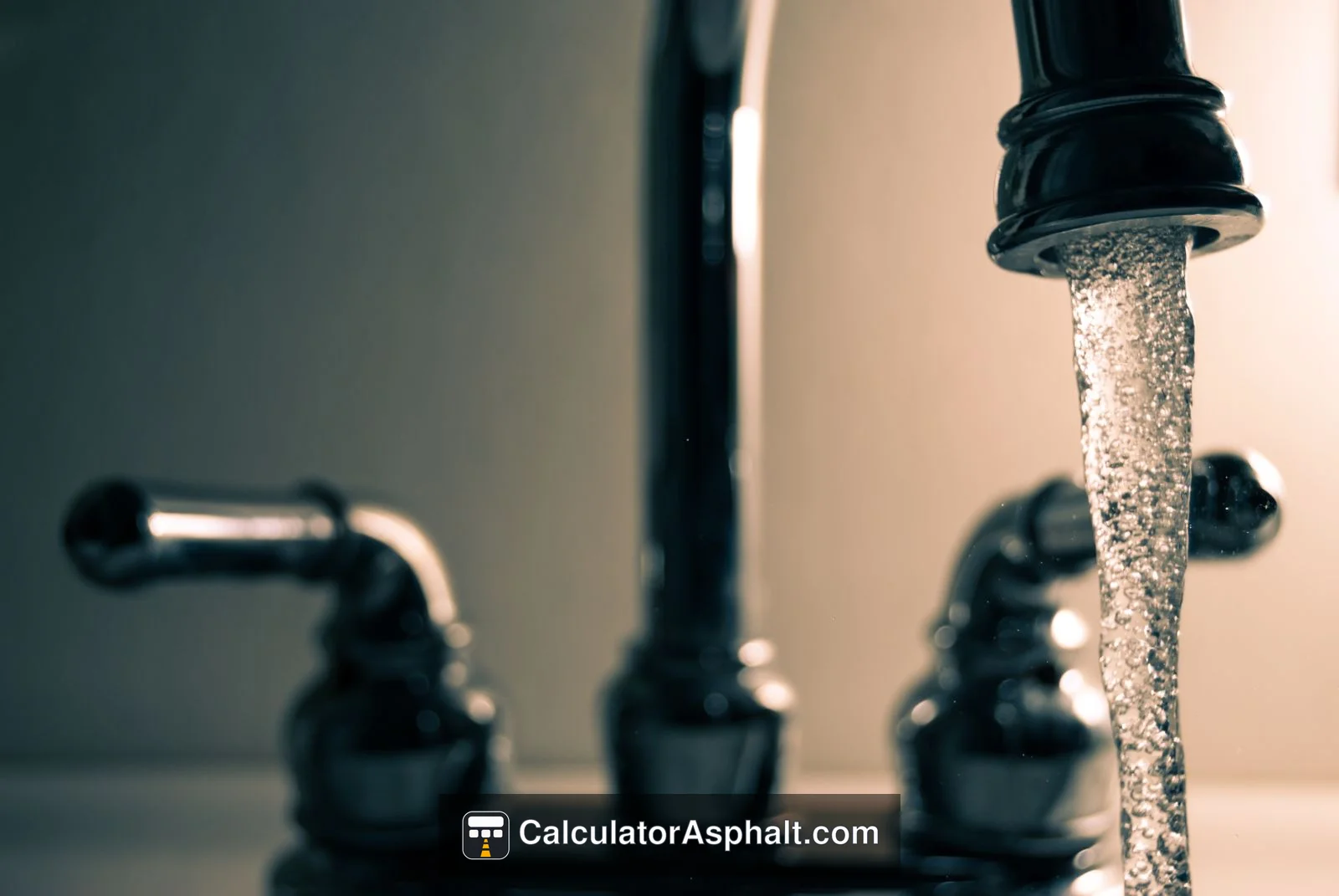
Take a household of four using 50 gallons of hot water a day, heated from 50-degree incoming water to 120-degree tap water — a 70-degree rise. All rates in this example are labelled examples: check your own bill and replace them.
Step 1: the heat the water needs. One gallon weighs 8.33 pounds, and each pound needs one BTU per degree. Heating 50 gallons through 70 degrees takes 50 × 8.33 × 70 = 29,155 BTU a day. That is the heat delivered to the water, before any heater losses.
Step 2: the electric tank. One kilowatt-hour equals 3,412 BTU, so 29,155 BTU needs 29,155 ÷ 3,412 = 8.55 kilowatt-hours a day. At the example rate of $0.15 per kilowatt-hour, that is 8.55 × 0.15 = $1.28 a day, or $1.28 × 365 = $467 a year. Add the example standby loss of one extra kilowatt-hour a day, and the total is 9.55 kilowatt-hours, or $1.43 a day, which is $523 a year.
Step 3: the gas tank. At an example efficiency of 80 percent, the heater must burn 29,155 ÷ 0.80 = 36,444 BTU a day to deliver 29,155 BTU to the water. One therm is 100,000 BTU, so that is 0.36 therms a day. At the example rate of $1.20 per therm, that is 0.36 × 1.20 = $0.44 a day, or $160 a year. Add the example standby loss of 10 percent, and the total is 0.40 therms a day, or $0.48 a day, which is $176 a year.
Step 4: the gas tankless. At an example efficiency of 95 percent, the heater must burn 29,155 ÷ 0.95 = 30,690 BTU a day, or 0.31 therms. At $1.20 per therm, that is 0.31 × 1.20 = $0.37 a day, or $134 a year — and there is no standby loss, because the heater only fires when a tap opens.
Step 5: the heat pump. At an example coefficient of performance of 3.0, the heater moves three units of heat for every unit of electricity, so it needs 8.55 ÷ 3 = 2.85 kilowatt-hours a day. At $0.15 per kilowatt-hour, that is 2.85 × 0.15 = $0.43 a day, or $156 a year, with a small standby loss already folded into the example figure.
Step 6: compare. In this example, the electric tank costs $523 a year, the gas tank $176, the gas tankless $134, and the heat pump $156. The gap between the most expensive and the cheapest is $523 − $134 = $389 a year.
Decision table: four heaters at the example rates
| Heater | Energy per day | Daily cost at example rates | Yearly cost |
|---|---|---|---|
| Electric tank, resistance | 9.55 kWh with standby | $1.43 | $523 |
| Gas tank, 80% efficient | 0.40 therms with standby | $0.48 | $176 |
| Gas tankless, 95% efficient | 0.31 therms, no standby | $0.37 | $134 |
| Heat pump, COP 3.0 | 2.85 kWh | $0.43 | $156 |
| Electric tank, no standby counted | 8.55 kWh | $1.28 | $467 |
| Gas tank, no standby counted | 0.36 therms | $0.44 | $160 |
Run the same table with your own rates before you buy.
Where water-heating costs go wrong
Pricing the heater, not the heat. The cheapest heater to buy is often the most expensive to run. An electric tank costs little up front and then charges $523 a year in the example, while a tankless unit costs more to install and $134 a year to run. The purchase price is paid once; the fuel bill is paid every year the heater lives.
Using a national average rate. Averages hide the spread. Electricity at $0.10 a kilowatt-hour makes the electric tank cost $349 a year in the example instead of $523, and gas at $2.00 a therm makes the gas tankless cost $224 instead of $134. The ranking can change completely, which is why the rates must come from your own bill.
Forgetting standby loss. A tank that nobody uses still burns fuel keeping water hot. The example gas tank loses 10 percent to standby and the electric tank loses a kilowatt-hour a day; over a year, that is about $16 on the gas tank and $55 on the electric tank, paid for hot water nobody used.
Field checklist: before you compare heaters
- Daily hot-water gallons counted from a week of actual use
- Incoming cold water temperature noted for the coldest month
- Target tap temperature set, usually 120 degrees
- Electricity rate read off your own bill, per kilowatt-hour
- Gas rate read off your own bill, per therm
- Existing heater type and age noted, with its label efficiency
- Standby loss allowed for on any tank heater
- Tankless flow rate checked against the peak demand
- Yearly cost calculated for each option at your own rates
Mistakes that hide the water-heating bill
The most expensive mistake is choosing a heater by its purchase price and never pricing the fuel, because the fuel bill over ten years dwarfs the price on the box. The second is using a national average rate instead of the rate on your own bill, which can flip the cheapest option to the most expensive. The third is forgetting standby loss, which charges you for hot water nobody used. The fourth is guessing the gallons instead of counting them, which makes every number downstream wrong by the same percentage. Every one is a pricing mistake, fixed by running the arithmetic with your own gallons and your own rates before you buy.
Frequently asked questions
How many gallons of hot water does a household use in a day?
About 50 gallons for a household of four is a common planning figure, but the range is wide: long showers, hot laundry cycles, and a dishwasher all push it up, while showering at the gym or running cold laundry cycles push it down. Count your own uses for a week rather than trusting an average.
Is a heat pump water heater always the cheapest to run?
Not always. At the example rates it costs $156 a year, close to the gas tankless at $134 — but it needs warm surrounding air to work well, so in a cold basement or a cold climate its efficiency falls, and it costs more to buy.
Why does my gas bill stay high in summer when the heating is off?
The water heater is the usual answer. It runs every day of the year, and in summer it is often the only gas appliance running — which makes its cost visible for the first time. A gas tank at the example rates costs about $0.48 a day with standby, or about $15 a month, just to keep water hot.
Can I cut the bill without buying a new heater?
Yes, and the cheapest cut is using less hot water: shorter showers, cold laundry cycles, and a dishwasher run only when full. The second cheapest is turning the tank thermostat down to 120 degrees if it is set higher.