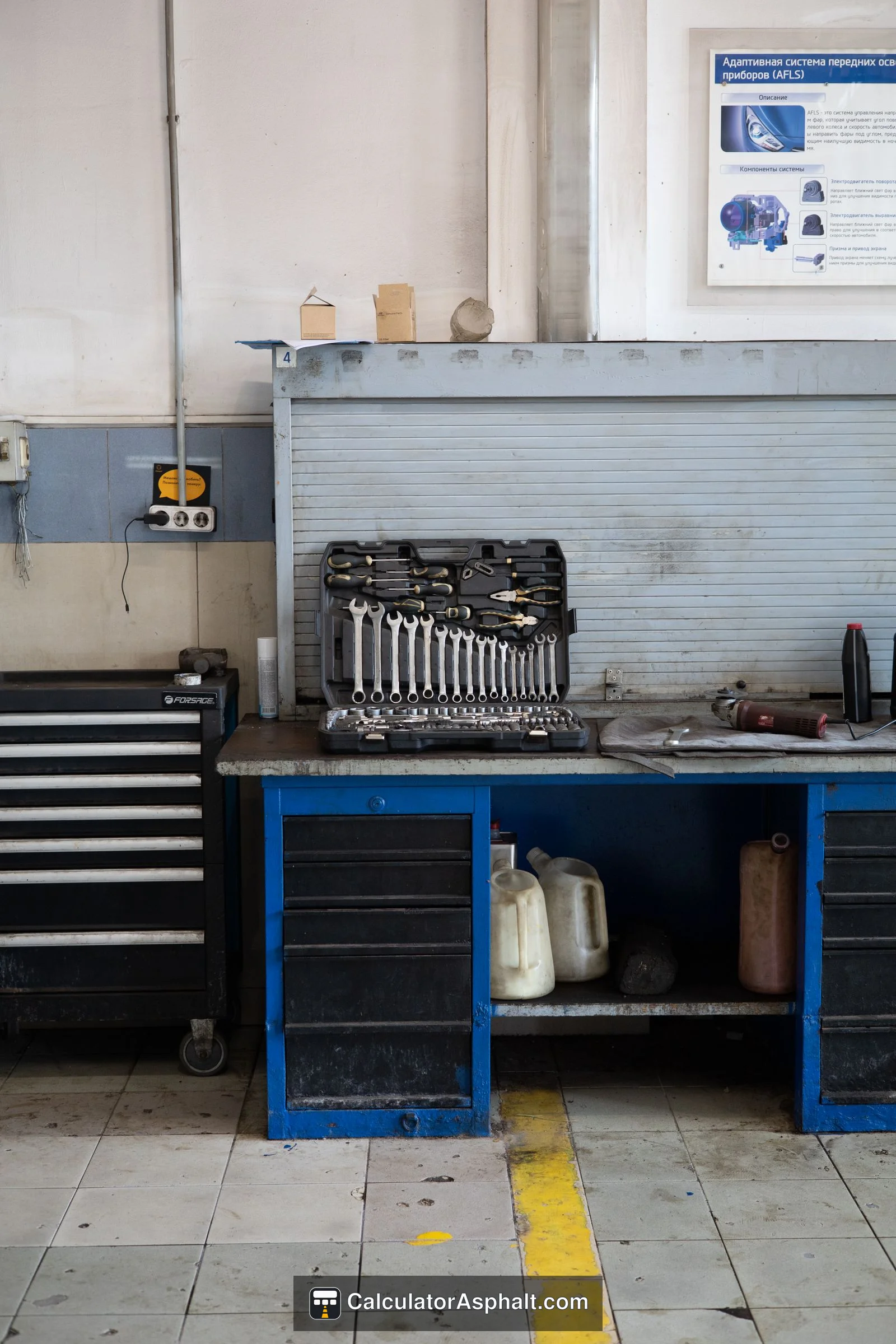
A workshop lit by a single bulb in the middle of the ceiling has the same problem in every house: a bright circle under the bulb, dark corners everywhere else, and your own shadow falling across whatever you are trying to see. The bulb is not too dim. The plan is too thin. One light source cannot cover a room, because light falls off with distance and every object in the room casts a shadow.
The fix is to plan lighting the way an electrician does: by lumens per square foot, room by room, with the brightness set by the task, not by the bulb. A workshop needs more light than a bedroom, a workbench needs more than the walkway, and the number of fixtures matters as much as the brightness of each one. Count the lumens first, then decide how many fixtures deliver them.
The decision first: lumens per square foot, by task
Light is measured in lumens, which is the total amount of light a source gives out, and in footcandles, which is lumens per square foot of floor. A footcandle is one lumen falling on one square foot. The planning rule is simple: multiply the floor area by the footcandles the task needs, and you have the total lumens the room needs.
The footcandle target depends on what you do in the room. General living space works at about 20 footcandles. A garage or laundry room needs about 30. A workshop where you read measurements, cut wood, or solder needs about 50. A workbench where you do fine detail work needs more still — about 75 footcandles at the bench surface itself, delivered by a task light on top of the general lighting. These are planning targets to check against the fixture labels and the room you are lighting, not rules stamped on any product.
The second decision is how many fixtures deliver the total. Five fixtures of 4,000 lumens each give the same 20,000 lumens as twenty-five bulbs of 800 lumens each, but the room looks completely different: five spread-out fixtures light the corners and kill shadows, while one bright source in the middle leaves the edges dark. Spread the fixtures across the ceiling, and put a task light over the bench, because the bench is where your eyes work hardest.
Bulbs and fixtures: what the numbers on the box mean
The number that matters on a bulb box is lumens, not watts. Watts measure how much electricity the bulb uses; lumens measure how much light it gives out. An old 60-watt incandescent bulb gives about 800 lumens, and a modern LED gives the same 800 lumens from about 9 watts. Comparing bulbs by watts is comparing fuel use, not light output.
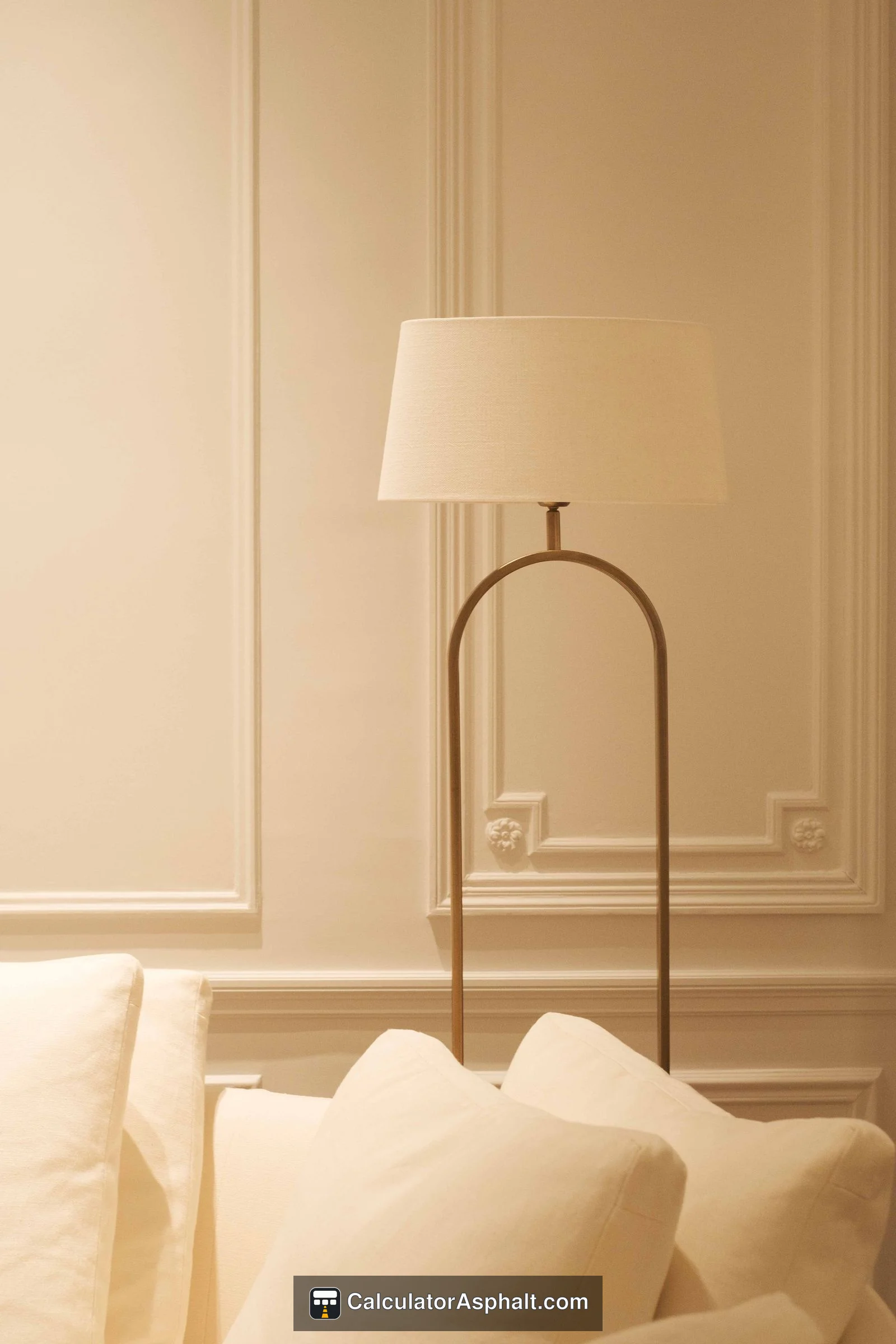
Colour temperature matters as much as brightness, and it is measured in kelvin. Warm white at about 2,700 to 3,000 kelvin suits living rooms and bedrooms, where the light should feel soft. Neutral white at about 4,000 kelvin suits kitchens and garages. Daylight at about 5,000 kelvin suits a workshop, because it renders colours and fine detail most accurately and keeps you alert. Pick the colour by the room, not by habit, and keep every fixture in one room at the same colour temperature, or the room looks patched together.
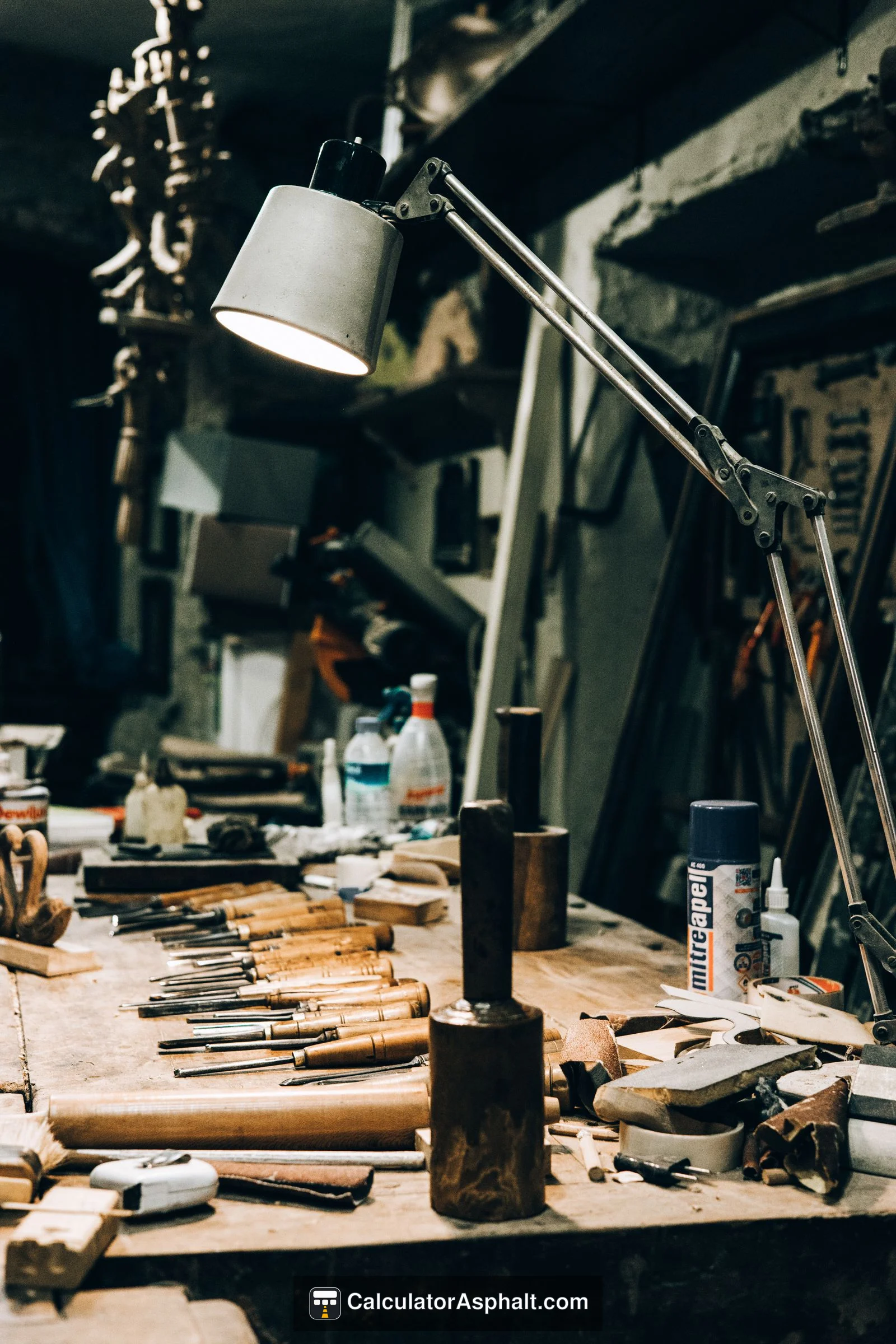
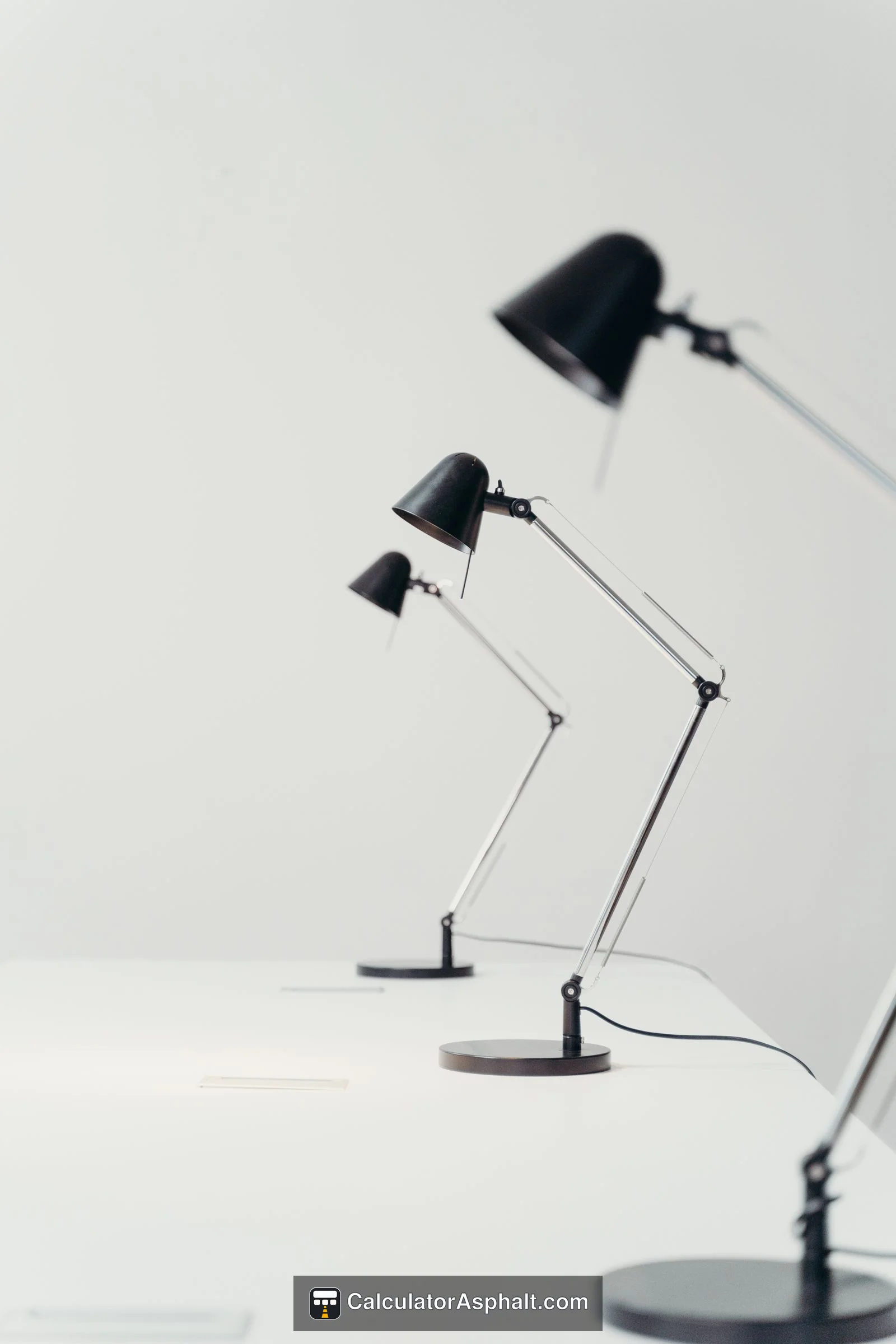
Fixture type decides where the light goes. A bare bulb throws light in all directions, including up at the ceiling. A shop light with a diffuser spreads it evenly downward. A task light on an arm puts it exactly on the work. A fixture with a narrow beam makes a pool of light and leaves the rest dark, which is fine over a bench and useless as the only light in a room. Read the fixture label for its lumen output, and check whether the light is diffused or directional before you buy.
Worked example: a 20-by-20-foot workshop and a 12-by-15-foot living room
Take a workshop 20 feet by 20 feet, and a living room 12 feet by 15 feet. The workshop needs 50 footcandles for bench work; the living room needs 20.
Step 1: the workshop floor area. 20 × 20 = 400 square feet. At 50 footcandles, the room needs 400 × 50 = 20,000 lumens in total.
Step 2: the workshop fixtures. A four-foot LED shop light gives about 4,000 lumens — check the fixture label, because that number comes from the fixture, not the room. Five fixtures give 5 × 4,000 = 20,000 lumens, which is exactly the target. Spread them in two rows across the ceiling, three in one row and two in the other, so no corner is more than a few feet from a fixture.
Step 3: the workbench task light. The bench needs about 75 footcandles at its surface, which the general lighting alone does not deliver. Add a task light over the bench giving about 1,500 lumens onto a bench area of 20 square feet: 1,500 ÷ 20 = 75 footcandles at the bench. The general lighting plus the task light together give the bench what it needs without flooding the whole room.
Step 4: the living room. 12 × 15 = 180 square feet. At 20 footcandles, the room needs 180 × 20 = 3,600 lumens. Five bulbs of 800 lumens each give 5 × 800 = 4,000 lumens, which is 4,000 ÷ 180 = 22 footcandles — slightly above target, which is the right side to be on, because furniture and wall colour absorb light the arithmetic does not count.
Step 5: the garage check. The same 20-by-20-foot space used as a garage needs 30 footcandles, not 50: 400 × 30 = 12,000 lumens, which is 12,000 ÷ 4,000 = 3 shop lights. The room is the same size; the task is different, and the task sets the number.
Step 6: compare with the single bulb. A single 800-lumen bulb in the 400-square-foot workshop gives 800 ÷ 400 = 2 footcandles — one twenty-fifth of the 50 the room needs. That is why the corners are dark and the bench is in shadow: the bulb is not broken, it is twenty-five times too little light for the room.
Decision table: lumens by room and task
| Room and task | Floor area | Footcandles | Lumens needed | Fixtures at 4,000 lumens |
|---|---|---|---|---|
| Workshop, bench work | 400 sq ft | 50 | 20,000 | 5 shop lights |
| Garage, parking and storage | 400 sq ft | 30 | 12,000 | 3 shop lights |
| Living room, general use | 180 sq ft | 20 | 3,600 | 5 bulbs at 800 lumens |
| Workbench surface, detail work | 20 sq ft | 75 | 1,500 | 1 task light |
| Bedroom, general use | 150 sq ft | 20 | 3,000 | 4 bulbs at 800 lumens |
| Single bulb in the workshop | 400 sq ft | 2 | 800 | 1 bulb, far too little |
The table shows the same lesson three ways: the task sets the target, the area sets the total, and the fixture count sets whether the light actually reaches the corners.
Where workshop lighting goes wrong
Counting bulbs instead of lumens. A room with ten bulbs can still be dark if the bulbs are dim, and a room with three fixtures can be bright if the fixtures are strong. Bulbs are not a unit of light; lumens are. Count lumens, and the room follows.
One fixture in the middle. A single central fixture lights the middle and leaves the corners dark, because light falls off with distance and the walls are the farthest point from the centre. Spread the fixtures, and the corners stop being dark.
Forgetting the task light. General lighting at 50 footcandles is not enough for fine work at the bench, which needs about 75 at the surface. A task light over the bench is not a luxury; it is the fixture that does the actual work.
Mixing colour temperatures. A 2,700-kelvin bulb beside a 5,000-kelvin shop light makes the room look wrong and makes colour matching unreliable. Pick one temperature per room and keep every fixture on it.
Field checklist: before you buy fixtures
- Each room measured: length times width in square feet
- Task listed for each room, with its footcandle target
- Total lumens calculated: area times footcandles
- Fixture lumen output read off the label, not guessed
- Fixture count worked out: total lumens divided by lumens per fixture
- Fixture positions sketched so no corner is far from a light
- Task light planned over the workbench, not just general lighting
- Colour temperature picked per room and kept consistent
- Existing fixtures counted and their lumens added to the total
Mistakes that leave a workshop dark
The most common mistake is buying one bright bulb and expecting it to light a room, when a single 800-lumen bulb delivers 2 footcandles in a 400-square-foot workshop against a target of 50. The second is counting bulbs instead of lumens, which hides the shortfall until the fixtures are already up. The third is lighting the room but not the bench, so the one place your eyes work hardest is the darkest place in the room. The fourth is mixing warm and daylight bulbs in the same room, which makes the light look wrong even when the lumens are right. Every one is a planning mistake, fixed by multiplying area by footcandles before buying anything.
Frequently asked questions
How many lumens do I need for a garage?
About 30 footcandles for parking and storage, which in a 20-by-20-foot garage is 400 × 30 = 12,000 lumens, or three 4,000-lumen shop lights. If you work at a bench in the garage, plan the general lighting at 30 and add a task light over the bench for the detail work.
Are watts or lumens the number to compare?
Lumens. Watts measure electricity use, and an LED gives the same lumens as an old incandescent from a fraction of the watts — about 9 watts for the 800 lumens a 60-watt incandescent gave. Compare bulbs by lumens, and check watts only for the energy bill.
What colour temperature should a workshop be?
About 5,000 kelvin, which is daylight white. It renders colours accurately and keeps detail visible, which is what bench work needs. Living rooms suit 2,700 to 3,000 kelvin, and kitchens and garages suit about 4,000 kelvin. Keep one temperature per room.
Do I need a task light if the ceiling lights are bright?
Yes, for fine work. General lighting spreads across the whole room, so the bench surface gets only its share. A task light puts about 1,500 lumens directly on 20 square feet of bench, which is 75 footcandles at the surface — the level detail work needs, and the level general lighting alone does not reach.