By Steve Axton, PE — Licensed Civil Engineer · Updated November 2026
Use ticket weight and a project density assumption to compare an estimated volume with the measured pavement. Check which loads actually served the area.
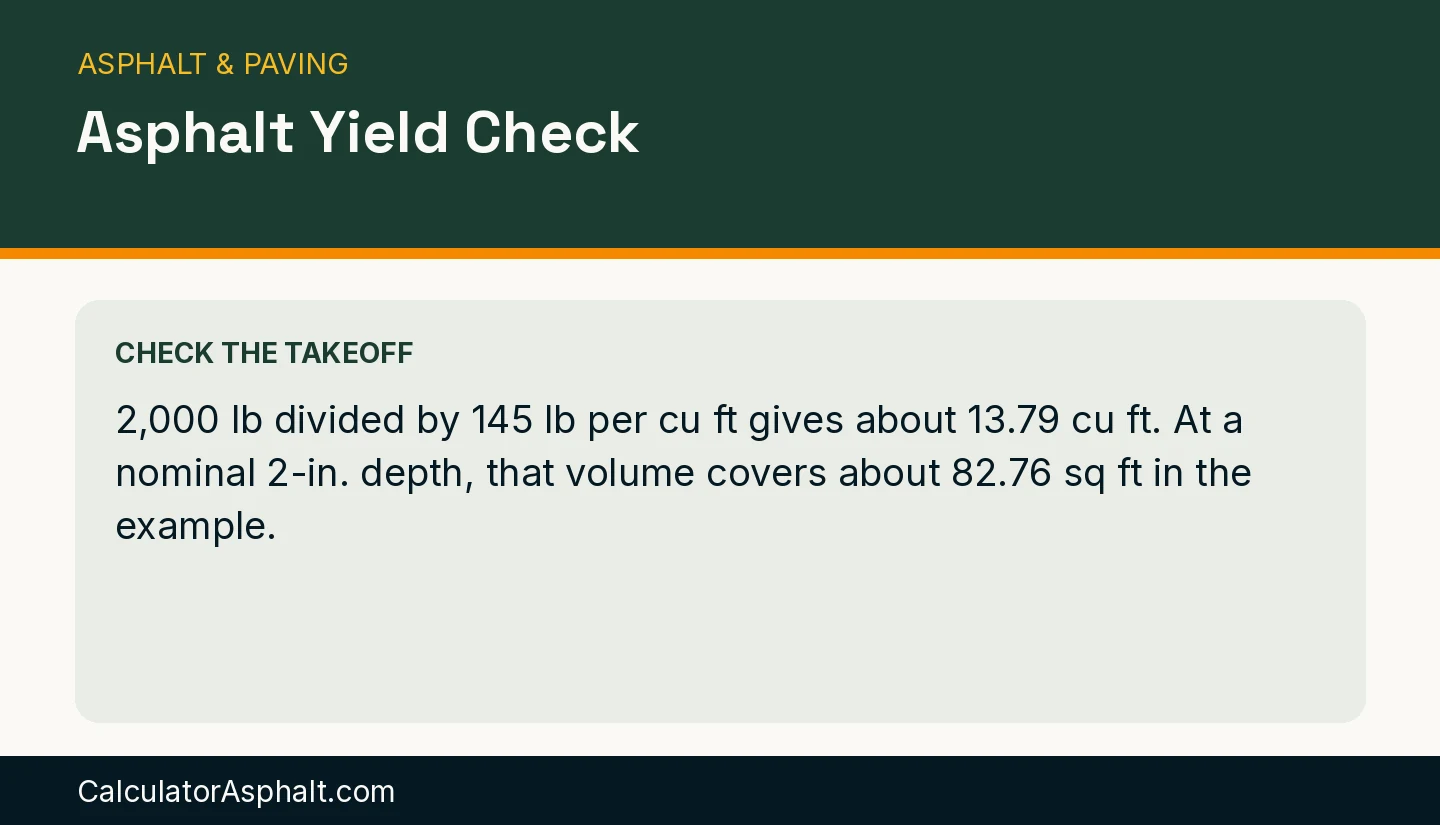
Illustrative result. 2,000 lb divided by 145 lb per cu ft gives about 13.79 cu ft. At a nominal 2-in. depth, that volume covers about 82.76 sq ft in the example.
Split the job by extent, material and treatment
On the drawing, identify the limits of work, the sections where material changes, and interfaces with existing surfaces. A measurement in square feet can carry through several quote lines, but it is only a sensible shared denominator if those lines cover the same extent. Keep areas with a separate repair, apron, tie-in or different thickness clearly identified.
Keep the inputs beside the Asphalt Yield Check calculator so its quantities can be checked against the original measurement. For an existing example of a clearly marked work scope, see concrete driveway vs asphalt driveway. Use its boundary or measurement practice only where the conditions match.
Record the material and quantity basis
Check whether the estimate uses a compacted volume, an estimated mass, a product delivery receipt or a measured installed area. Preserve the original units next to any conversion. Group only entries with a common measurement basis and product definition. When dimensions are revised, update the limits before recomputing the amount.
Separate transferred loads, material returned to the plant and the section boundaries before inferring depth from delivery mass.
Choose base units before multiplying. For a volume that combines dimensions in feet and depth in inches, divide the inches by 12 to express depth in feet. Convert a result in cubic feet to cubic yards by dividing by 27. For surface area, keep the original dimensions and do not include depth. Write the correct dimensional unit beside the subtotal so a later change does not turn a volume into an area estimate.
Record the shape you measured before changing any dimensions. For the next estimate, break irregular geometry into labeled parts and compute them separately. Compare the sum with an outside dimension or an independent check from the drawing. If the readings are too uncertain to justify a single quantity, keep the affected section provisional. That is usually more informative than adding precision to a number derived from the wrong boundary.
Check coverage from delivered mix
Some truckloads can serve more than one area. Bring those allocation notes to the worksheet before dividing total ticket mass by the thickness of a single section.
| Worksheet entry | What to record | When to revise |
|---|---|---|
| Measurement or scope | The measured limits and units | A drawing or field dimension changes |
| Product or rate | Exact model, coverage, quote or authority | The product, basis or conditions change |
| Calculated subtotal | Original result and any conversion | An input units check or independent reading changes |
| Order or reviewed amount | Selling increment or reviewed scope | Availability, review findings or inclusions change |
Worked example
- Identify the scope. Use ticket weight and a project density assumption to compare an estimated volume with the measured pavement. Check which loads actually served the area.
- Set the example inputs and calculate. 2,000 lb divided by 145 lb per cu ft gives about 13.79 cu ft. At a nominal 2-in. depth, that volume covers about 82.76 sq ft in the example.
- Check the result against the plan or quote. Separate transferred loads, material returned to the plant and the section boundaries before inferring depth from delivery mass.
- Write down the basis for the next person. Prepare a log with ticket weights, mix identifiers and the measured area for each placed section.
Match the proposed quote to the known condition
Keep the estimated material quantity distinct from the approved construction or treatment scope. Identify any condition or area that may trigger a separate line, such as localized work around an edge or a distinct phase with different access. Ask the contractor to describe the contract measurement method, which ticket or other record supports it, and how revisions will be authorized.
Use the asphalt tonnage estimate and the asphalt milling estimate to keep connected quantities in view. A project can need each of those estimates without allowing their outputs to be summed. Identify the unit and purpose on every line.
For a separate quantity on the same project, see asphalt material cost. A built example in gravel driveway maintenance checklist shows why defining the finished area or work scope is more useful than estimating from a single outside dimension.
Work through the unit conversion once
Sketch the outline the calculation actually includes and keep a second column for the changes that will alter that outline. If two areas meet, assign the shared portion to one of them before summing. A change in representation should leave the quantity unchanged if both representations cover the same physical object.
Preserve the assumptions for the second estimate
File the marked-up drawing and product data with the estimate. If the alternative uses a different measurement or basis, remove the old value before entering the new one. Write down why the revision was made and whether another line depends on it. When financial assumptions are involved, retain the original dated quote and distinguish its actual terms from the numbers used in an example.
An implied thickness or yield from tickets is a planning cross-check. Confirm acceptance with the specified field testing method.
Where this work connects to existing or planned asphalt, record the paving scope separately using the asphalt paving guide. Keep the location and work boundary in the estimate so any interface changes can be reviewed before purchase or construction.
Run your project numbers. Run the project inputs in the calculator for asphalt yield check. To check a connected line item, use asphalt tonnage estimate or asphalt milling estimate. Transfer the quantities and units back to the same plan or quote before comparing totals.
Frequently asked questions
What should I measure first?
Use ticket weight and a project density assumption to compare an estimated volume with the measured pavement. Check which loads actually served the area.
Should I round each measured section as I go?
Retain precise intermediate quantities for compatible sections. Sum them before rounding for the vendor. Keep materials, depths or treatments with a distinct specification on separate rows.
Which assumption deserves a second check?
Separate transferred loads, material returned to the plant and the section boundaries before inferring depth from delivery mass.
What should I give the supplier or reviewer?
Prepare a log with ticket weights, mix identifiers and the measured area for each placed section.
Calculation method reviewed November 2026. Use the CalculatorAsphalt worksheet and its stated inputs to reproduce the example.