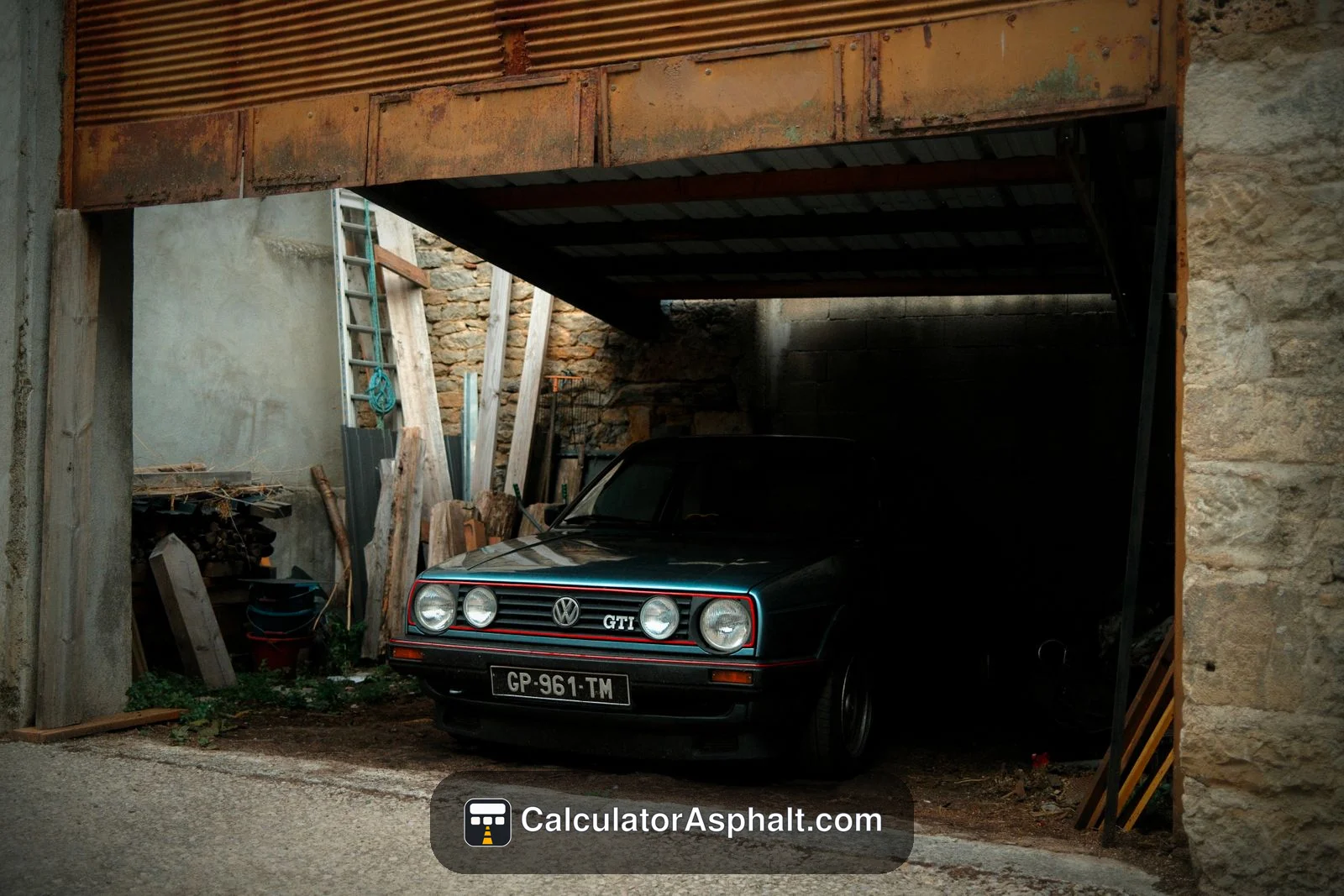
The car sits on the driveway in the rain. The garage sits beside it, full of things nobody can name, and the parking bay inside it has not held a car for a year. This guide is for the family that parks outside its own house, and it makes one promise: one bay, tonight, three hours.
The job is smaller than it looks, because it is one bay, not the whole garage. The rest of the garage can stay messy for now. One bay, cleared tonight, is the difference between parking inside and parking outside. This guide works through one example with real arithmetic, compares the choices, and gives a checklist you can follow this evening.
The decision first
Clear one bay tonight, and clear it completely. Not half a bay, not a bay with a few boxes pushed to the side. One bay, 10 ft by 20 ft, empty from wall to wall, with the car parked in it before bed. The car is the test: if the car fits, the doors open, and nobody has to move anything to get out, the bay is clear. If anything has to move first, the bay is not clear.
The rule for the evening is simple: everything in the bay has three choices, keep, move, or toss, each made in minutes, not hours. The keep pile goes to the storage strip on the other side of the garage. The toss pile leaves the house tonight. Nothing goes back into the bay except the car.
Why the car ended up outside
The car ended up outside one box at a time. A box went into the bay because there was nowhere else for it. Then a bike, then a broken chair, then a pile of things that might be useful one day. After a year, the bay holds no car.
The second reason is that nobody owns the bay. The garage belongs to everyone in the house, which means it belongs to no one, and nobody is responsible for keeping the bay clear.
Worked example: one bay, one evening
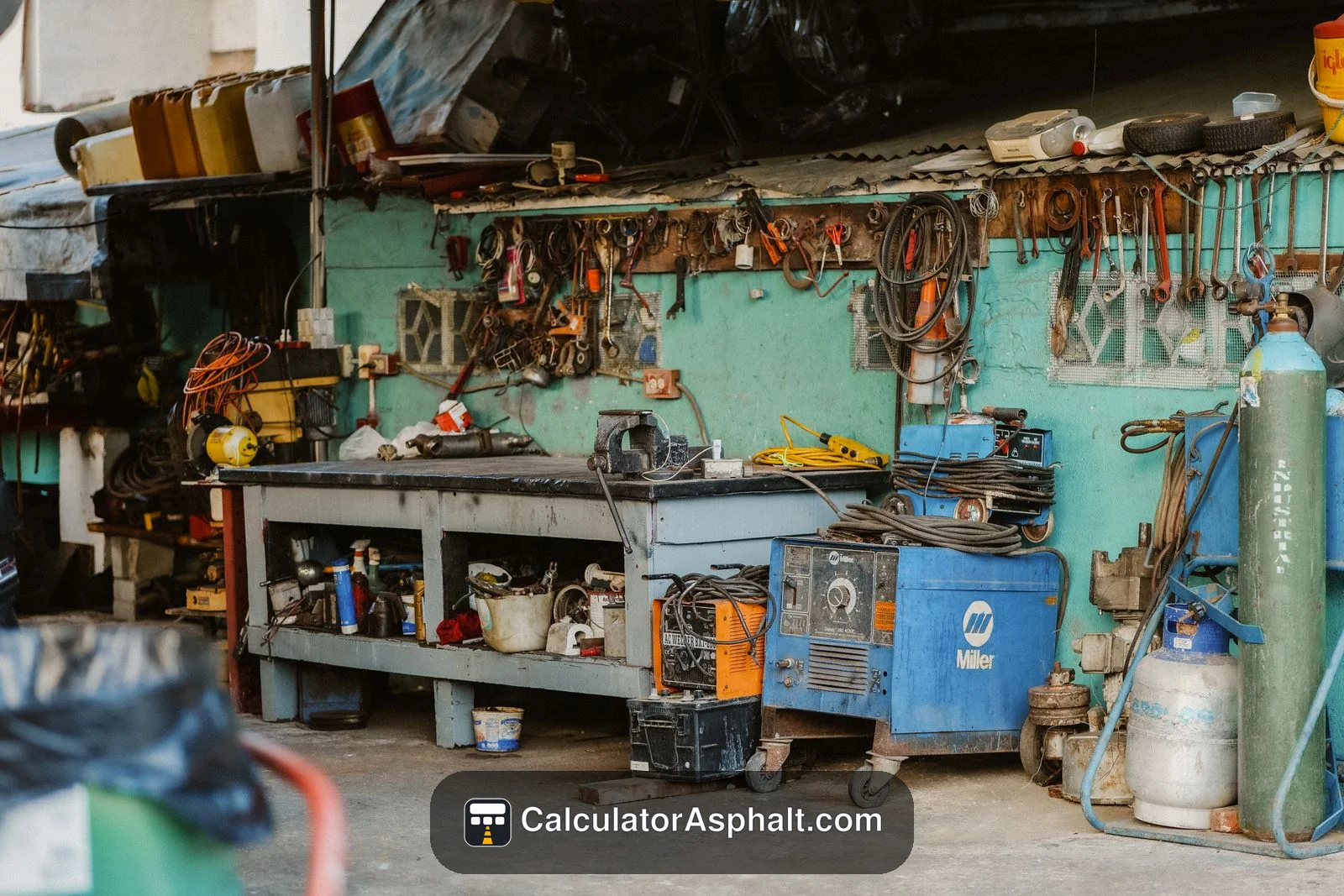
Every number here comes from the assumptions below, and every step shows its arithmetic. Measure your own garage before you start.
Assumptions: garage 20 ft by 20 ft. Car 15 ft long by 6 ft wide. One bay is half the garage: 10 ft by 20 ft. The evening is 3 hours. These are assumptions, not facts about your garage.
The bay: 200 square feet
Bay area: 10 ft x 20 ft = 200 sq ft. Car area: 15 ft x 6 ft = 90 sq ft. Spare room in the bay once the car is parked: 200 sq ft – 90 sq ft = 110 sq ft. The bay is more than twice the size of the car, which is why the car fits with room to open both doors and walk around it. The bay is not tight. It only looks tight because it is full.
The whole garage: 20 ft x 20 ft = 400 sq ft. The other bay, the storage bay, is also 200 sq ft, and that is where the keep pile goes tonight.
The clutter: 72 square feet
The example bay holds clutter that claims 72 sq ft of floor. Boxes: 6 boxes, each 2 ft by 2 ft = 4 sq ft. Box area: 6 x 4 sq ft = 24 sq ft. Bikes: 2 bikes, each 6 ft by 2 ft = 12 sq ft. Bike area: 2 x 12 sq ft = 24 sq ft. Loose pile: 6 ft by 4 ft = 24 sq ft. Total clutter: 24 + 24 + 24 = 72 sq ft. The clutter claims 72 sq ft of a 200 sq ft bay, which is 72 / 200 = 36%. More than a third of the bay is clutter, and the car needs 90 sq ft, so 72 + 90 = 162 sq ft, leaving only 38 sq ft for doors and walking. That is why the car does not fit: not because the bay is small, but because a third of it is taken.
The sort: 24 items, 3 piles
Items in the bay: 24. Keep pile: 10 items. Move pile: 8 items. Toss or donate pile: 6 items. Check: 10 + 8 + 6 = 24. Sorting time: 24 items at 2.5 minutes each is 24 x 2.5 = 60 minutes, or 1 hour. Two and a half minutes per item is the budget.
The evening: 3 hours
Clear the bay floor: 30 minutes. Sort the 24 items: 60 minutes. Move the keep pile to the storage bay and the move pile out of the garage: 30 minutes. Sweep the bay: 30 minutes. Park the car and test the doors: 30 minutes. Total: 30 + 60 + 30 + 30 + 30 = 180 minutes, or 3 hours. Start at 6 in the evening, and the car is inside by 9.
Run the same steps for your garage: measure your bay, add up the floor your clutter claims, count your items at two and a half minutes each, and work out your evening in 30-minute blocks.
Car or storage: give each its half
The bay split is the decision that keeps the car inside after tonight.
| Choice | What happens | Best for | Watch out for |
|---|---|---|---|
| One bay for the car, one for storage | The car has 200 sq ft and storage has 200 sq ft, and the line is marked on the floor | Almost every two-car garage | The line must be marked and respected, or storage spreads into the car bay within a month |
| The whole garage for the car | Both bays clear, and storage lives elsewhere in the house | A house with storage space elsewhere | It wastes half the garage, and the storage still has to go somewhere |
| The whole garage for storage | The car stays outside permanently | A house that never parks inside | It is not a clear-out, it is a surrender, and the garage stays a store room |
| Half a bay for the car | The car squeezes in beside a row of boxes | No garage: this is the trap to avoid | The doors do not open properly, and the first box knocked over ends the experiment |
| Clear the bay, no line marked | The bay is clear tonight and full again by next month | No garage | Without a marked line, storage spreads back into the bay one box at a time |
One bay for the car and one for storage, with the line marked on the floor in tape or paint, is the split that lasts. The line is the rule, and the rule is visible every time anyone walks into the garage.
How to clear the bay without regret
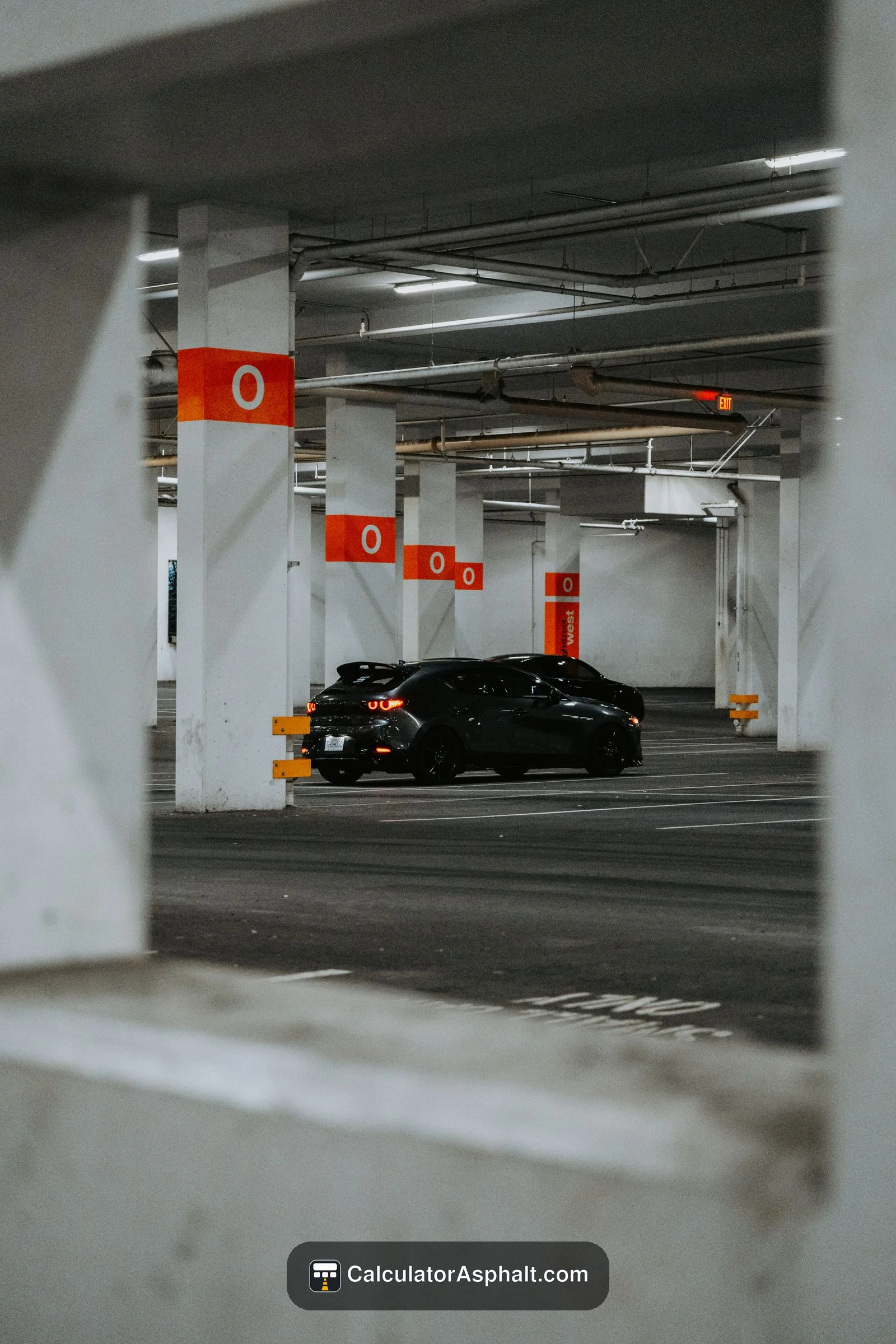
Start by moving the car out of the driveway and onto the street, so the driveway is free for the sort. Work from the bay outwards: pull everything out of the bay and onto the driveway, in one pile, so the bay is empty and you can see the floor.
Sort on the driveway, not in the garage. Three piles, marked with chalk or tape: keep, move, toss. Two and a half minutes per item. The keep pile is the smallest it can be: ten items in the example, not twenty-four. The move pile goes to a better home elsewhere in the house, tonight. The toss pile goes in the bin or the car boot, tonight.
Sweep the bay while it is empty. A swept bay looks like a parking space, and a parking space invites a car. Then mark the line: tape or paint a line down the middle of the garage, dividing the car bay from the storage bay. Bring the keep pile into the storage bay, in one straight line against the wall. Then park the car. Open both doors. Walk around it. If the doors open and nobody has to move anything, the bay is clear, and the evening is done.
Field checklist: before tonight
Use this checklist in order.
- Measure the garage and the bay, and work out the bay area and the car area.
- Count the items in the bay, and write the number down.
- Work through the worked example with your own numbers, and work out your evening in 30-minute blocks.
- Move the car onto the street, so the driveway is free for the sort.
- Lay a cover on the driveway if rain is coming.
- Mark three piles on the driveway: keep, move, toss.
- Get bags for the toss pile, and a box for the move pile.
- Agree the rule with everyone in the house: keep, move, or toss, decided in two and a half minutes per item.
- Buy tape or paint for the line down the middle of the garage.
- Keep the evening free: three hours, starting at 6, car inside by 9.
Mistakes that put the car back outside
Clearing half a bay is the first mistake. A bay with a row of boxes along one wall is not a clear bay, and the car doors do not open properly. The first box knocked over ends the experiment. Clear the whole bay, wall to wall.
Sorting without a time limit is the second mistake. An item that takes half an hour to decide about is an item you are avoiding deciding about. Two and a half minutes per item, then decide. If you cannot decide, it goes in the move pile.
Letting the toss pile stay in the garage is the third mistake. A toss pile that stays in the garage comes back into the bay, one item at a time. The toss pile leaves the house tonight, in the bin or in the car boot.
Not marking the line is the fourth mistake. Without a marked line, storage spreads back into the car bay one box at a time, and by next month the car is outside again. Tape or paint a line down the middle of the garage tonight, while the bay is empty.
Frequently asked questions
What if the bay holds things we cannot move tonight?
Move them to the storage bay, not back into the car bay. If the keep pile does not fit in the storage bay, the keep pile is too big, and some of it belongs in the move pile.
What if the car does not fit even with the bay clear?
Measure the car and the bay. A car 15 ft long by 6 ft wide fits in a 10 ft by 20 ft bay with 110 sq ft to spare. If your car is bigger than the bay, the garage needs a different split.
How do we keep the bay clear after tonight?
Mark the line, and make one person the owner of the bay. The owner checks the bay once a week, and anything in the car bay that is not the car goes back to the storage bay.
Should we clear the whole garage instead?
Not tonight. The whole garage is a weekend, and tonight is an evening. Clear one bay tonight, park the car inside, and clear the rest of the garage on a weekend, when you have the time. A bay with a car in it is the proof that the rest is worth doing.