
Walk into most garages and the floor is doing a job it was never meant to do. Boxes sit where the car should park, where the door should swing, and where your feet should go. The floor is not storage. It is the only surface in the garage that has to stay empty for the room to work, and the ceiling is the storage space nobody is using. This guide is for the homeowner whose boxes have taken the floor, and it makes one promise: lift the light, rarely used boxes overhead and the floor comes back.
The fix is two ceiling racks, not a bigger garage. This guide works through one example with real arithmetic, compares ceiling racks with shelves, and gives a step-by-step plan for getting twelve boxes off the floor.
The decision first
Lift light, rarely used boxes to ceiling racks, and keep heavy and often used things at waist height or below. The split matters more than the rack: overhead storage is for things you touch twice a year, such as holiday decorations and camping gear. Anything you reach for weekly stays where you can reach it without a ladder.
Why the floor fills up
A garage floor fills up for one reason: it is the easiest place to put a box down, and nobody ever takes the box back up. The first box goes down by the wall, the second goes beside it, and within a year there is a row of boxes along every wall and a pile in the middle. The floor looks full long before it is full, because boxes on the floor block walking lines and door swings, not just square feet.
The ceiling is the opposite. It is empty in almost every garage, it is out of the way of cars and feet, and it holds the boxes that are doing nothing on the floor.
Worked example: twelve boxes off the floor
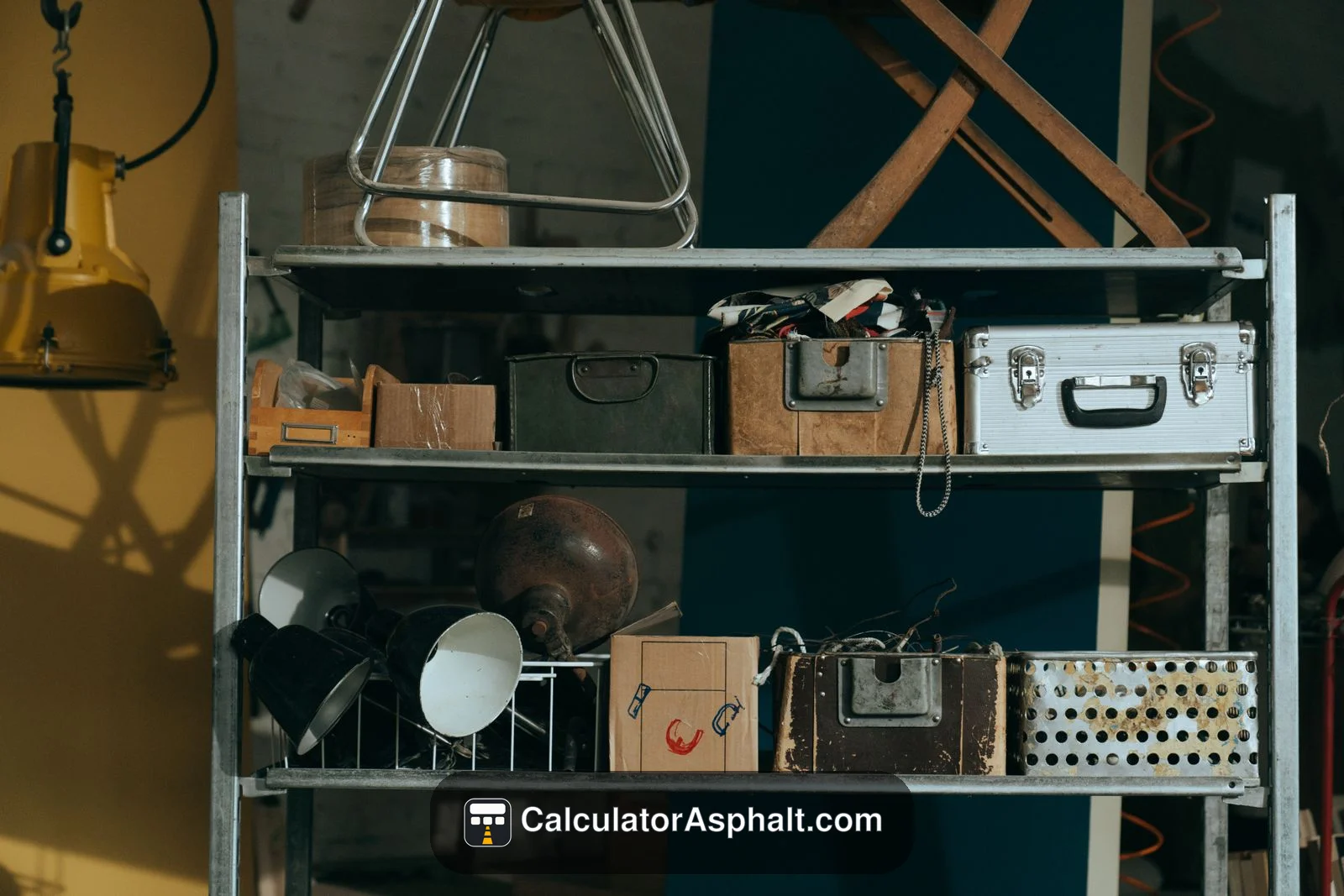
Every number here comes from the assumptions below, and every step shows its arithmetic. Measure your own garage before you buy anything.
Assumptions: garage 20 ft by 20 ft, ceiling 8 ft high. Twelve boxes on the floor, each 2 ft by 2 ft, each 12 in tall, each holding light seasonal things. Two ceiling racks, each 4 ft by 8 ft. These are assumptions, not facts about your garage.
The floor: 48 square feet of boxes
Floor area: 20 ft x 20 ft = 400 sq ft. One box footprint: 2 ft x 2 ft = 4 sq ft. Twelve boxes: 12 x 4 sq ft = 48 sq ft. That is 48 sq ft out of 400 sq ft, or 12 percent of the floor. Twelve percent sounds small, but the boxes do not sit in one neat corner. They sit along the walls, in front of the shelves, and beside the car, so they block three walking lines and the door swing. The floor is not 12 percent full. It is unusable.
The racks: 64 square feet overhead
One rack: 4 ft x 8 ft = 32 sq ft. Two racks: 2 x 32 sq ft = 64 sq ft of overhead storage. Each rack holds 6 boxes: 6 boxes x 4 sq ft = 24 sq ft of boxes on a 32 sq ft rack, which leaves 8 sq ft of spare room on each rack for the odd-shaped item. Two racks hold 12 boxes: 6 + 6 = 12. Every box on the floor goes overhead, and the floor gets all 48 sq ft back.
The headroom: six feet under the racks
Ceiling height: 8 ft = 96 in. The rack platform hangs 24 in below the ceiling: 96 in – 24 in = 72 in, or 6 ft, from the floor to the underside of the rack. A person 5 ft 10 in tall walks under it with 2 in to spare. The boxes sit on top of the platform, so they occupy the space from 72 in to 84 in, which is the dead space under the ceiling that nobody was using anyway.
Do not mount the racks over the car bay. Mount them over the storage strip, where nobody walks tall and nobody opens a car door. A rack over the car bay saves the same 48 sq ft and costs you a dented roof the first time you forget it is there.
The weight rule: light boxes only
Overhead storage is for light boxes. The rule in this guide is simple: if you cannot lift the box above your head with both hands and hold it there for ten seconds, it does not go on the rack. Holiday decorations, camping gear, and out-of-season clothes pass the test. Toolboxes, paint cans, and boxes of books do not. Those stay on shelves at waist height, where a dropped box lands on the floor and not on your head.
The time: one afternoon
Two racks, one afternoon. Mounting: 2 hours for two racks, working with a second person. Sorting and lifting the twelve boxes: 12 boxes at 10 minutes each is 12 x 10 = 120 minutes, or 2 hours. Total: 2 + 2 = 4 hours. Do the sorting first, the mounting second, and the lifting last, so the racks are never holding boxes you have not yet decided to keep.
Run the same steps for your garage: count your floor boxes and multiply by 4 sq ft, work out how many 4 ft by 8 ft racks that number needs, and check your ceiling height against the 6 ft clearance under the rack.
Ceiling racks or shelves

The choice is not which one is better. It is which boxes go where.
| Choice | What happens | Best for | Watch out for |
|---|---|---|---|
| Ceiling racks | Boxes leave the floor entirely and sit in dead ceiling space | Light, rarely used boxes | You need a ladder every time, and the rack must sit over the storage strip, not the car |
| Wall shelves | Boxes sit at eye level and stay easy to reach | Heavy boxes and things you use monthly | Shelves eat wall space and the floor underneath them still fills up |
| Floor stacking | Boxes stay where they are, stacked higher | Nothing: this is the trap to avoid | Stacks fall, the bottom box is never reachable, and the floor stays blocked |
| Both racks and shelves | Light boxes go up, heavy boxes go on shelves, the floor stays clear | Every garage with more than a dozen boxes | You must sort first, or the racks fill with things you should have thrown away |
The right split is racks for the light and rare, shelves for the heavy and regular, and nothing on the floor except the car and your feet.
How to lift the boxes without regret
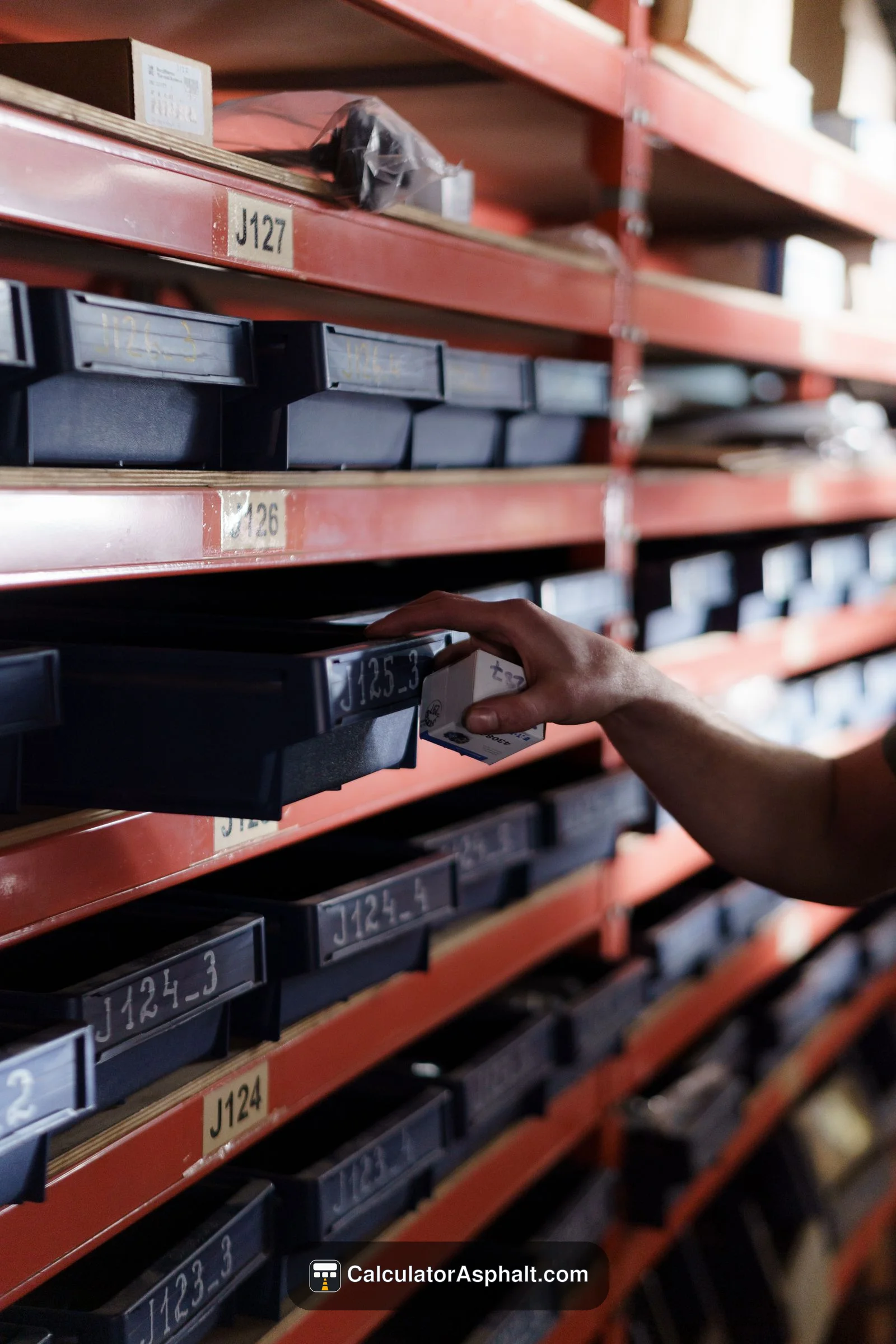
Start by sorting, not by shopping. Put every floor box into one of three piles: overhead, shelf, or out. Overhead is light and rare. Shelf is heavy or regular. Out is anything you have not opened in two years. In the example, 12 boxes sort into 12 overhead, because the example boxes are all light seasonal things. Your garage will be different. Count honestly, because a rack full of things you should have thrown away is a ceiling full of clutter.
Buy the racks after the sort, not before. Two racks hold twelve boxes in the example. If your sort gives you eight overhead boxes, one rack is enough, and the second rack is money spent on storing air.
Mount with a second person. One person holds the rack level while the other fixes it, and the rack goes up straight the first time. A rack mounted alone goes up crooked, and a crooked rack is a rack that drops boxes.
Lift last, and lift light. Carry one box at a time up the ladder, set it down flat on the rack, and push it to the back before you bring the next one. A box dropped from six feet breaks whatever is inside it and whatever is underneath it.
Field checklist: before you buy a rack
Use this checklist in order.
- Count the boxes on the floor, and write the number down.
- Measure each box and work out the total footprint at 4 sq ft per box.
- Sort the boxes into overhead, shelf, and out, and count the overhead pile.
- Measure the ceiling height and check the 6 ft clearance under the rack.
- Choose the storage strip for the racks, never the car bay.
- Lift each overhead box above your head for ten seconds before it goes up.
- Agree the rule with everyone in the house: the floor is not storage.
- Buy the racks after the sort, one rack per six boxes.
- Mount with a second person, and check the rack is level before loading it.
- Keep a step ladder in the garage, because a rack without a ladder is a rack you cannot use.
Mistakes that drop boxes on your head
Putting heavy boxes overhead is the first mistake. A heavy box on a ceiling rack is a box waiting to fall on someone. The ten-second lift test is the rule, and it is not negotiable.
Mounting the rack over the car bay is the second mistake. The rack saves floor space and costs you a dented roof, a broken windscreen, or a box landing on the bonnet. Storage strip only, every time.
Stacking boxes on the floor higher instead is the third mistake. A taller stack is the same problem in a taller shape. The bottom box is still unreachable, the stack still falls, and the floor is still blocked.
Skipping the sort is the fourth mistake. Buying racks before sorting means the racks fill with things you should have thrown away, and the floor fills up again within a year because nothing actually left the garage.
Forgetting the ladder is the fifth mistake. A ceiling rack without a ladder in the garage is storage you cannot reach, and boxes you cannot reach are boxes you will never use. Buy the ladder with the racks.
Frequently asked questions
How do I know if my ceiling can hold a rack?
This guide does not answer that question, and you should not guess. Check the rack instructions for how it must be fixed, and if the instructions mention joists, fixings, or load limits you do not understand, ask someone who does before you mount anything overhead. A rack that falls is worse than boxes on the floor.
What goes on the rack and what stays down?
Light and rare goes up: holiday decorations, camping gear, out-of-season clothes. Heavy and regular stays down: tools, paint, books, and anything you reach for more than twice a year. If you cannot lift it above your head for ten seconds, it stays down.
Can I put a rack over the car?
No. Mount racks over the storage strip only. A rack over the car bay puts boxes above the car, and a box that slips lands on the car. The storage strip is the side of the garage where the car never goes.
What if I have more than twelve boxes?
Count them first. Two racks hold twelve boxes at six per rack. Eighteen boxes need three racks, and twenty-four need four. If the count keeps growing, the problem is not storage, it is sorting: more than two dozen boxes in a garage usually means a dozen of them should leave the house entirely.