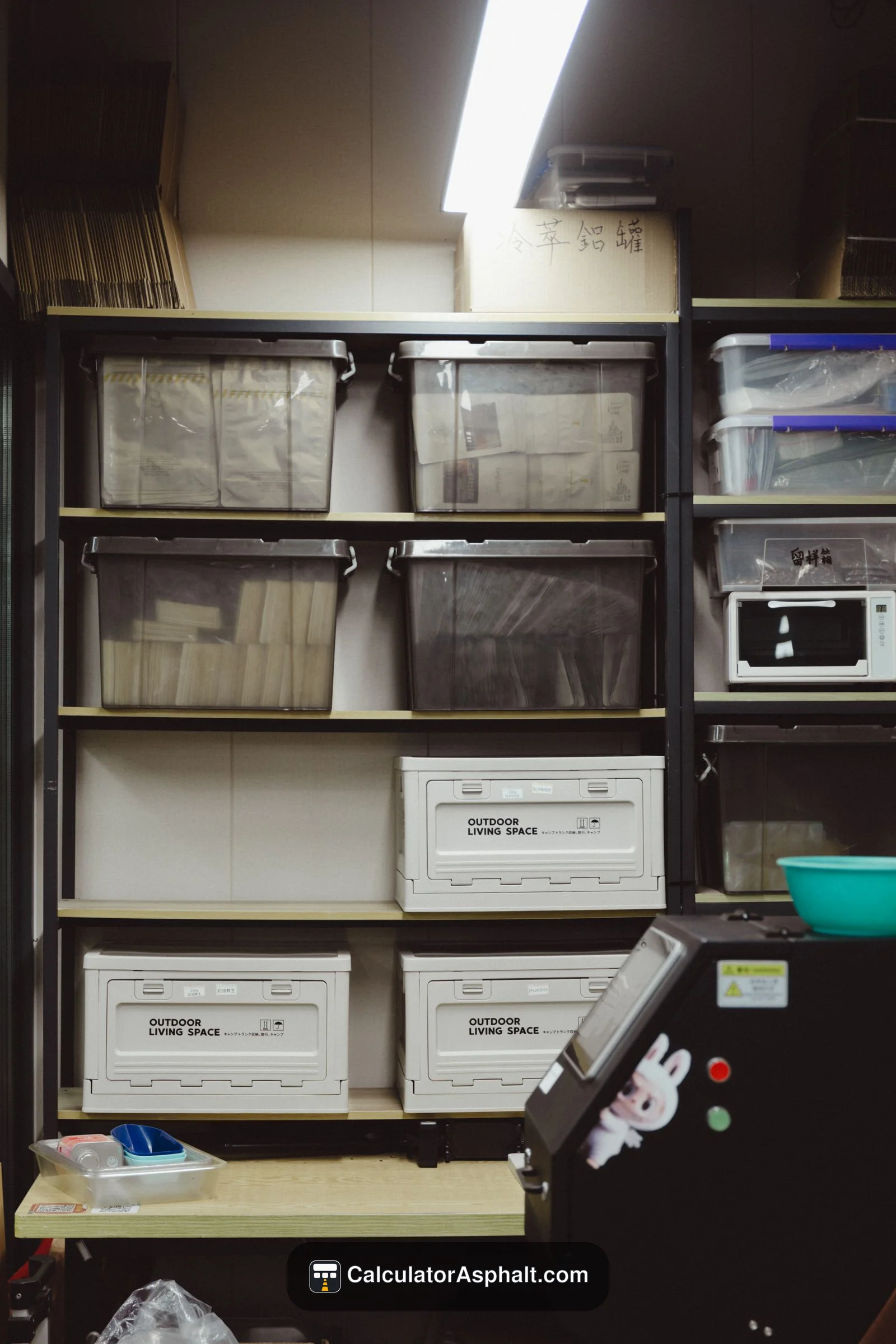
Every spring the same thing happens. You spend a Saturday reorganizing the garage, it looks perfect for a month, and by autumn it has drifted back into chaos. The problem is not that you are lazy. The problem is that reorganizing is not a system. A reorganization moves things around. A setup gives everything a home, a zone, and a rule for going back. This guide is for the homeowner who is tired of doing the same job every year, and it makes one promise: six hours of setup, once, ends the yearly reorganization.
The fix is five zones, twenty bins, and a five-minute daily habit. This guide works through one example with real arithmetic, compares zones with piles, and gives a setup plan that holds.
The decision first
Set the garage up once, with a zone for every kind of thing and a labelled place for every bin, and then defend it with five minutes a day. The setup is the work. The five minutes a day is what keeps the setup from drifting, and it is the part everyone skips, which is why everyone reorganizes every year.
Why the garage drifts back
A garage drifts back for one reason: things arrive with no home. A bag of sports gear comes in and lands on the nearest flat surface, because there is no labelled place for sports gear. A box of tools comes in and lands beside the workbench, because the workbench has no labelled shelf. Every arrival is a small decision made in a hurry, and a hundred small decisions add up to chaos.
A reorganization does not fix this. It moves the chaos into neater piles, but the piles have no labels and no zones, so the next arrival has nowhere to go and lands on the nearest flat surface again. The cycle is not a failure of effort. It is a failure of design.
Worked example: one setup, five zones
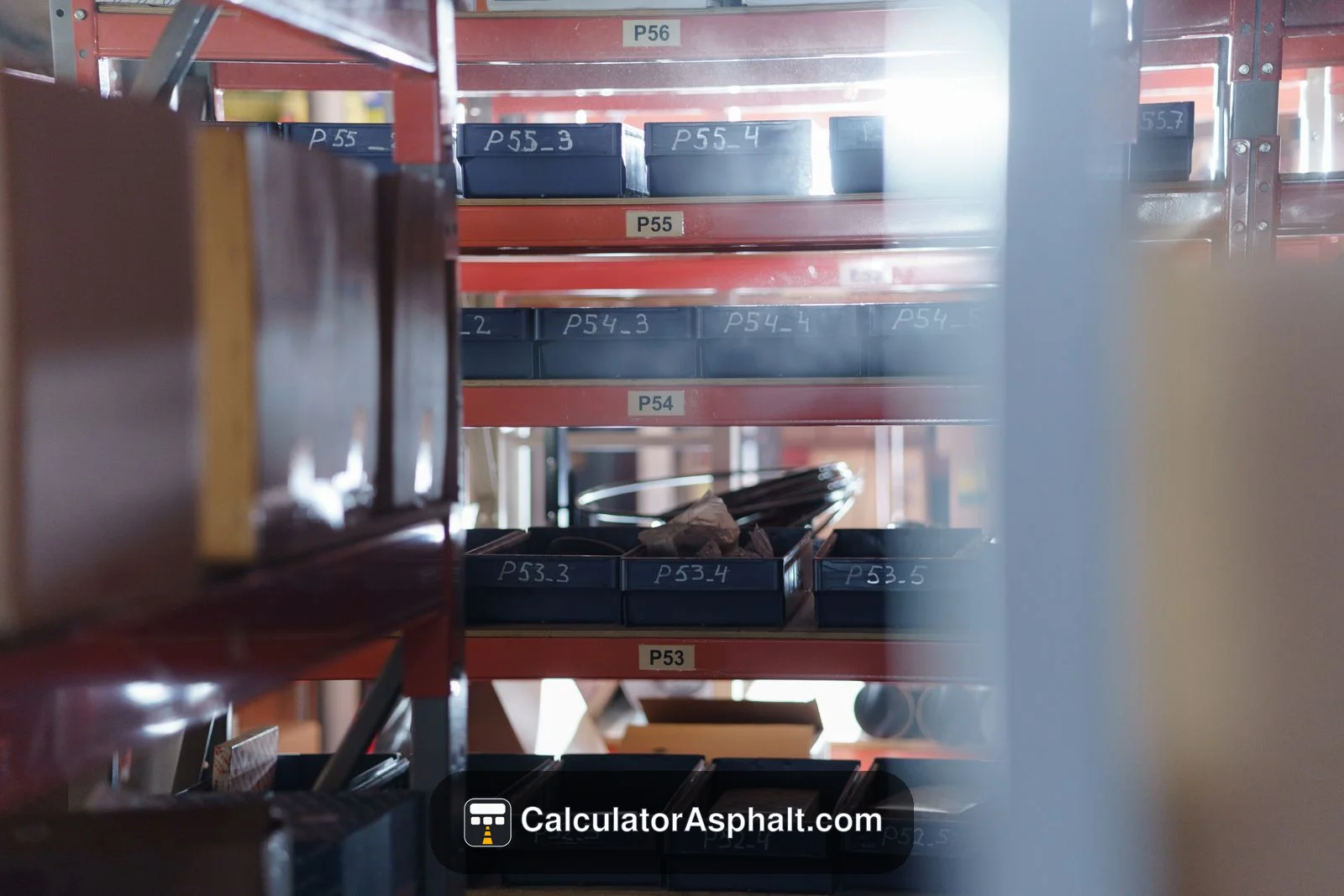
Every number here comes from the assumptions below, and every step shows its arithmetic. Measure your own garage before you buy anything.
Assumptions: garage 20 ft by 20 ft, 400 sq ft. Twenty bins to store. One setup session of 6 hours. These are assumptions, not facts about your garage.
The zones: five zones, 400 square feet
Floor area: 20 ft x 20 ft = 400 sq ft. The zones split it like this: car bay 12 ft x 20 ft = 240 sq ft, tools and work 4 ft x 20 ft = 80 sq ft, storage 4 ft x 20 ft = 80 sq ft. Check: 240 + 80 + 80 = 400 sq ft. Inside the storage zone, five bin zones share the 80 sq ft: sports, garden, seasonal, car care, and household spares. Four bins per zone: 5 zones x 4 bins = 20 bins. Every bin has a zone, and every zone has a label on the wall above it.
The hunting: 61 hours a year without a system
Without a system, finding things takes about 10 minutes a day: the screwdriver, the garden hose fitting, the car wash sponge, the spare light bulb. Ten minutes a day, 365 days: 10 x 365 = 3,650 minutes, which is 3,650 / 60 = 60.8 hours, or about 61 hours a year. That is a working week and a half spent hunting for things you own.
With a system, finding things takes about 2 minutes a day, because every bin is labelled and every label is in its zone. Two minutes a day, 365 days: 2 x 365 = 730 minutes, which is 730 / 60 = 12.2 hours, or about 12 hours a year. The setup takes 6 hours once. Year one total: 6 + 12 = 18 hours. The saving in year one: 61 – 18 = 43 hours. In year two, with no setup to repeat: 61 – 12 = 49 hours saved. The setup pays for itself seven times over in the first year.
The daily habit: five minutes
The habit is five minutes a day, and it is not cleaning. It is putting things back. Five minutes a day, 365 days: 5 x 365 = 1,825 minutes, or about 30 hours a year. That sounds like a lot until you compare it with the 61 hours of hunting it replaces. The habit is not extra work. It is the work you were already doing, moved from hunting to putting back.
The bins: twenty bins, four per zone
Twenty bins, four per zone, five zones. Each bin holds one kind of thing, and each bin has a label with the kind of thing on it, not the word "miscellaneous". A bin labelled "miscellaneous" is a junk drawer with a lid, and it is where the system goes to die. Four bins per zone is the limit: a fifth bin in a zone means the zone is holding two kinds of things, and two kinds of things in one zone is a pile.
Run the same steps for your garage: split the floor into a car bay, a work strip, and a storage strip, divide the storage strip into zones by kind of thing, and count your bins at four per zone.
Zones or piles

The choice is not which one looks tidier on the day. It is which one survives the year.
| Choice | What happens | Best for | Watch out for |
|---|---|---|---|
| Zones with labels | Everything has a home, and arrivals go straight to it | Every garage, every household | The labels must be specific, and the five minutes a day must actually happen |
| Neat piles | The garage looks tidy for a month, then drifts | A garage you reorganize every year anyway | Piles have no labels, so the next arrival has nowhere to go |
| One big sort, no zones | Everything is sorted once, then mixed again | Nobody: this is the trap to avoid | Sorting without zones is a reorganization, and reorganizations expire |
| Zones without labels | The zones exist but nobody can see them | A garage used by one person only | The moment anyone else puts something away, it goes in the wrong zone |
The right setup is zones, labels, and five minutes a day. Two of the three is not enough: zones without labels are invisible, and labels without the habit are decorations.
How to set it up once
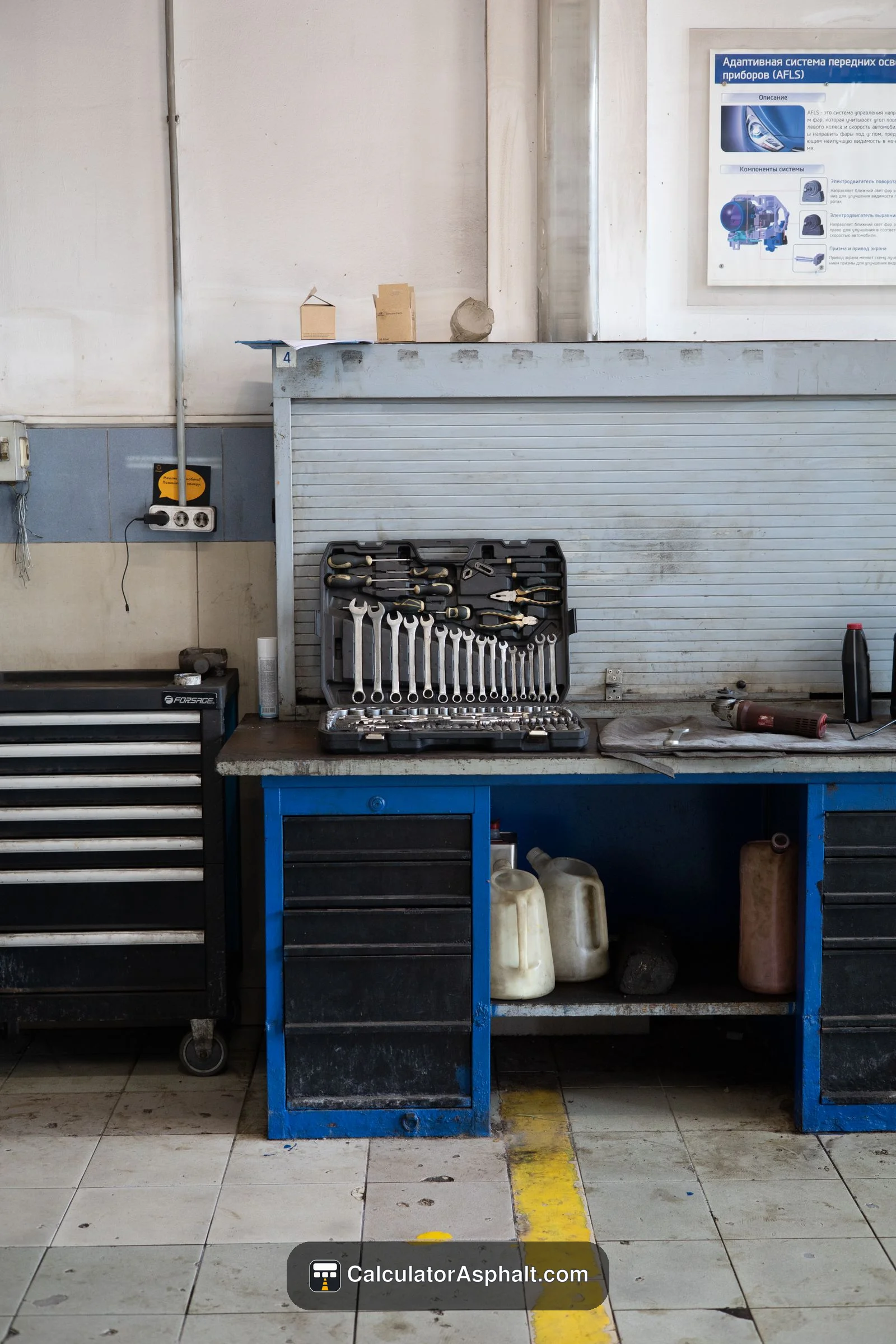
Start by emptying the garage completely. Everything comes out onto the driveway, in the open, where you can see all of it at once. A setup done around the clutter is a setup that keeps the clutter. Empty first, every time.
Sort on the driveway into five piles, one per zone: sports, garden, seasonal, car care, and household spares. Anything that fits none of the five piles goes in a sixth pile, and the sixth pile is the out pile: it leaves the house. In the example, the twenty bins sort into four per zone and nothing in the out pile, because the example household has already decluttered. Your garage will be different. Count honestly.
Mark the zones on the floor with tape before a single bin goes back. The car bay gets a taped rectangle, 12 ft by 20 ft in the example, and nothing but the car goes inside it. The work strip and the storage strip get taped lines too. Tape is cheap, and a taped line is a rule everyone can see.
Bring the bins back zone by zone, labels facing out, four per zone. Put the label on the wall above the zone as well as on the bin, so the zone is visible even when the bin is out. Then walk the garage with everyone who uses it, and show them where each zone is. A system nobody else knows about is a system only you can defend.
Field checklist: before setup day
Use this checklist in order.
- Measure the garage: length, width, and the size of the car bay.
- Count the bins and write the number down.
- Decide the five zones by kind of thing, and write them on a list.
- Buy twenty bins at most, four per zone, and labels for every bin.
- Empty the garage completely onto the driveway.
- Sort into five piles plus one out pile, and count each pile.
- Tape the zone lines on the floor before anything goes back.
- Bring the bins back zone by zone, labels facing out.
- Label the wall above each zone as well as the bins.
- Walk the garage with everyone who uses it and show them the zones.
Mistakes that restart the cycle
Sorting without zones is the first mistake. A big sort with no zones is a reorganization, and reorganizations expire within a year. Zones first, sorting second.
Labelling a bin "miscellaneous" is the second mistake. A miscellaneous bin is a junk drawer with a lid, and it grows until it swallows the zone. Every bin holds one kind of thing, and the label says which kind.
Skipping the five minutes a day is the third mistake. The setup is the work, but the habit is what keeps it. Five minutes of putting back beats a Saturday of reorganizing, every time, and the garage drifts the moment the habit stops.
Letting the car bay fill up is the fourth mistake. The car bay is a zone too, and it holds the car and nothing else. The first box in the car bay is the first step back to chaos, because every box after it follows the first one.
Setting up alone and telling nobody is the fifth mistake. A system only you know about is a system only you can defend, and you are not in the garage every time something arrives. Walk everyone through the zones, or the zones will not survive the week.
Frequently asked questions
How long does the setup really take?
Six hours in the example, for a 20 ft by 20 ft garage with twenty bins. A smaller garage takes less, a fuller garage takes more, and a garage that has never been decluttered takes a full day, because the sorting is the work. The six hours is once. The yearly reorganization it replaces is every year.
What if I have more than twenty bins?
Count them first, then ask what they hold. Twenty bins at four per zone is the limit in this guide, and a twenty-first bin means a zone is holding two kinds of things. Split the zone or shrink the pile: either way, the count is telling you something, and the answer is not a bigger garage.
Do the zones work if I am the only one who uses the garage?
Yes, and they work better, because you are the only person who can break them. The zones still need labels, though, because future you is a different person from present you, and future you will not remember where the garden hose fitting lives without a label.
What if the garage drifts anyway?
It will, a little, and that is normal. Drift is not failure. The test is whether the drift is five minutes of putting back or a Saturday of reorganizing. If it is five minutes, the system is working. If it is a Saturday, one zone has failed, usually because a bin is labelled "miscellaneous" or the car bay has a box in it. Fix the zone, not the whole garage.