A garden bridge should give the path somewhere to go. In a small yard, that might mean carrying a stepping-stone route across an ornamental dry creek. In a larger garden, a bridge can frame a pond, make a shaded seating area feel like a destination, or connect two paths that already get used.
Start by looking from the house and both approaches. Decide whether the crossing needs to stand out or blend into the planting. A picture of a beautiful bridge can help you choose its shape and color. For a real crossing, have the site, structure, edge protection and applicable requirements assessed before you commit.
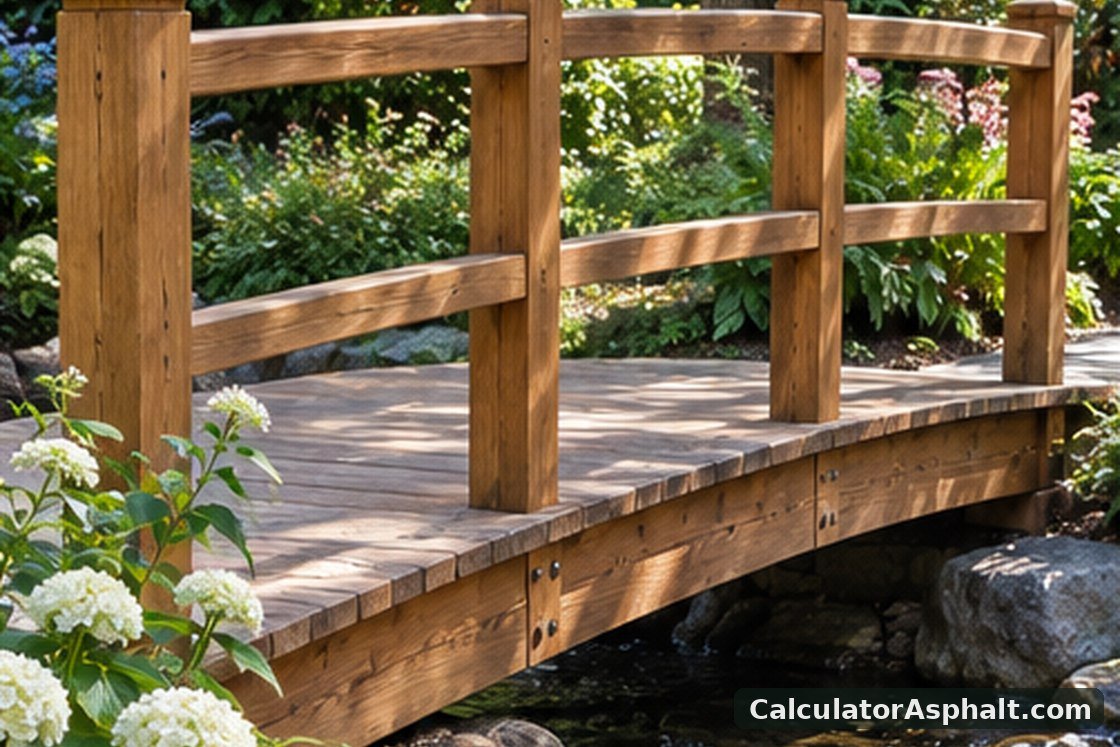
1. An arched timber bridge over a dry creek
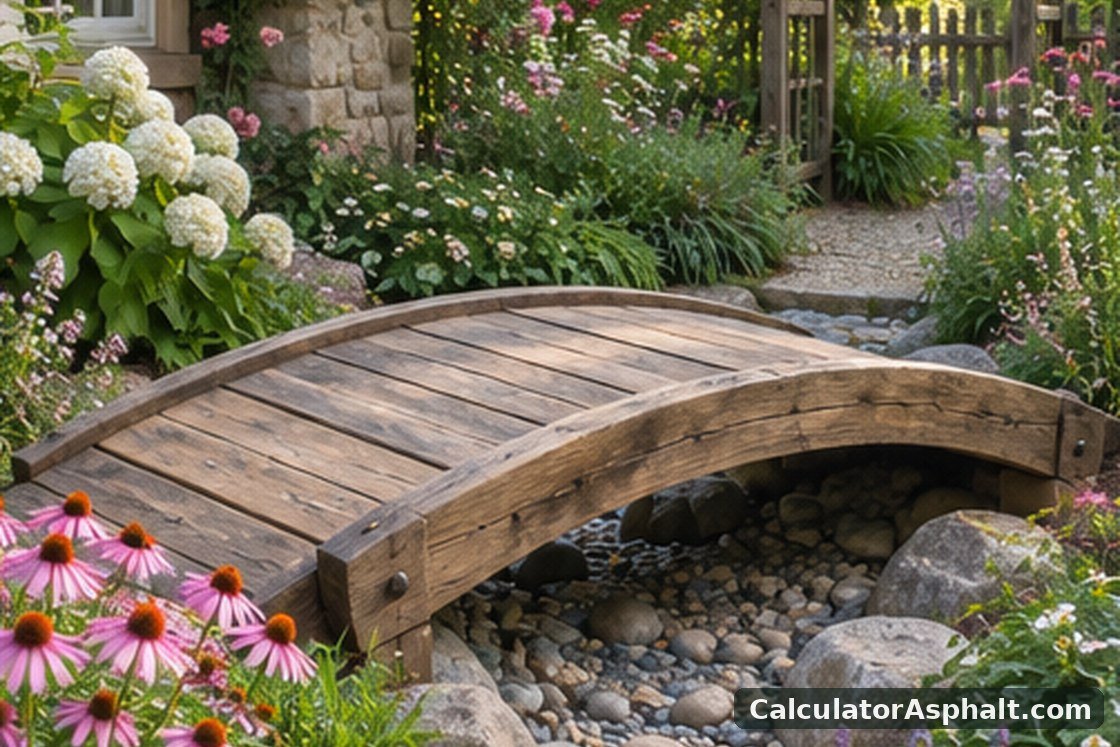
A small timber arch gives a cottage garden an obvious focal point. Put it where the curve can be seen from the main path. Use lower plants at the approaches so the entrance is easy to find. Timber and irregular rock look natural together, while a single recurring plant helps both sides belong to the same garden.
Try a paper silhouette on a photograph first. A stronger arch may dominate a tight garden and create a less comfortable route. If easy passage matters, compare the same composition using a straighter profile.
2. A straight timber crossing with square-post rails
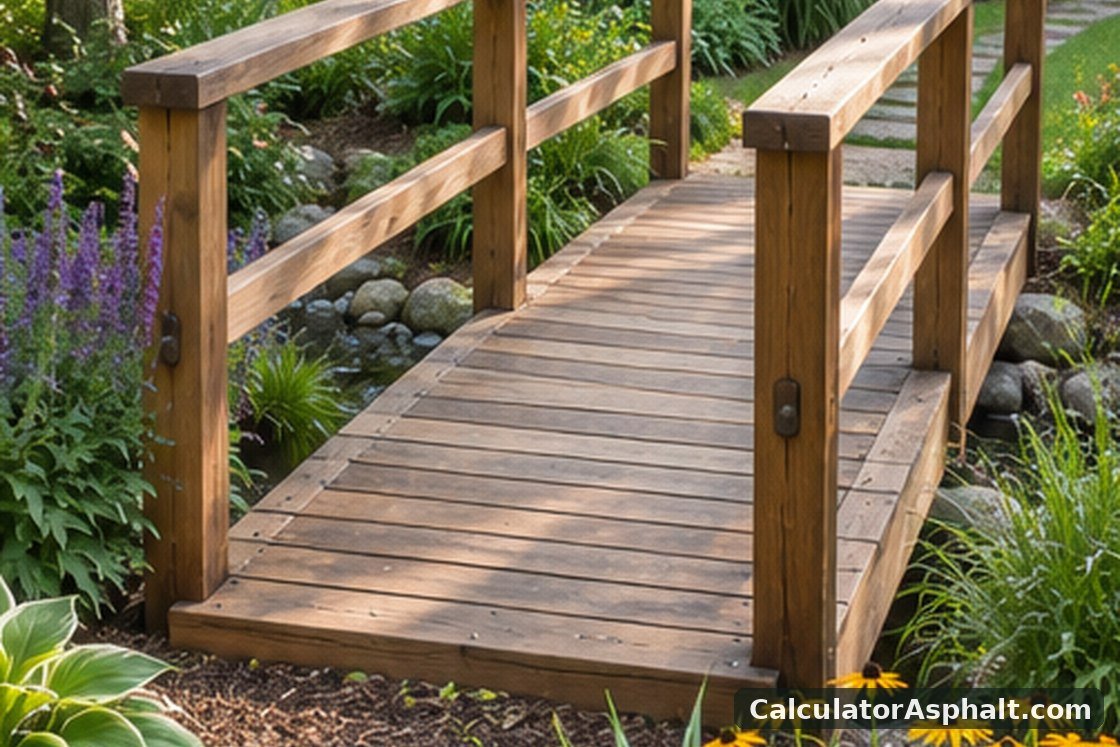
Straight lines work well when two paths already meet across a planted swale. The square posts can echo a timber fence, shed, or porch. Keep the approaches aligned in your sketch so the bridge does not feel like a decorative interruption.
Compare the railing from two viewpoints. From the side, repeat posts can make the crossing feel neatly framed. From the approach, closely grouped visual elements can look heavier than you expected. Ask the designer to separate the look you prefer from the requirements for the actual route.
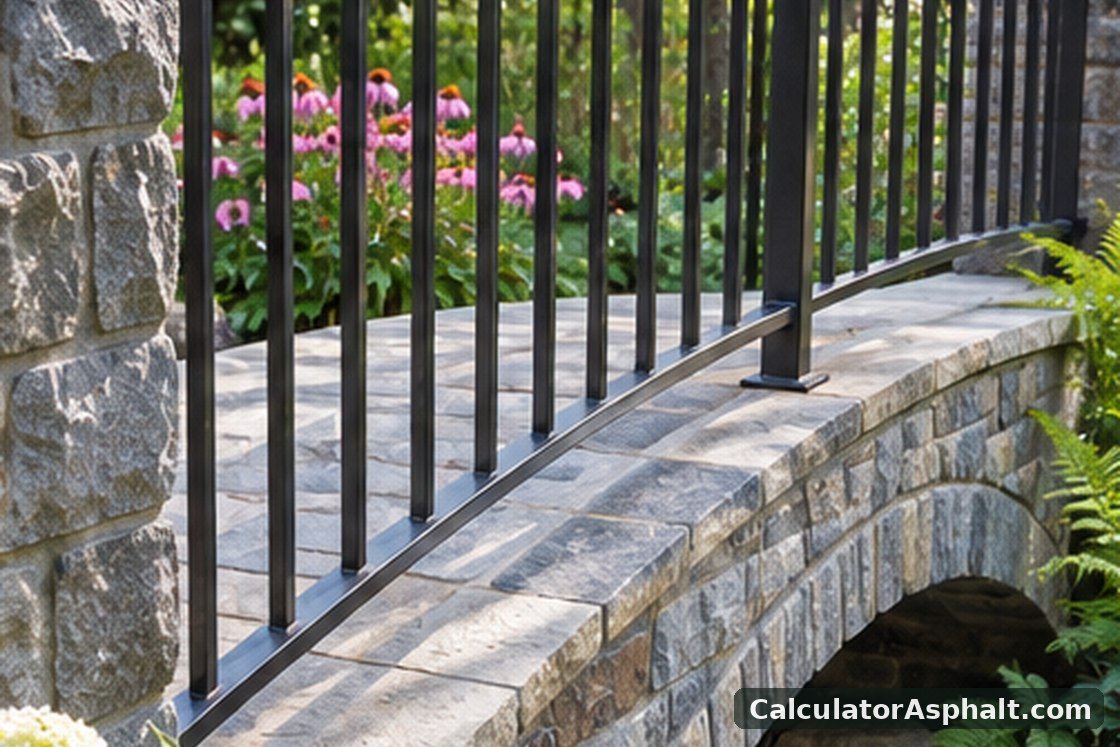
3. A flat stone crossing through a gravel channel
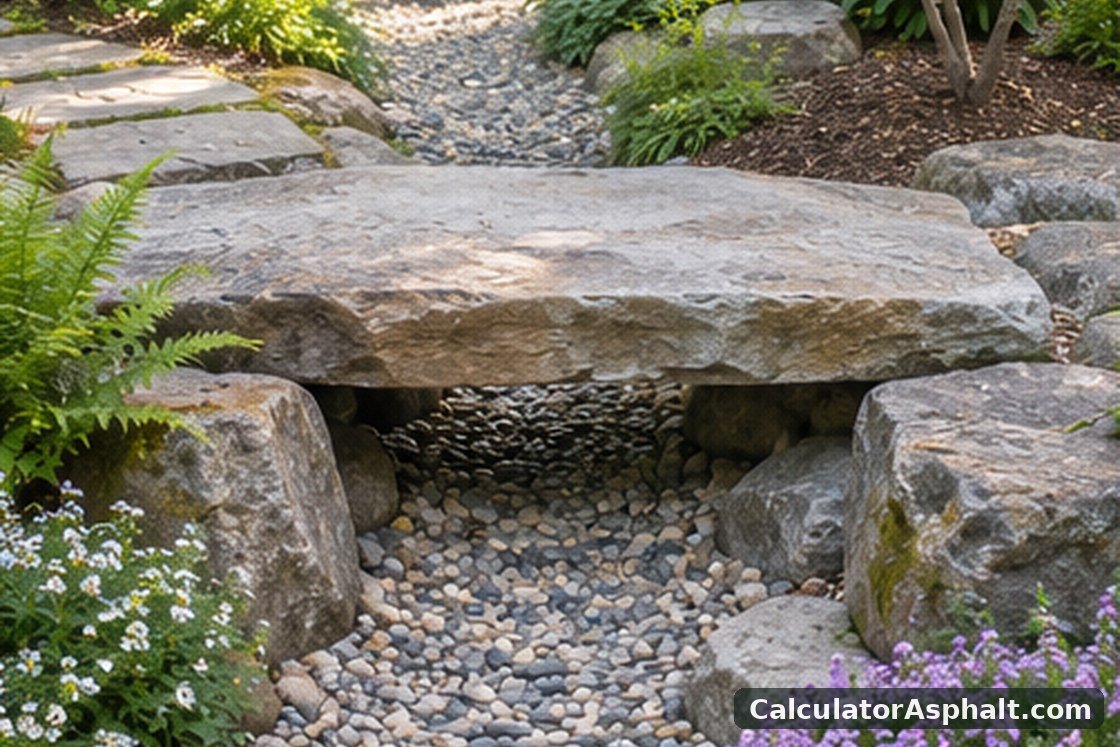
A flat stone look can suit a garden where you want the path to disappear into the landscape. Repeat the color at the near landing or in a low edge nearby. Use a contrasting plant to show where the walking route enters.
The image illustrates the appearance of stone, and the actual stone or stone-look system needs to suit the site. If the dry channel carries stormwater, include its function in the assessment. A small landscaping detail still has to work when it rains.
4. A dark woodland footbridge beside a pond
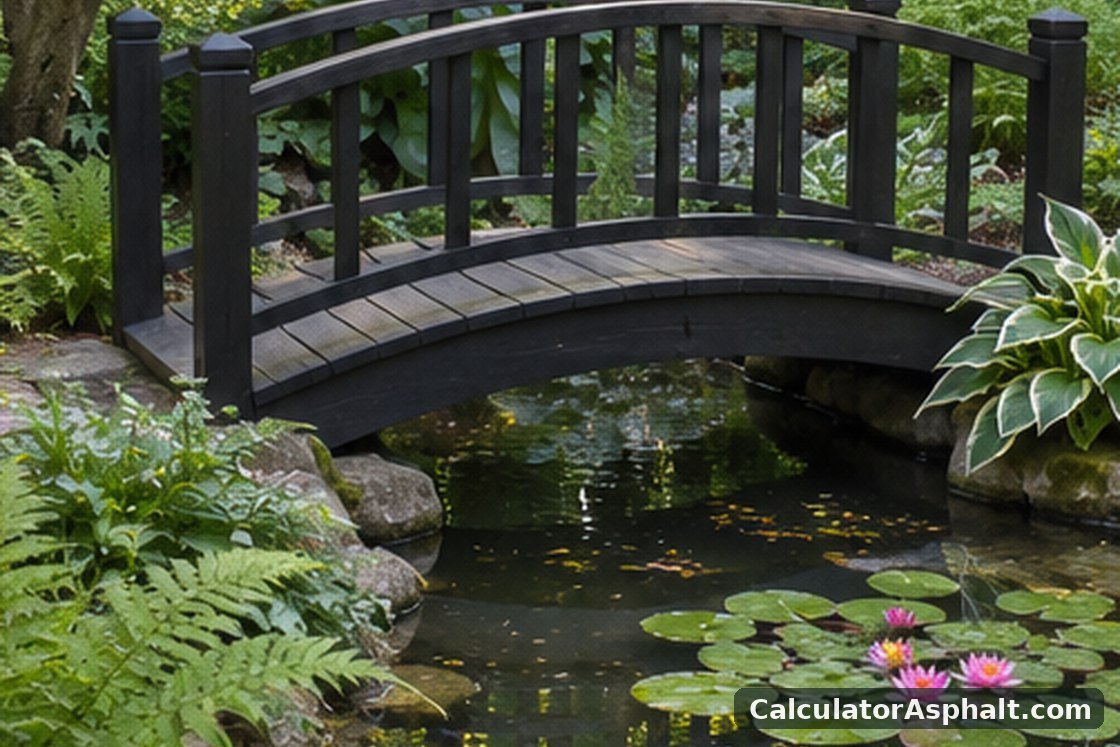
Dark paint or stain lets bright foliage stand out. In a shaded yard, a single dark crossing can feel more coherent than a collection of unrelated ornaments. Photograph the area on an overcast day to check whether visitors can still see the approach.
Keep maintenance in the plan. Ask how leaves will be cleared and how the walking surface and finish will be maintained. An ornamental pond edge also needs an access and safety review appropriate to the site and its users.
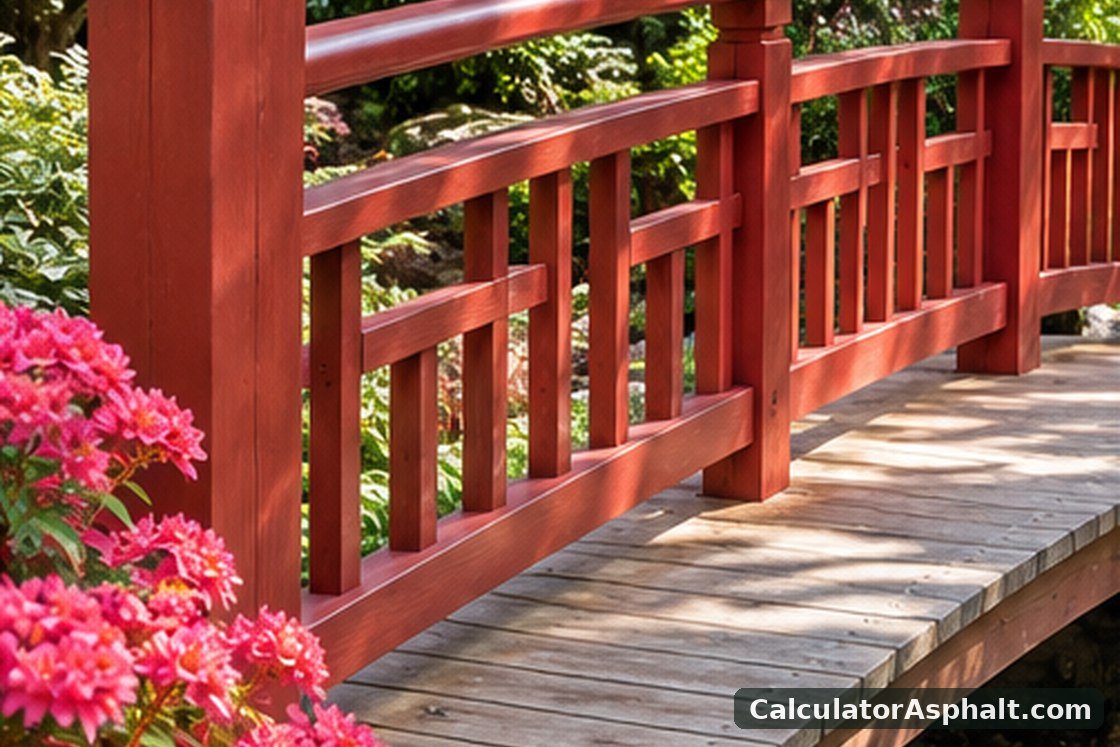
5. A painted red bridge as the garden focal point
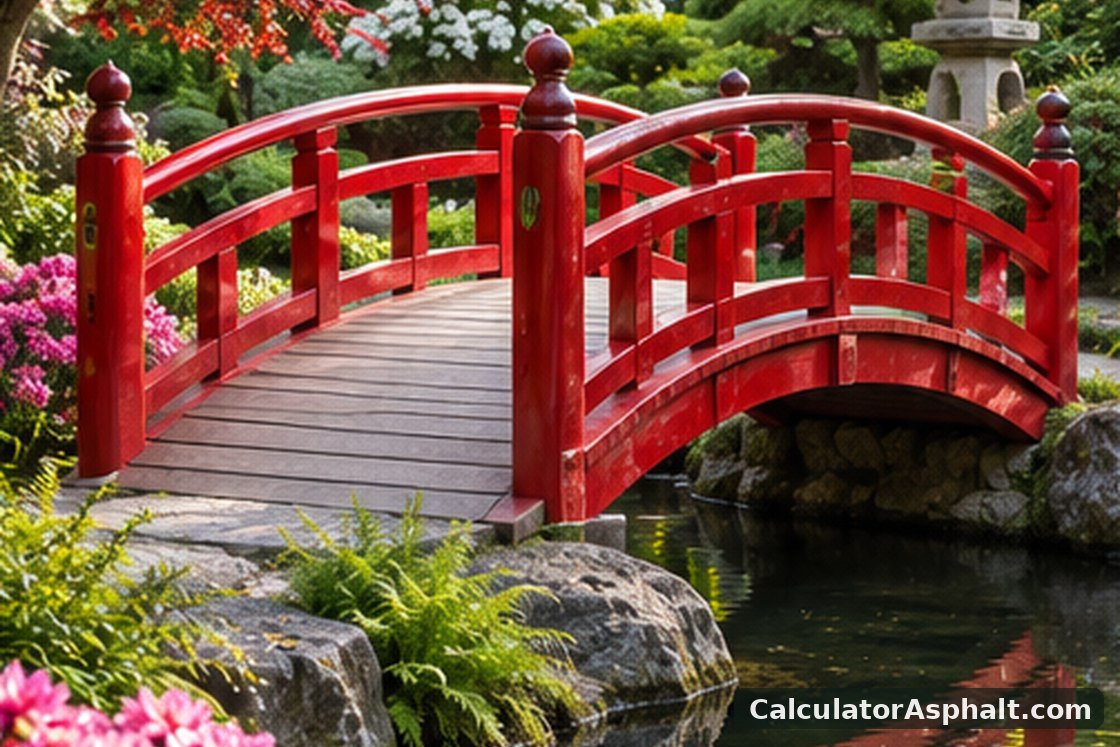
A red bridge works best when it has a quiet backdrop, such as shrubs in one or two shades of green. Repeat the color once in a nearby feature if the bridge otherwise looks disconnected. A small sample photographed in both sun and shade is more informative than a paint swatch indoors.
Test whether the red pulls attention toward the route or away from it. If the bridge competes with the house and the rest of the garden, try a darker tone or confine the color to one element.
6. A boardwalk-style link between planted beds
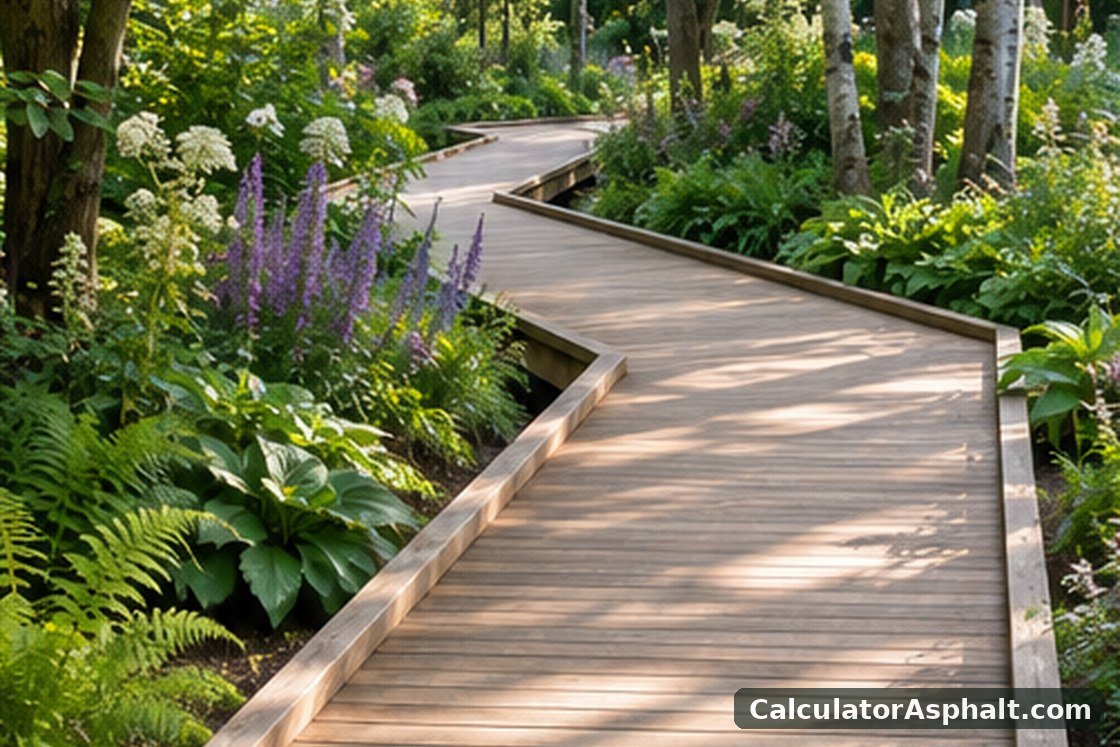
A boardwalk look makes sense when the main job is connecting a path to a bench or a garden section. It can create a strong line in an informal landscape. Use planting to frame the edges without letting it hide the walking surface or reduce usable space as it matures.
Sketch a destination before you draw the crossing itself. A boardwalk toward a seat or an opening feels more purposeful than a boardwalk that simply ends at another part of the lawn.
7. A dark metal footbridge for a modern courtyard
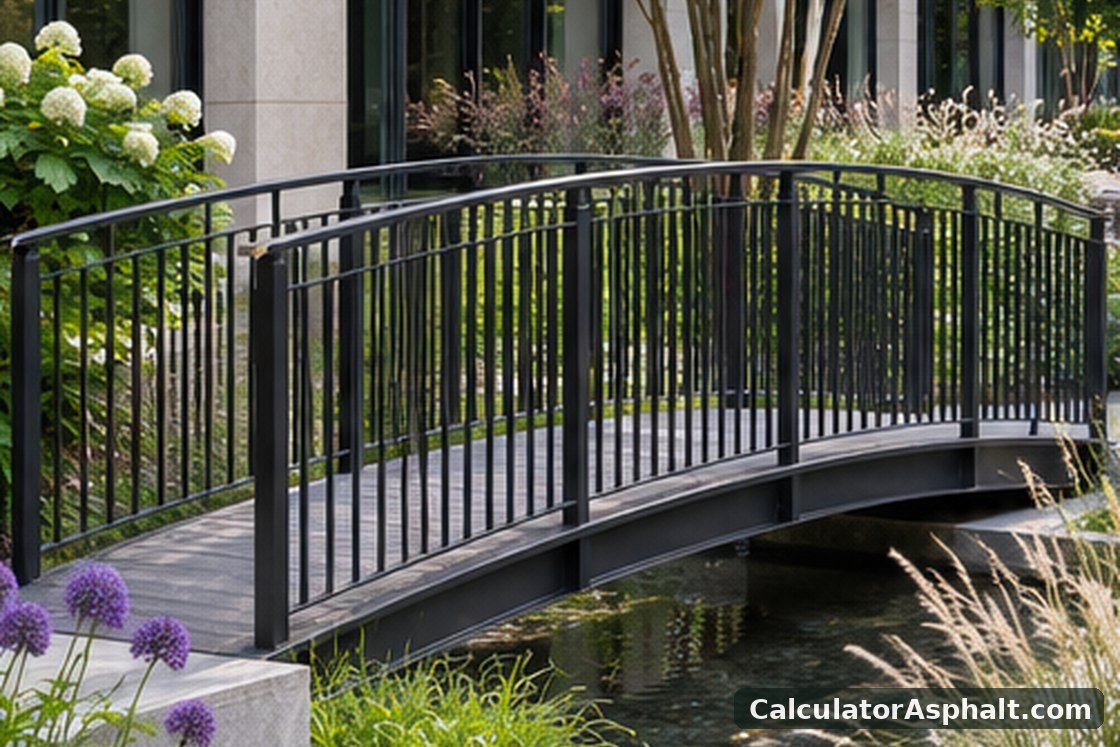
A slim dark profile can look at home beside paving, clean planting beds, and contemporary windows. Echo one finish from the house or entrance gate. Vertical lines can frame the planting beyond when the bridge is viewed from the side.
Ask the contractor for a visual mock-up of the railing and its connection to the approach. If chairs, tools, or a garden cart use the same route, include the actual equipment in the design discussion.
8. A pale weathered-timber bridge in a naturalistic yard
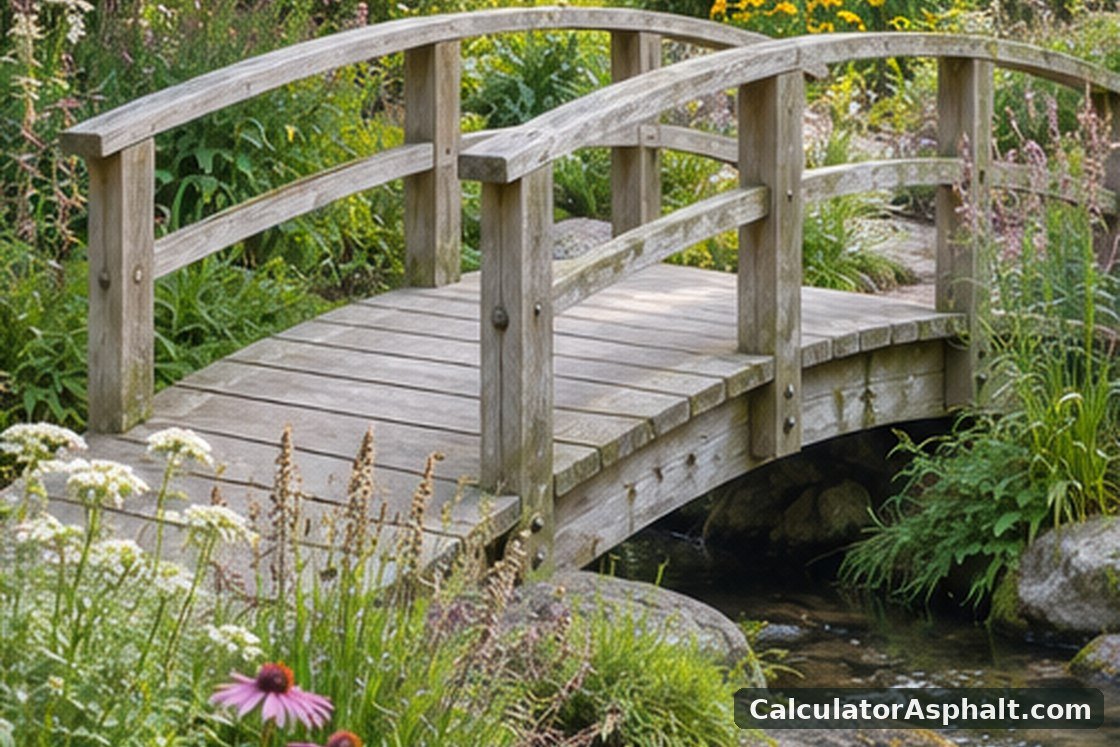
Pale timber can catch the light without drawing as much attention as a saturated color. Use a few broad-leaf plants around the approach to soften the transition. From a distance, a clear outline matters more than an intricate pattern on the sides.
Consider whether the finish you like represents new material or the look after weathering. Ask what that surface will look like after regular use and what upkeep the finish needs.
Compare the railing looks before you choose
Square timber posts on a garden bridge
Dark vertical metal rail on a garden bridge
A painted red timber bridge railing
Dark metal infill with timber posts
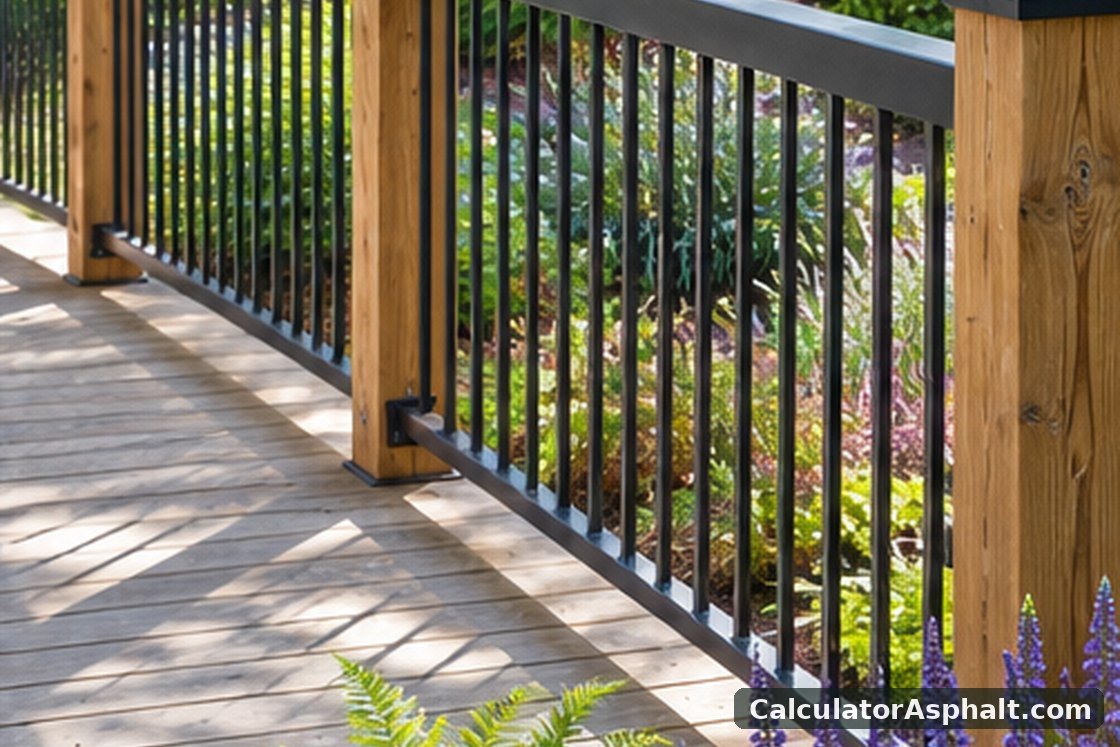
– Square timber posts make a good visual match for cottage gardens and nearby wood fences. – Dark vertical metal can give stone, timber, or modern paving a clear contrast. – Painted timber turns the railing into a focal feature, especially with a restrained background. – A mixed timber-and-metal look can connect modern hardware to a house or fence with wood tones.
A handrail helps people grip for support. A guard limits the risk of falling from an edge. Ask a qualified designer or local building official which functions and requirements apply to your crossing. Photos are useful for picking the visual direction. Use project-specific specifications for the structure and rails.
Take three photos and make one decision
Take a photo from the house, one looking down the usual route, and one from the far side. Mark where you expect people to enter and what they will see after crossing. Add one image of your preferred rail style. Then choose a bridge that supports your preferred route and one fallback if the site rules out the first option.
If the job also includes a paved garden path, estimate that approach separately with the Paver Calculator. If the crossing carries vehicles, move on to the driveway comparison guide.