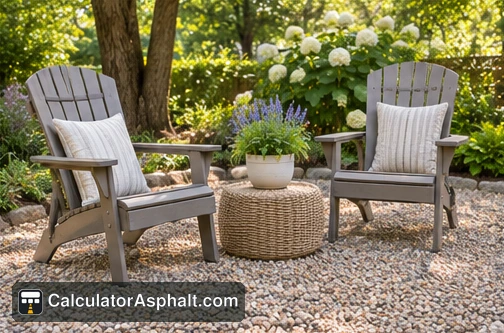
Pea gravel changes how a chair slides and how much a narrow foot can sink. Try the actual furniture on a sample when possible. Compare the seating experience, walking route and edge before deciding how much gravel you want in the finished design.
Jump to a section
Test the feet and the moving chair
Look at the contact area of every chair and table leg. Set the chairs on a realistic sample and try sitting, turning and pulling them away from the table. Check whether the chair rocks, whether gravel shifts behind it and whether wide shoes or mobility aids work on the route.
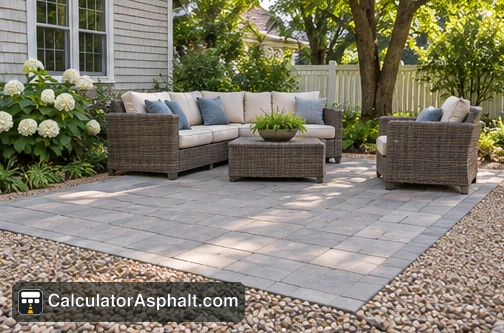
Give the seating its own stable surface
A solid pad under chairs can preserve the gravel look at the edges while keeping the furniture on a consistent surface. Mark the full range of chair positions. Choose the paved edge and transition with the installer so a chair or walker is unlikely to straddle the joint.
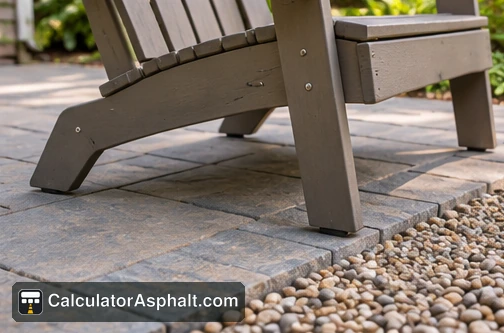
Compare maintenance with daily use
Check where gravel migrates when you sit, sweep or walk. A transition that looks good in a picture should remain usable when the furniture moves and after ordinary rain. Ask who will fill displaced gravel and how the shared edge will be maintained.
Worked furniture zone
A 4 ft round table with an illustrative 30 in space around it occupies a 9 ft diameter envelope. Set the real chairs out with someone getting up to see if more space is needed. Compare a 9 ft square pad with a smaller rectangle after measuring a different furniture arrangement in the same way.
Choose which surface gets priority
Trace three areas on your drawing: furniture travel, everyday access and the remaining decorative zone. Try the design with occupied seats and with a person carrying something around the table. Draw the whole route to the house, including an entry turn or threshold. Mark any places where gravel is likely to move onto the walk. Ask the installer to explain the transition detail, plus how the furniture zone and surrounding gravel would be repaired separately over time.
What if I already bought narrow-legged furniture?
Confirm the existing pavers or alternate firm surface will support the furniture and test how all four feet sit. Compare relocating the furniture to the solid section with changing the seating layout. Discuss the material transition before placing any raised pad in a walking route.
Video example
Lowe’s demonstrates a pea gravel patio with pavers. Compare the example with the system and site conditions in this guide.
Material calculators
Related project guides
- Gravel and paver patio zones
- Small Side Garden Patio Layouts: Keep the Route and Find Room for a Seat
- Small patio furniture layout
Reference CMHA construction guidance for interlocking concrete pavers.