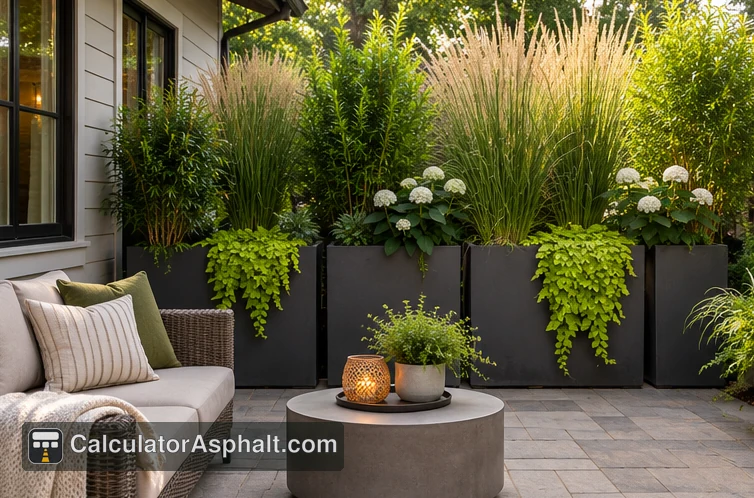
A single well-placed privacy screen can change a seating area. Start with the view you want to block and the seat people use most. The right location may be closer than the lot line, leaving the rest of the patio open to light and air.
Find the view you actually want to hide
Sit in each chair and mark the windows, sidewalk or neighboring seating areas visible from that position. Repeat while standing at the door and carrying something through the yard. Rank the views so occasional movement does not dictate the entire design.
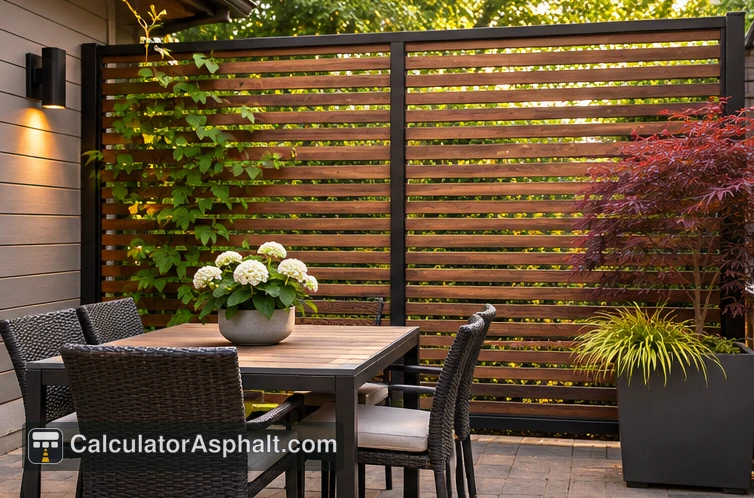
Mock up the screen before choosing it
Use a helper and a sheet or sheet of cardboard to test screen placement from inside your own yard. Check what happens from low seats and from the kitchen window. A closer screen can block a line of sight with less coverage, although it will occupy more of the seating enclosure.
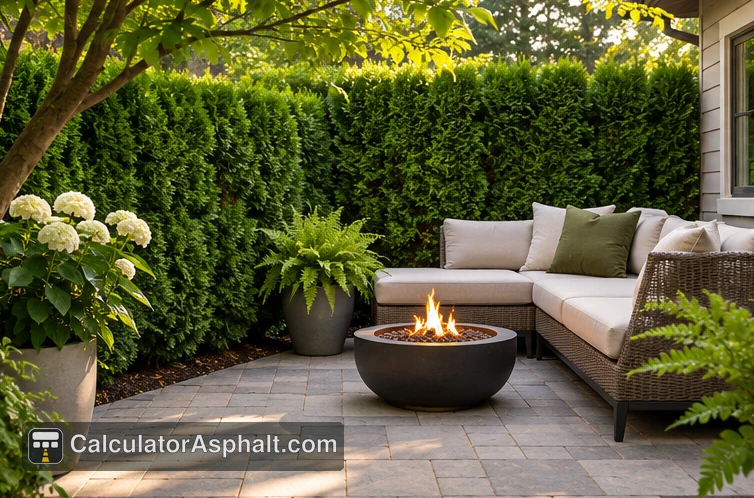
Leave room for planting at mature size
Draw the real footprint of the plants you are considering. A container may fit today while the mature plant crowds the walking route. Give yourself access to water and prune, and account for deciduous plants losing their leaves during the months you use the patio.
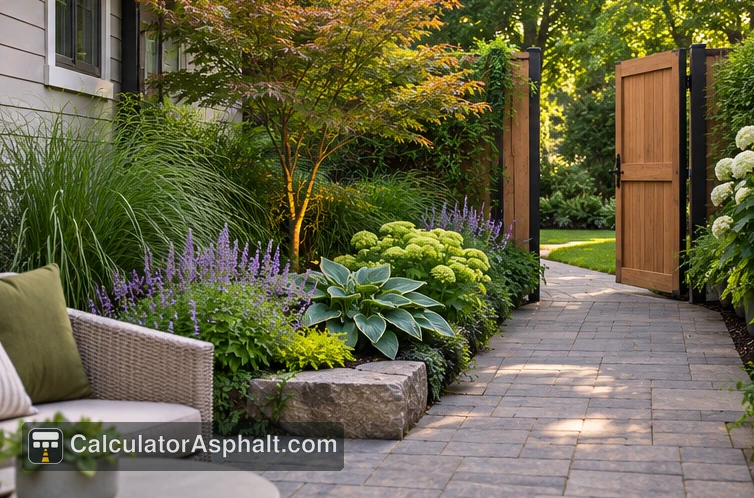
Separate the screen support from the paving design
Choose the construction system and verify local rules, anchoring and wind requirements before committing to the layout. Paving units are a walking surface. Have the screen support coordinated with the base design where posts or footings enter the paved area.
Worked mock-up for a corner sofa
On a 12-by-14-foot patio, compare a mock screen near the sofa with one at the outer edge. Photograph both from the main seat and the back door. Mark the smallest panel that blocks the chosen view while leaving the door-to-yard route intact.
Choose the best of two short screens
Mock up a single short screen at the side of the sofa and a second option diagonally closer to the yard boundary. Check each from the garden, seating and window. Write down which views it blocks and which spaces still get light. Think through how the screen would be maintained without standing on plants or moving a heavy chair. Confirm setbacks and approved anchoring before measuring materials. If you prefer tall containers, sketch their mature foliage over the same plan and check the occupied floor area. The result should give you both a likely location and a reason for choosing it.
Take these checks to the site
Seasonal privacy
Check the view when deciduous plants are sparse. If winter coverage matters, compare fixed screening or planting selections suited to the site. Walk the perimeter after each option and test available maintenance access.
Partial screening
Try one panel perpendicular to the house and another parallel to it. Record the blocked views and which open areas are visible from the doorway. Compare daylight in the adjacent room with a helper observing indoors.
Free-standing planters
Map the mature canopy, irrigation route and loaded container weight. Ask whether the containers need to be fixed or moved in strong wind and where they can be serviced without blocking the approach.
Common questions
Will a screen block an upstairs view?
Test the steeper sightline from the actual seat. A vertical screen may help only at specific angles. Discuss a suitable overhead solution with the installer if the required height would compromise wind performance or local limits.
Project calculators
Related patio guides
- Estimate paver base and sand
- See small DIY paver patio ideas
- Patio Landscaping Border Ideas That Frame the Space and Keep It Usable
- Paver Patio With a Pergola: Measure the Shade and the Walking Route
- Outdoor Dining Patio Ideas: Lay Out the Table Before You Order Pavers
Technical reference CMHA guide to concrete paver construction.