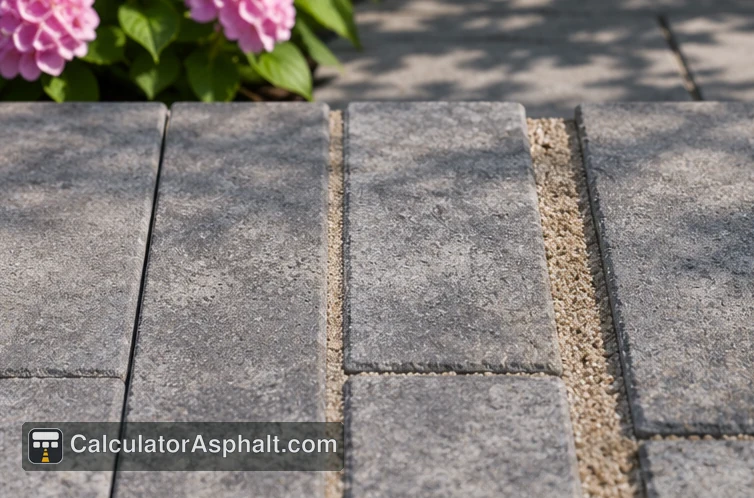
Joint maintenance starts by identifying the paving system and what the joints were designed to contain. A new bag of material can create more work if the product is incompatible with the joint, surface or drainage assembly.
Identify the assembly from records
Look for invoices, installer specifications and product names. Photograph the pavers, joints and any surface residue. If the installation uses a permeable system, confirm the approved joint aggregate rather than assuming an ordinary joint product fits.
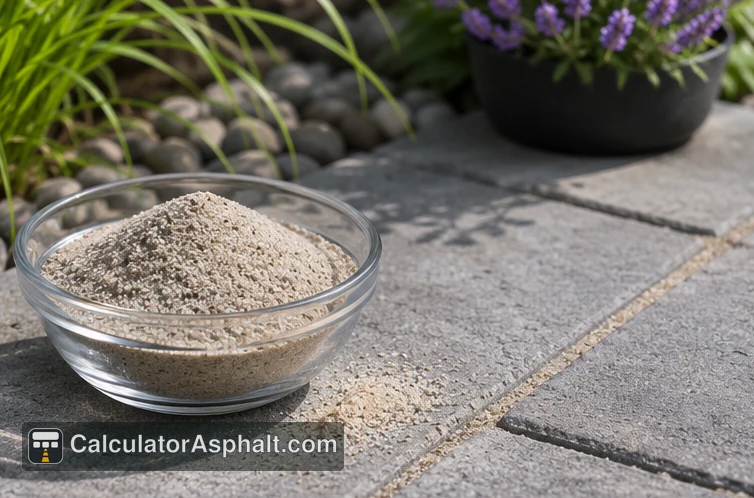
Measure width, available depth and condition
Check several points, including the border and a well-traveled area. Record whether existing material is loose, missing below the surface or hardened at the top. Product labels specify eligible joint dimensions and preparation for the intended use.
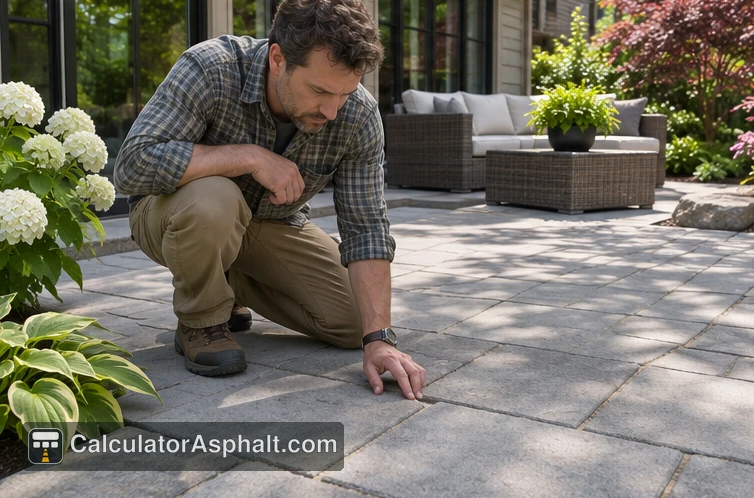
Rule out movement before treating a joint symptom
If joints open progressively or neighboring pavers rock, inspect the pattern of movement and contact the installer. Joint loss at one downspout might also point to a water problem. Document the condition before washing or adding material.
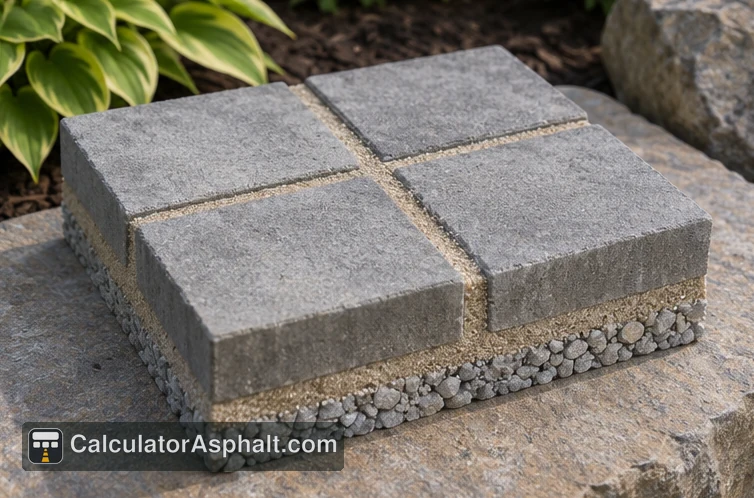
Check coverage and weather against the exact product
Coverage depends on the units and joint geometry as well as the material. Read current preparation, application and weather instructions from the manufacturer. Check a small inconspicuous area under the manufacturer's guidance where staining or compatibility is a concern.
Worked buying comparison
For a 180-square-foot patio, an example coverage of 55 square feet per bag would make four bags the arithmetic minimum. Coverage of 80 square feet per bag would make it three. Use the chart for your paving unit and joint dimensions, then assess whether the scope is a touch-up or complete refill.
Compare the product label against the actual surface
Use one sheet for the measured joint widths, present material and paving block name. Ask a supplier to mark which of those conditions their product covers. If there is a wide joint alongside a narrow one, check both and request a preparation plan for each. Confirm how to handle a joint near a drain or a sensitive adjoining surface. Plan the test area around any required weather and cure window, and record the material applied and the result. Ask about removing residue under the manufacturer's directions before exposing more of the patio to the same treatment.
Take these checks to the site
Gather product evidence
Ask the original installer for specifications and check any spare stock labels. Record approximate installation age and which areas have been cleaned or refilled before. Use those details when asking the manufacturer about compatibility.
Inspect several joint locations
Choose a sheltered area, an exposed area and a busy route. Record missing joint material, staining and any units that move. Compare proposed products against the widest and shallowest measured joints.
Plan a trial area
Use a low-visibility section under the product maker's instructions and check the finish after the specified cure. Keep the label and coverage chart with the project for future maintenance, including how much material the test used.
Common questions
Does joint sand stop all weeds?
Follow the maintenance schedule for your paving system and watch for organic material collecting at the surface. Ask the product supplier what its instructions and warranty cover for your installation.
What if the existing joint has crusted at the top?
Document a sample, then ask the paving or joint manufacturer about identifying the material and safe preparation for your system. Ask them to confirm how much old material needs to come out and how to protect adjacent surfaces. Record the guidance with the exact product name.
Project calculators
Related patio guides
- Estimate paver base and sand
- See small DIY paver patio ideas
- How Much Paver Patio Edging Do You Need? Measure Each Run Before You Order
- 24×24 Paver Patio Ideas: Plan a Clean Grid Before the First Cut
- Sinking Patio Pavers: What the Shape of the Dip Can Tell You
Technical reference CMHA guide to paver maintenance.