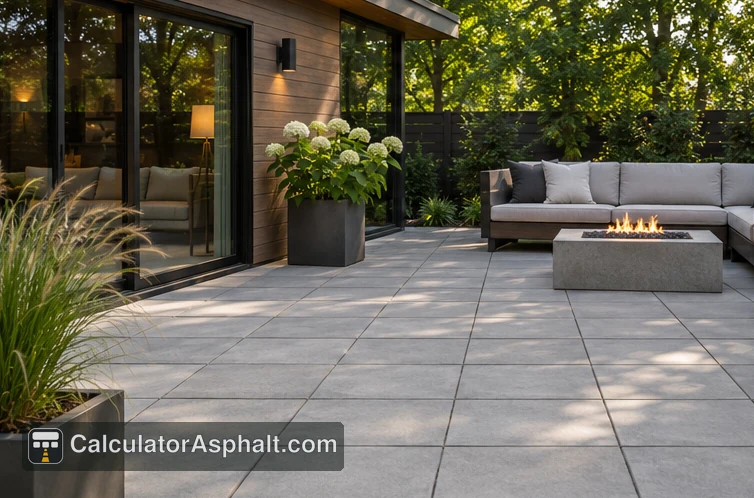
Big square slabs make a patio read as one surface. Their scale also makes interruptions more obvious: an off-center doorway, tiny perimeter cuts, or wandering joints. Plan the actual product module and the edges first, then decide whether the dramatic grid suits the site and how it will be installed.
Center the grid on the daily route
Draw a centerline through the main door and the principal path across the patio. Try placing a joint on that line, then try centering a slab on it. One arrangement may give you a more useful cut at both ends. Check a full row with the supplier’s stated work size and joint before committing.
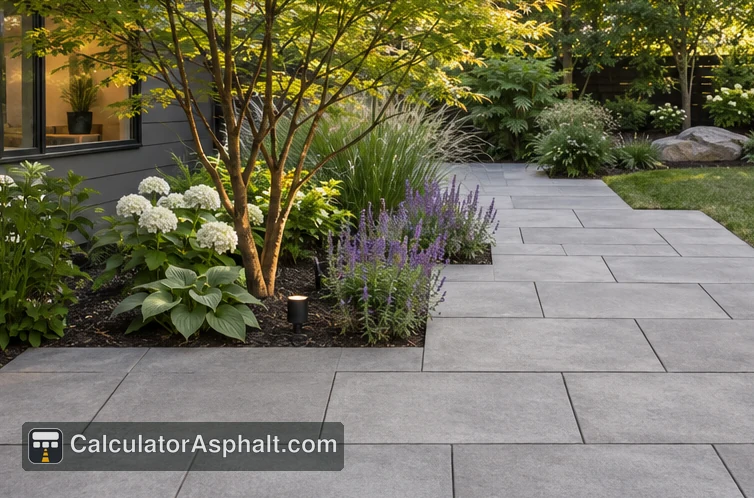
Use a deliberate frame
A border can absorb layout changes and separate the grid from a planted edge. It also introduces its own joints and pieces. Compare a fixed-width border with a clean slab cut at the edge; list the material and labor differences before choosing.
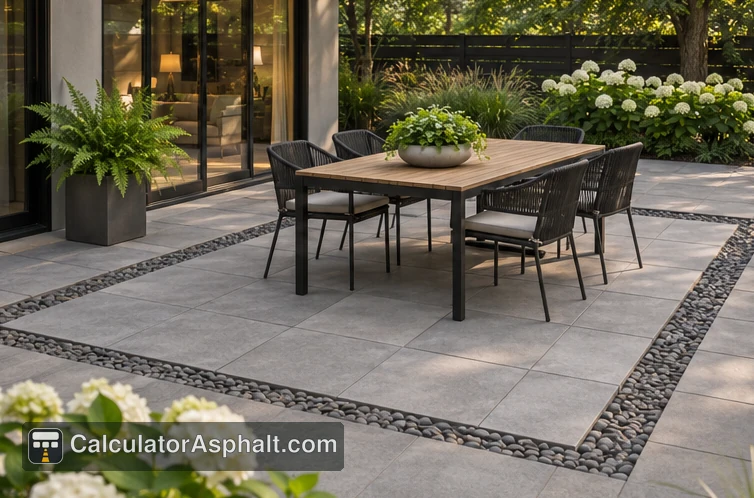
Break up the square without losing the grid
A narrow step or an existing tree bed can make the edges asymmetric. Keep the main field consistent and plan a distinct transition where the shape changes. Sketch the turning movement from the door with the chairs pulled out before placing a decorative interruption.
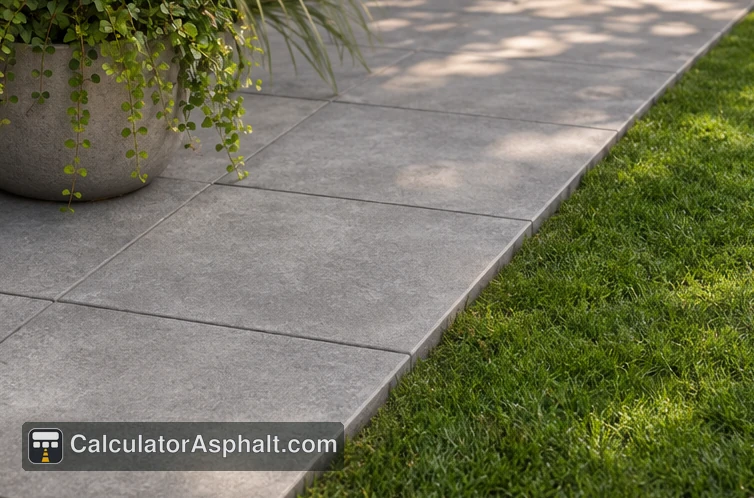
Check the product, substrate and handling
A slab, a concrete paver and a porcelain unit may look alike in a rendering and require different supports and handling. Review the actual product’s approved assembly with the supplier. Large units are harder to move and reset; ask about weights, lifting help and the minimum order.
Count the slab grid
A 12 × 16 ft rectangle is 192 sq ft. A nominal 24 × 24 in unit covers about 4 sq ft before field verification, giving 48 unit equivalents, or six by eight in a nominal grid. A 5% illustrative reserve gives 51 units after rounding. Draw actual cuts and include carton or pallet rounding separately.
Compare two shifts on a 13-foot edge
A nominal 2-foot module repeated six times uses 12 feet of the 13-foot run. One layout would put the remaining 12 inches at one end. Centering those same six modules would leave roughly 6 inches each side. An alternative is five full modules with about 18 inches at each end. Each alignment can look centered at the door, depending on whether the centerline hits a joint or a slab. Verify the joint spacing and the border's true width before treating those numbers as cut sizes. Ask the installer to highlight each perimeter cut on the same drawing and label the visible widths.
Take these checks to the site
Door centerline
Take the inside and outside edges from the same reference point. Draw the door swing on the plan so a centered slab also works with foot traffic. In an irregular yard, prioritize the view out of the main doorway.
Cut balance
Compare the sliver you would get at the edge with the cuts after shifting the field half a module. Ask whether a border could replace the narrowest cuts and estimate the separate cut and labor cost before choosing.
Delivery route
Photograph turns and steps between the delivery point and patio. Ask the installer who handles the largest units and what equipment they plan to use. Confirm where any spare units will be stored for a future replacement.
Video demonstration
Ask This Old House demonstrates installing concrete pavers. Compare the example with the instructions for the products and site in this guide.
Common questions
Should I order from the advertised size alone?
No. Confirm whether that measurement is a nominal module or the physical size. Dry-lay a few pieces at the required joint to see what coverage you actually get.
Project calculators
Related patio guides
- Estimate paver base and sand
- See small DIY paver patio ideas
- How Much Paver Patio Edging Do You Need? Measure Each Run Before You Order
- Paver Patio on a Budget: Where to Save Before You Change Materials
- Large Paver Patio Installation: Plan Access, Delivery and Handling First
Technical reference CMHA technical guidance on paving slabs.