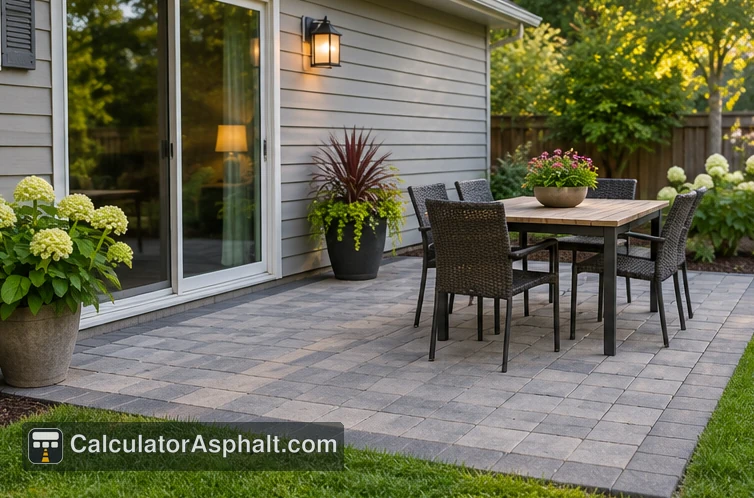
Start with the reason you want a patio, then price the simplest plan that serves it. A table for four needs a usable route and enough space for chairs. A reading corner can be smaller. Reducing an awkward edge or standardizing the paver module can save money while preserving the purpose of the patio.
Compare a simple footprint with a complicated one
A rectangle can reduce fitting work where it aligns with available modules. List any changes to the drainage pattern, access route, or project footprint on each version. A straight patio that blocks an existing route is not a saving if you must rebuild the path afterward.
Use the same assumptions for every quote
Ask what each quote includes for excavation, hauling, base, bedding, unit material, restraint and cleanup. Compare the same finished area and treatment of the perimeter. Some estimates omit disposal or assume a machine can fit through a gate; check those assumptions before comparing totals.
Choose where to spend on appearance
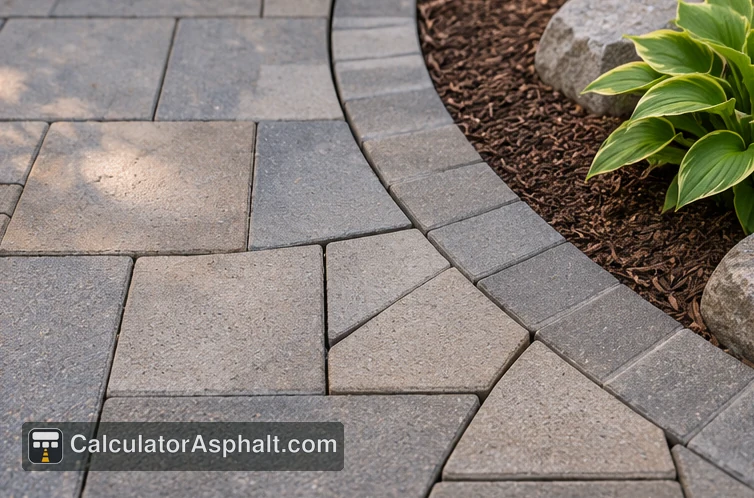
A contrasting border or bench area can draw attention while the main field uses an economical stock unit. Make sure the products work together within the selected system. Check whether the accent unit needs additional cuts, planning or a different thickness before adopting it.
Phase changes carefully
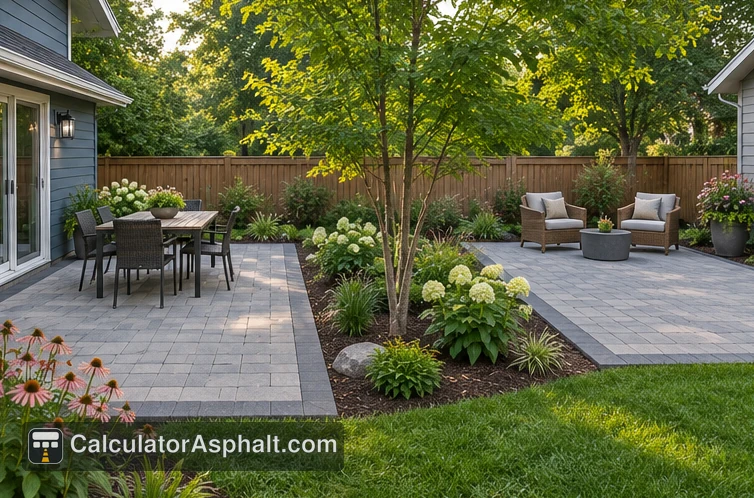
If you might expand later, record the existing base and pavement detail and keep a sample of the unit. Plan where the future break will sit. A second delivery, changes in material color, and rework at the seam can reduce the apparent benefit of splitting the project.
Compare two areas, not two finish prices
A 10 × 12 ft plan covers 120 sq ft; a 12 × 14 ft plan covers 168, or 40% more area. Their perimeters are 44 and 52 ft, so the edge length rises by about 18%. Consider the area and perimeter independently. At hypothetical material prices of $3.25 per sq ft for units and $2.50 per finished linear foot for restraint, these two items cost $500 and $676 respectively, before labor, tax, base, bedding or delivery.
Compare savings before switching products
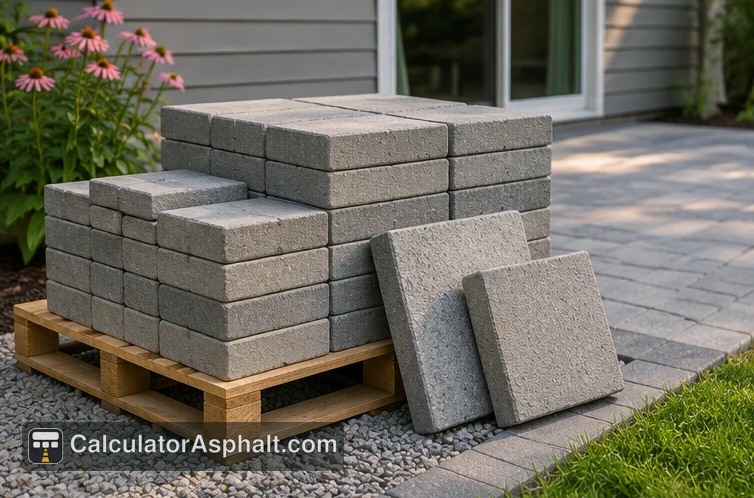
A 12-by-18-foot patio has 216 square feet. A 12-by-15-foot version has 180 square feet, a reduction of 36. One change may save field materials and installation hours while leaving the delivery or excavation minimum unchanged. For a rough comparison, multiply each footprint by the same quoted field-material rate and add the contractor's separate charges for fixed items. Then reprices can reflect differences in edge length and cuts. When two quotes use different paver sizes, ask each supplier how many units and packs the revised drawing requires. Compare delivered costs with tax, the remaining usable layout and the availability of future matching pieces.
Take these checks to the site
Resize the rectangle
Calculate square footage for two footprints before choosing finishes. Removing a strip along one edge also changes excavation and edge lengths. Ask whether the smaller option creates a cut-heavy perimeter that eats into the expected labor saving.
Simplify the pattern
Give the contractor the same product and square footage in both plans. Compare a plain field and a plan with one accent edge, including labor for cutting and changes to unit counts. Get separate prices for materials already at the site.
Price the hidden work
Request comparable lines for removal, hauling, base materials and site access. If two designs need the same drainage improvement, keep that site cost visible in both estimates. Record which material quotes include freight and taxes.
Video demonstration
Ask This Old House demonstrates installing concrete pavers. Compare the example with the instructions for the products and site in this guide.
Common questions
Where should I avoid cutting the budget?
Keep the base, edge and drainage appropriate to the chosen system. Reduce optional area or decorative complexity before changing support details to meet a quote.
Project calculators
Related patio guides
- Estimate paver base and sand
- See small DIY paver patio ideas
- 24×24 Paver Patio Ideas: Plan a Clean Grid Before the First Cut
- 12×12 Paver Patio Ideas: Three Layouts That Leave Room to Walk
- Compare Paver Patio Quotes: Find the Costs Hidden in the Scope
Technical reference CMHA guide to concrete paver construction.