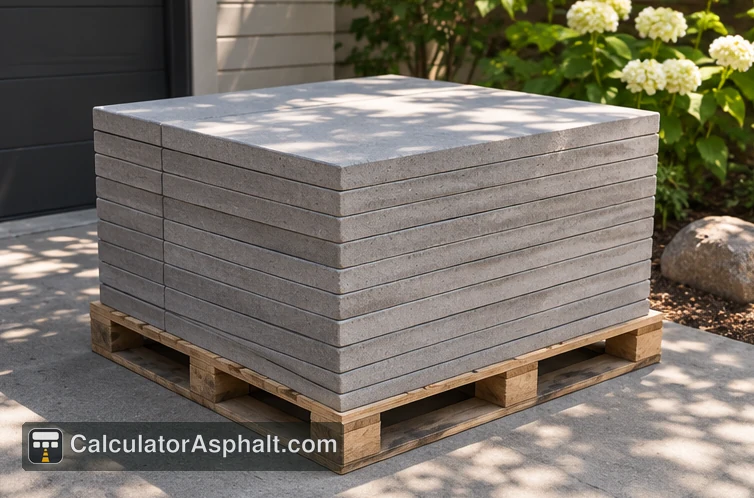
A large-format slab may suit the design and still be the wrong product for the route into the backyard. Work through delivered dimensions, handling arrangements and storage before confirming an order.
Measure the entire path from curb to patio
Record gates, tight turns, steps, grade changes and overhead clearance along the route. Use the narrowest real opening after accounting for latches and posts. Tell the supplier what is on the route and ask what equipment or staging their delivery service actually provides.

Ask for data about the whole pallet
Get unit dimensions and weight, units per pallet, pallet dimensions and loaded weight from the supplier. Confirm where any pallet may be set down and how it will be moved again. Delivery language such as curbside service can leave the entire transfer to the homeowner or installer.

Review handling with the installer
Ask who supplies rated handling equipment and who is responsible for its use. They should have a plan for the largest pieces, transfers and safe staging. Choose a paving unit supported for its intended application and confirm manufacturer instructions for support and installation.

Inspect before the installer starts laying
Verify product names, quantities and color lots. Take photos of visible delivery damage and check the supplier's process for reporting it. Keep enough approved site space for separating accepted material from pieces that need review.
Worked delivery walk-through
A 36-inch side gate appears to fit a nominal 24-inch slab edge-on. A narrow turn after the gate, surface steps and the transport equipment width can still stop that delivery. Walk the full route with the installer and get their equipment dimensions and minimum clearance before ordering.
Write a delivery decision in the purchase order
Ask the seller to list the number of pallets, space required and exactly where the shipment will stop. Compare that with what the installer expects to receive. If the chosen forklift or cart requires a turn the route cannot accommodate, obtain a written alternate handling plan. Confirm if changes to the delivery date need advance notice and where the supplier will store a damaged pallet pending replacement. Keep batch details for the spares after the job. This gives you a clear record of what each company is expected to deliver before pallets arrive at the curb.
Take these checks to the site
Site access notes
Take a photo facing both directions at each gate and turn. Identify what can temporarily move, who would move it and who restores it afterward. A delivery allowance should specify where the pieces or pallets will actually be set down.
Staging surface
Confirm who approves the temporary storage locations and whether the ground there can support the load. Identify an alternate spot if the preferred area is wet or inaccessible. Mark how work will move from storage to the final surface.
Condition checklist
Record the order number, product size, finish and shade batch. Photograph damage at delivery and clarify the time window for a report. Keep intact spares and storage information with the final project records.
Common questions
Should I accept a substitute slab size?
Compare the substitute's installation requirements, weight and module, then redraw corners and boundaries. A small change in module can create a different cut layout and alter how the surface is supported.
Who should check the ground before delivery?
Confirm with the delivery company and installer who approves the route and unloading location. Let them know about buried utilities, sensitive surfaces and nearby structures. Keep delivery, safe on-site handling and rebuilding any affected area separate in the written scope.
Project calculators
Related patio guides
- Estimate paver base and sand
- See small DIY paver patio ideas
- 24×24 Paver Patio Ideas: Plan a Clean Grid Before the First Cut
- Round Paver Patio Ideas: Compare the Circle, the Border and the Cuts
- Compare Paver Patio Quotes: Find the Costs Hidden in the Scope
Technical reference CMHA technical guidance on paving slabs.