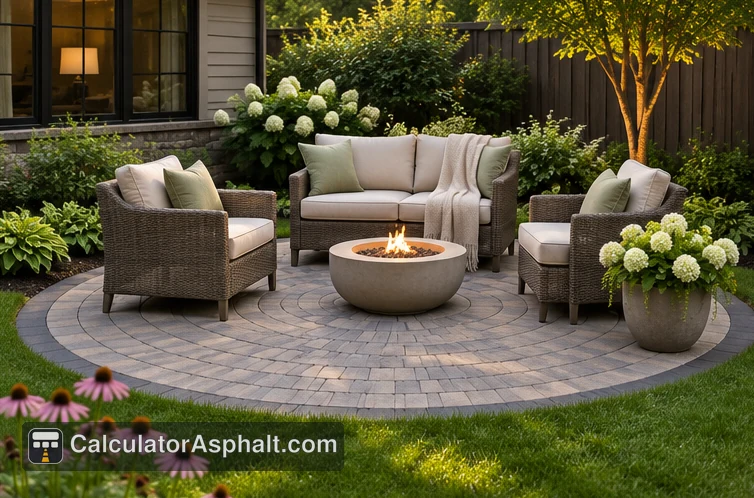
A round patio can anchor a small yard, but the curve affects ordering, furniture placement and labor. Decide where the circle meets the walking path and whether the paving system offers the curve you want.
Mark a circle you can use
Define the center and mark the proposed edge. Set chairs and any table or container inside the circle. Pull each chair out and test the route from the path. The available width changes near the curved edge, which can matter more for furniture than the total area.
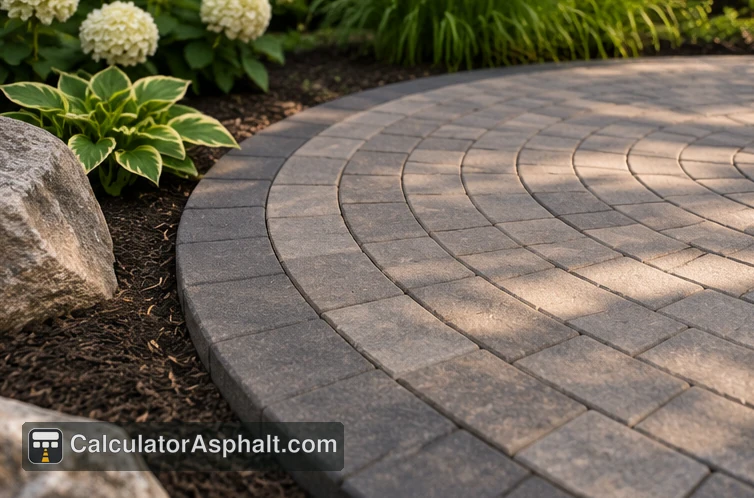
Choose a paving system for the perimeter
Compare a manufacturer-designed circle kit with a field pattern that meets a curved soldier course or other compatible border. Ask the supplier for the actual kit increments and how the perimeter is formed. These details change the appearance, ordering and cutting burden.
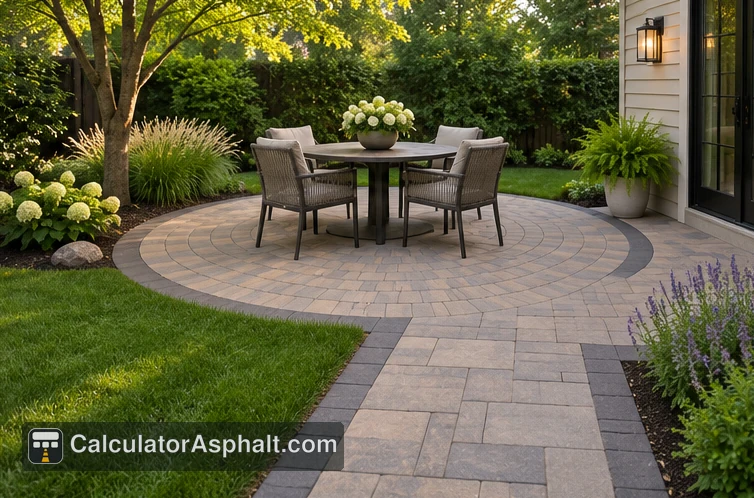
Decide how the path joins the circle
Sketch the path entering toward the center and offset to one side. Compare the number of cuts and how naturally guests arrive. A straight threshold at the join can simplify a junction if it suits the border system and desired look.
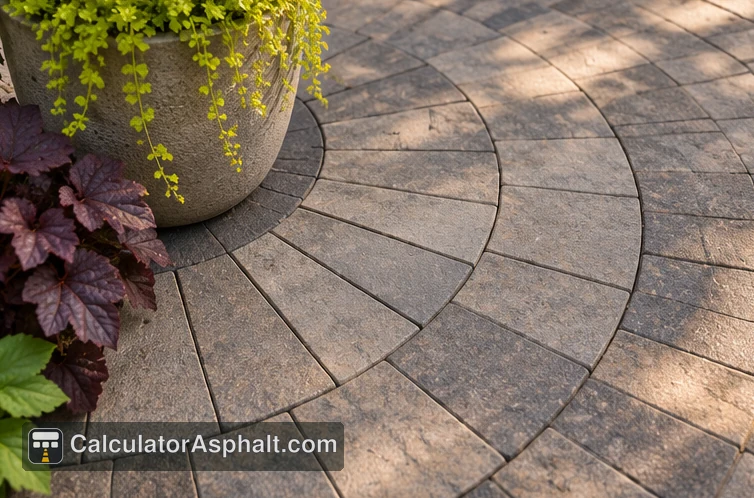
Count the curved pieces separately
Calculate area for field budgeting and trace the perimeter for edge products. Draw actual units across the circle to identify small wedges, especially where the path joins. Confirm coverage, recommended cuts and spare quantities with the product supplier.
Worked quantity example for a 12-foot diameter
A 6-foot radius gives an area of about 113.1 square feet and a circumference of about 37.7 feet. If a 4-foot path opening replaces a section of edging, measure the actual point-to-point arc length removed on the drawing, then adjust for terminations and the chosen restraint system.
Check the leftover space around the circle
A 12-foot circle centered on a square envelope of the same width leaves about 31 square feet in the four outside corners combined. Those corner fragments may suit planting or a path transition even when they are too small for furniture. Mark which corner faces the main approach and make that part of the drawing rather than drawing the paving in isolation. If a straight route meets the circle, price the circle's edge pattern and the route's field separately. Ask the installer to show where the curved joints end and whether any small pieces need a different layout.
Take these checks to the site
Center the actual use
Try placing the table at the true center and then offset toward the part of the circle opposite the path. See how the arrangement feels from the approach, and check whether any chair moves beyond the finished edge.
Confirm kit dimensions
Compare the nearest smaller and larger kit to your measured furniture envelope. Ask if the advertised diameter includes the border. Record kit coverage and extra units separately from any rectangular path material.
Check the perimeter detail
Walk the edge with the supplier's cut sketch and confirm shortest pieces, transitions and the approved restraint. Compare removing a small path section from the measurement with ordering separate corner and spare material.
Common questions
Can I make a circle from square pavers?
You can compare a square field cut to a circle with a purpose-made curve. Get a mock-up of the border and cut pieces first and review the paving manufacturer's guidance for small cuts and edge support.
How can I check a curved edge without drawing software?
Mark the center and measure outward along several lines using the same radius. Join those marks to visualize the perimeter, including where the path cuts across it. Give the supplier the diameter and ask for a manufacturer drawing before ordering.
Project calculators
Related patio guides
- Estimate paver base and sand
- See small DIY paver patio ideas
- Paver Patio With a Fire Pit: A Layout Checklist Before You Buy
- Gravel and Paver Patio Ideas: Put Solid Paving Where It Counts
- Large Paver Patio Installation: Plan Access, Delivery and Handling First
Technical reference CMHA guide to concrete paver construction.