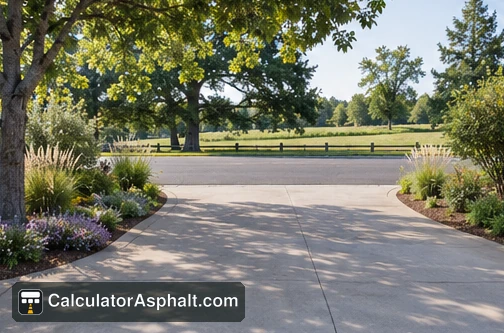
A driveway corner can frame the front of the house while keeping the view open where someone pulls out. Start at the actual driver's position and identify the places vehicles, people and bicycles can approach from. Plant selection follows that check.
Jump to a section
Look from the driveway toward both directions
Observe from legal, safe positions. Mark what you need to see from the vehicle and from the walk. Ask the relevant road authority or local office about permit conditions, allowable planting height and sight-distance requirements. Walk the approach again from a pedestrian perspective.
Use mature sizes on the sketch
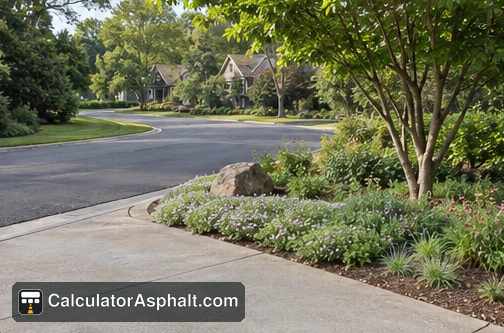
Outline how big each plant will grow, including foliage spread that may reach above the labels. Keep seasonal flower stems and hardscape features in the picture. A low plant at installation can conceal a view when it matures, especially where ground slopes upward toward the road.
Review pruning and maintenance access
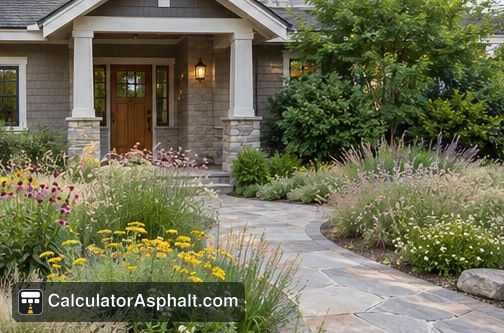
Reserve a way to weed, water and trim without standing in the roadway. Test your planting sketch from more than one vehicle height. Add visual interest farther back where it can grow without narrowing the view or interfering with driveway maneuvers.
Worked bed area example
A triangular area with a 10 ft base and 6 ft depth covers 30 square feet. Draw the required clear-view area independently, then use only the portion available for planting to estimate mulch and soil. Make a second sketch with the chosen plants drawn at maturity.
Evaluate the view twice
Place removable stand-ins for landscaping well inside the private area, then observe from the driveway where you would normally look before proceeding. Repeat in the opposite direction from a safe location on foot. Mark the projected mature planting height on a second sketch so the review accounts for change. Note where visibility is affected by grade, a permanent object or parked cars. Bring the sketch and photos to the local reviewer when sightline requirements apply.
Can a large rock substitute for a taller plant?
Show the actual stone dimensions and location to the relevant reviewer. Height and visibility matter for hardscape as well as planting. Check how installation, drainage and maintenance will work before ordering a large piece.
Material calculators
Related project guides
- Driveway Privacy Planting Ideas: Place Taller Plants Where the Drive Can Stay Open
- Gravel Driveway Flower Bed Borders: Keep Gravel and Mulch on Their Own Sides
- Driveway Landscaping With Rock Accents: Frame the Edge and Keep the Wheel Path Clear
Reference University of Minnesota Extension guidance on mature plant size.