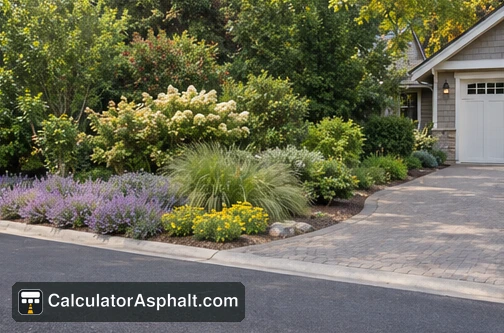
A driveway privacy planting works best where it blocks the view you care about and leaves room for daily movement. Map the target view first, then put a second set of marks where drivers need to see and passengers need to open doors.
Jump to a section
Find your privacy target
Check views from the house, turnaround and seating spot, then identify whose view you plan to screen. A short stretch set inside the site may do more than a continuous edge. Sketch where foliage would intercept that sightline and where daylight still needs to reach.
Allow for vehicle access and sightlines
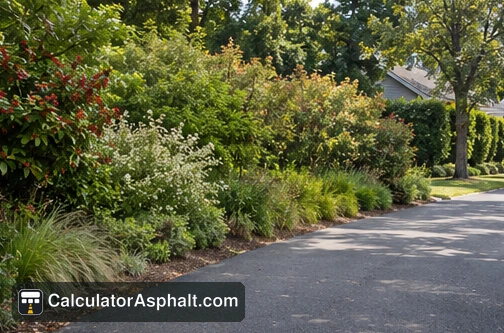
Measure door swing and passenger space with the usual vehicle parked. Ask the local road authority about clear-sight conditions near the street. Keep plantings clear of equipment access and discuss snow storage, runoff and utility clearance where relevant.
Draw mature shrubs by width
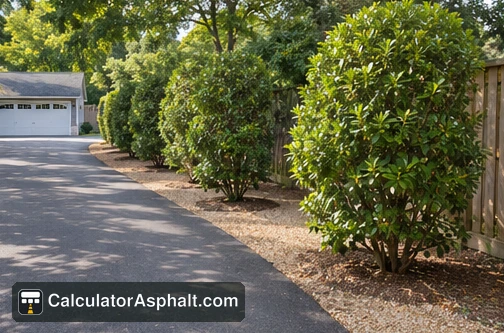
Compare a single row with staggered planting using actual mature widths and spread. Note which species keep leaves in winter. Consider how pruning and plant replacement will work when all the shrubs mature. Select plants suited to available light, soil and moisture.
Compare one screen and a layered alternative
A 16 ft screen section with nominal 4 ft units suggests four widths on paper. Confirm plant spacing with a knowledgeable nursery because overlap and growth habit determine the result. Mark the passenger route beside the screen and test the drawing from a car and a nearby window.
Try a lower foreground and a taller background
Compare two plant arrangements on the same sketch. Keep the foreground open where drive movements and required views matter, then show where taller planting could screen the area farther back. Check that a passenger can exit and reach the walk even when the planting is mature. Observe the view in another season if the privacy goal depends on leaves. Select a maintenance route and flag utility locations before reserving the plant stock.
What if there is no room to prune behind the plants?
Choose a position you can maintain, or a smaller planting form suited to the space. Include any fence, public right-of-way and temporary access on the plan. Keep the final mature edge clear of daily vehicle movements.
Material calculators
Related project guides
- Driveway Corner Planting Ideas: Plan the Bed Around a Clear View
- Side Parking Pad Layouts: Measure the Car With Its Doors Open
- Paver patio privacy layout
Reference University of Minnesota Extension guidance on mature plant size.