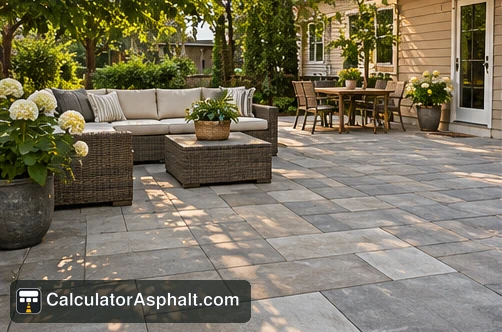
A patio pattern has to meet a door, a border and whatever interrupts the field. Compare brick, concrete pavers and natural stone from the actual approach. Material samples and a short test row reveal how a design will look with joints, cuts and real edges.
Jump to a section
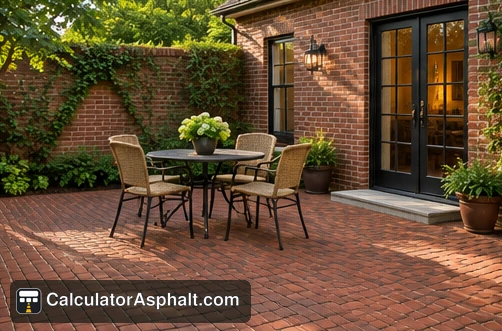
Brick for a compact, repeating pattern
Look for a product intended for outdoor paving. Lay out a sample of running bond and herringbone using the maker's dimensions and recommended joint. Compare how each pattern meets an edge and how many cuts appear around the transition from the door.
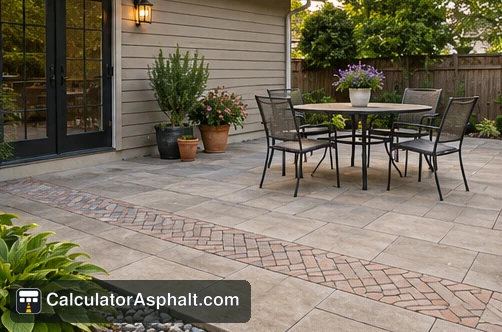
Stone for tone and surface variation
Set out a few samples together. Natural stone can have color and surface variation, so inspect several pieces and discuss thickness and support with the supplier. Compare the intended seating route with the surface texture, especially near steps or frequently used doors.
Outdoor concrete pavers for a consistent module
Draw a straight-lay pattern and a second plan with an accent band. Note whether joints or unit centers meet the main door. If you use different product sizes, get the manufacturer's actual module and compatible edge details before calculating unit counts.
Count the design and the border independently
A 12-by-15-foot field occupies 180 square feet before borders are assigned. A decorative band may use a different unit and number of cuts. Ask the supplier to price the field, border and stock rounding separately. Dry-lay a few units to understand the actual coverage before calculating packs.
Mark the approach with an actual sample
Place a short row at the doorway and another near the hardest turn. Look from inside, from the street-facing edge and from an occupied chair. Bring two potential border pieces into the comparison and write down how the corners meet. Ask what spare units the supplier can deliver from the same batch and how to store them. A good record includes the unit dimensions, installed pitch, color and approval for the intended paving assembly.
Which pattern suits an irregular patio?
Draw the irregular boundary and test two start lines with the same visible focal point. One may produce fewer small cuts and a cleaner edge at the main approach. Get both layouts priced if labor is the main difference, and keep the preferred drawing with the material list.
Video example
Ask This Old House demonstrates installing concrete pavers. Check the selected system and site requirements for your project.
Material calculators
Related project guides
- Concrete Back Patio Ideas: Plan the Slab, Joints and Budget Before the Pour
- Pavers With Rocks in Between: Plan the Joints and Keep the Path Walkable
- Simple concrete paver patio patterns
Reference CMHA guidance on concrete paver construction.