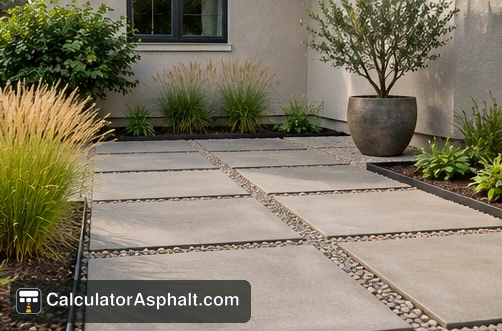
The wide joints in a photo may be part of a garden stepping path, a patio with contained gravel bands or a permeable assembly. Pick the intended use first. The size and finish of the gaps will affect furniture, everyday walking and future cleanup.
Jump to a section
Choose a walking surface before a joint width
Set a few slabs at the proposed spacing. Test the route when you carry groceries or move a bin and watch where people step near the turn. Decide whether a continuous route is needed for regular users or mobility devices. Ask the installer to assess stable transitions before setting the finish.
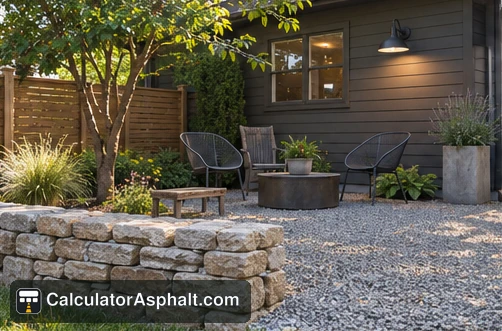
Put rock where it can stay contained
Compare a thin decorative band beside a continuous walk with broad joints across the entire field. Observe how loose materials move after ordinary rain and sweeping. Confirm the selected edge and aggregate fit the proposed assembly. Use the specified joint material on an actual permeable pavement.
Check slab support and maintenance
Show the supplier the load, base conditions and intended material. Ask for the manufacturer-approved support and installation detail. Record where you need to sweep away leaves, replace loose material and service the drain. Pick a trial area near the part of the route you use most.
Work from a measured dividing line
A 4-by-16-foot design covers 64 square feet. If the plan assigns 44 square feet to solid slabs at their actual footprint, the remaining 20 square feet includes joint space, loose rock beds and any border. Calculate those separately because the material and depth can differ. Keep the exact cut plan with the quantities.
Build a small traffic mock-up
Outline the widest turn and make a temporary model of the surface at a safe, controlled location. Test the gap with normal footwear and wheels you regularly use. Check whether gravel stays within the drawn boundary as you sweep. Ask the installer how to replace a damaged slab without disturbing the whole area. Draw the location for a firm, continuous alternative route if users prefer it. Recheck the actual joints and material specification on the final plan.
Can I use regular decorative gravel in a permeable system?
Use the aggregate specified for that paving assembly. A permeable design also depends on its base, site conditions and outlet. Ask for directions to keep sediment out and a maintenance plan for the actual installation.
Video example
Lowe’s shows a pea gravel patio that incorporates pavers. Check the selected system and site requirements for your project.
Material calculators
Related project guides
- Brick and Stone Patio Ideas: Choose a Paving Pattern That Fits the Yard
- Large Pavers or Poured Concrete? Compare Five Walkway Surfaces Before You Build
- Gravel and paver patio zones
Reference CMHA guidance on pedestrian paving slabs.