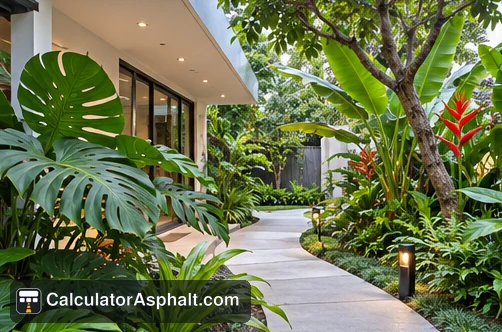
A modern tropical look can come from large foliage, a calm material palette and layered planting. Begin with a single focal bed and a simple path. Plant choices should come from the light, soil and climate you actually have.
Jump to a section
Create a calm frame
Use one surface color or edge treatment near the path. Place containers where they repeat a form without blocking the route. Look from your main seat before choosing a new focal plant. A restrained boundary lets the foliage do more of the visual work.
Build the plant layers
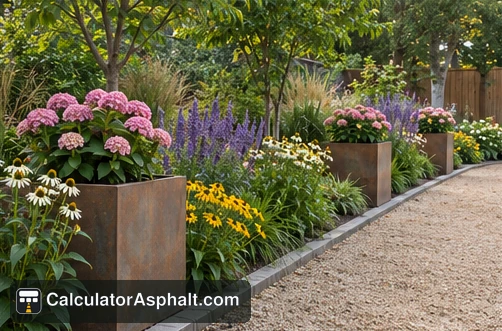
Choose a taller foliage form, a middle layer and a lower edge suited to the same growing conditions. Draw mature size and allow room for pruning. Use suitable containers where a plant needs seasonal protection. Ask a local nursery about viable options and local invasive plants to avoid.
Design the path and water together
Check drainage and where water from irrigation travels. Allow a stable approach to doors and a service route beside the largest plants. Review the proposed hardscape for the site conditions, including wet areas and footing.
Try one 10-by-4-foot planting bed
Mark the 40-square-foot outline and place empty pots to represent mature widths. Walk past with the largest object you often carry. Change the location before planting if foliage would overhang the path. Estimate topsoil or mulch only for the area that actually receives it.
Try repeated foliage before adding more species
Place movable pots along the path to simulate the eventual heights. Photograph the scene from the door and from your seat. Select the view where the plants seem layered and preserve space to reach them for maintenance. Repeat one leaf shape or container material across the scene. Ask a nursery how the selected plants behave in your region over a full year. Keep the structure of the garden usable when any seasonal plant is stored or replaced.
Can I get the look in winter?
Decide which visual features matter when seasonal plants die back or move indoors. Use suitable permanent structure and climate-appropriate plants where you need year-round coverage. Use movable plants as accents and leave room to handle the pots safely.
Material calculators
Related project guides
- Outdoor Landscape Design Ideas: Five Moves That Make the Yard Feel Connected
- Front of House Landscaping Ideas: Layer Flower Beds Around the Entry
- Small Backyard Landscaping Blueprint: Draw a Garden Plan You Can Measure
Reference University of Minnesota Extension guidance on selecting planting locations.