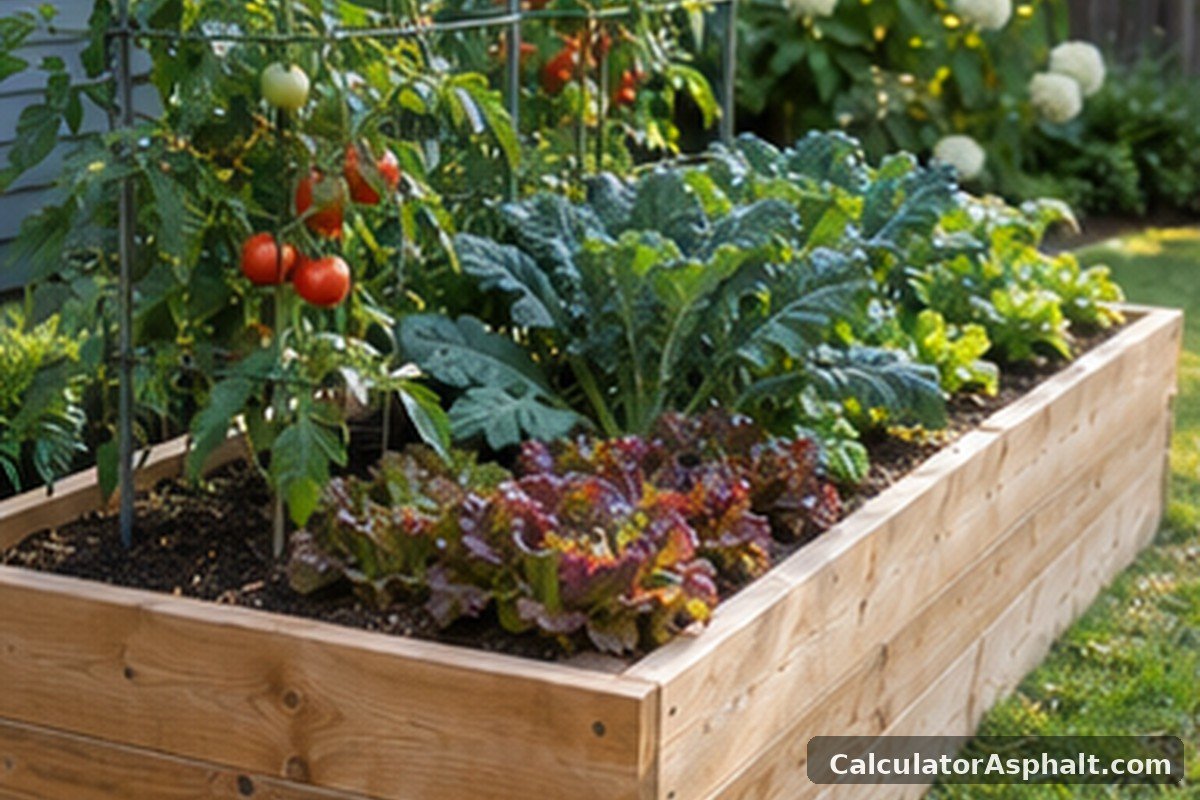
A raised garden bed can add growing space without taking over the patio. The layout has two separate jobs. It has to provide useful root space, and it has to let you reach the plants without standing on the soil. Work from the inside dimensions for soil and from the outside dimensions for the yard plan.
Jump to a section
Choose the location around access and light
Watch where sun reaches the intended site in the morning, around midday and later in the day. Match crops to the available light and observe any shade from buildings or fences. Test the carrying route from the tap and the route from a delivery point before committing. A bed that is easy to water and harvest tends to remain useful when the plants are large.
Mark the outside box with tape or stakes. Push a wheelbarrow through the planned route and try bending or kneeling beside the bed. Account for the spread of mature plants and supports. Put overhead trellises or tall crops where they will shade the fewest plants that need direct sun. Keep the main walking surface intact, particularly in a narrow side yard.
Pick one of three layouts
### One broad bed reached from both long sides A rectangular bed reached from both sides can hold several crops. A nominal 4-by-8-foot kit is a starting point, but check the inside width and whether you can handle work near the center. Buy to suit the shortest comfortable reach among the people who will garden there.
Two smaller beds with a path between
Two beds offer more edge access and let you group crops with different watering or support needs. The internal path costs planting area, so confirm that what you gain in use is worth the trade. Sketch the path using the actual outside width of both beds. A 30-inch test strip is a starting measurement for this sketch, and the correct width for your site depends on the equipment, people and any access requirements.
A shallow herb bed beside a patio
Use a narrower planting zone where only one side is accessible. Calculations become easier if you keep the bed rectangular, but reach and drainage matter more than the shape. In restricted spaces or where the structure cannot support an added bed, use the small patio garden layouts for container alternatives. Confirm the allowable load for any elevated surface before adding raised beds or wet soil.
Calculate how much soil to order
Multiply inside length by inside width by the planned filled depth in feet. A rectangular bed measuring 4 by 8 feet inside, planned for 12 inches of actual fill, needs 32 cubic feet. Divide by 27 for about 1.19 cubic yards. Two identical beds need 64 cubic feet, or about 2.37 cubic yards. If your nominal 4-by-8-foot frame is smaller inside, recalculate using the finished dimensions.
If soil is sold in 1.5-cubic-foot bags, one 32-cubic-foot bed needs 22 whole bags before any settling allowance. That number comes from rounding 32 divided by 1.5 up to a whole bag. For delivery, compare the vendor's order increments, fees and drop location. Measure each bed individually if dimensions differ. If the fill is divided among components, record the actual proportions for your selected mix and verify that those component volumes add to the target. Use the topsoil calculator to cross-check the bulk volume when estimating a soil-based mix.
Select growing material for the site
A bed open to suitable ground and an elevated planter with a closed bottom have different root and water conditions. University of Maryland Extension notes that roots can grow through raised-bed soil into the ground beneath an open-bottom bed. Check site conditions, drainage and the crops you intend to grow. For growing edible crops, investigate suspect soil with your local Extension office and use materials suitable for the purpose.
Check your supplier's stated ingredients, volume and recommended use. A new bag labeled for raised beds and a bulk load sold as screened topsoil can behave differently. Avoid assuming that straight compost or fill dirt meets crop needs. If you are unsure, ask your local Extension service for guidance about a soil test and a suitable blend for your specific setup. Confirm the delivery can reach a suitable unloading area without blocking required access.
Estimate path material as its own line item
If the arrangement has a 2.5-by-8-foot path, its area is 20 square feet. A planned 2-inch layer would occupy about 3.33 cubic feet before settlement or compaction, calculated as 20 × 2 ÷ 12. That is a quantity example. Choose a material, depth and surface appropriate for stability and use. Use the mulch calculator or gravel calculator for a separate path layer. If the bed also screens a seating area, the patio privacy guide explains how to check the sightline and the usable route.
Compare bagged and bulk on the same basis
Request the usable volume and final delivered price for both options. Divide each total by the volume in the same unit. Check whether the delivery is tipped loose, supplied in a bulk bag or dropped at the curb. Record how many trips you would need to carry it from the drop point to the bed, and make sure the route remains usable for other people. For a single small bed, bags can be easier to stage. For several beds, bulk delivery may save handling if the drop point is close. Include leftover storage and the work of moving it in your decision.
Watch a raised-bed layout take shape
Utah State University Extension's demonstration shows a practical example of building a raised bed. Watch for how the shape controls access from the sides and compare that with your own plan.
Questions before placing an order
### Should I round up the soil estimate? Round to the supplier's available units after calculating the fill volume. Ask about expected settlement and retain enough mix to adjust the level after watering if needed.
How do I estimate several beds with different shapes?
Split them into regular sections and add the section volumes. Double-check that you counted shared edges only once. Ask the manufacturer for filled capacity if a tapered or irregular form is hard to measure.
Can I use the same calculation for a bed on concrete?
The volume calculation still applies. The project also needs a suitable contained growing system, appropriate drainage, and a surface capable of carrying the filled load. Confirm those conditions before buying.
More outdoor project guides
- Patio Garden Ideas for Small Spaces: Three Layouts You Can Measure
- Under Deck Patio Ideas: Three Layouts and a Rain-Check Plan
- Patio Privacy Ideas: Screens, Planters, and Fences That Fit
- Backyard Fire Pit Seating Ideas: Three Layouts to Test Before Buying Chairs
Source
University of Maryland Extension: Growing Vegetables in Raised Beds