Three courtyard patterns and a simple way to fit a table and a planting edge.
Before choosing a pattern or shopping for finishes, test the design on the space you already use. Look from the most-used door and decide what you want to frame, such as a table under shade or an existing tree. Walk from that door to the garden before placing furniture.
Small square of herringbone
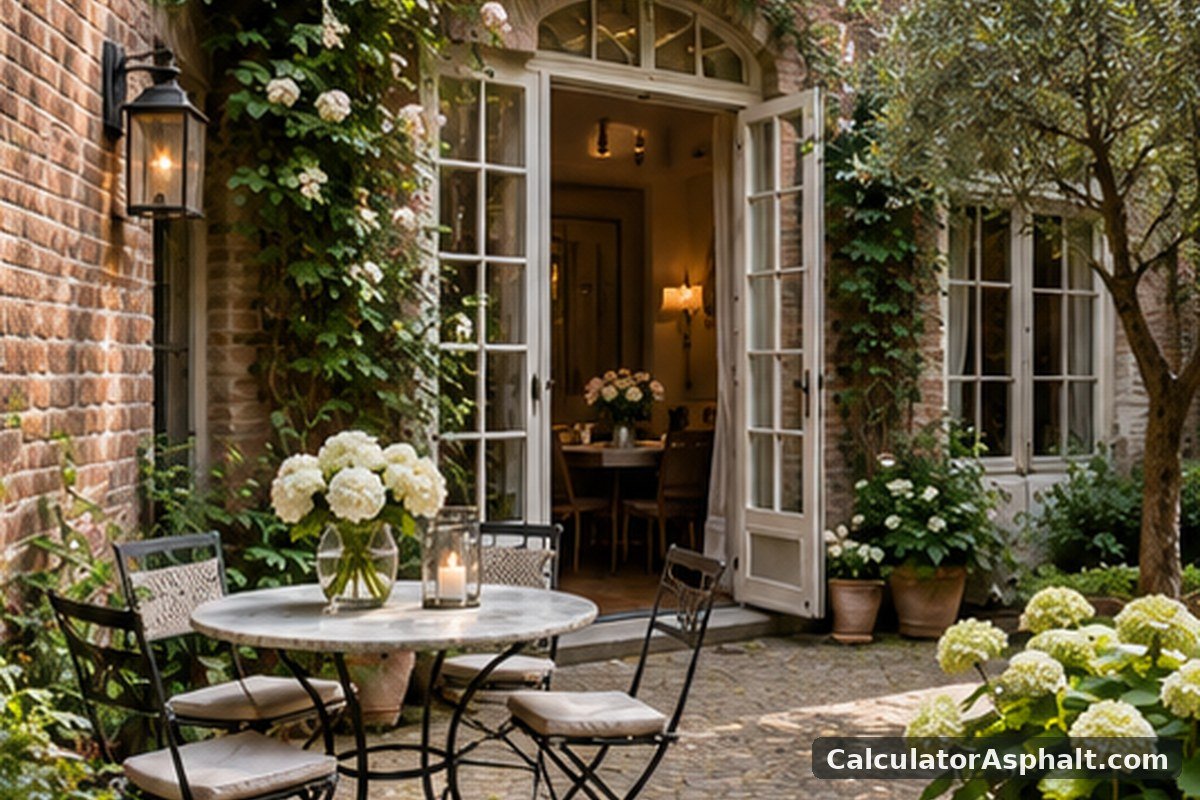
Draw the paving square to make the layout feel intentional. Place the busiest walking route outside the chair backs.
Two ways to adapt the idea
- Running bond with a contrasting edge
- Keep the central surface quiet. Use one band to connect the entrance to the far side.
- Brick and planted corners
- Pull paving back from the least-used edges. Use a plant group as the courtyard focal point.
Work through a measured example
A 10-by-12-foot example covers 120 square feet before you account for cutouts. Keep separate totals for each material and avoid counting the same surface twice. Set out the actual furniture or cardboard footprints for a day. Check the usable area with every chair pulled out, then draw the paving boundary from that test.
Check the design from both sides
Dense projections can make a small courtyard look crowded. Arrange the chairs in a group and leave a deliberate stretch of open brick. A matching edge works best when the starting point is obvious, for example a doorway or a step. If you bring in a second color, test a small area from the door before choosing it.
A question to settle before ordering
Where should the brick pattern begin?
Start from the strongest view and check the cut at the opposite edge before setting the pattern. A small dry layout makes a short end piece easy to spot.
Estimate the materials
Before you buy
Open the site checklist
- Work with the dimensions of the actual furniture and materials.
- Look from the most-used door and decide what you want to frame, such as a table under shade or an existing tree. Walk from that door to the garden before placing furniture.
- Set out the actual furniture or cardboard footprints for a day. Check the usable area with every chair pulled out, then draw the paving boundary from that test.