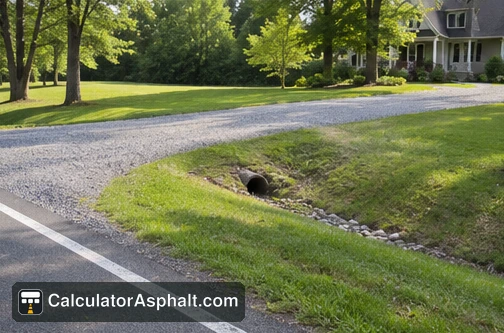
When gravel washes out, follow the water before buying replacement material. Record the source, crossing and outlet. That sequence makes a contractor conversation more specific, especially near a roadside ditch, driveway apron or neighboring lot.
Jump to a section
Mark the likely source
From a safe location, look uphill for roof runoff, adjacent grade changes and concentrated flow. Photograph the path after ordinary rain and mark where gravel or sediment gathers. Avoid entering flowing water or areas where the road edge is unstable.
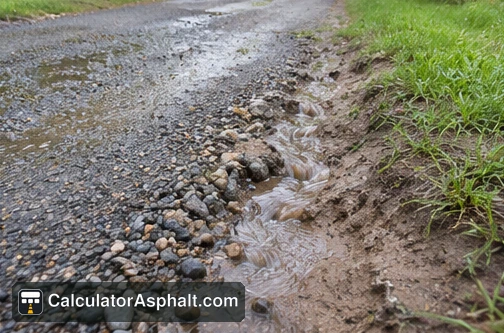
Find the crossing and receiving area
Draw arrows around the entrance and low areas. Record whether there is a ditch, swale, existing pipe or paved road at the connection. Ask the local authority who maintains the road drainage and what approvals apply before altering any connection or outlet.
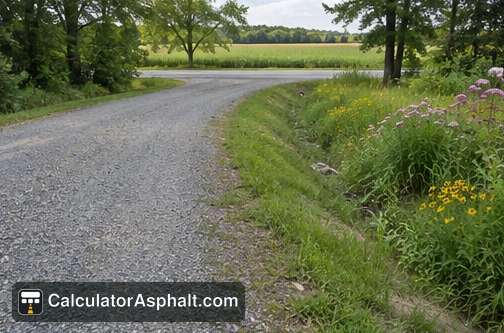
Use a written contractor scope
Provide dates, photos and the drainage sketch. Ask bidders to explain the source they plan to address, how flow will be handled and how they will protect the drive edge. Confirm who checks utilities, right-of-way and downstream effects. Track grading, surfacing and drainage independently in the estimate.
Work from a measured affected patch
A photographed 8 ft by 6 ft washout is a 48 square foot symptom. That measurement helps explain the visible loss. The drainage evaluation may show that the repair extends farther than the patch. Ask the installer to label both areas on a sketch.
Bring a three-photo sequence to the contractor
From safe positions, photograph where the water arrives, where it crosses and the visible receiving area. Add a site sketch showing private and public boundaries where known. Confirm which part of the problem the contractor can address and who needs to approve changes near the road. Ask how the proposal accounts for the next receiving area, as well as routine cleaning and inspection. Keep the photos so you can compare what happens after the work.
When does a washout need urgent attention?
Restrict use if the edge or crossing looks unstable or if someone cannot travel through safely. For an affected public road or ditch, contact the responsible authority. Keep photos and dates so the location can be identified.
Material calculators
Related project guides
- Gravel Driveway Maintenance Checklist: Read the Ruts Before Adding Stone
- Asphalt Driveway Extension: What to Ask About the Old-to-New Seam
- Paver patio drainage planning
Reference Federal Highway Administration gravel roads maintenance and drainage manual.