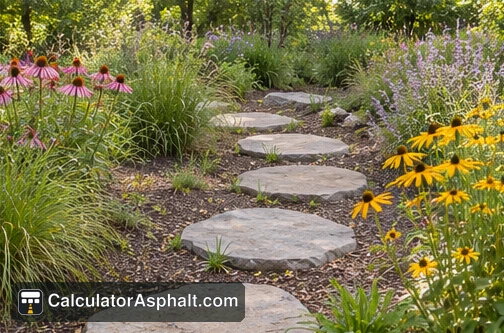
A stepping-stone path through a planting bed should be comfortable once the plants fill in. Locate the route with the people who will use it, then examine how each stone meets mulch, gravel or soil. The spacing and approach matter as much as the shape.
Jump to a section
Mark the route at real pace
Walk through the bed where you normally reach a hose, garden gate or bench. Use removable markers as visual stand-ins for stones. Have more than one person test the stride and turning points. Add a larger landing where users are likely to pause or turn.
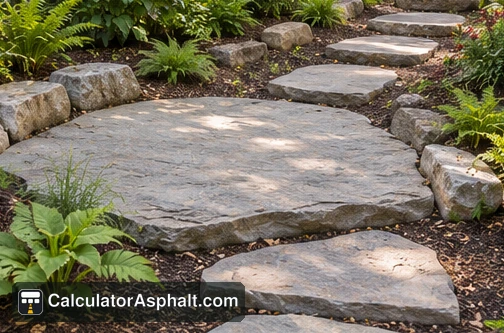
Allow for plant size and upkeep
Draw projected mature widths, then mark any plants that would overhang the walking route. Put larger plants farther from frequent traffic. Keep room to prune and water along the outside. Consider that soft mulch may travel onto the stones during heavy rain or cleanup.
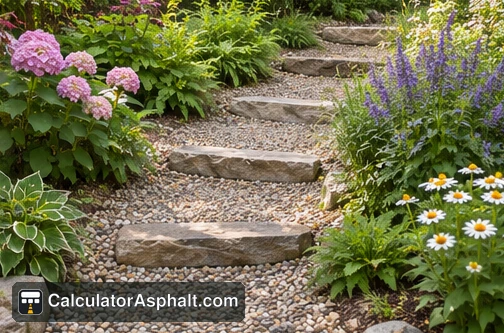
Check stability and surface transitions
Discuss support and finished height with the installer for the chosen paving product. Ask how the layout prevents rocking and deals with adjacent mulch or gravel. Decide where a continuous, even surface is needed for frequent access, wheels or people with mobility limitations.
A path with room for a turn
Sketch a 14 ft run with alternative stone positions and a larger pad near a turn. Arrange temporary stand-ins, count the stones you can reach from each end, and revise until the last step fits. Measure bed area separately for mulch so you do not include the paved landing volume.
Test the route as plants fill in
Use a tape, hose or removable marker to indicate the mature edge of each nearby plant. Walk the proposed route slowly and then with a watering can. Check whether a lone narrow stone becomes a turning point or whether a gap forces people into the bed. Photograph the final positions and write down how much mulch and paver material you expect to buy separately. After planting, observe the path in ordinary rain and adjust maintenance before loose material repeatedly covers a walking surface.
Why does mulch keep landing on the pavers?
Observe where it moves during watering, sweeping and ordinary rain. Adjust maintenance and discuss a compatible boundary or finish with the installer. Inspect any nearby concentration of runoff before returning mulch repeatedly to the same spot.
Video example
Ask This Old House demonstrates mulching a garden bed. Compare the example with the system and site conditions in this guide.
Material calculators
Related project guides
- Side-of-House Walkway Ideas: Draw a Route That Works With Doors and Bins
- Paver Walkway on a Slope: Compare a Continuous Route, Steps and Landings
- Front yard mulch bed ideas
Reference CMHA construction guidance for interlocking concrete pavers.