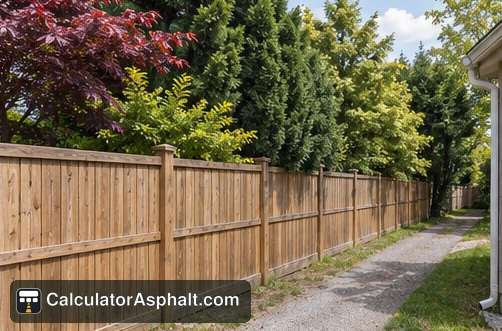
A useful fence drawing shows where privacy is needed, what the trees will look like when they mature and how the boundary can be maintained. Draw the plan from above and the view from the seat where privacy matters most.
Jump to a section
Mark the fence line and the target view
Identify the boundary, fence, gate and ordinary maintenance route. Confirm the fence location and applicable local conditions before any installation. From the main seat or window, note the specific view you want to screen. Mark other views that should stay open.
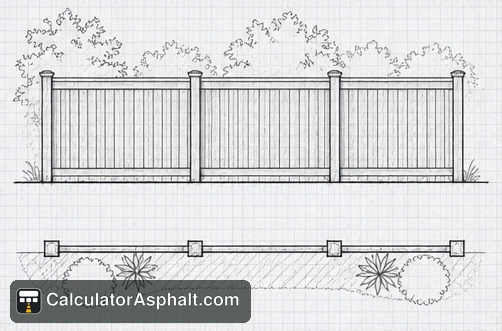
Draw mature canopy, roots and access on the plan
Use mature width and height from reliable plant information and discuss site constraints with a local expert. Compare a staggered planting plan and a short focused screen. Show access for pruning and service, then check where shade will fall in different seasons.
Add an elevation drawing
Sketch the fence, slope, viewing point and intended plant height on a side view. Copy real dimensions from the plan. Test the view from inside and outside with safe temporary markers. Keep track of what actually needs screening when some plants lose their leaves.
Test one 18-foot section
For a proposed 18-foot stretch, try two overlapping canopies and a three-plant arrangement on paper. The actual spacing depends on species and growth habits. Mark clearance for gate swing and maintenance before reviewing the drawing with a nursery or installer.
Make a plan and elevation that agree
Put the same gate, corner and viewing location on both drawings. Label mature widths from the plan and actual proposed height ranges on the elevation. Make sure the two views show a place to stand and maintain the boundary. Check what changes when plants are bare or views are higher than first assumed. Bring back photos of the target views before choosing a planting position. Use the proposed species and real dimensions to revise the sketches after getting local advice.
What if the gap is above the fence?
Check which height and location would screen the view while meeting local requirements and protecting access. A closer screen or different arrangement may work better than a continuous row. Discuss mature sizes, maintenance and any safety requirements before ordering.
Material calculators
Related project guides
- Front of House Landscaping Ideas: Layer Flower Beds Around the Entry
- Small Backyard Landscaping Blueprint: Draw a Garden Plan You Can Measure
- Driveway privacy planting ideas
Reference University of Minnesota Extension guidance on selecting planting locations.