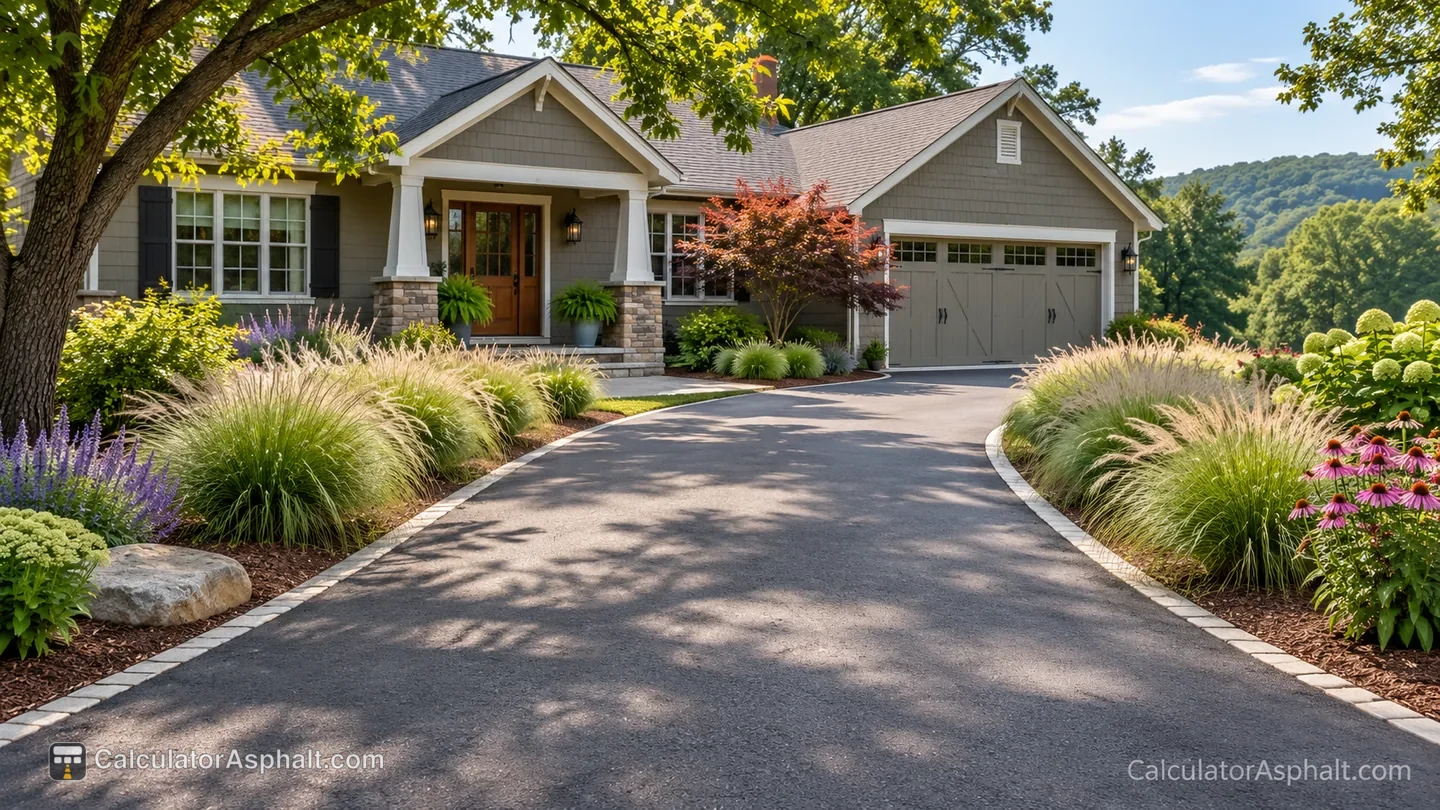
A planted driveway border can make the entrance feel finished while leaving room for car doors, pedestrians and a clear view of the street. Start by marking where the driveway gets sun, where rainwater exits and where snow or deicing salt collects. Then choose plants by their mature size. These seven layouts are starting points for US homeowners. The images are AI-generated design illustrations.
Driveway landscaping ideas for curb appeal
1. Repeat low ornamental grasses
Repeat a few clumps of regionally suitable low grasses to give a long border a consistent appearance. Compare mature leaf and flower-stem height as well as spread, and leave space for doors to open. Choose plants that fit the light and moisture conditions. Check local guidance for plants that spread aggressively, and trim at the time recommended for the species.
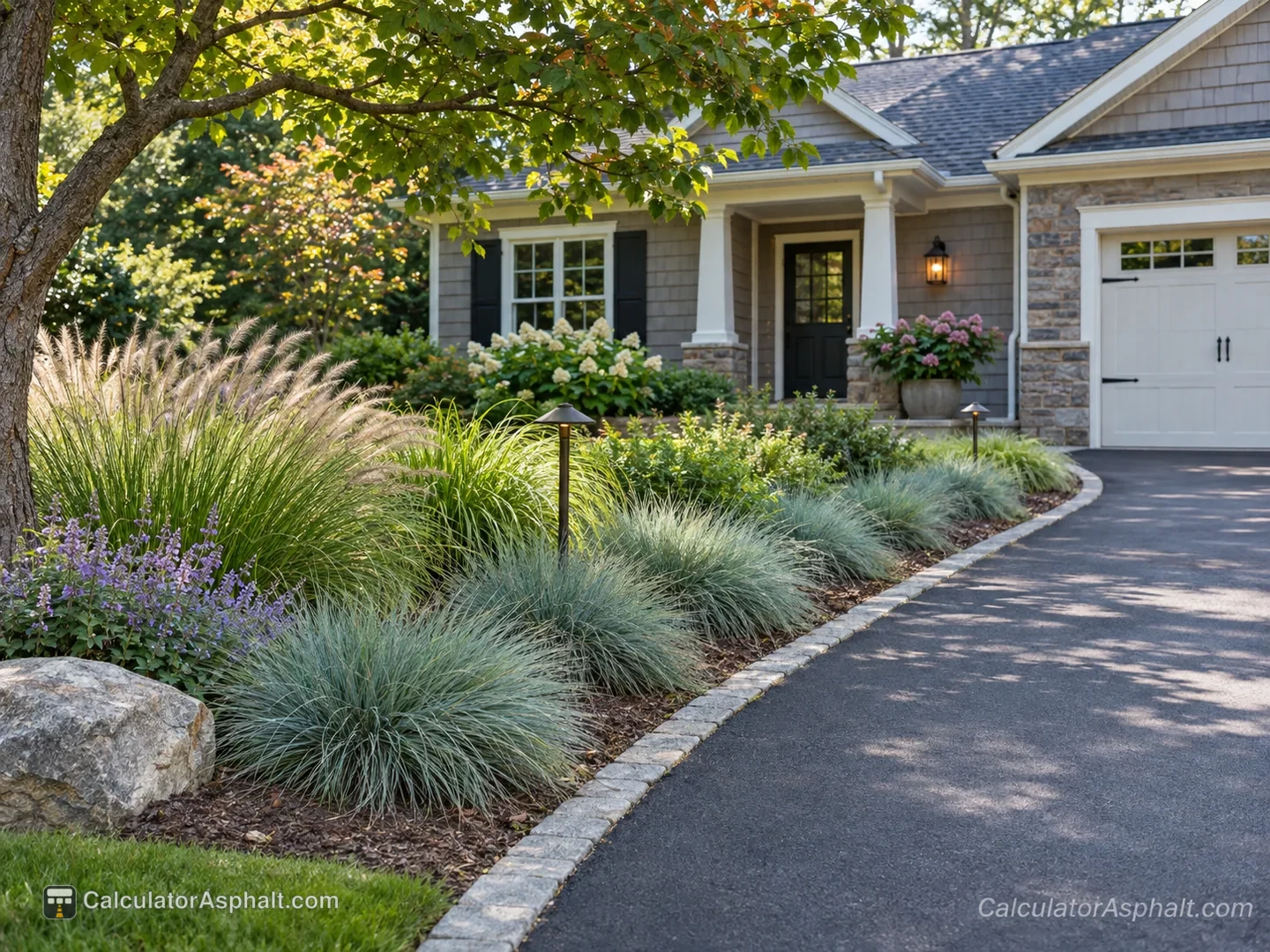
2. Set back compact evergreen shrubs
A short row of naturally compact evergreens gives an entrance winter structure. Select cultivars whose mature width fits the bed and leaves room to walk or prune. The University of Minnesota Extension recommends planning for mature height and width. Allow additional space where salt spray or plowed snow can reach the plants.
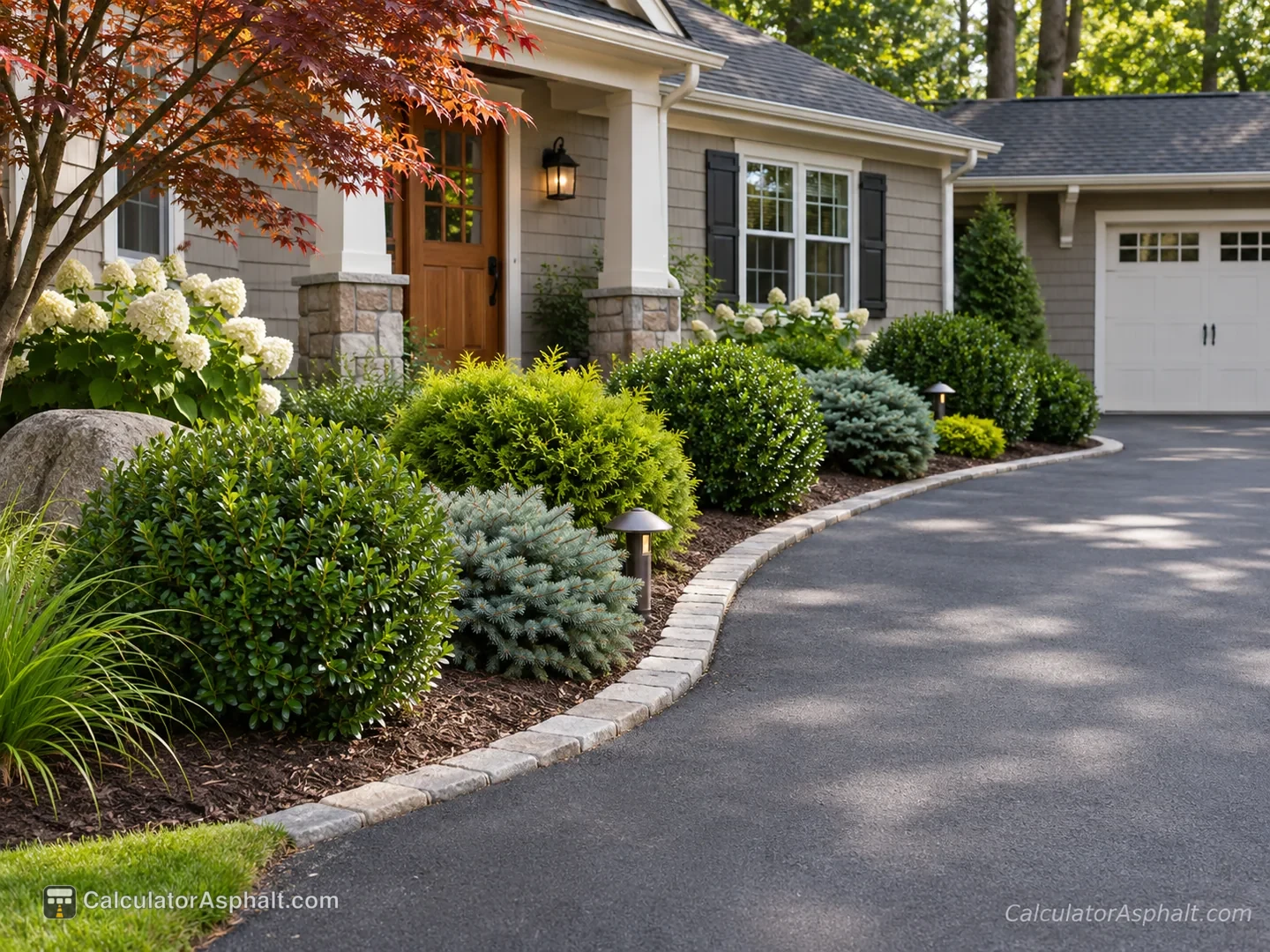
3. Group low flowering perennials
Place repeated groups at a bend or near the front walk to concentrate color where visitors will see it. In suitable regions, low-growing moss phlox can fit sunny sites and alumroot can suit shadier spaces. Consult the University of Maryland Extension groundcover guide and local sources before buying. Group plants with similar water needs and keep stems clear of the walking route.
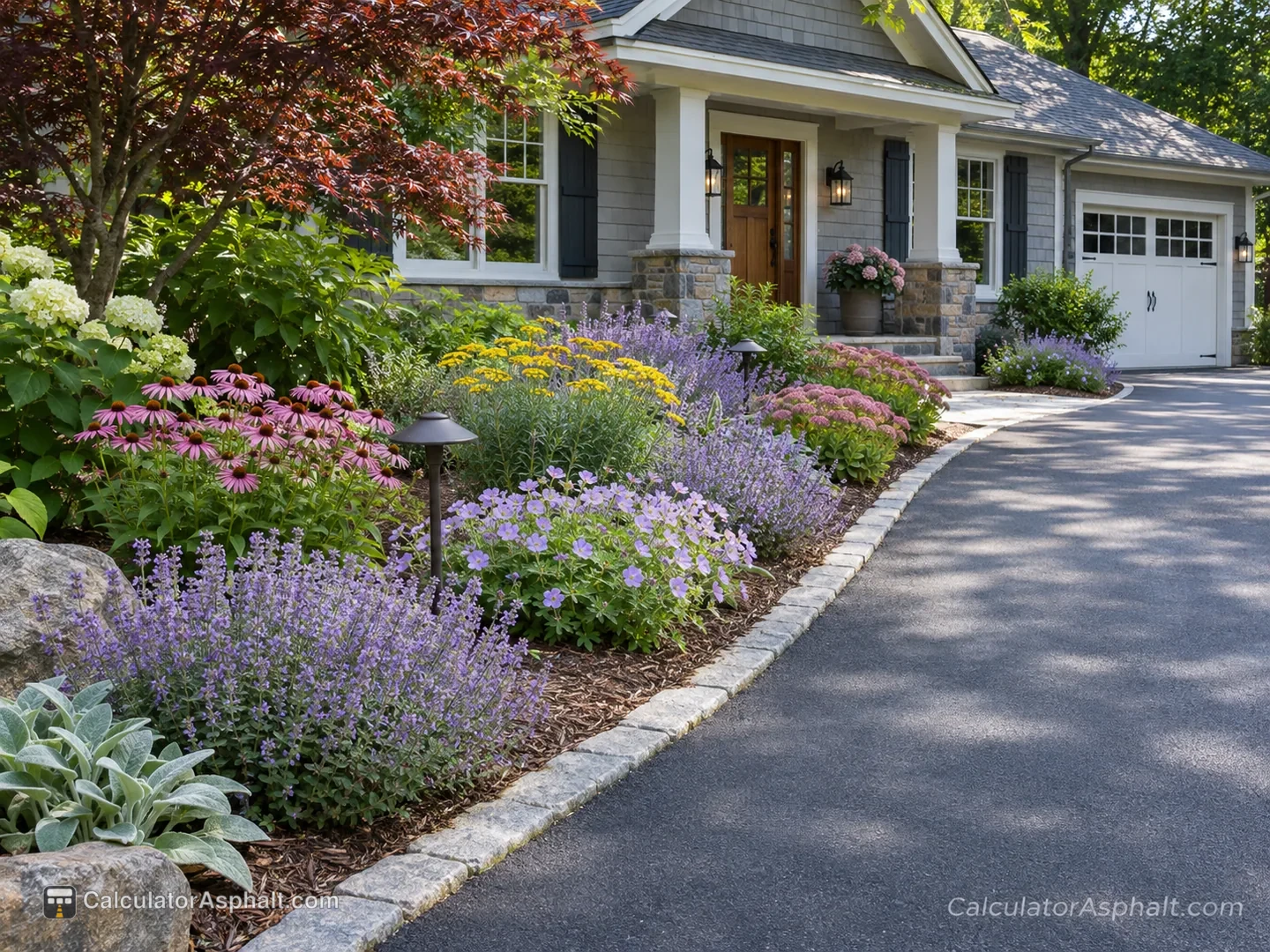
4. Choose plants for a hot, dry edge
Pavement can reflect heat into the planting strip. Observe the soil after rain and choose regionally suitable plants that match both summer temperatures and winter conditions. Group plants with similar water needs and plan establishment watering. Buy a small test group first if the strip dries faster than the surrounding yard.
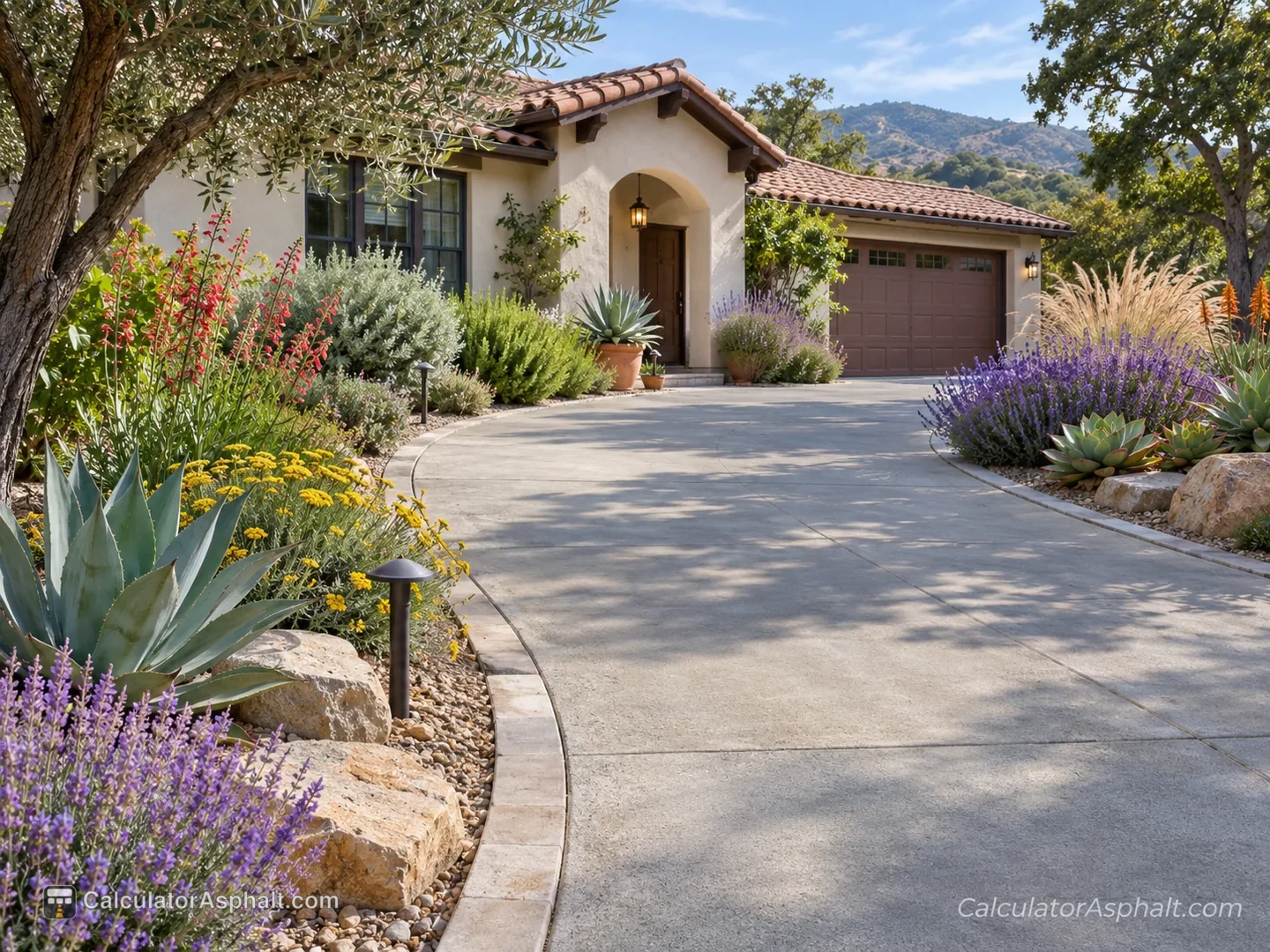
5. Layer low plants toward the driveway
Where the drive runs beside the house, use lower plants beside the pavement and set taller plants farther back. Leave space to reach siding, downspouts, windows and equipment. Sketch the outlines at mature size. Keep taller growth away from driveway entrances and public sidewalks where it could restrict visibility.
6. Start with a narrow mulch bed
A short mulch border with a few focal plants is easy to measure and can be extended later. Place it where runoff will not carry mulch onto the pavement. Keep mulch away from plant stems and trunks, and use a depth appropriate to the material and plants. Watch the Ask This Old House mulching demonstration for an example of clearing the base of plants.
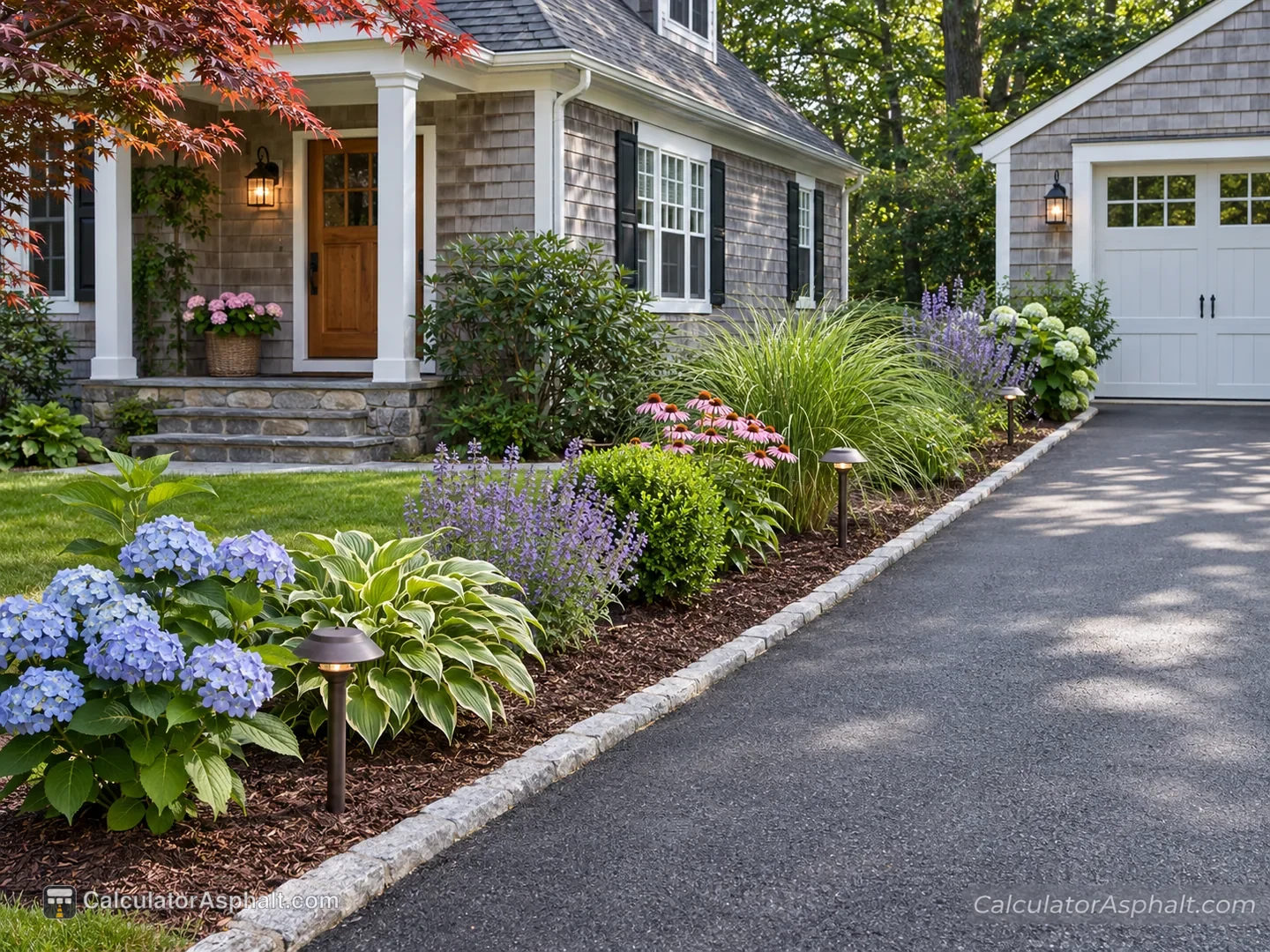
7. Combine rock accents with low plants
Use a few stones beyond the driving surface to repeat a material already used near the house. Group low plants where their mature shape will still leave an open walking route. Choose stable ground and keep loose stone contained outside the wheel path. Remove leaves from rock pockets and check after storms for material migrating onto the drive.
Measure your bed and estimate mulch
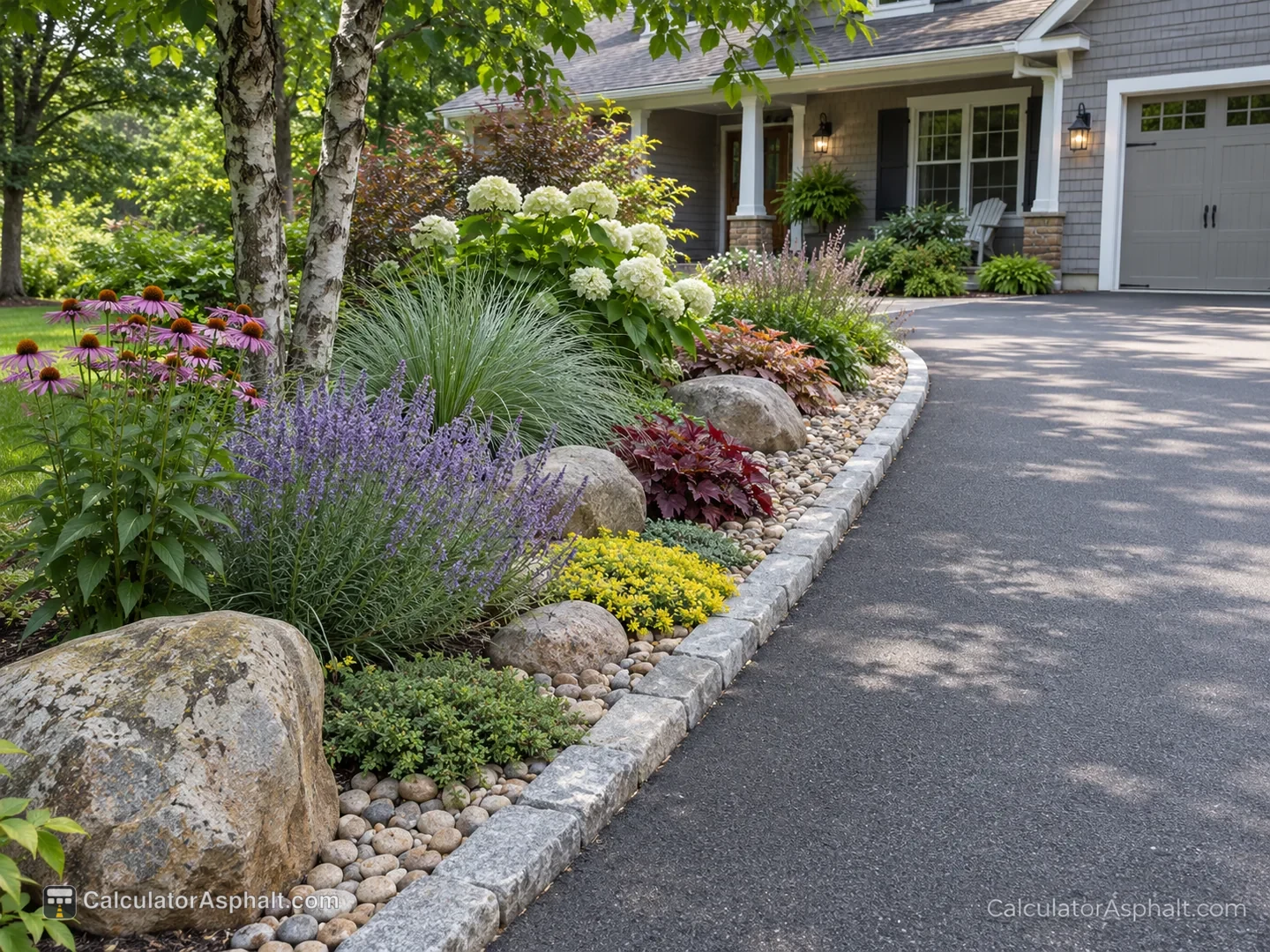
Break irregular beds into simple shapes and measure each one. A hypothetical 24-by-3-foot bed covers 72 square feet. A 3-inch layer for this calculation is 18 cubic feet, or about 0.67 cubic yard. Compare bagged and delivered quantities in the mulch calculator. Estimate any fill separately in the topsoil calculator.
Check the site before planting
Check where water leaves the drive, whether winter salt reaches the bed, and whether planting would block drivers’ view of the street. Keep a route open for pedestrians and snow removal. Contact 811 before digging and arrange private locating where needed. Seek a site assessment for recurring ponding, an unstable slope or work near public drainage.
Save these driveway planting ideas on Pinterest to keep the guide handy.
Frequently asked questions
How far back should plants go?
Allow for mature plant spread, door swing, walkers and snow storage. At the entrance use vehicle height to check the view of the street and follow local visibility requirements.
What is an affordable way to start?
Improve one visible section first. Buy manageable plants, price the entire bed’s mulch before ordering, and extend the layout after seeing how the first plants grow.
What can handle deicing exposure?
Check how salt reaches the bed and ask local extension staff which plants are suited to that exposure. Evergreen foliage can be vulnerable close to roads. See the University of Minnesota Extension’s salt guidance.