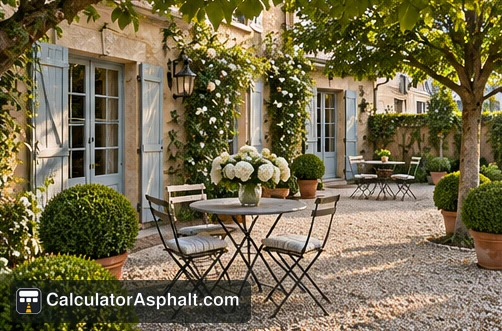
Pick a courtyard arrangement by how you enter and use it. A café corner needs a firm place for chairs and a way to carry a tray. An enclosed sitting room needs protected sightlines with some open sky. A rural-inspired garden can borrow the view beyond the yard. Start with one of those jobs before choosing pots, pavers or plants.
Jump to a section
An intimate café corner
Try a small table on a continuous pad and use containers to frame a view. Draw chair pullback and the approach from the kitchen. Choose one stone or brick tone for the paving and repeat it in one nearby planter or wall detail. Bring actual samples outside in morning and afternoon light.
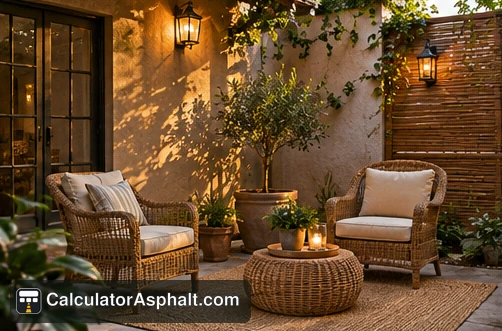
An enclosed, cozy sitting space
Place the most-used seat against a visually quiet boundary. Test a removable screen or large planter behind it. Leave a distinct route to the rest of the yard and room to clean behind the seat. A bench at a wall can preserve more floor space than furniture floating in the middle.
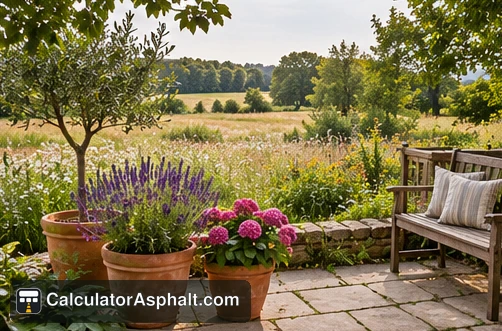
A rural-inspired boundary
Preserve the far view from the main chair and mark places that can accept looser planting. Repeat a limited mix of plants in several beds to hold the scene together. Check which species suit your soil, temperature and exposure before choosing plants pictured in another region. Keep rock and gravel contained where they meet walking surfaces.
Sketch an 11-by-13-foot room
An 11-by-13-foot boundary contains 143 square feet. A 3-by-11-foot route uses 33, leaving 110 before planting and furniture. Tape the outline and set up your actual chairs. Change the hardscape area after you test the route, then estimate base, border and loose material using their separate areas.
Test the courtyard at the time you use it
Put out temporary chairs one morning and one evening. Look at the main seat from the back door, turn the chairs and check where the afternoon light lands. Walk through with a tray. Set movable containers in the drawing so you can test their height and shade without committing to plants. Try the main route after ordinary rain, noting whether shoes and chair legs feel stable. Use those observations to choose the surface and to locate the permanent focal feature.
What makes a courtyard feel finished?
Place the seat, walking line and one focal feature before committing to more decoration. Walk in from the house and note what you see first. A table, specimen container or visible gate can give the space a clear focal point. Keep maintenance access and places to sit in the layout.
Material calculators
Related project guides
- Outdoor Landscape Design Ideas: Five Moves That Make the Yard Feel Connected
- Small Backyard Landscaping Blueprint: Draw a Garden Plan You Can Measure
- 12 by 12 paver patio layout dimensions
Reference Penn State Extension principles of garden design.