Start with the place you actually want shaded. Test it at the hours you sit outside, then compare a center-pole umbrella, a cantilever umbrella or a freestanding shade product intended for the site. Each option uses different floor space and has its own operating and wind requirements.
Jump to a section
Make a two-time shadow sketch
Take a picture from the same spot at two times you are likely to use the patio, such as lunch and late afternoon. On a plan, shade the area that is already comfortable and circle the chair or table you want to protect. Observe which direction the sun reaches your face. Repeat in a different season if the equipment will stay up year-round. The useful measurement is the location of covered seating at the right hour.
Choose a center pole when it fits the daily route
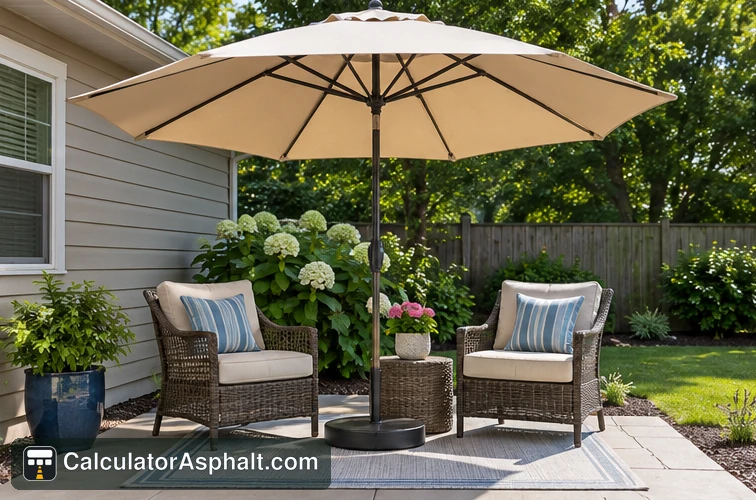
A centered umbrella can work around a compatible table and base. Mock up the base footprint with tape and put the chairs in their most open positions. Mark where the pole sits in relation to knees, chair backs and the route from the door. Verify that the table and base are approved for the exact model. Store the equipment according to its instructions when you are finished using it.
Test a cantilever base and a raised shade edge
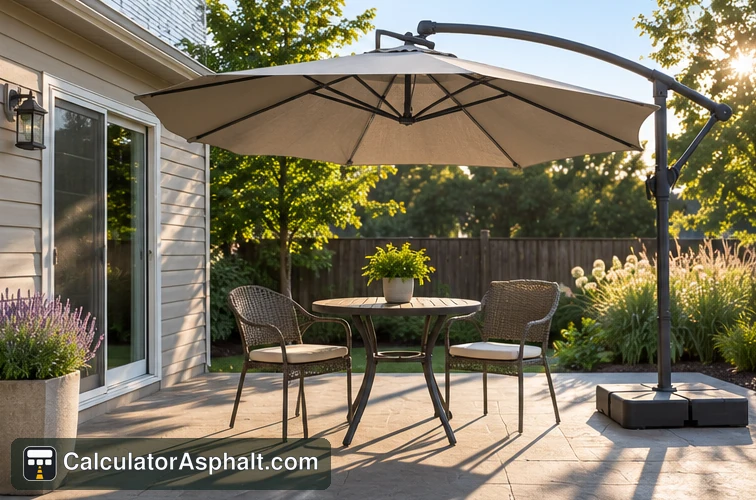
A side-mounted umbrella can keep a table or lounge open. Its base and movement range still need room, and the canopy may throw shade well to one side. Compare the base at two corners before buying. Check how the product opens, turns or closes beside furniture, the house and neighboring property. Ask the manufacturer about the exact base, ballast and operating restrictions for that model.
Compare a freestanding unit for a larger area
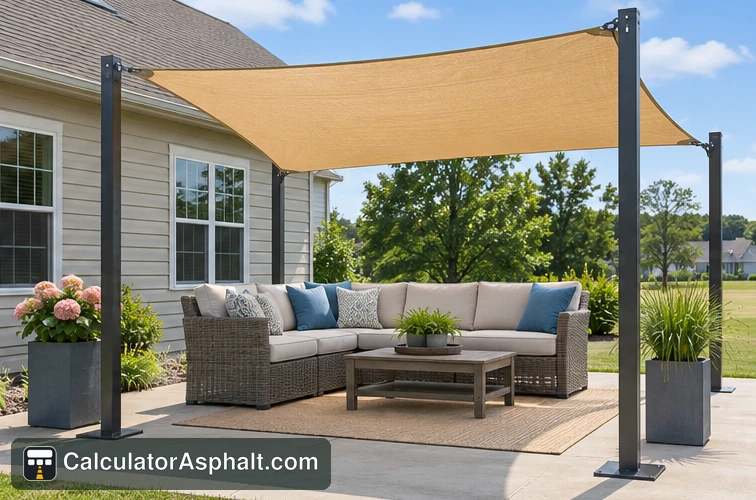
A freestanding shade structure can serve more seats if the product and site support that arrangement. Verify its intended installation, footprint, wind limits and local or property requirements. Have a qualified installer assess any required footing or anchorage. Keep people, pet routes and doors clear of proposed supports. When the site cannot accommodate the product’s required installation, reconsider the footprint or try another shade option.
Put wind and storage into the decision
Read the current manual, find the base or ballast requirement and check the conditions for opening, closing and securing the canopy. Close and secure it as the manufacturer directs for wind, severe weather and unattended use. Include a place to store or protect the unit. Lightweight furniture and planters should also be located and maintained in a way that suits the site and manufacturer guidance.
Use a 10-by-12-foot layout comparison
A 10-by-12-foot patio has 120 square feet. An illustrative 3-by-10-foot passage takes 30, before subtracting furniture and base footprints. Put a paper rectangle the size of each base on the drawing and test the occupied chair zone. Walk to the door carrying a tray. At the time you use the patio, stand in that zone and compare what the canopy could actually shade. If you widen the patio, base material estimates should use the finished paving dimensions and the assembly specified for the site.
Make the purchase comparison on one sheet
Write down the shade area you need, the operating hours, base dimensions, storage and product-specific limits for each candidate. Compare the total system price including a compatible base and installation if required. Look for the cost of a replacement canopy or parts before paying for a frame. Choose a layout that leaves the existing route clear when the product is both in use and stored.
Compare the same seating arrangement three ways
Take the same table, two chairs and approach route and draw one version around a center-pole base, one around a side-mounted umbrella and one under a larger approved structure. Mark the outline when each one is in use and when it must be folded or secured. Ask which parts have to be lifted and where they will go in bad weather. Cross out any candidate with a base in the walkway or unsupported materials. Compare the two that remain from the viewpoint of the person who uses the patio most often. Keep the stronger layout even if its canopy is smaller.
Treat exposure, storage and replacement as part of the budget
Write down whether you can close and secure the equipment easily, how much stable space the base takes up and which pieces the product maker sells separately. An extra large canopy has a cost beyond its price when it is hard to handle or interferes with storage. Ask about equipment limitations in wind and check how it would fit the route to a suitable storage area. Try the arrangement before buying furniture intended to sit near the base. Allow for storage requirements during colder months, severe weather or a long period when nobody will be home.
Adjust where you sit before extending the patio
Swap the positions of the seats and table at the two times you measured. Test whether one position lets you avoid the base without crowding the approach. If a raised edge restricts a layout, ask an installer which finished surface would support the desired setup. Draw proposed new paving separately from the area that is already usable. Carry a serving tray between the door and the table again, with the chairs in use. Record the footprint that genuinely needs to be paved and which parts already serve their purpose. Use that drawing for any new base estimate.
Field checklist
- Photograph the same chair at the two hours you most want shade.
- Tape the base footprint and check doors and chair movement.
- Verify the manufacturer’s base, storage, and wind requirements before buying.
Common questions
Does a bigger umbrella always shade more seats?
Its extra coverage only helps if the shadow reaches the right location at the time you use the patio. Compare the canopy location and sun angle with the chair positions.
Can a patio umbrella sit on loose gravel?
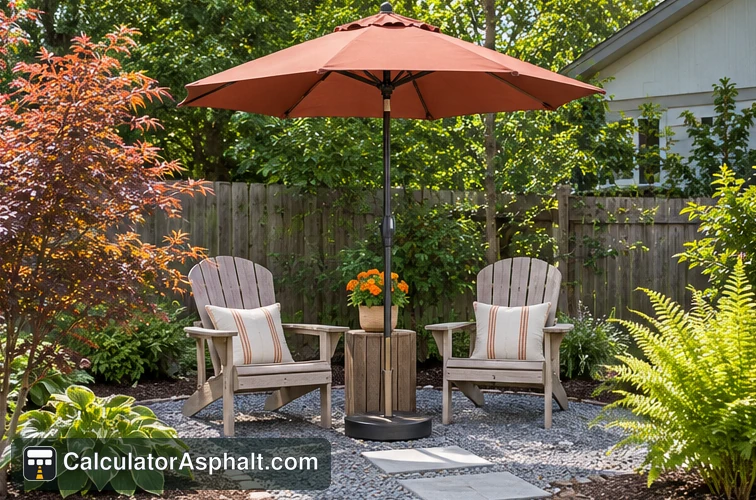
Check the exact manufacturer's instructions and approved placement. If the specified base requires a stable surface or a different assembly, arrange a suitable location and get advice where needed.
Material calculators
Use these tools only if your measured layout calls for a separate new paved area. Follow the material and support requirements for the actual site.
Related guides
- Paver patio pergola shade layout
- Small patio furniture layout
- Paver patio outdoor dining layout
- Small Apartment Patio Ideas for Renters: Four Layouts That Pack Up Easily