Make a ground-level apartment patio work with items you can move, store and take with you. Measure the door, walking route and the place you want to sit before buying anything. Then try one of four layouts with the furniture dimensions marked on the outdoor surface.
Jump to a section
Layout one for coffee for two
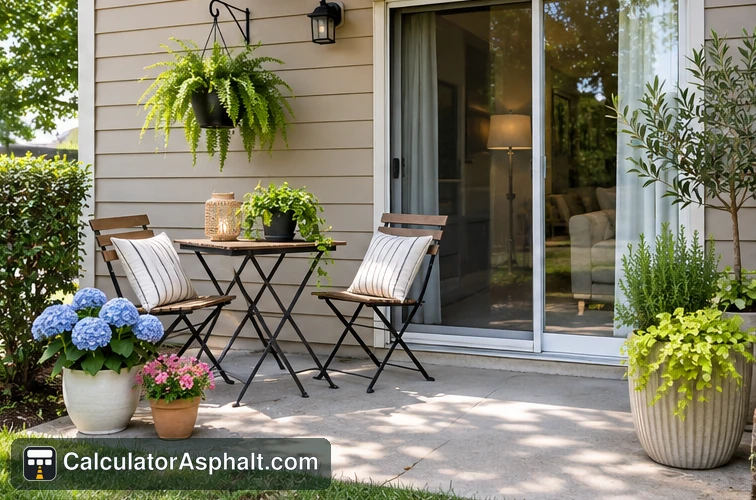
Measure two folding chairs in use and a compact outdoor table before placing the set near the door. Put the tall item outside the main route and make sure everyone can stand without moving it. Fold and store the furniture as a real test. If the doorway is narrow, compare a rectangular side table with a wider bistro top. Try carrying a mug and a plate from inside after setting up the chairs.
Layout two for a single reading seat
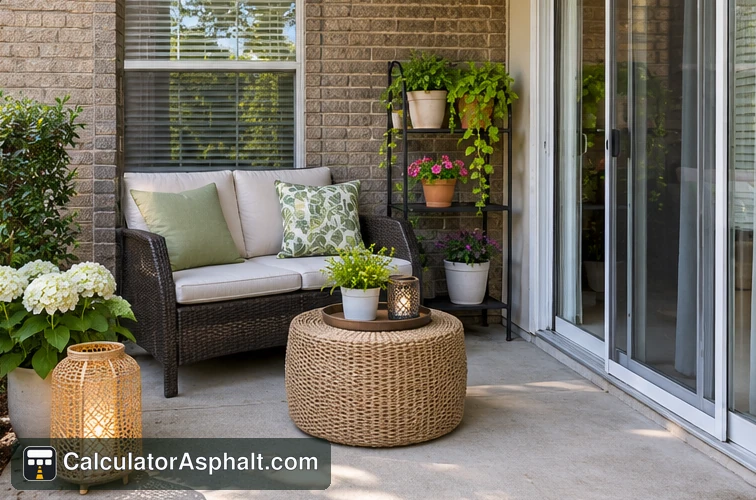
Mock up one chair and a side table along a sheltered edge. Place a lightweight movable item of the same size where each piece will sit. Walk to the door from the yard and test how you stand up. Check where the afternoon glare reaches the seat. A seat that takes up less floor area and a smaller side table can leave room for a planting pocket or path. Keep the doorway and any required exit clear.
Layout three for movable container plants
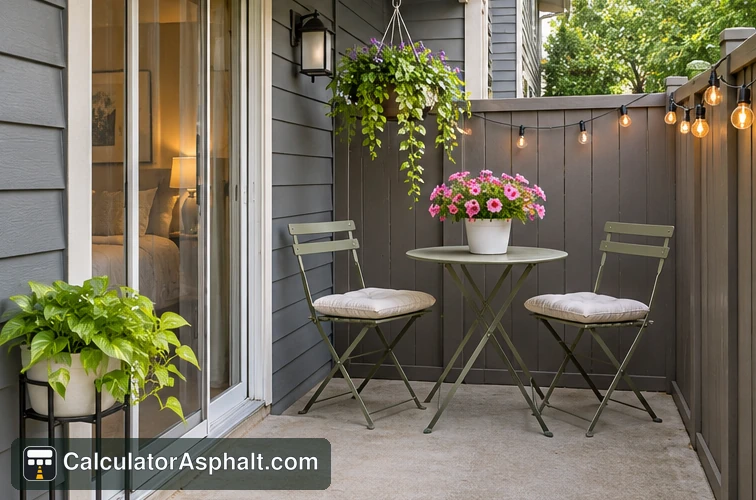
Put one or two pots where the plants get suitable sunlight and you can reach them to water. Account for the eventual width of the plant and the weight of a fully watered container. Use a container with drainage suited to the plant and protect the patio surface as needed. Keep water away from door tracks and neighboring spaces. Choose species with compatible light and water needs instead of grouping containers by color alone.
Layout four for a rug and temporary seating
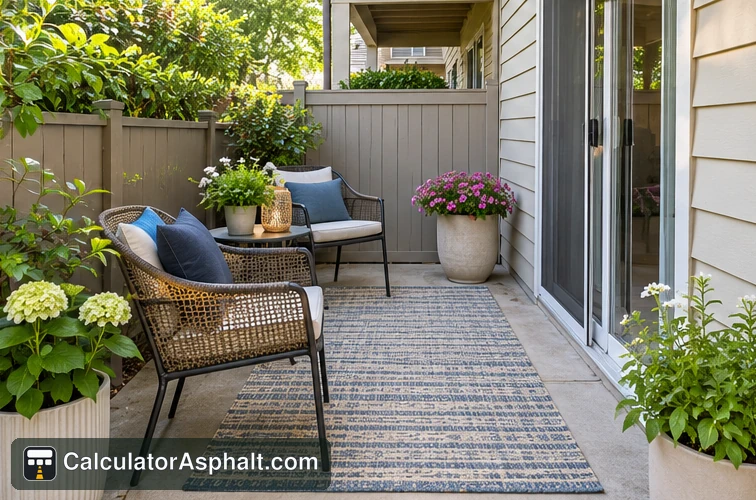
Try the seating without a rug first and mark a smaller rectangle for an outdoor rug if your building permits it. Check the manufacturer’s intended surface, weather care and backing. A curling edge or a rug across a door track can interrupt the walking route. Leave a way to lift and dry the rug and keep it clear of unfamiliar drains. Choose storage you can actually carry indoors without clearing the room.
Check the lease and building rules before you buy
Ask the property manager which items, floor coverings, exterior lights or attachments are allowed. Use approved, stable furnishings and keep access and exits unobstructed. These examples are for a ground-level patio. Elevated balconies and rooftop spaces can have different load, wind and building restrictions. Ask the property manager or a qualified professional about those spaces before putting heavy containers, screens or other large objects outside.
Try a real footprint example
A 6-by-9-foot rectangle has 54 square feet. An illustrative 3-by-6-foot route would occupy 18, leaving 36 before plants, chairs and other furniture. Mark the dimensions of the furniture and door on the actual surface. Expand the travel strip if the doorway, access requirements or equipment need more room. Test a second setup by moving the chair and planters without changing the route.
Budget for upkeep and moving out
List what you own, what can be borrowed for a mock-up and what you still need. Ask what must be stored before winter or during severe weather. Try carrying any proposed folding item and check where a drained container can be cleaned or stored. If you have permission for a small planted ground bed, estimate its soil or mulch separately. For containers, use the container's capacity and suitable potting mix.
Choose the setup you will actually use
Try the strongest two arrangements on ordinary days. Note whether you carry food, sit facing the view or spend most of the time watering the pots. Keep the item that supports that actual use first. You can add an accent after the main route and furnishings work. Mark maximum dimensions on your shopping notes and choose only items you can remove without altering the property.
Check what comes back indoors each evening
Walk through an ordinary evening from opening the door through putting everything away. Notice which pieces can be carried safely without blocking the approach and which bring water or dirt indoors. Choose a storage position with enough room for doors to close. A folding seat may be useful only if it has a place to go after use. Bring a tape measure when you shop and compare the collapsed size with the storage route. For a rental where outside items are limited, list the approved pieces on your plan before buying extra furniture or accessories.
Get the most use from one piece
Try a single chair in two places and compare the view, afternoon shade and way the door works. If you mostly sit by yourself, build around that chair and a stable spot for a drink. If you frequently eat together, put two seats and the table on the measured sketch first. Compare used or already-owned items by condition and actual footprint. Check manufacturer instructions for the intended outdoor use. Budget for an appropriate storage solution before adding decoration. Keep a working list of approved items so moving out is easier to plan.
Make the planting practical in a shared building
Choose containers you can maintain without taking over the whole route. Look at the water path after a normal watering and consider a suitable way to protect the floor. Leave access to each container when chairs are in use. Move a less suitable pot instead of guessing whether a crowded plant will fit at maturity. Check cleaning requirements for the outdoor surface and ask how to handle permanent staining or water marks. If you need a trellis or other fixed item, confirm the property’s permission and site requirements before including it in the design.
Field checklist
- Mark the door swing and approved access route.
- Test the furniture footprint, light and cleanup before shopping.
- Check the building rules and make sure each item can be moved or stored.
Common questions
What is the best first purchase?
Buy the one piece you already tested at the right dimensions, often a chair or a table. Use boxes or borrowed furniture for the trial and check the approved storage location.
Can I attach a screen to a fence or building?
Ask the property manager and follow any property rules. An outdoor screen must be suitable for the location and expected wind conditions. Confirm installation instructions and required supports before choosing one.
Material calculators
Use these tools for a ground bed only if the property manager approves it. For individual containers, use the pot’s capacity and an appropriate container mix.
Related guides
- Small patio furniture layout
- Small backyard garden blueprint
- Paver patio privacy layout
- Patio Shade Ideas Without a Pergola: Test Where the Shadow Falls Before Buying