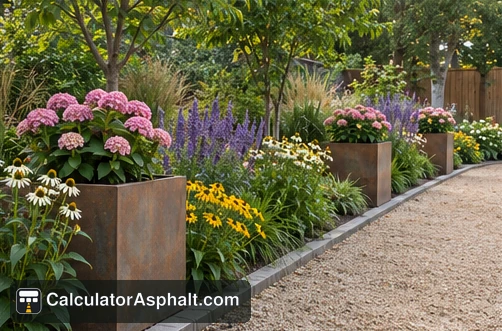
An outdoor landscape feels easier to use when surfaces, plants and seating reinforce the same routes. Choose the view you care about and one everyday trip through the yard. Build your design around those two observations before shopping.
Jump to a section
Establish a clear focal point and route
Pick a plant, planter, seating spot or opening that will be visible as you step outside. Draw how you reach it and where the main walking line sits. Move a distracting object before choosing another focal feature. A simple view from the door makes the rest easier to read.
Repeat two elements with a purpose
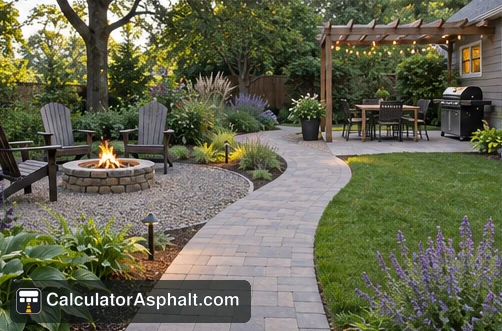
Try one paving color or material and two plant forms that work in your site. Repeat them in different beds rather than putting every sample in the same place. Test the plant widths at maturity and the paving sample from indoor and outdoor viewpoints.
Use edges to clarify activities
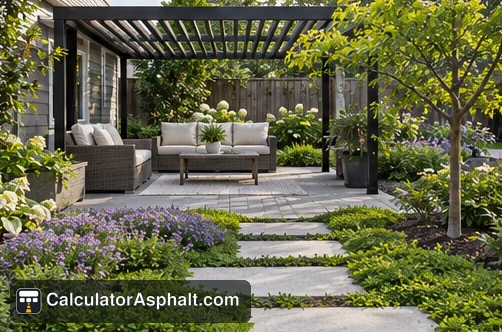
Draw a quiet seating pocket, walking zone and anything else that uses the yard daily. A low planting bed, change in surface or back of a bench can show where one zone starts. Test the route with chairs pulled out and the gate open.
A small design comparison
Sketch a 14-by-18-foot yard with a 3-by-18-foot planning path. That reserves 54 of 252 square feet before furniture or planting. Compare one wide seating pocket and two smaller pockets using identical routes. Count plant bed and paving areas separately after the mock-up works.
Collect a short set of site observations
Choose a morning and afternoon for photographs from the same spot. Write down the walking trips you made and whether a bench, plant or gate affected any of them. Mark changes needed for periodic yard work. Test one proposed change using movable objects, then compare it with the photos. Record mature planting width and which surfaces require regular cleaning. This gives your early landscape plan a reality check before the expensive details are set.
How do I make weekly upkeep easier?
Draw where you actually need to rake, water or prune. Preserve room to reach every narrow bed and keep suitable plants in groups that have compatible growing conditions. Plan one small change first and see how it affects the rest of the site.
Material calculators
Related project guides
- European Backyard Ideas: Three Courtyard Layouts for Ordinary Yards
- Front of House Landscaping Ideas: Layer Flower Beds Around the Entry
- Small Backyard Landscaping Blueprint: Draw a Garden Plan You Can Measure
Reference Penn State Extension principles of garden design.